

A clogged milk duct feels like someone stuck a hard marble or pebble in your breast, and it’s not going anywhere. Engorgement is a whole different beast where your entire breast feels like it’s turned into concrete overnight. Both situations are incredibly uncomfortable, and if you’re dealing with either one right now, you want relief immediately, not in three days.
The good news is that both clogged ducts and engorgement are super treatable once you know what you’re doing. The key is acting fast before a simple blocked duct turns into something more serious like mastitis. We’re gonna break down exactly what’s happening in your breast, what works to fix it quickly, and how to prevent it from happening again.
The difference between engorgement and clogged ducts
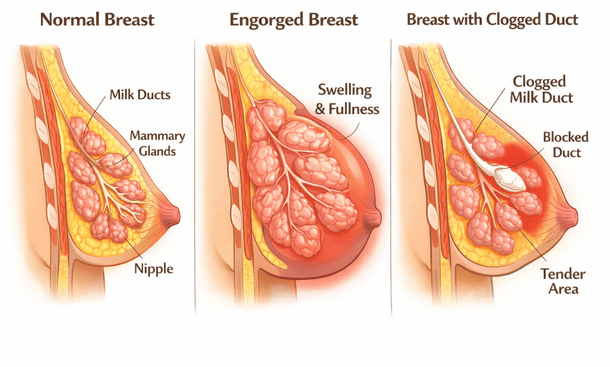
Even though both make your breasts feel hard and painful, engorgement and clogged ducts are different problems with different solutions.
Engorgement usually happens in the first week or two after birth when your milk first comes in. Your breasts suddenly get massively full, tight, hot, and painful. The whole breast is affected, not just one spot. Your skin might look shiny and stretched, and sometimes you’ll even run a low-grade fever. This happens because your body is still figuring out how much milk to make, so it overproduces at first.
A clogged duct, on the other hand, is a localized blockage in one milk duct. You’ll feel a distinct hard lump or tender spot in one area of your breast. The rest of your breast might feel fine. The skin over the clogged area might look red or feel warm. You usually won’t have a fever unless it’s progressing to an infection.
Engorgement affects both breasts equally. Clogged ducts typically happen in just one breast at a time, though you can definitely get them in both if you’re really unlucky.
The timing is different too. Engorgement is most common in the early postpartum days, though it can happen anytime you go too long between feedings or suddenly drop nursing sessions. Clogged ducts can strike at any point during your breastfeeding journey, and they’re often triggered by pressure on the breast, a tight bra, sleeping on your stomach, or skipping feedings.
Immediate relief for clogged ducts
When you’ve got a clogged duct, time matters. The longer it stays blocked, the more likely it is to get infected.
Heat is your first move. Apply a warm compress or heating pad to the affected area for about ten to fifteen minutes before nursing. This helps dilate the ducts and gets things flowing. Some moms swear by standing in a hot shower and massaging the lump while the water runs over it.
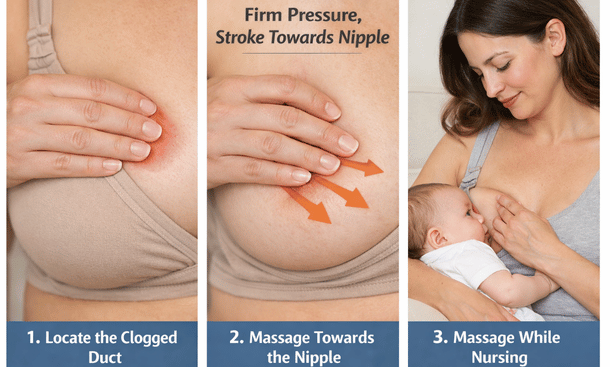
Massage while you nurse. Use firm but gentle pressure to work the lump toward your nipple in long strokes. It might hurt, but keep at it. You’re trying to move that blocked milk out. Think of it like pushing toothpaste from the bottom of the tube toward the opening.
Nurse with your baby’s chin pointing toward the clogged area. Gravity and their sucking pressure work together to help drain that specific duct. This might mean trying some weird positions, like nursing on all fours with your baby underneath you if the clog is on top of your breast. Do what works even if it looks ridiculous.
Dangle feeding is a technique where you lean over your baby on all fours while they nurse lying on their back. Gravity helps pull the milk down and out. It’s awkward as hell but surprisingly effective for stubborn clogs.
After nursing, use cold compresses to reduce inflammation and pain. A bag of frozen peas wrapped in a thin towel works perfectly.
Keep nursing frequently on the affected side. I know it hurts, but you need to keep emptying that breast. If your baby won’t nurse enough or the lump isn’t budging, pump after feedings to make sure you’re fully draining the breast.
A vibrating massager or electric toothbrush applied to the clog while nursing can help break it up. Place it right on the hard spot and let the vibration work its magic.
Lecithin supplements might help if you get recurrent clogs. Take one two hundred milligram capsule three to four times a day. It works by making your milk less sticky, so it flows more easily through narrow ducts. This isn’t an immediate fix for an active clog, but it’s good prevention.
Fast relief for engorgement
Engorgement needs a slightly different approach because you’re dealing with overall fullness, not a specific blockage.
Nurse frequently, every one to two hours if possible. This is the single most important thing you can do. Your body needs to get the message to slow down production, and that only happens when milk gets removed regularly.
If your breast is so hard and full that your baby can’t latch properly, you need to hand express or pump just enough to soften the areola. This is called reverse pressure softening. Press firmly around your areola for about a minute to push some fluid back into your breast tissue, making the nipple area softer and easier for your baby to grasp.
Cold cabbage leaves are an old remedy that actually works for some women. Take cold green cabbage leaves from the fridge, wash them, and tuck them inside your bra over your breasts. Leave them on for about twenty minutes or until they wilt. Don’t overdo this though, because it can decrease your supply if you use it too much.
Cold compresses between feedings help reduce swelling and pain. Use them for fifteen to twenty minutes at a time.
Gentle massage before nursing can help milk flow more easily, but don’t massage as aggressively as you would for a clogged duct. You’re just trying to encourage letdown, not force milk out.
Wear a supportive but not tight bra. You want enough support so your breasts aren’t pulling on ligaments, but avoid anything with underwires or that leaves marks on your skin.
Anti-inflammatory medication like ibuprofen is safe while breastfeeding and helps with both pain and swelling. Take it as directed on the package.
When to worry about mastitis
Both clogged ducts and engorgement can progress to mastitis if left untreated. Mastitis is a breast infection that needs medical attention, so you need to know the warning signs.
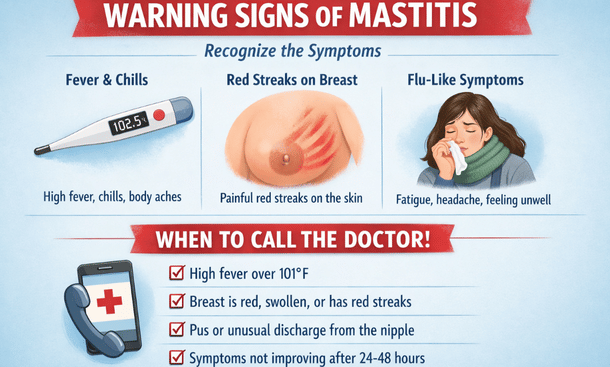
Fever over one hundred point four degrees Fahrenheit is the biggest red flag. If you suddenly spike a fever along with breast pain, call your doctor.
Red streaks spreading from the affected area mean the inflammation is getting worse. A small red patch over a clogged duct is one thing, but streaks radiating outward suggest infection.
Flu-like symptoms including body aches, chills, and feeling completely wiped out often accompany mastitis. You’ll feel sick in a way that goes beyond just having a sore breast.
If your symptoms aren’t improving after twenty-four hours of home treatment, or if they’re getting worse, don’t wait. Contact your healthcare provider. Mastitis usually requires antibiotics, and the sooner you start them, the faster you’ll feel better.
You should keep nursing even if you develop mastitis. The infection is in your breast tissue, not in the milk itself, and continuing to drain the breast helps it heal faster. Your milk is still safe for your baby.
Preventing future clogs and engorgement
Once you’ve dealt with the pain of a clogged duct or engorgement, you definitely don’t want to go through it again. Prevention is way easier than treatment.
Nurse on a consistent schedule as much as possible. Going too long between feedings is one of the main triggers for both problems. If you need to skip a feeding, pump to keep your breasts drained.
Avoid tight bras, especially ones with underwires. Constant pressure on your breast tissue can compress ducts and lead to blockages. Make sure your nursing bras fit properly and aren’t leaving red marks on your skin.
Don’t sleep on your stomach. This puts hours of pressure on your breasts and is a common cause of morning clogs.
Watch how you carry bags and purses. A heavy diaper bag or purse strap crossing your chest can press on ducts all day without you realizing it.
Stay hydrated. Thick, sticky milk is harder to move through ducts than milk with proper consistency. Drink water throughout the day.
If you’re pumping, make sure your flanges fit correctly. Flanges that are too small can compress tissue and create blockages over time.
Gradually wean when you’re ready to stop breastfeeding. Dropping feedings too quickly causes engorgement. Cut out one feeding every few days to let your supply adjust slowly.
Take lecithin daily if you’re prone to recurrent clogs. That one two hundred milligram capsule three to four times a day can make a real difference in preventing blockages.
Dealing with recurrent problems
Some women just seem to get clogged ducts all the time no matter what they do. If this is you, there might be underlying issues to address.
Oversupply can cause recurrent engorgement and clogs because you’re always making more milk than your baby needs. Block feeding, where you nurse from only one breast for a set period of time, can help regulate an oversupply. Talk to a lactation consultant before trying this though.
Anatomical issues like fibrous breast tissue or naturally narrow ducts make some women more susceptible to blockages. There’s not much you can do about your anatomy, but knowing this is the cause helps you be more vigilant about prevention.
High lipid content in your milk makes it thicker and more prone to clogging. Lecithin helps with this by acting as an emulsifier.
Stress and exhaustion seem to trigger clogs for some moms, probably because they affect your hormones and immune function. Easier said than done with a baby, but rest when you can.
The reality check
Clogged ducts and engorgement are painful and frustrating, but they’re also incredibly common and usually resolve quickly with proper treatment. Most clogs clear within twenty-four to forty-eight hours if you’re aggressive about treating them.
Don’t try to tough it out or wait to see if it gets better on its own. The faster you act, the faster you’ll feel relief and the lower your risk of developing mastitis.
If you’re doing everything right and still getting frequent clogs, it’s worth seeing a lactation consultant. There might be positioning issues, latch problems, or other factors you’re not aware of that are contributing to the problem.
And remember, while dealing with plugged ducts or rock-hard breasts is miserable in the moment, it doesn’t mean there’s anything wrong with you or that you can’t successfully breastfeed. These are mechanical problems with mechanical solutions.
If the pain escalates beyond a simple clog and you develop fever or spreading redness, you might be dealing with mastitis. Our comprehensive guide on mastitis symptoms and treatment covers everything you need to know about recognizing and treating breast infections before they get serious. For a complete overview of all the challenges you might face while nursing and how to handle them, check out our resource on common breastfeeding problems and how to solve them.

As a Felyro.com content author, I develop actionable content on breastfeeding, translating research-backed information into practical advice for mothers. My goal is to help families establish healthy feeding habits, improve maternal confidence, and support infant development.