

There’s this moment — you’re staring at that little stick and suddenly your whole world tilts a little. And then comes the questions. Like, what is actually happening in there right now? Because you don’t feel much yet. Maybe some nausea. Maybe nothing at all. But trust me, your body is already running a full construction project.
Months one and two of pregnancy are genuinely the most intense weeks developmentally, even though from the outside you’d never know it. I’ve been tracking pregnancies, reading studies and writing about fetal growth for years now and the first trimester still gets me every time. It’s that fast. It’s that wild.
So let’s actually talk about what’s going on inside, week by week, no medical textbook vibes.
Week 1 and 2: Before baby even exists
Okay this might throw you a little but technically weeks one and two of your pregnancy happen before conception. Your doctor counts from the first day of your last period which means week one is just your body prepping. The uterine lining is thickening. An egg is maturing inside a follicle. Ovulation happens around day 14 for most people.
No embryo yet. But your body is already getting the stage ready.
Week 3: The moment it actually begins
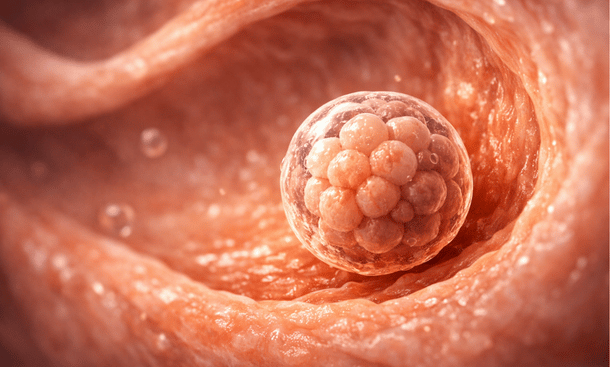
This is when fertilization happens. One sperm meets one egg and within 24 hours that single cell starts dividing. By the end of week three you’ve got a blastocyst — a tiny ball of cells that’s making its way down the fallopian tube toward the uterus.
It’s smaller than a grain of salt. And yet everything — your baby’s entire genetic blueprint — is already locked in. Eye color. Blood type. All of it.
Week 4: Implantation and the beginning of everything
The blastocyst burrows into the uterine lining. This is implantation. Some women feel a tiny cramp or notice light spotting around this time. Most don’t feel anything.
Once implanted the cells start separating into two groups. One group becomes the embryo. The other becomes the placenta — which will spend the next eight months delivering oxygen and nutrients to your baby.
HCG (human chorionic gonadotropin) starts flooding your system. That’s the hormone a pregnancy test picks up. So if you’re testing now and getting a positive, this is exactly what’s happening.
Week 5: The neural tube forms
Week five is enormous. A primitive version of the brain and spinal cord — called the neural tube — begins to form. The heart also starts developing this week. Not beating yet but the structure is there.
This is why folic acid matters so much in early pregnancy. It directly supports neural tube development. If you haven’t already started taking a prenatal vitamin with folic acid, now is the time.
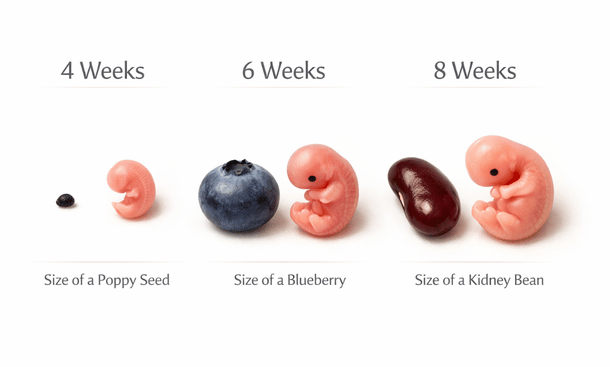
The embryo at this point looks more like a tiny curved shrimp than anything else. About 2 millimeters long.
Week 6: The heartbeat
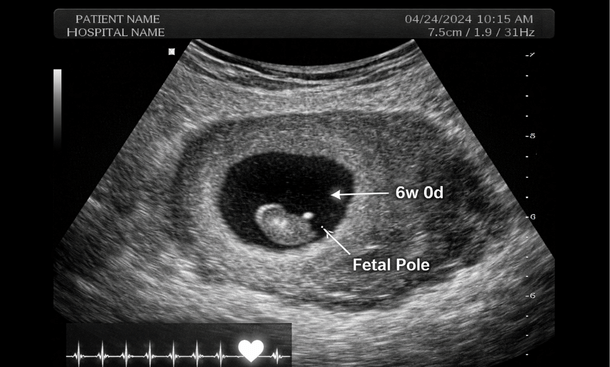
This is the week a lot of people hear it for the first time at an early ultrasound. That rapid flicker on the screen. That sound.
At week six the heart begins to beat. It’s not a fully formed four-chambered heart yet but it’s beating. Somewhere between 90 and 110 beats per minute. The neural tube is closing. The beginning of the eyes and ears are forming as small indentations. Arm and leg buds are starting to appear.
Six weeks is also when morning sickness tends to kick in hard for a lot of people. That’s not a coincidence — HCG levels are peaking and your body is in full overdrive.
Week 7 and 8: Face, fingers and rapid growth
By week seven the embryo has doubled in size from the week before. The face is starting to take shape — nostrils, a mouth, dark spots where the eyes will be. The brain is growing fast. Dramatically fast actually. Around 100 new neurons are forming every minute at this stage.
Week eight brings finger and toe rays — the early webbed beginnings of hands and feet. The major organs are all starting to form: kidneys, liver, lungs. Nothing is functioning yet but the architecture is going up.
This is also when a lot of people have their first OB appointment. Seeing that little bean on screen with a heartbeat tends to make everything feel a lot more real.
Month 2 in context: what the embryo actually looks like
At the end of week eight your embryo is roughly the size of a kidney bean. About 1.6 centimeters. It has a recognizable head, a curved body, tiny arm and leg buds, and a beating heart.
It doesn’t look like a baby yet. But it has all the foundational pieces. Every major organ system has begun developing. From here, the next weeks are about refining, growing and specializing.
Why these early weeks matter so much
The first trimester is the most critical window for fetal development. Almost every major structure forms between weeks 3 and 10. That’s why any disruptions during this time — whether from certain medications, infections or nutritional deficiencies — can have the biggest impact.
It’s also why so many people feel exhausted, nauseous and emotional in early pregnancy. Your body isn’t being dramatic. It’s literally building a human from scratch while keeping you alive at the same time.
Understanding what’s happening week by week isn’t just interesting — it changes the way you take care of yourself. You start to see why rest matters. Why nutrition matters. Why stress management matters.
What comes next
Months one and two are just the beginning. If you want to see how this all connects — how those early weeks lead into the dramatic growth of the second trimester and beyond — the full month-by-month guide to fetal development walks you through every stage in one place.
And once you hit that 12-week mark and officially leave the first trimester, the changes keep coming fast. Month three brings some of the most satisfying milestones — including the moment your baby gets actual fingerprints. You can read about all of that in baby development at 3 months: end of first trimester.

As an author at Felyro.com, I create actionable content on pregnancy tracking, offering practical tools, tips, and insights that empower mothers-to-be to stay informed and confident throughout their pregnancy.
Fabulous, what a blog it is! This website presents valuable data to us, keep it up.