
pregnancy is a magical journey filled with excitement and change not only for your growing baby but also for your skin. as your body adjusts to new hormones, increased blood flow, and physical changes, your skin may go through transformations too. while some women experience a “pregnancy glow,” others face acne, dryness, pigmentation, or sensitivity.
navigating skincare during pregnancy can be confusing, especially when you’re unsure which ingredients are safe and which ones should be avoided. this complete guie will help you build a safe, effective pregnancy skincare routine that nourishes, protects, and soothes your skin through every trimester.
understanding skin changes during pregnancy
your skin reflects what’s happening inside your body. as hormone levels rise, your skin may behave differently than usual sometimes glowing, sometimes acting up.
here are some common skin changes you might experience during pregnancy:
-
pregnancy glow: increased blood circulation and oil production can give your skin a natural radiance.
-
acne or breakouts: hormonal shifts can trigger excess sebum production, leading to pimples.
-
hyperpigmentation (melasma): darker patches often appear on the face, neck, or abdomen due to increased melanin production.
-
stretch marks: as your belly expands, skin elasticity decreases, causing pink or purple streaks.
-
dry or itchy skin: hormonal and physical stretching can lead to dryness, especially around the belly.
-
spider veins or redness: increased blood volume can make small blood vessels more visible.
while these changes are common, the right skincare routine can help you minimize discomfort and keep your skin healthy.
key principles of pregnancy-safe skincare
-
simplicity is best: your skin is more sensitive during pregnancy, so stick to gentle, minimal products.
-
avoid harsh chemicals: some ingredients can be absorbed into the bloodstream and may affect your baby’s development.
-
hydrate and protect: moisturizing and sun protection are your best defense against dryness and pigmentation.
-
choose clean, fragrance-free formulas: fragrances can irritate sensitive skin and cause allergic reactions.
-
consult your doctor: before using any new skincare treatment or active ingredient, discuss it with your healthcare provider.
daily pregnancy skin care routine
a good pregnancy skincare routine focuses on cleansing, moisturizing, and protecting your skin with safe, nourishing ingredients.
morning routine
-
cleanser:
use a gentle, sulfate-free cleanser to remove oil and dirt without stripping your skin.-
safe options: cetaphil gentle skin cleanser, cerave hydrating cleanser, or la roche-posay toleriane hydrating wash.
-
look for ingredients like glycerin, aloe vera, or chamomile.
-
-
toner (optional):
if you like toners, choose alcohol-free versions that soothe and balance your skin’s ph.-
safe ingredients: rose water, witch hazel (alcohol-free), or green tea extract.
-
-
serum:
choose serums with antioxidants and hydration boosters.-
safe ingredients: vitamin c (in low concentration), hyaluronic acid, niacinamide.
-
benefits: brightens the skin, boosts collagen, and keeps it plump.
-
-
moisturizer:
keep your skin hydrated to prevent dryness and irritation.-
look for: ceramides, shea butter, coconut oil, or jojoba oil.
-
avoid: retinoids or strong acids.
-
-
sunscreen:
this is non-negotiable. pregnancy hormones make your skin more prone to pigmentation.-
use a mineral-based sunscreen with zinc oxide or titanium dioxide (spf 30+).
-
avoid chemical sunscreens containing oxybenzone or avobenzone.
-
evening routine
-
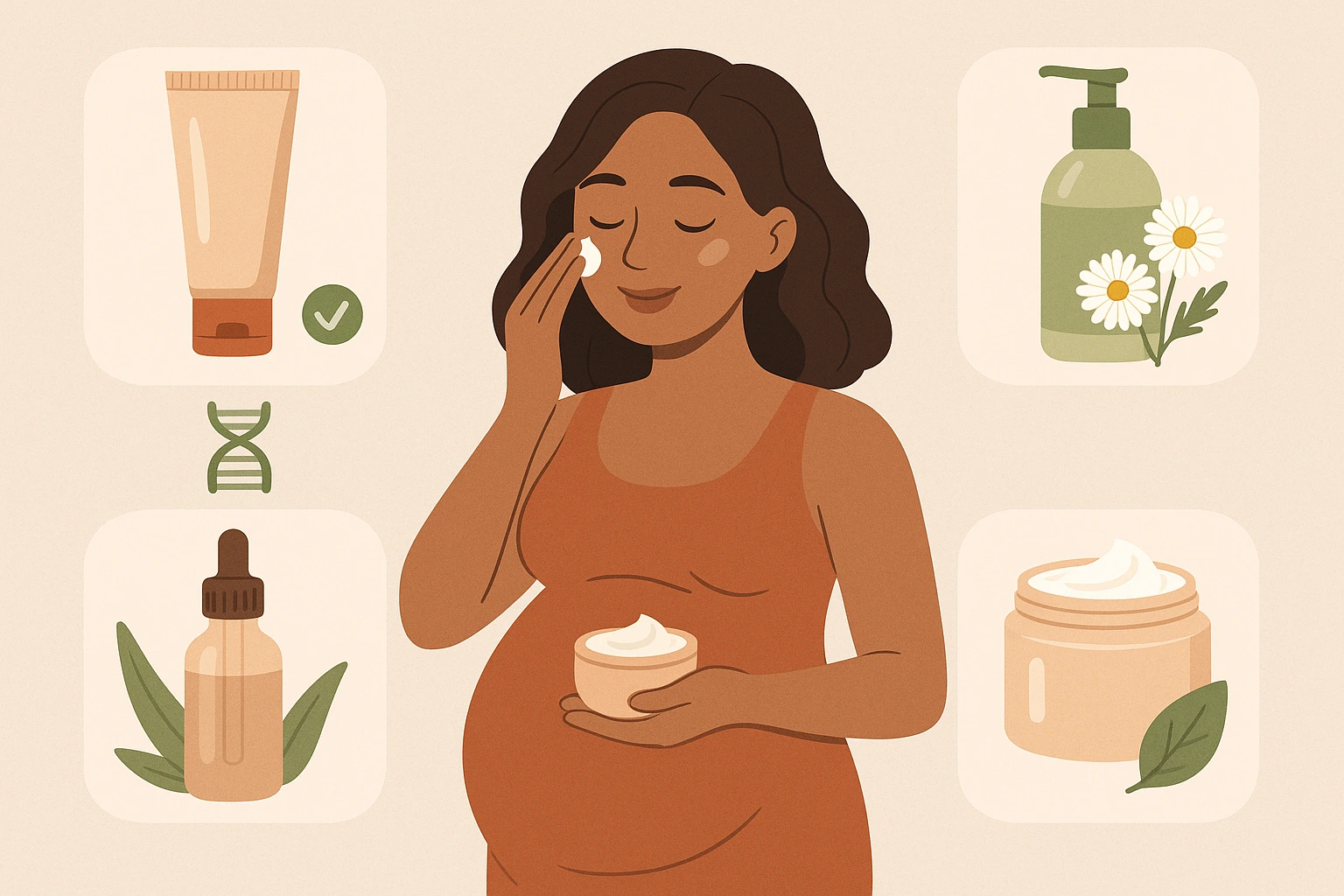
gentle cleansing:
remove makeup and dirt using micellar water or a mild cleanser. -
treatment serum or oil:
use nourishing serums rich in antioxidants and safe oils.-
try: rosehip oil, argan oil, or vitamin e serum.
-
-
moisturizer or night cream:
apply a thick, soothing moisturizer to lock in hydration overnight.-
safe choices: cocoa butter, aloe vera gel, ceramide-based creams.
-
for more guidance on how your skin and body evolve during each stage, check out what to expect in each trimester of pregnancy. it gives you trimester-by-trimester insights that align perfectly with your skincare adjustments.
pregnancy-safe skincare ingredients
knowing which ingredients are safe makes choosing products much easier. here are the top safe ingredients for expecting moms:
-
hyaluronic acid: hydrates deeply without side effects.
-
vitamin c: brightens skin and fadespigmentation safely.
-
niacinamide: soothes inflammation, improves texture, and strengthens the skin barrier.
-
shea butter & cocoa butter: great for moisturizing and reducing stretch marks.
-
aloe vera: calms irritation and keeps the skin hydrated.
-
ceramides: repair and protect your skin’s moisture barrier.
-
zinc oxide & titanium dioxide: natural sunscreens that shield from uv damage.
ingredients to avoid during pregnancy
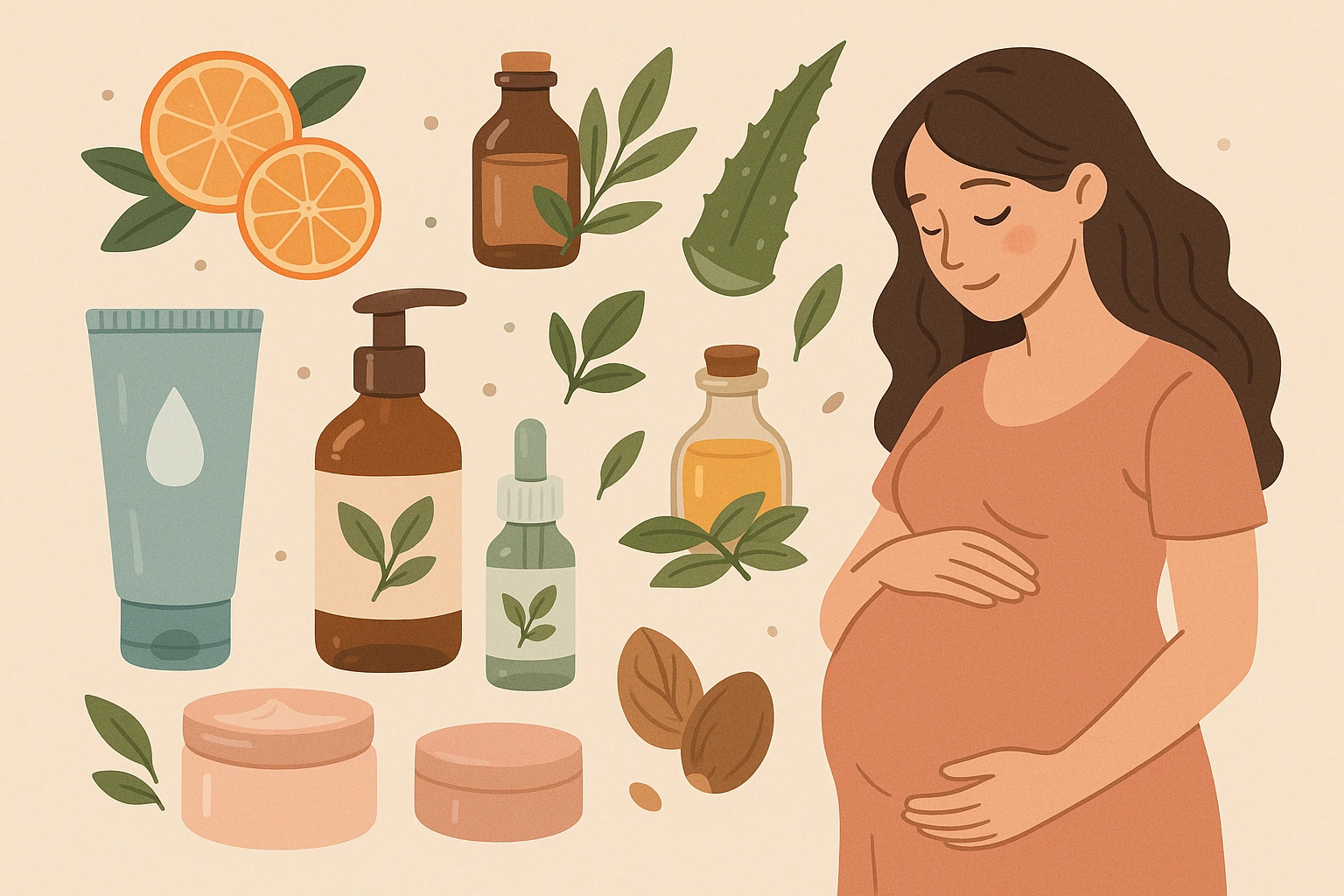
certain skincare ingredients can penetrate the skin barrier and may be harmful to your baby. steer clear of:
-
retinoids (retinol, tretinoin, adapalene): linked to birth defects.
-
salicylic acid (in high doses): small topical doses are safe, but avoid peels or oral use.
-
benzoyl peroxide (in high amounts): limited research; use only under medical advice.
-
hydroquinone: used for pigmentation but can be absorbed systemically.
-
formaldehyde & phthalates: found in some cosmetics — avoid completely.
-
chemical sunscreens: like oxybenzone or avobenzone; switch to mineral formulas instead.
managing common pregnancy skin issues
1. pregnancy acne
hormones can trigger oil production, leading to breakouts.
-
use gentle cleansers with niacinamide or zinc.
-
avoid harsh scrubs or alcohol-based products.
-
use oil-free moisturizers and mineral sunscreens.
2. melasma (mask of pregnancy)
dark patches around the forehead, nose, or cheeks are common.
-
wear sunscreen daily (spf 30 or higher).
-
use vitamin c and licorice extract for gentle brightening.
-
avoid direct sun exposure.
3. stretch marks
as your belly grows, skin stretches and small tears appear.
-
apply shea butter orcocoa butter twice daily.
-
use bio-oil or almond oil for elasticity.
-
keep your body hydrated.
4. dryness and itchiness
dryness is common, especially around the belly and thighs.
-
use creamy moisturizers with ceramides and hyaluronic acid.
-
avoid hot showers and harsh soaps.
-
drink plenty of water.
5. swelling and redness
increased blood flow can cause puffiness and redness.
-
use cold compresses.
-
elevate your legs when resting.
-
limit salt intake and stay hydrated.
natural diy skincare for pregnancy

if you prefer natural remedies, you can try these simple at-home treatments:
-
honey and yogurt mask: hydrates and brightensskin.
-
oatmeal bath: relieves itchiness and dryness.
-
coconut oil massage: reduces stretch marks and boosts circulation.
-
aloe vera gel: cools and calms irritated skin.
make sure to do a patch test first, as pregnancy can make your skin more sensitive.
safe skincare brands for pregnancy
many skincare brands now offer clean, pregnancy-safe options. here are a few trusted ones:
-
the ordinary (choose niacinamide, hyaluronic acid, and squalane lines)
-
cerave (gentle, dermatologist-tested, and fragrance-free)
-
bioderma (hydrating micellar water and creams)
-
earth mama organics (natural body oils and balms)
-
la roche-posay (safe cleansers and sunscreens)
-
pipette (formulated for moms and babies)
self-care and skin wellness during pregnancy
beautiful skin starts from within. in addition to your skincare routine, maintaining a healthy lifestyle enhances your glow.
-
eat a balanced diet: include fruits, vegetables, and omega-3s.
-
stay hydrated: aim for 8–10 glasses of water daily.
-
get enough sleep: helps skin repair and reduces puffiness.
-
manage stress: try meditation or prenatal yoga to keep your hormones in balance.
pregnancy-safe treatments
some spa treatments or facials can be beneficial, but alwas chck safety.
-
safe options: prenatal masages, hydrating facials, mild exfoliation.
-
avoid: chemical peels, microdermabrasion, botox, or laser treatments.
always inform your esthetician that you are pregnant.
postpartum skincare
after giving birth, your hormones gradually return to normal, but skin recovery takes time. continue gentle cleansing, moisturizing, and sunscreen use. once your doctor approves, you can slowly reintroduce active ingredients like retinoids.
a pregnancy skincare routine should focus on safety, hydration, andsimplicity. understanding what your body need and avoiding harsh ingredients ensures that your skin stays healthy and radiant throughout your pregnancy.
by using gentle cleansers, rich moisturizers, and mineral sunscreens, you can protect your skin and enhance your natural glow without compromising your baby’s safety.

Carlene R. Priddy offers strategic advice and practical guidance for governorsbefore, during, and after their mandatesto strengthen governance and public leadership.