
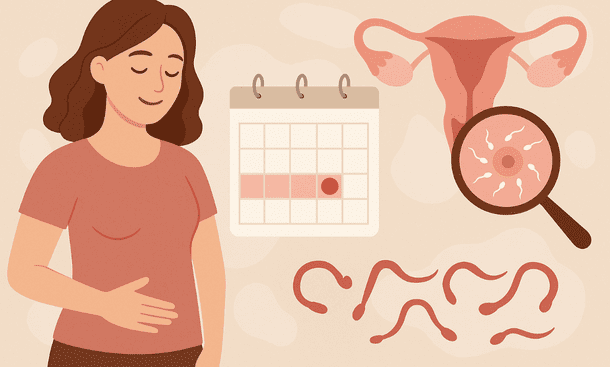
Understanding how ovulation works is one of the most empowering steps when trying to conceive. Many women grow up without learning the details of their cycle, so fertility can feel like guesswork. Once you understand your fertile window, timing becomes clearer and the process feels less stressful. Cycle awareness also blends naturally with a broader pre pregnancy preparation guide, giving your journey a stronger structure.
Ovulation is the moment your ovary releases an egg. It happens once per cycle and the egg stays viable for a short time. Sperm live longer, which is why timing intercourse during the fertile window helps increase your chances. This window usually lasts six days. Learning how to recognise it gives you the clarity you need for better timing and more confidence.
Each woman is unique. Cycles vary, symptoms vary and ovulation can shift from month to month. What matters is observing your own patterns instead of relying on assumptions. With simple tools and habits you can understand your body better and reduce uncertainty.
Understanding how ovulation works
Your menstrual cycle has several phases. Ovulation sits in the middle. Hormones rise and fall in a rhythm that prepares your body for conception. As estrogen climbs, your cervical mucus changes. Your energy and libido may rise too. The egg is released when luteinising hormone spikes. After that you enter the luteal phase, which prepares for either implantation or a new cycle.
Some women ovulate early, others later. A classic “day 14” ovulation is only a general reference. Many women ovulate on day 11 or day 18. Because of this variation, tracking signs matters more than counting.
When you know roughly when ovulation happens, you can time intercourse in the days leading up to it. Sperm can live up to five days in fertile cervical mucus. This means conception often happens from intercourse before the egg is released.
Recognising your fertile window
Your body gives several clear signals. Learning to notice them becomes easier with practice.
Cervical mucus changes
In the days before ovulation, cervical mucus becomes more abundant and stretchy. It may look similar to egg white. This texture helps sperm move more easily. After ovulation, mucus becomes thicker.
Ovulation pain
Some women feel a mild ache on one side of the lower abdomen. This sensation is called mittelschmerz. It is not a reliable method on its own but it can confirm other signs.
Temperature shift
Basal body temperature rises slightly after ovulation. Tracking it daily helps you confirm patterns. It does not predict ovulation but it shows when it has already happened.
Increased libido
Many women notice a natural rise in desire near ovulation. This instinct is driven by hormones.
Using ovulation predictor kits
Ovulation predictor kits (OPKs) detect the luteinising hormone surge. This surge happens shortly before ovulation. OPKs help you confirm when your fertile window is about to peak. They are easy to use and widely available. They work well if your cycle is somewhat regular.
Digital kits may be easier to interpret than simple strips. Some women combine OPKs with cervical mucus observation for more accuracy. If your cycles are irregular, you may need to test for more days.
Common factors that influence ovulation
Several lifestyle habits affect how regularly you ovulate. Supporting your body helps your cycles stay stable.
Stress
High stress can delay ovulation. Gentle routines like walking or journaling help your body find balance.
Nutrition
Low levels of vitamin D, iron or B vitamins can influence hormonal rhythms. Many women correct these through meals or supplements.
Sleep
Irregular sleep patterns affect hormones. Consistent sleep helps regulate your cycle.
Exercise
Moderate exercise supports hormone balance. Excessive training may delay ovulation for some women.
Weight changes
Both underweight and overweight ranges can influence ovulation. Every body is different, so the goal is balance rather than a specific number.
How to track your cycle effectively
Cycle tracking does not need to be complex. You can use a notebook, an app or a simple calendar. Start by noting the first day of your period. Track cervical mucus, energy changes and any ovulation pain. If you use OPKs, write down the day of your positive result.
After two or three cycles you may see patterns. Even irregular cycles have signals. With time you will recognise trends that help you anticipate your fertile days.
Cycle tracking also helps you communicate better with your doctor if you need support later.
Timing intercourse for conception
Once you understand your fertile window, timing becomes easier. Intercourse every one or two days during the fertile days gives sperm enough opportunities to meet the egg. Some couples feel pressure when trying to conceive. A simple rhythm helps reduce stress. The goal is not perfection but consistency.
You do not need to time intercourse exactly at ovulation. Sperm present before ovulation often lead to conception. If you know your fertile window is approaching, focus on the days before the LH surge.
Myths about ovulation and fertility
Fertility is surrounded by myths that create confusion. Ovulation does not always happen on day 14. A regular cycle does not guarantee ovulation. Having no ovulation pain does not mean you are not fertile. Stress does not prevent conception for everyone. Age matters but fertility varies widely from person to another.
Clearing these myths helps you trust your body more and removes unnecessary pressure.
When ovulation becomes irregular
Many women experience irregular ovulation at some point. Stress, travel, illness, intense exercise or hormonal shifts can delay it. If irregularity becomes frequent you may want to check thyroid levels, iron, vitamin D or other markers. Supporting your body with balanced meals, vitamins and sleep can help restore regularity.
If cycles remain unpredictable for several months, a doctor may suggest simple tests. Often the solution is straightforward once the cause is identified.
Building confidence through understanding
Tracking ovulation gives you a clearer connection with your body. It reduces uncertainty and helps you feel more prepared during your conception journey. It brings rhythm to your routine and helps you recognise patterns that you may have never noticed before. Many women describe it as a form of self-awareness rather than a chore.
The goal is not to create pressure around timing but to understand your cycle enough to feel confident. Knowledge turns the process into something more guided and calm.
Understanding your ovulation and fertile window strengthens your chances of conceiving and gives you a sense of clarity. It is one of the most meaningful steps in pregnancy preparation. If you want to continue building strong foundations, you can read our guide on how to prepare emotionally and financially before pregnancy, which complements this phase of your journey.
