
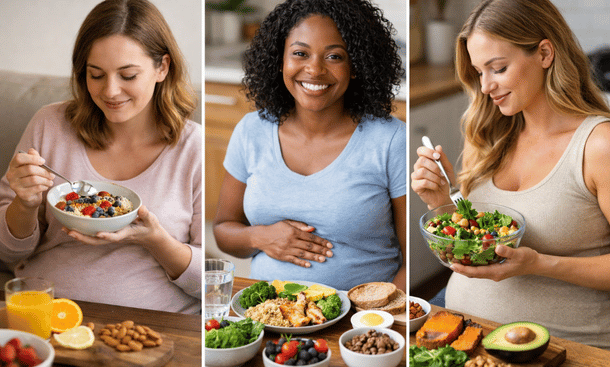
You’ve probably heard “you’re eating for two” about a million times since getting pregnant. But honestly that saying is misleading because it makes it sound like you need to double your food intake. The truth is way more nuanced. What you eat during pregnancy matters a lot but it’s more about quality than quantity.
Your nutritional needs actually change as you move through each trimester. What your body needs in the first thirteen weeks is different from what you need in the third trimester. Understanding these changes helps you make better food choices and gives your baby the best possible start.
I’ll be honest, eating well during pregnancy was harder than I expected. Between food aversions, nausea and weird cravings my diet looked nothing like those perfect pregnancy meal plans you see online. But I did my best and that’s really all you can do.
First Trimester Nutrition: Weeks 1 to 13
The first trimester is all about survival eating for many women. Morning sickness, food aversions and exhaustion make it really hard to eat nutritious meals. I lived on saltine crackers and ginger ale for weeks and felt guilty about it until my doctor told me not to stress.
Your calorie needs don’t actually increase in the first trimester. You still need the same amount of calories you needed before pregnancy which is usually around 1800 to 2000 depending on your size and activity level. What matters more is getting the right nutrients.
Folic acid is the most critical nutrient in early pregnancy. It prevents neural tube defects which develop in the first few weeks often before you even know you’re pregnant. You should be getting 400 to 800 micrograms daily from your prenatal vitamin plus folate rich foods.
Foods high in folate include leafy greens like spinach and kale, citrus fruits, beans, lentils and fortified cereals. I made smoothies with spinach, orange juice and frozen fruit when I couldn’t stomach solid food. At least I was getting some nutrients even when everything else made me nauseous.
Protein is essential for building your baby’s cells and tissues. Aim for about 75 grams per day. Good sources include lean meat, poultry, fish, eggs, dairy, beans and nuts. If you’re vegetarian or vegan make sure you’re combining plant proteins to get all essential amino acids.
During my first trimester the only protein I could handle was scrambled eggs and peanut butter. Everything else made me gag. My OB said as long as I was getting some protein and taking my prenatal vitamin the baby would be fine.
Iron needs increase during pregnancy and many women enter pregnancy with low iron stores. You need about 27 milligrams daily. Red meat is the best source but you can also get iron from chicken, fish, beans, spinach and fortified cereals. Pair iron rich foods with vitamin C to boost absorption.
Calcium is crucial for building your baby’s bones and teeth. You need 1000 milligrams per day. If you don’t get enough from your diet your body will pull calcium from your own bones. Dairy products are the best sources but you can also get calcium from fortified plant milks, leafy greens and canned fish with bones.
I wasn’t a big milk drinker but I forced myself to have a glass every morning and ate yogurt as snacks. Greek yogurt became my go to because it has both calcium and protein.
Hydration matters more than you think. Your blood volume is increasing and you need extra fluids to support that. Aim for at least 8 to 10 glasses of water per day. If you’re nauseous try adding lemon or ginger to your water.
Managing First Trimester Food Aversions
Food aversions are brutal and they come out of nowhere. Foods you loved before pregnancy suddenly smell and taste disgusting. For me it was chicken and coffee which were staples in my diet before.
Don’t force yourself to eat foods that make you nauseous. Find alternatives that provide similar nutrients. If meat grosses you out try beans or eggs for protein. If vegetables make you gag try fruit or take a greens powder mixed into juice.
Small frequent meals work better than three big meals when you’re nauseous. I ate something small every two hours to keep my stomach from getting too empty which made nausea worse. Crackers, toast, pretzels and dry cereal were my lifelines.
Cold foods are often easier to tolerate than hot foods because they don’t have strong smells. Smoothies, yogurt, fruit and sandwiches might sit better than cooked meals. I basically lived on cold foods for my entire first trimester.
If you’re throwing up frequently focus on staying hydrated and getting calories from whatever you can keep down. Your baby is tiny and doesn’t need much yet. Once you feel better you can focus more on balanced nutrition.
Second Trimester Nutrition: Weeks 14 to 27
The second trimester is when most women finally feel like eating again. Your energy comes back, morning sickness fades and food actually sounds good. This is the time to really focus on nutrient dense eating because your baby is growing rapidly.
Your calorie needs increase by about 300 to 350 calories per day in the second trimester. That’s not as much as you might think. We’re talking an extra snack like a banana with peanut butter, a yogurt parfait or a turkey sandwich. Not an entire extra meal.
Protein needs continue at about 75 to 100 grams per day. Your baby is building muscle and tissue at a rapid pace and protein is the building block. Include protein at every meal and snack. Eggs for breakfast, chicken or fish for lunch, beans or meat for dinner and nuts or cheese for snacks.
I meal prepped hard boiled eggs and kept them in the fridge for easy protein snacks. Rotisserie chicken was another lifesaver because I could eat it cold on salads or heated up with vegetables.
Omega 3 fatty acids especially DHA are crucial for your baby’s brain and eye development. You need about 200 to 300 milligrams of DHA daily. Fatty fish like salmon, sardines and trout are the best sources. Aim for two servings of low mercury fish per week.
If you don’t eat fish you can get omega 3s from walnuts, flaxseeds, chia seeds and algae based DHA supplements. I took a DHA supplement because I couldn’t eat fish every week and wanted to make sure I was getting enough.
Iron needs remain high at 27 milligrams per day. Many women develop anemia in the second trimester so focus on iron rich foods. I started having more red meat and cooking in a cast iron skillet which actually adds iron to your food.
Fiber becomes increasingly important as pregnancy progresses because constipation is a real problem. Aim for 25 to 30 grams of fiber daily from whole grains, fruits, vegetables, beans and nuts. Staying hydrated helps too.
Foods to Focus On in the Second Trimester
Whole grains provide sustained energy, fiber and B vitamins. Choose brown rice, quinoa, oats, whole wheat bread and whole grain pasta. These foods help prevent constipation and keep your blood sugar stable.
Colorful fruits and vegetables are packed with vitamins, minerals and antioxidants. Aim for a variety of colors to get different nutrients. Dark leafy greens, berries, sweet potatoes, bell peppers and citrus fruits are all excellent choices.
I made it a goal to eat something from every color of the rainbow each day. It sounds cheesy but it actually helped me get more variety in my diet.
Lean proteins like chicken, turkey, fish, eggs and legumes provide amino acids your baby needs for growth. Greek yogurt and cottage cheese are great protein sources that also provide calcium.
Healthy fats from avocados, nuts, seeds, olive oil and fatty fish support your baby’s brain development and help you absorb fat soluble vitamins. Don’t be afraid of fat during pregnancy. Your baby needs it.
Dairy products or fortified alternatives provide calcium, protein and vitamin D. Milk, yogurt, cheese and kefir are all good options. If you’re lactose intolerant try lactose free dairy or fortified plant milks with added calcium and vitamin D.
Third Trimester Nutrition: Weeks 28 to 40
The third trimester is when your baby really packs on weight and your nutritional needs peak. You need an additional 450 to 500 calories per day compared to your pre pregnancy intake. That’s still just one substantial snack or small meal.
Protein needs increase to about 100 grams per day. Your baby is growing rapidly and your body is preparing for labor and breastfeeding. Continue focusing on lean proteins at every meal.
By the third trimester I was eating protein at every single meal and snack. My go to snacks were Greek yogurt with granola, cheese and crackers, hard boiled eggs and protein smoothies.
Iron remains crucial because your blood volume peaks in the third trimester. If you’re anemic you’ll feel even more exhausted than pregnancy already makes you. Make iron rich foods a priority and take your prenatal vitamin consistently.
Calcium needs stay at 1000 milligrams per day. Your baby’s bones are hardening and teeth are forming. If you’re not getting enough calcium your body takes it from your bones which isn’t good for your long term health.
Vitamin K becomes important in the third trimester for blood clotting. You’ll find it in leafy greens, broccoli, Brussels sprouts and cabbage. I made myself eat a big salad or cooked greens almost every day.
Managing Third Trimester Eating Challenges
Heartburn and indigestion are brutal in the third trimester. Your growing uterus pushes your stomach up into your chest and slows digestion. Eating smaller more frequent meals helps. Avoid spicy, fatty and acidic foods if they trigger heartburn.
I basically lived on Tums during my last trimester. Eating small meals and staying upright for at least an hour after eating helped reduce heartburn. No more lying on the couch right after dinner.
Feeling full quickly is common because your stomach has less room. Focus on nutrient dense foods that pack a lot of nutrition into small portions. Smoothies, nut butters, avocados and nuts give you calories and nutrients without requiring a huge volume of food.
Swelling and water retention are normal in the third trimester but excessive salt can make it worse. Don’t cut out salt completely because you need it but avoid processed foods that are loaded with sodium. Staying hydrated actually helps reduce swelling.
Constipation often gets worse as pregnancy progresses. Continue prioritizing fiber rich foods, drink plenty of water and stay as active as you can. Prunes and prune juice really do work if you’re desperate.
Foods to Avoid Throughout Pregnancy
Some foods carry risks during pregnancy and should be avoided. Raw or undercooked meat, poultry and eggs can harbor bacteria like salmonella and listeria. Make sure everything is cooked thoroughly. No rare steaks or runny eggs.
Raw fish including most sushi carries a risk of parasites and bacteria. Cooked sushi rolls are fine but skip the raw stuff. I really missed sushi during pregnancy but I found some great cooked rolls that satisfied the craving.
High mercury fish like swordfish, shark, king mackerel and tilefish should be avoided completely. Mercury can harm your baby’s developing nervous system. Salmon, shrimp, cod and canned light tuna are safe options.
Deli meats and hot dogs can contain listeria unless heated until steaming. I know that turkey sandwich sounds amazing but heat up the meat first. Same goes for hot dogs which need to be cooked until hot.
Unpasteurized dairy products and soft cheeses made from unpasteurized milk should be avoided. Listeria thrives in these foods. Hard cheeses and pasteurized soft cheeses are safe. Check labels to make sure everything is pasteurized.
Unwashed produce can harbor toxoplasmosis and other bacteria. Wash all fruits and vegetables thoroughly even if you’re going to peel them. I used a vegetable brush on things like apples and cucumbers.
Alcohol is a hard no during pregnancy. There’s no known safe amount and it crosses the placenta directly to your baby. Fetal alcohol syndrome is completely preventable by abstaining from alcohol.
Caffeine should be limited to 200 milligrams per day which is about one 12 ounce cup of coffee. Excessive caffeine is linked to miscarriage and low birth weight. I switched to half caff coffee and that kept me under the limit.
Special Diet Considerations
If you’re vegetarian or vegan you can absolutely have a healthy pregnancy but you need to be more intentional about certain nutrients. Focus on getting enough protein from beans, lentils, tofu, tempeh, nuts and whole grains. Combine different plant proteins to get all essential amino acids.
Iron from plant sources isn’t absorbed as easily as iron from meat so you might need a supplement. Vitamin B12 is only found in animal products so vegans need to take a B12 supplement. Make sure your prenatal vitamin includes B12.
Omega 3s are trickier on a plant based diet. Take an algae based DHA supplement to ensure you’re getting enough. Calcium and vitamin D might also need supplementation if you’re not eating dairy.
If you have food allergies or intolerances work with a dietitian to make sure you’re meeting all your nutritional needs. There are always alternatives but you need to be strategic about food choices.
Women with gestational diabetes need to manage their carbohydrate intake carefully. Focus on complex carbs with fiber, pair carbs with protein and fat to slow glucose absorption and avoid sugary drinks and processed foods. Your doctor will likely refer you to a dietitian for specific guidance.
Meal Planning Tips That Actually Work
Planning meals ahead of time makes healthy eating so much easier especially when you’re exhausted. I spent Sunday afternoons prepping ingredients for the week. I’d wash and chop vegetables, cook a batch of rice or quinoa and grill chicken breasts.
Keep easy nutritious snacks readily available. I always had hard boiled eggs, cheese sticks, yogurt, fruit, nuts and hummus in my fridge. When hunger hit I could grab something healthy instead of chips or cookies.
Batch cooking was a lifesaver. I’d make big pots of soup, chili or casseroles and freeze portions. On days when I was too tired to cook I had healthy meals ready to heat up.
Don’t stress about perfection. Some days you’ll eat really well and other days you’ll survive on toast and crackers. Your body is incredibly good at prioritizing your baby’s needs. As long as you’re taking your prenatal vitamin and doing your best you’re doing great.
Listen to your cravings to an extent but try to find healthier ways to satisfy them. If you’re craving ice cream try frozen yogurt or a smoothie. If you want potato chips try roasted chickpeas or popcorn. You don’t have to deny yourself but you can make slightly better choices.
Understanding how your prenatal care evolves across all three trimesters helps you see how nutrition fits into the bigger picture of keeping you and your baby healthy. Every meal is an opportunity to nourish your growing baby and taking it one day at a time makes it manageable. And if you’re wondering which specific vitamins and supplements you should be taking alongside your healthy diet, check out our detailed guide to prenatal vitamins during pregnancy for all the information you need about supplementation.

Carlene R. Priddy offers strategic advice and practical guidance for governorsbefore, during, and after their mandatesto strengthen governance and public leadership.