

Why preconception health matters more than most people think
Most women start thinking about prenatal care the moment they see a positive pregnancy test. But by that point, your baby’s neural tube — the structure that becomes the brain and spinal cord — has already started forming. That happens around week three or four of pregnancy, often before you even miss a period.
That’s why preconception health, meaning the care you give your body before you conceive, is not a bonus step. It’s one of the most important things you can do. The habits you build now will shape the environment your baby develops in from day one. And the good news is, most of what needs to happen is well within your control.
This checklist walks you through the key areas, in a way that’s practical and doable, not overwhelming.
Start with your doctor before anything else
Before supplements, before ovulation apps, before any of it — book an appointment with your OB-GYN or primary care provider. This visit is sometimes called a preconception consultation, and it’s worth every minute.
Your doctor will likely:
- Review your medical history and any chronic conditions like thyroid issues, diabetes, or autoimmune disorders that need to be stable before pregnancy
- Check your vaccinations — rubella and varicella immunity matter a lot during pregnancy
- Review any medications you’re currently taking, since some are not safe during early pregnancy
- Order baseline bloodwork including iron levels, vitamin D, thyroid function, and sometimes genetic carrier screening
If you have a condition like PCOS (polycystic ovary syndrome, a hormonal disorder that affects ovulation) or endometriosis, getting that conversation started early gives your care team time to put a solid plan in place.
Don’t skip the dentist either. Gum disease has been linked to preterm birth in some studies. A cleaning before pregnancy is a small thing that matters.

The nutrition basics your body needs now
You don’t need a complicated meal plan. What you do need is a foundation of whole, nutrient-dense foods that give your body what it needs to prepare for pregnancy.
Focus on these key areas:
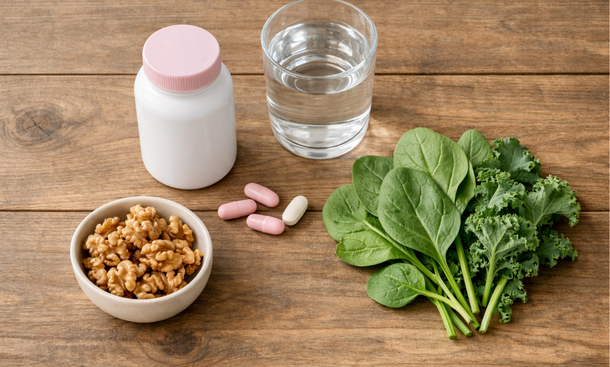
Folate-rich foods. Folate, the natural form of folic acid found in food, is critical for preventing neural tube defects. Load up on dark leafy greens, lentils, black beans, asparagus, and avocado.
Iron. Your blood volume will nearly double during pregnancy. Starting with healthy iron stores matters. Red meat, chicken, tofu, lentils, and fortified cereals are good sources. Pair plant-based iron sources with vitamin C to help your body absorb them.
Healthy fats. Omega-3 fatty acids, especially DHA, support fetal brain development. Fatty fish like salmon and sardines are the richest sources. If you don’t eat much fish, walnuts and flaxseed help, and a DHA supplement is worth considering.
Protein. Every cell in your future baby’s body is built from protein. Eggs, legumes, lean meats, dairy, and nuts are all solid sources.
What to cut back on: alcohol (ideally stop completely), excessive caffeine (most experts recommend staying under 200mg a day before and during pregnancy), highly processed foods, and anything with a lot of added sugar.
Supplements: what to take and when to start
Even a great diet usually has gaps. That’s where targeted supplements come in.
Folic acid or methylfolate. The recommendation is 400–800 micrograms of folic acid daily, starting at least one month before trying to conceive. If you have the MTHFR gene variant, a mutation that affects how your body processes folic acid, your doctor may recommend methylfolate instead. Ask about this specifically.
A prenatal vitamin. Start taking one now, not when you’re pregnant. A good prenatal covers your bases across multiple nutrients including iodine, choline, iron, and B vitamins. Look for one with at least 400mcg of folic acid and 200mg of DHA.
Vitamin D. Many women are deficient, especially in northern climates or if you spend most of your time indoors. Low vitamin D has been linked to fertility issues and complications in pregnancy. A blood test will tell you where you stand.
Iron. Only supplement if your levels are low — your bloodwork will clarify this. Too much iron without a deficiency is not beneficial.
Everything else — herbal supplements, extra zinc, CoQ10 — talk to your doctor before adding them. The supplement industry is not tightly regulated, and some products marketed to women trying to conceive contain doses that aren’t evidence-based.
Your weight, fitness, and sleep — why they all count
Weight. Being significantly over or under a healthy weight can affect ovulation and hormone balance. This is not about aesthetics — it’s about creating the right hormonal environment for conception. If weight is a concern, working with a registered dietitian before pregnancy can make a real difference.
Exercise. Regular moderate movement, think walking, swimming, yoga, or cycling, supports hormone regulation and reduces stress. You don’t need to be an athlete. Thirty minutes most days is a strong target. If you’re currently doing high-intensity training seven days a week, it may be worth pulling back slightly — excessive exercise can disrupt your cycle.
Sleep. Melatonin, the hormone your body produces when you sleep, also plays a role in egg quality. Chronic sleep deprivation affects cortisol levels, insulin sensitivity, and your immune system — all things that matter for fertility. Aim for seven to nine hours, and take it seriously.
Lifestyle habits that can quietly affect fertility
Some things people don’t always connect to fertility are worth paying attention to.
Smoking. Cigarette smoke accelerates egg loss and damages egg DNA. If you smoke, stopping now is one of the highest-impact things you can do for your fertility and your future pregnancy.
Alcohol. There is no established safe amount of alcohol in early pregnancy, and early pregnancy often happens before you know you’re pregnant. Most preconception guidance recommends stopping or dramatically reducing alcohol while you’re trying to conceive.
Environmental toxins. This one tends to get overlooked. Plastics containing BPA, certain cleaning products, pesticide residues on food, and heavy metals in water can all affect hormone function. Switching to glass containers, buying organic for the produce with the highest pesticide loads, and using a water filter are reasonable steps that don’t require a complete lifestyle overhaul.
Stress. Chronic, unmanaged stress affects hormone levels — particularly cortisol and luteinizing hormone, which play roles in ovulation. Building stress management into your routine now, whether that’s therapy, breathwork, journaling, or simply protecting time that’s just yours — is not a luxury. It’s part of the prep.
Your mental and emotional state is part of the checklist too

This piece often gets separated from the “physical” checklist, as if they’re two different things. They’re not.
How you feel going into pregnancy — your relationship with your body, your anxiety levels, your support system, your sense of readiness — all of it matters. Women who enter pregnancy with unaddressed anxiety or depression are at higher risk for complications including preterm birth and postpartum depression.
If you’re already in therapy, keep going. If you’ve been meaning to start, now is a genuinely good time. If you have a partner, talking openly about expectations, fears, finances, and parenting values before pregnancy is some of the most useful prep work you can do together.
And if the idea of getting pregnant brings up complicated feelings — grief from a past loss, fear of repeating a difficult childhood, ambivalence about timing — those deserve space and attention too.
A simple week-by-week starting plan
You don’t have to do all of this at once. Here’s a reasonable way to pace it:
Week 1: Book your preconception appointment and start taking a prenatal vitamin with folic acid.
Week 2: Look at your diet honestly. Add one folate-rich food per day and cut back on alcohol.
Week 3: Get your bloodwork done if your doctor ordered it. Start tracking your sleep.
Week 4: Evaluate your exercise routine. Aim for at least four days of moderate movement.
Week 5 and beyond: Revisit your stress levels. Consider therapy or stress management tools if you haven’t already. Review any supplements with your doctor based on your lab results.
Small, consistent steps compound. By the time you’re actively trying to conceive, your body will be in a far stronger position.
Once you’ve worked through your body-based preconception prep, two natural next steps are understanding your cycle and knowing exactly when you’re most fertile. The satellite page on ovulation tracking for pregnancy breaks that down in practical detail — including how to use BBT charting and OPKs without making it a second job.
And if you want the full picture of everything involved in this season of life — physical, emotional, medical, and relational — the complete guide to preparing for pregnancy covers it all in one place.
