

Alright, let’s talk about somethin’ that makes a lotta people uncomfortable. STI screening and immunity testing before pregnancy. I get it. Nobody wants to have this conversation with their doctor. But here’s the thing. These tests aren’t about judgment or your sexual history. They’re about protectin’ your future baby from infections that could cause serious harm.
Some infections that barely affect you as an adult can be devastating to a developin’ fetus. We’re talkin’ birth defects, developmental delays, stillbirth, and lifelong health problems. The good news? Most of these infections are preventable or treatable if you catch them early. That’s why screenin’ before you get pregnant is so important.
Look, I know this feels like another box to check on your already long preconception to-do list. But trust me on this one. These tests could literally save your baby’s life or prevent serious disabilities. A little awkwardness now is worth a lifetime of peace of mind later.
Why STI and Immunity Screening Matters
Here’s what most people don’t realize. You can have certain infections without knowin’ it. No symptoms. No warning signs. You feel completely fine. But durin’ pregnancy, these silent infections can cross the placenta and infect your baby. Or they can be transmitted during delivery as your baby passes through the birth canal.
Some infections cause problems right away during pregnancy, like miscarriage or preterm labor. Others don’t show up until after your baby’s born, when you notice developmental delays or other health issues. And by then, the damage is already done. That’s why we test before pregnancy, not after.
Immunity testing is equally important. You might think you’re immune to certain diseases because you were vaccinated as a kid. But sometimes that immunity wears off over time. If you catch certain infections during pregnancy, especially in the first trimester, they can cause severe birth defects. Better to check your immunity now and get booster shots if needed.
The bottom line? These tests give you a chance to address potential problems before they affect your baby. If you test positive for somethin’, you can get treated. If you’re not immune to somethin’, you can get vaccinated. Either way, you’re takin’ concrete steps to protect your future child.
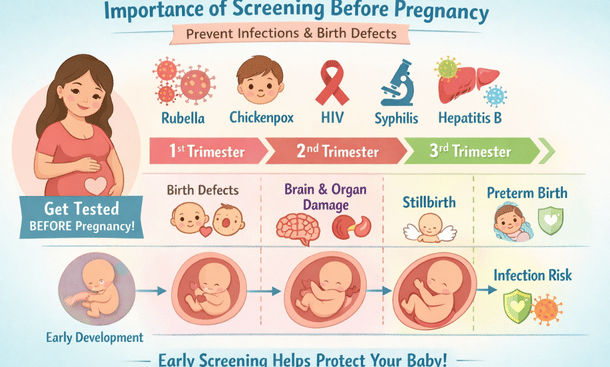
HIV Testing: Essential for Every Pregnant Woman
Let’s start with HIV. Every single person who’s plannin’ to get pregnant should be tested for HIV, no exceptions. This isn’t about your sexual history or how many partners you’ve had. HIV testing is standard preconception and prenatal care for everyone.
Here’s why this is so critical. If you’re HIV positive and don’t know it, there’s about a 25 percent chance you’ll pass the virus to your baby during pregnancy, delivery, or breastfeeding. But if you know your status and get proper treatment, that risk drops to less than 1 percent. We’re talkin’ about goin’ from one in four to one in a hundred. That’s huge.
Modern HIV medications called antiretroviral therapy, or ART, can reduce your viral load to undetectable levels. When your viral load is undetectable, the virus can’t be transmitted to your baby. You’ll take these medications throughout pregnancy and delivery. Your baby will also receive HIV medications for the first few weeks of life as an extra precaution.
If you test positive for HIV, you’ll work closely with an infectious disease specialist and a high-risk pregnancy doctor throughout your pregnancy. You’ll have more frequent monitoring to make sure your viral load stays low. And you’ll probably have a scheduled C-section to minimize your baby’s exposure to any virus in your blood or vaginal fluids.
I know this sounds scary, but thousands of HIV-positive women have healthy, HIV-negative babies every year thanks to proper treatment and monitoring. The key is knowin’ your status before you get pregnant so you can start treatment right away.
Syphilis Screening: A Preventable Tragedy
Syphilis might sound like an old-timey disease that nobody gets anymore, but it’s actually on the rise in the United States. Cases have increased dramatically in recent years, includin’ congenital syphilis, which is when a mother passes it to her baby.
Untreated syphilis during pregnancy can cause miscarriage, stillbirth, premature birth, and serious health problems in newborns. Babies born with congenital syphilis can have deformed bones, severe anemia, enlarged liver and spleen, jaundice, brain and nerve problems, and skin rashes. Some babies look healthy at birth but develop problems weeks or months later.
The tragedy here is that syphilis is completely curable with antibiotics. If you test positive before or during pregnancy, a course of penicillin shots will knock it out. Your baby will be protected as long as you get treated early enough. But if syphilis goes undetected and untreated, the consequences can be devastating.
Syphilis testing is a simple blood test. Your doctor will check for antibodies to the bacteria that causes syphilis. If the test comes back positive, they’ll do additional testing to confirm the diagnosis and determine whether it’s an active infection or a past infection that was already treated.
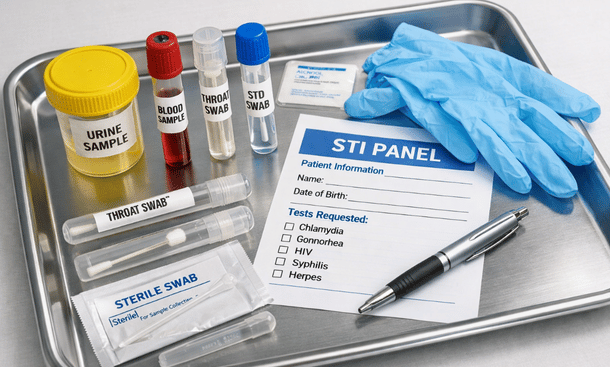
Clinical Testing Setup
Hepatitis B and C: Silent Liver Infections
Hepatitis B and hepatitis C are viral infections that affect your liver. Like HIV, you can have hepatitis for years without knowin’ it because symptoms often don’t show up until your liver is seriously damaged. That’s why universal screening is so important.
Hepatitis B can be passed from mother to baby during delivery. Without treatment, about 90 percent of infected newborns will develop chronic hepatitis B, which can lead to liver damage, liver cancer, and liver failure later in life. But here’s the good news. If you know you’re hepatitis B positive, your baby can get the hepatitis B vaccine and hepatitis B immune globulin right after birth. These interventions are about 95 percent effective at preventin’ transmission.
If you’re not already immune to hepatitis B, you should get vaccinated before tryin’ to conceive. The vaccine is given in a series of three shots over six months. Once you’re vaccinated, you’re protected for life. And since healthcare workers recommend that all newborns get the hepatitis B vaccine anyway, you’ll be protectin’ yourself and settin’ a good example.
Hepatitis C is a bit different. There’s no vaccine for hep C, and the risk of transmission to your baby is lower than with hep B, around 5 to 6 percent. But if you’re co-infected with HIV, the risk goes up. The good news is that new medications can actually cure hepatitis C in most people. Treatment takes about 8 to 12 weeks, and you need to finish treatment before gettin’ pregnant.
Herpes Simplex Virus: Managing Outbreaks
Genital herpes is incredibly common. About one in six Americans has genital herpes, though most don’t know it because they’ve never had symptoms. Herpes itself won’t harm your baby during pregnancy. The concern is transmission during delivery if you have an active outbreak.
If you have a herpes outbreak when you go into labor, the virus can be passed to your baby as they move through the birth canal. Neonatal herpes is rare but very serious. It can cause skin infections, eye problems, and even life-threatening infections of the brain and other organs.
The good news is that neonatal herpes is highly preventable. If you know you have herpes before pregnancy, your doctor can prescribe antiviral medication like acyclovir or valacyclovir to take during the last few weeks of pregnancy. This suppressive therapy dramatically reduces the risk of outbreaks around your due date.
If you do have an active outbreak when labor starts, your doctor will recommend a C-section to avoid exposing your baby to the virus. And if you’ve never had herpes but your partner has it, you’ll need to take precautions during pregnancy to avoid gettin’ infected, especially in the third trimester when the risk to the baby is highest.
Many doctors don’t routinely test for herpes unless you have symptoms or specifically request it. But if you’ve ever had any suspicious sores or bumps, or if you know your partner has herpes, definitely bring it up with your doctor so they can test you and discuss management options.

Rubella Immunity: The German Measles Check
We talked about rubella briefly in the blood work article, but it’s worth goin’ into more detail here because it’s such an important immunity test. Rubella, also called German measles, causes mild illness in adults. You might get a rash, low fever, and swollen lymph nodes. No big deal, right?
Wrong. If you catch rubella during pregnancy, especially in the first trimester, it can cause congenital rubella syndrome in your baby. This condition causes serious birth defects includin’ heart defects, cataracts, hearing loss, developmental delays, and organ damage. There’s no treatment for rubella during pregnancy. The only option is prevention through vaccination.
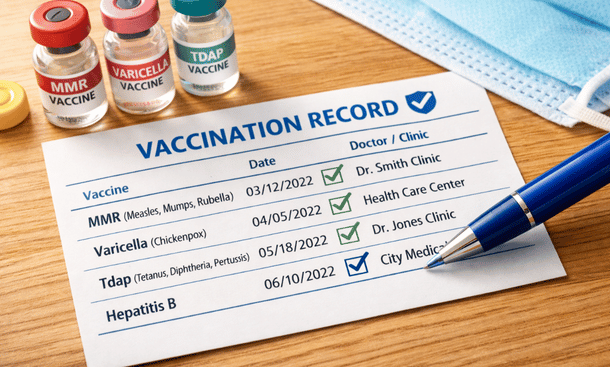
Most people in the U.S. received the MMR vaccine, which protects against measles, mumps, and rubella, as children. But immunity can fade over time. About 10 percent of people who were vaccinated as kids no longer have protective antibody levels as adults. That’s why your doctor needs to check your rubella immunity before you get pregnant.
The rubella immunity test is a simple blood test that measures your antibody levels. If your antibodies are high enough, you’re protected and good to go. If they’re low or absent, you need an MMR booster shot. Here’s the catch. You absolutely cannot get the MMR vaccine while pregnant because it’s a live virus vaccine. So you need to get it before you conceive, and then wait at least one month before tryin’ to get pregnant.
If you’re not immune to rubella and you accidentally get pregnant before gettin’ vaccinated, don’t panic. The risk of catchin’ rubella is pretty low in the United States because vaccination rates are high. But you’ll need to be extra careful to avoid exposure, especially in the first trimester. And you should definitely get vaccinated after delivery to protect future pregnancies.
Varicella Immunity: The Chickenpox Question
Varicella is chickenpox. Most people who grew up in the U.S. before the chickenpox vaccine was introduced in 1995 had chickenpox as kids. If you had it, you’re immune for life and don’t need to worry about it. But if you never had chickenpox and you’re not vaccinated, you need to address this before gettin’ pregnant.
Chickenpox during pregnancy isn’t common, but when it happens, it can be serious. If you catch chickenpox in the first or second trimester, there’s about a 2 percent risk of congenital varicella syndrome, which causes limb abnormalities, scarring, eye problems, and neurological issues in the baby. If you get chickenpox right around delivery, your baby can be born with neonatal varicella, which can be life-threatening.
Your doctor will test your varicella immunity with a blood test. If you’re not immune, you’ll need the varicella vaccine, which is given in two doses about four to eight weeks apart. Like the MMR vaccine, this is a live virus vaccine, so you can’t get it during pregnancy. You need to complete both doses and then wait at least one month before tryin’ to conceive.
If you’re pregnant and not immune to chickenpox, stay away from anyone who has chickenpox or shingles, which is caused by the same virus. If you’re exposed to chickenpox during pregnancy, call your doctor immediately. They can give you an injection of varicella-zoster immune globulin within 10 days of exposure to reduce your risk of gettin’ sick.
Toxoplasmosis: The Cat Litter Warning
You’ve probably heard that pregnant women should avoid cat litter. That’s because of toxoplasmosis, a parasitic infection that cats can carry. Most people who get toxoplasmosis don’t even know it because symptoms are mild or nonexistent. But if you catch it for the first time during pregnancy, it can cause serious problems for your baby.
Congenital toxoplasmosis can cause miscarriage, stillbirth, and problems like vision loss, hearing loss, developmental delays, and seizures. The risk to your baby depends on when you get infected. Infections in the first trimester are less likely to pass to the baby but cause more severe problems if they do. Third-trimester infections are more likely to transmit but usually cause milder issues.
Toxoplasmosis testing isn’t routinely done in the United States unless you have symptoms or known exposure. But if you have cats, especially outdoor cats, or if you garden or handle raw meat regularly, you might want to ask your doctor about gettin’ tested. The blood test checks for antibodies to the toxoplasma parasite.
If you test positive for toxoplasmosis antibodies before pregnancy, that’s actually good news. It means you had the infection in the past and you’re now immune. You can’t get it again, so your baby is protected. If you test negative, you’re not immune, so you’ll need to take precautions during pregnancy like avoidi’ cat litter, wearin’ gloves when gardenin’, and cookin’ meat thoroughly.
Cytomegalovirus: The Unknown Virus
Cytomegalovirus, or CMV, is the most common viral infection passed from mothers to babies during pregnancy. Yet most people have never even heard of it. CMV is related to the herpes virus and is incredibly common. About half of adults have had CMV by age 40, though most never knew it because symptoms are usually mild or absent.
The problem is when you catch CMV for the first time during pregnancy or when a previous CMV infection reactivates while you’re pregnant. About one in three babies born to mothers with primary CMV infection during pregnancy will be infected. Most infected babies appear normal at birth, but about 10 to 15 percent will develop problems like hearing loss, vision loss, developmental delays, and seizures.
Currently, there’s no routine screening for CMV before or during pregnancy in the United States, and there’s no vaccine. However, if you work with young children, especially in daycare settings, your risk of exposure is higher. CMV spreads through saliva, urine, and other body fluids, and young kids shed the virus frequently.
If you’re concerned about CMV, talk to your doctor about gettin’ tested. A blood test can tell you whether you’ve ever had CMV. If you’re CMV negative and work with kids, take extra precautions like frequent handwashing, not sharin’ food or drinks, and avoidi’ contact with saliva and urine. These simple steps can significantly reduce your risk of infection during pregnancy.
Gonorrhea and Chlamydia: The Silent STIs
Gonorrhea and chlamydia are the most commonly reported bacterial STIs in the United States. The scary thing about these infections is that they often don’t cause any symptoms, especially in women. You can have gonorrhea or chlamydia for months or years without knowin’ it.
Untreated gonorrhea and chlamydia can cause pelvic inflammatory disease, or PID, which damages your fallopian tubes and can lead to infertility or ectopic pregnancy. During pregnancy, these infections increase the risk of miscarriage, premature birth, and low birth weight. They can also be passed to your baby during delivery, causin’ eye infections and pneumonia.
The good news is that both gonorrhea and chlamydia are easily cured with antibiotics. Testing is simple. Your doctor will either take a swab from your cervix or have you provide a urine sample. If you test positive, you’ll take antibiotics, and your partner needs to be treated too to prevent reinfection.
All sexually active women under 25 should be screened annually for chlamydia and gonorrhea. If you’re over 25, you should be tested if you have a new sexual partner, multiple partners, or a partner who has other partners. And definitely get tested as part of your preconception workup, regardless of your age or relationship status.
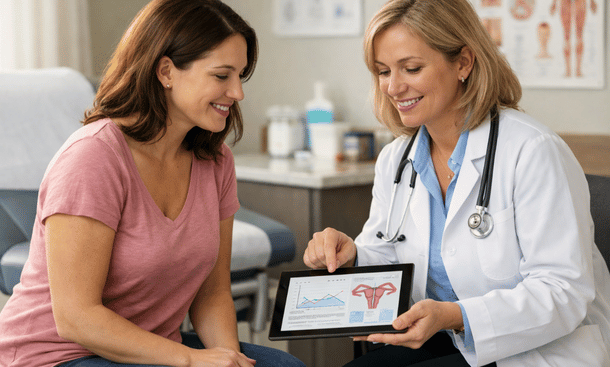
Group B Streptococcus: The Late Pregnancy Check
Group B streptococcus, or GBS, is a bit different from the other infections we’ve talked about because it’s not actually a sexually transmitted infection. It’s a type of bacteria that lives naturally in the vagina and rectum of about 25 percent of healthy women. GBS doesn’t usually cause problems for adults, but it can be dangerous for newborns.
If you have GBS when you go into labor, your baby can be exposed to the bacteria as they pass through the birth canal. About one or two out of every 100 babies born to GBS-positive mothers will develop a GBS infection if the mother doesn’t receive antibiotics during labor. These infections can cause sepsis, pneumonia, and meningitis in newborns.
GBS testing is typically done between 36 and 37 weeks of pregnancy, not before pregnancy. But it’s worth mentionin’ here because it’s an important screening that protects your baby. Your doctor will swab your vagina and rectum and send the sample to a lab to check for GBS bacteria.
If you test positive for GBS, you’ll receive antibiotics through an IV during labor. This reduces your baby’s risk of infection by about 70 percent. If you’re GBS negative, you don’t need antibiotics. The test needs to be repeated with each pregnancy because your GBS status can change.
Trichomoniasis: The Forgotten STI
Trichomoniasis, or trich, is the most common curable STI, but it doesn’t get much attention. It’s caused by a parasite and is more common in women than men. Like chlamydia and gonorrhea, trich often doesn’t cause symptoms. When it does, you might notice unusual discharge, itching, irritation, or painful urination.
During pregnancy, trichomoniasis is associated with preterm birth, low birth weight, and premature rupture of membranes. If you have symptoms or you’re at high risk, your doctor should test for trich as part of your STI screening. The test is usually done using a cervical swab or urine sample.
Trich is treated with a single dose of antibiotics, either metronidazole or tinidazole. Both medications are safe during pregnancy if needed. Your sexual partner also needs to be treated to prevent reinfection. And you should abstain from sex until both you and your partner have completed treatment.
Many routine STI panels don’t automatically include trich testing, so if you’re concerned or you have symptoms, specifically ask your doctor to test for it. Better to catch it and treat it before pregnancy than deal with complications later.
Getting Vaccinated: Timing Is Everything
If your immunity testing reveals that you need vaccines, timing becomes really important. Some vaccines are safe during pregnancy, while others aren’t. Live virus vaccines like MMR and varicella can’t be given during pregnancy, so you need to get them before you conceive.
After receivin’ live virus vaccines, you should wait at least one month before tryin’ to get pregnant. I know that feels like a long time when you’re eager to start your family, but it’s necessary to protect your baby. Use contraception during this waiting period to make sure you don’t accidentally conceive too soon.
Other vaccines, like the flu shot and Tdap, which protects against tetanus, diphtheria, and pertussis, are safe during pregnancy. In fact, they’re recommended. The flu shot should be given before or during flu season. Tdap is typically given in the third trimester, between 27 and 36 weeks, to protect your newborn from whooping cough.
If you’re not sure which vaccines you’ve had or when you had them, your doctor can run blood tests to check your immunity. Most doctors prefer to rely on blood work rather than your memory or old records because immunity can fade even if you were vaccinated as a child.
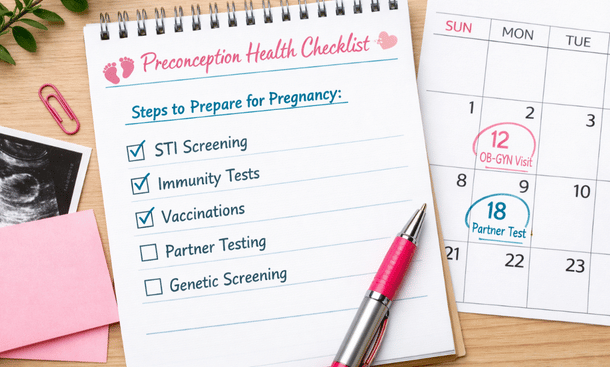
Partner Testing: It Takes Two
Here’s somethin’ people often forget. Your partner needs testing too. If your partner has an STI, you can get infected even if you tested negative before. And some infections like HIV, syphilis, hepatitis B, and herpes can be passed to your baby even if you’re not infected yourself, depending on when your partner was infected and whether they’re receivin’ treatment.
Your partner should be tested for HIV, syphilis, hepatitis B and C, gonorrhea, and chlamydia at minimum. If either of you has a history of genital herpes or cold sores, that should be discussed with your doctor. Men with known herpes should consider suppressive therapy during the time you’re tryin’ to conceive and throughout pregnancy to reduce transmission risk.
If your partner tests positive for any infection, they need treatment before you start tryin’ to conceive. Even if they’re asymptomatic, untreated infections can be passed to you and eventually to your baby. It’s not just about individual health. It’s about protectin’ your whole family.
Some guys are resistant to gettin’ tested, especially if they don’t have symptoms. But this is non-negotiable. If they’re not willin’ to take simple steps to protect your baby’s health, that’s a conversation you need to have before you start tryin’ to get pregnant. This is basic responsibility and respect for you and your future child.
Insurance Coverage and Costs
Most insurance plans cover STI screening and immunity testing as part of preventive care, especially when you’re plannin’ a pregnancy. The Affordable Care Act requires most insurance plans to cover prenatal care at no cost to you, and many plans extend this to preconception care as well.
That said, coverage varies by plan, so check with your insurance company before you schedule tests. Ask specifically about which tests are covered, whether you need prior authorization, and whether you’ll have any out-of-pocket costs. Some plans cover certain tests but not others, or they cover testing only if you meet certain risk criteria.
If you don’t have insurance or your plan doesn’t cover preconception testing, look into community health centers, Planned Parenthood, or local health departments. Many of these facilities offer STI testing and vaccines on a sliding fee scale based on your income. Don’t skip these important tests just because you’re worried about cost. There are resources available to help.
Taking Action on Your Results
So you’ve done all the testing. Now what? If everything comes back normal and your immunity is good, congratulations! You’re cleared to start tryin’ to conceive whenever you’re ready. Keep your test results in a safe place so you can share them with your prenatal care provider once you’re pregnant.
If you test positive for an infection, follow your doctor’s treatment plan completely. Take all your medications as prescribed, even if you start feelin’ better before you finish them. Avoid sexual contact until your doctor confirms that the infection is cleared. And make sure your partner gets tested and treated too.
If you need vaccines, schedule them as soon as possible and mark your calendar for when you can safely start tryin’ to conceive. Use this waiting period productively. Work on other aspects of preconception health like optimizin’ your diet, startin’ prenatal vitamins, reducin’ stress, and getting regular exercise.
Don’t try to hide positive test results from your prenatal care provider once you’re pregnant. They need complete information to give you the best care. Everything you share with your doctor is confidential and protected by law. Their job isn’t to judge you. It’s to help you have the healthiest pregnancy possible.
Moving Forward with Confidence
I know STI screening and immunity testing can feel invasive and uncomfortable. Nobody likes talkin’ about this stuff or gettin’ tested for infections. But think of it this way. Every test you take is an investment in your baby’s health and future. You’re not just goin’ through the motions. You’re actively protectin’ your child before they’re even conceived.
These screenings give you the power to prevent problems instead of reactin’ to them after it’s too late. That’s huge. So many pregnancy complications are beyond your control, but this? This is somethin’ you can actually do somethin’ about. Take advantage of that opportunity.
And remember, testin’ positive for somethin’ doesn’t make you a bad person or mean you’re goin’ to have a bad pregnancy. It just means you need treatment or vaccination. With proper medical care, the vast majority of women who test positive for infections or lack immunity go on to have perfectly healthy babies. Knowledge and early intervention make all the difference.
STI screening and immunity testing before pregnancy are essential steps in protectin’ your baby from preventable infections and serious health complications. From HIV and syphilis to rubella and chickenpox, these tests identify risks early when they can still be addressed through treatment or vaccination.
You’ve already taken important steps by completing your hormone testing to assess your fertility and reproductive function. Now you’ve armed yourself with knowledge about immunity and infection screening to create the safest possible environment for your future baby.
As you continue your preconception journey, the next important step is addressing any existing health conditions. Learn about thyroid and chronic disease management before pregnancy to make sure your health is fully optimized before you conceive.
For a comprehensive overview of all recommended preconception medical assessments, including blood work, hormone testing, STI screening, chronic disease management, and partner health evaluations, return to our complete guide to preconception health tests. It provides the complete roadmap for preparing your body for a healthy pregnancy.
