

I was six weeks pregnant when I got my first migraine of the whole pregnancy. I’m talking the kind that makes you want to close every blind in the house and lay completely still. And there I was, standing in my bathroom, holding a bottle of ibuprofen I’d been taking for years, genuinely not knowing if I could still use it.
Nobody had told me yet. My first OB appointment was still two weeks away. So I did what every pregnant woman does at 11pm — I went down a Google rabbit hole and came out more confused than when I started.
That experience is honestly why I write about this stuff now. Because the first trimester is already a lot. You’re exhausted, you’re nauseous, you’re emotionally all over the place, and the last thing you need is to feel like you can’t get a straight answer about something as basic as headache medicine.
So let’s fix that.
Why the first trimester is the most critical window
The first trimester runs from week 1 through week 12. During this time your baby’s brain, spine, heart and major organs are forming. This is why doctors are especially careful about medication exposure during these early weeks — because certain substances can interfere with that development in ways that matter long-term.
That said, “be careful” does not mean “take nothing and suffer.” There’s a real difference between medications that are well-studied and considered safe and medications that carry actual documented risks. Knowing that difference is what this whole page is about.
What doctors actually look at when approving a medication

Before getting into the list itself, it helps to understand how medications get classified during pregnancy. The FDA used to use a letter system (A, B, C, D, X) and while that system has been updated, many doctors and pharmacists still reference those categories informally.
Here’s what they basically mean in plain language:
Category A and B — Studies in humans or animals show no risk to the baby. These are the ones generally considered safe during pregnancy.
Category C — Animal studies showed some risk but there’s not enough human data. Doctors weigh benefits vs risks case by case.
Category D and X — These have documented risks in human pregnancies and are generally avoided unless there’s a serious medical reason.
Most medications recommended during the first trimester fall into category A or B. If your doctor or midwife tells you something is okay to take, that’s the framework they’re working from.
Pain and fever: what you can actually take
This is probably the biggest question. You have a headache. You have a fever. What now.
Acetaminophen (Tylenol) is the most widely accepted pain reliever during pregnancy including the first trimester. It’s been used for decades and the data on it is extensive. The key is using the lowest effective dose for the shortest amount of time. It’s not a candy — but it’s not dangerous when used as directed.
Ibuprofen (Advil, Motrin) is a different story. Most providers recommend avoiding it during the first trimester and it’s considered clearly unsafe in the third trimester. There’s ongoing research about its effects in early pregnancy so when in doubt, skip it and go with Tylenol.
Aspirin in regular doses is generally not recommended during the first trimester either. Low-dose aspirin (81mg) is sometimes prescribed by doctors for specific high-risk situations, but that’s a clinical decision — not something to take on your own.
Nausea and morning sickness

Morning sickness is one of the most common first trimester complaints. And for some women it’s not just mornings — it’s all day, every day, for weeks.
Vitamin B6 (pyridoxine) is often the first recommendation and it’s considered safe. Doses around 10–25mg taken a few times a day can help reduce nausea for a lot of women.
Doxylamine (Unisom SleepTabs) combined with B6 is actually the same formula as the prescription drug Diclegis. A lot of OBs recommend this combo and it has a solid safety record during the first trimester.
Ginger in teas, capsules or even ginger candies can genuinely help for milder cases. Not a medication exactly but worth mentioning because it works for a lot of people.
What you want to avoid is reaching for random anti-nausea medications without checking first. Some antihistamines used for nausea are fine. Others haven’t been studied enough in early pregnancy to feel comfortable about.
Heartburn and digestive issues
Even in the first trimester, heartburn can show up. Hormonal changes slow digestion and things that never bothered you before suddenly feel like a problem.
Calcium carbonate antacids (Tums, Rolaids) are generally considered safe and they have the added benefit of providing calcium. Most providers are fine with these.
Famotidine (Pepcid) is also widely considered safe during pregnancy and works better for persistent heartburn than antacids alone.
Omeprazole (Prilosec) is category C, so it’s more of a conversation with your doctor situation rather than a grab-it-off-the-shelf situation.
What to avoid completely in the first trimester
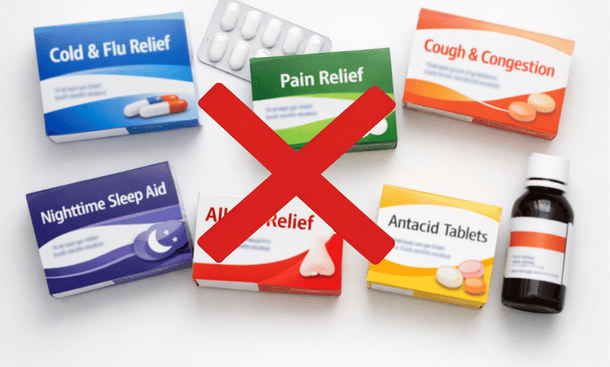
Some medications need to be off the table entirely during the first trimester. Not because doctors are being overly cautious but because the evidence against them is real.
Ibuprofen and naproxen — as mentioned above, best avoided especially in early and late pregnancy.
Aspirin (regular dose) — skip it unless specifically prescribed.
Decongestants like pseudoephedrine (Sudafed) — generally recommended to avoid in the first trimester because of potential effects on fetal blood vessels.
Any herbal supplements not approved by your provider — “natural” does not automatically mean safe during pregnancy. Some herbal products can stimulate contractions or affect hormone levels.
Retinoid-based products — this one catches people off guard but high-dose vitamin A derivatives (like Accutane or prescription retinoids) are known teratogens. They cause birth defects. This applies to oral versions primarily, but it’s worth discussing topical retinoids with your provider too.
A Note on supplements
Your prenatal vitamin is non-negotiable. Beyond that, run anything else by your provider before adding it. Fish oil is generally fine. Iron supplements are often recommended. Extra vitamin D is commonly prescribed. But the combo and dosage matters — more is not always better when you’re pregnant.
When to call your doctor instead of reaching for the medicine cabinet
Some symptoms during the first trimester warrant a call before you try to manage them yourself. A fever over 100.4°F (38°C) needs medical attention, not just Tylenol. Severe pain that doesn’t fit normal pregnancy symptoms, heavy bleeding, or anything that feels off in a gut-level way — call your OB or midwife. The first trimester is not the time to push through something serious on your own.
The first trimester can feel like a minefield when it comes to medication. But you have more options than you might think and the goal is never to suffer unnecessarily. Tylenol for pain and fever, B6 and doxylamine for nausea, Tums for heartburn — these are real, doctor-approved options that millions of pregnant women have used safely.
What matters most is knowing what to reach for, what to leave on the shelf, and when to make a phone call instead.
If you want to see how first trimester medications fit into the bigger picture across all three trimesters and every symptom category, the complete guide to safe medications during pregnancy lays it all out in one place.
And once you are past those first twelve weeks, pain relief becomes its own conversation — because the rules shift depending on your trimester and the type of pain you are dealing with. Can I take Tylenol while pregnant? Pain relief facts breaks down every option clearly so you always know what is safe to reach for and what needs to stay on the shelf.

Carlene R. Priddy offers strategic advice and practical guidance for governorsbefore, during, and after their mandatesto strengthen governance and public leadership.