

I have a friend who spent her entire second trimester with a tension headache she refused to treat because someone at her baby shower told her all pain medication was off-limits during pregnancy. All of it. No exceptions. She white-knuckled through weeks of pain for nothing.
That kind of misinformation is genuinely frustrating to me. Because the reality is more nuanced and a lot more manageable than “take nothing.”
Pain happens during pregnancy. Headaches, back pain, round ligament pain, tooth pain — your body is doing something enormous and it does not always feel comfortable. Knowing what you can actually reach for is not optional information. It’s necessary.
Why pain relief gets so confusing during pregnancy
Part of the problem is that advice changes. Studies come out. Guidelines get updated. And somewhere in between all of that, a well-meaning relative tells you that even Tylenol will hurt your baby, and suddenly you’re paralyzed in the medicine aisle at CVS.
The other part of the problem is that not all pain relievers work the same way or carry the same risks. Lumping them all together as “dangerous” or “fine” misses the whole point. The type of medication, the trimester you’re in, the dose, and how long you take it — all of it matters.
Acetaminophen (Tylenol): the most common answer
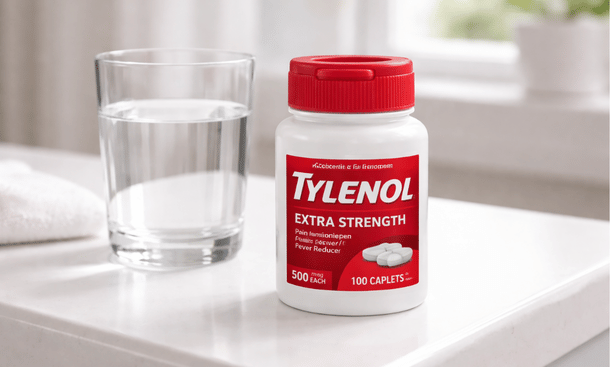
Acetaminophen is the active ingredient in Tylenol and it is the most widely recommended over-the-counter pain reliever during pregnancy. It has decades of use behind it and it’s considered safe across all three trimesters when used correctly.
What “correctly” means here is important. The lowest effective dose for the shortest necessary time. Not a daily habit. Not exceeding the recommended amount on the label. Occasional, intentional use for real symptoms.
There has been some newer research suggesting that prolonged use of acetaminophen during pregnancy may be associated with certain developmental outcomes. This is worth knowing. But “prolonged use” is very different from taking two Tylenol for a migraine once a week. If you find yourself reaching for it constantly, that’s a conversation to have with your provider — not a reason to panic about a single dose.
For a full picture of all medication categories during pregnancy, the complete guide to safe medications during pregnancy covers everything from nausea remedies to allergy medications in one place.
Ibuprofen: why most doctors Say No
Ibuprofen is the active ingredient in Advil and Motrin. It belongs to a class of drugs called NSAIDs — nonsteroidal anti-inflammatory drugs. And during pregnancy, NSAIDs come with real concerns that are worth understanding.
In the first trimester, ibuprofen use has been associated in some studies with an increased risk of miscarriage and certain birth defects. The evidence isn’t airtight but it’s enough that most OBs recommend avoiding it.
In the third trimester, ibuprofen is more clearly problematic. It can cause premature closure of a blood vessel in the baby’s heart called the ductus arteriosus. That’s a serious issue and the reason ibuprofen is considered contraindicated after 30 weeks by most guidelines.
The second trimester is a gray area where some providers consider short-term ibuprofen use acceptable in specific situations. But the general recommendation is still to avoid it when you have a safer alternative available.
Bottom line: if Tylenol can handle what you’re dealing with, use Tylenol.
Aspirin: it depends on the dose

Regular-dose aspirin — the kind you’d take for a headache or fever — is generally not recommended during pregnancy for the same reasons as ibuprofen. It’s an NSAID and carries similar risks especially in the third trimester.
Low-dose aspirin (81mg) is a completely different situation. Doctors prescribe it intentionally for women at high risk of preeclampsia, certain clotting disorders, or a history of pregnancy loss. In those cases it’s not just considered safe — it’s medically recommended and closely monitored.
The takeaway here is that aspirin is not a blanket yes or no. It depends entirely on the dose and why you’re taking it. Do not start low-dose aspirin on your own without a provider recommending it first.
What about back pain and round ligament pain
These are two of the most common complaints during pregnancy and neither one has a simple pill solution.
For back pain, acetaminophen can take the edge off but it’s rarely a complete fix. Most providers will also suggest heat (a warm — not hot — heating pad on the back is generally considered safe), gentle stretching, and prenatal yoga or physical therapy for anything ongoing.
Round ligament pain — that sharp pulling sensation on the sides of your lower abdomen — usually responds better to position changes and rest than medication. It’s caused by the ligaments stretching to support your growing uterus and there’s not much a pain reliever will do for the underlying cause.
Headaches: when tylenol isn’t enough
Pregnancy headaches can be brutal. Hormonal shifts, increased blood volume, tension from carrying extra weight, dehydration — there are a lot of reasons they happen and they don’t always respond the way they did before you were pregnant.
If Tylenol isn’t cutting it, the conversation gets more complicated. Some doctors prescribe low-dose medications for severe migraines during pregnancy on a case-by-case basis. Caffeine in small amounts (less than 200mg a day) is generally considered safe and can actually help with headache relief — a small coffee alongside your Tylenol is something many OBs will give the green light on.
What you want to avoid is reaching for combination cold and flu medications that include ibuprofen or aspirin, or anything containing opioids without a specific prescription and close monitoring.

Restful Pregnancy Moment
Fever during pregnancy: take It seriously
A fever is one situation where you should not skip the Tylenol out of fear. High fevers during pregnancy — especially in the first trimester — have been associated with neural tube defects and other complications. Treating a fever with acetaminophen is not just acceptable, it’s often the right call.
That said, a fever over 100.4°F (38°C) during pregnancy warrants a call to your provider. Tylenol to manage symptoms while you wait to hear back is appropriate. Tylenol as a substitute for medical evaluation is not.
What to skip entirely
Just to be clear about what stays on the shelf during pregnancy:
Ibuprofen and naproxen (Aleve) should be avoided across all trimesters when possible and completely avoided in the third trimester. Regular-dose aspirin follows the same rule. Combination pain relievers that include these ingredients — like some forms of Excedrin — are also off the table unless your provider says otherwise.
Opioid pain medications are sometimes medically necessary during pregnancy but carry real risks and should only ever be used under close medical supervision with a clear clinical reason.
Pain during pregnancy is real and you do not have to just endure it. Acetaminophen used responsibly is your primary tool. Ibuprofen and regular aspirin should be avoided. And anything beyond that is a conversation with your OB or midwife — not a decision to make based on a label or a Google search at midnight.
For a full picture of all medication categories during pregnancy, the complete guide to safe medications during pregnancy covers everything from nausea remedies to allergy medications in one place.
If allergies are also on your radar — and for a lot of pregnant women they get worse before they get better — the next thing worth reading is antihistamines safe during pregnancy: Claritin vs Zyrtec, where we break down exactly which options are approved and which ones to leave on the shelf.

Carlene R. Priddy offers strategic advice and practical guidance for governorsbefore, during, and after their mandatesto strengthen governance and public leadership.
WOW just what I was searching for. Came here by searching for website