

Pregnancy has a way of making everything more complicated. Things that used to be simple — like grabbing a Claritin before heading outside during allergy season — suddenly come with a whole list of questions you never had to think about before.
I got hit with the worst allergy season of my life during my second pregnancy. Eyes watering, constant sneezing, congestion so bad I couldn’t sleep. And I had no idea what I could safely take. My first instinct was to just push through it, but weeks of broken sleep and sinus pressure while growing a baby is not a sustainable plan.
So I did the research. I talked to my OB. And I’m going to share what I found because you deserve a straight answer on this.
Why allergies can get worse during pregnancy
Here’s something a lot of women don’t expect. Pregnancy can actually intensify allergy symptoms. The increased blood flow and hormonal changes that come with pregnancy can cause the mucous membranes in your nose to swell — a condition sometimes called pregnancy rhinitis. Even women who never had allergies before sometimes develop nasal congestion and sensitivity during pregnancy.
So if your allergies feel worse than usual this year and you happen to be pregnant, that’s not a coincidence. Your body is doing a lot and your sinuses are feeling it too.
How antihistamines work and why it matters

Antihistamines block histamine — the chemical your immune system releases in response to allergens. They come in two main categories that matter a lot during pregnancy.
First-generation antihistamines like Benadryl (diphenhydramine) cross the blood-brain barrier and cause drowsiness. They work fast but they sedate you.
Second-generation antihistamines like Claritin (loratadine) and Zyrtec (cetirizine) were designed to be non-drowsy. They’re slower to act but gentler on your system overall.
During pregnancy the distinction between these two categories is relevant — not just for how you’ll feel but for what the research actually says about safety.
For a complete breakdown of all medication categories during pregnancy including pain relief, heartburn, and cold remedies, the complete guide to safe medications during pregnancy is worth bookmarking.
Claritin (Loratadine): what the research says
Loratadine has been studied fairly extensively in pregnant populations and it consistently shows up on the “generally considered safe” list. It’s a category B medication under the old FDA system which means animal studies showed no fetal risk and available human data hasn’t raised red flags.
Most OBs and midwives are comfortable recommending Claritin for allergy management during all three trimesters. It’s non-drowsy, it lasts 24 hours, and it doesn’t interact with most other pregnancy-safe medications.
One thing worth noting — Claritin-D is not the same thing as regular Claritin. The “D” stands for decongestant (pseudoephedrine) and that ingredient carries different recommendations during pregnancy especially in the first trimester. More on that below.
Zyrtec (Cetirizine): also generally considered safe
Cetirizine is another second-generation antihistamine and it also lands in category B territory. The data on Zyrtec during pregnancy is solid and most providers consider it an acceptable option alongside Claritin.
Some women find Zyrtec works better for them than Claritin — allergy medications can be weirdly individual in how effective they are. If Claritin isn’t cutting it, Zyrtec is a reasonable alternative to discuss with your provider.
Same caveat applies here — Zyrtec-D contains pseudoephedrine and should be treated as a separate medication with its own set of considerations.
Benadryl (diphenhydramine): use with caution

Benadryl is one of the oldest antihistamines around and it’s been used during pregnancy for a long time. For that reason some providers are comfortable with occasional use, particularly at night when the sedating effect is actually welcome.
That said, there are a few things to be aware of. Some studies have explored a potential link between first-trimester Benadryl use and certain birth defects though the evidence is not conclusive. The sedating effect is also more pronounced during pregnancy for some women. And because it’s a first-generation antihistamine it wears off faster and can leave you feeling groggy.
Most providers who recommend Benadryl during pregnancy do so for short-term use — helping you sleep through bad allergy symptoms, for example — rather than as a daily allergy management tool. Claritin or Zyrtec are generally the first recommendations for ongoing allergy relief.
What about allegra (Fexofenadine)
Allegra is another second-generation antihistamine that’s popular for seasonal allergies. The data on fexofenadine during pregnancy is thinner than it is for loratadine or cetirizine. Animal studies raised some concerns at high doses and human data is more limited.
That doesn’t mean it’s definitively unsafe — it means the evidence base is smaller. Most providers default to Claritin or Zyrtec over Allegra simply because those two have a longer track record in pregnant populations. If you’ve been using Allegra successfully before pregnancy, bring it up with your OB rather than just continuing or stopping cold.
Decongestants: the ingredient to watch
This is where a lot of women get tripped up. Combination allergy medications — anything with a “D” at the end — contain pseudoephedrine or phenylephrine, both of which are decongestants.
Pseudoephedrine (Sudafed, the “D” in Claritin-D and Zyrtec-D) is generally recommended to avoid during the first trimester. Some studies have suggested a possible association with certain birth defects affecting the abdominal wall. After the first trimester the risk profile changes and some providers are okay with short-term use — but it’s always a conversation rather than an assumption.
Phenylephrine has less data overall during pregnancy and is generally treated with similar caution.
The practical takeaway: reach for plain Claritin or plain Zyrtec. Leave the “D” versions on the shelf unless your provider specifically says otherwise.
Nasal sprays: an underrated option
If your primary symptom is congestion rather than sneezing or itchy eyes, a nasal corticosteroid spray might actually be a better fit than an oral antihistamine. Options like Flonase (fluticasone) or Rhinocort (budesonide) work locally in the nasal passages with minimal systemic absorption.
Budesonide in particular has a solid safety profile during pregnancy and is often recommended for pregnancy rhinitis specifically. These sprays take a few days to reach full effectiveness but they can be very helpful for ongoing congestion without the concerns that come with oral decongestants.
Natural options that actually help
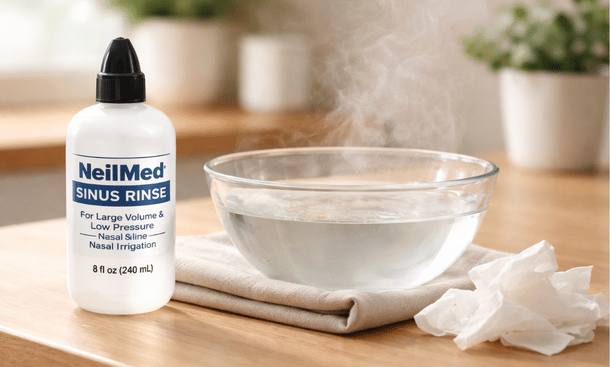
If you’d rather avoid medication as much as possible, a few non-pharmacological approaches are worth trying:
Saline nasal rinses (like NeilMed or a neti pot) can significantly reduce congestion by flushing allergens out of the nasal passages. They’re completely safe during pregnancy and can be used as often as needed.
HEPA air filters in the bedroom can reduce overnight allergen exposure which helps a lot if your symptoms are worst in the morning.
Keeping windows closed during high pollen counts and showering before bed to wash off allergens are simple changes that genuinely make a difference for some women.
These aren’t replacements for medication when you really need it but they’re good tools to have alongside whatever your provider recommends.
When to call your provider
If your allergy symptoms are severe enough to affect your sleep, your ability to eat, or your general functioning — call your OB or midwife rather than trying to manage it entirely on your own. Chronic sleep deprivation and significant sinus pressure during pregnancy are real quality-of-life issues and there are safe options available.
Also worth mentioning: if you develop a fever alongside your symptoms, that’s more likely a cold or sinus infection than allergies. Antihistamines won’t help much there and the evaluation changes.
Claritin and Zyrtec are both well-studied and generally considered safe during pregnancy. Benadryl is acceptable short-term with some caveats. Combination “D” products should be avoided especially in the first trimester. And nasal sprays like Rhinocort are an underused but effective option for congestion specifically.
You don’t have to spend allergy season miserable just because you’re pregnant. Talk to your provider, know your options, and make a plan that actually works for you.
If a cold or flu is what’s actually hitting you right now — not allergies — the answers are a little different. Head over to cold and flu medicine safe during pregnancy where we break down exactly what’s approved by trimester so you’re not guessing when you feel your worst.

Carlene R. Priddy offers strategic advice and practical guidance for governorsbefore, during, and after their mandatesto strengthen governance and public leadership.
I savour, cause I discovered exactly what I used to be taking a look for.
You have ended my 4 day lengthy hunt! God Bless you man. Have a great day.
Bye