

The real story behind the statistics
If you have ever Googled “getting pregnant after 35,” you have probably seen some version of the same alarming headline. Fertility drops sharply after 35. Your biological clock is ticking. Advanced maternal age — a clinical term that sounds a lot harsher than it needs to — carries serious risks.
Some of that is true. Some of it is significantly overstated, based on older research that doesn’t reflect what modern medicine actually knows or what women in their late 30s and early 40s are actually experiencing.
The most cited statistic about fertility dropping after 35 comes from French birth records from the 1700s. That is not a typo. Researchers in the early 2000s pointed out that much of the foundational data used to counsel women about age-related fertility decline was collected before modern nutrition, medicine, or prenatal care existed.
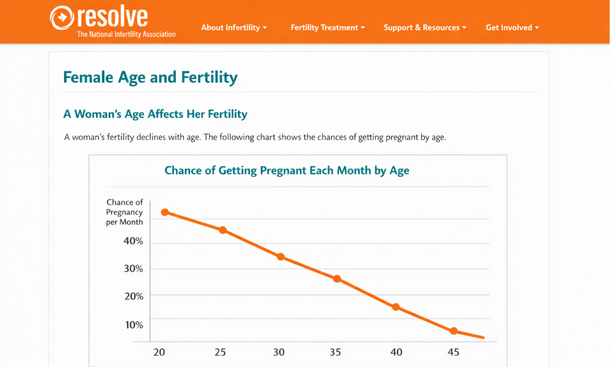
More recent studies using current populations paint a less dramatic picture. A study published in the journal Obstetrics and Gynecology found that 82 percent of women aged 35 to 39 conceived within a year of trying. For women aged 27 to 34, that number was 86 percent. The gap is real — but it is not a cliff.
What this means practically is that being 35 or older does not make pregnancy unlikely. It does make intentional preparation more valuable. The window for correction is narrower, the body’s reserves are different, and the stakes of skipping preconception prep are higher. But the path forward is clear and well-supported.
How fertility actually changes after 35
Understanding what is biologically happening helps you make smarter decisions rather than just feeling anxious about a number.
Ovarian reserve. Women are born with all the eggs they will ever have — roughly one to two million at birth, declining to around 300,000 by puberty, and continuing to drop through the reproductive years. By the mid-30s, the rate of decline accelerates. Fewer eggs means fewer opportunities each cycle, and it also means the remaining eggs have had more time to accumulate chromosomal damage.
Egg quality. This is the piece that matters most for pregnancy outcomes after 35. As eggs age, they are more likely to carry chromosomal abnormalities — errors in the genetic material that can prevent implantation, cause early miscarriage, or result in chromosomal conditions like Down syndrome. This is why miscarriage rates increase with age, and why chromosomal screening becomes a more active part of prenatal care.
Ovulation frequency. Some women in their late 30s begin having anovulatory cycles — cycles where the hormonal sequence occurs but no egg is actually released. These cycles still produce a period, making them indistinguishable without tracking.
Hormone shifts. FSH, follicle-stimulating hormone, tends to rise as ovarian reserve declines. Elevated FSH is a sign your body is working harder to stimulate egg development. AMH, anti-Müllerian hormone, tends to fall. These are numbers your doctor can measure and that give a clearer picture of where your fertility stands right now.
None of this is meant to be discouraging. It is meant to be specific — because specific information leads to better decisions than generalized fear.

The preconception appointments you should not skip
If you are 35 or older and thinking about pregnancy, your preconception timeline is a little more compressed — which means starting the medical conversation earlier matters more.
Your OB-GYN or midwife. Book a preconception appointment now if you have not already. This is not an optional step. Your provider will review your full medical history, current medications, vaccination status, and any conditions that need to be stable before pregnancy. They will likely order a baseline hormone panel and may refer you to a reproductive endocrinologist if there are any concerns.
A reproductive endocrinologist, or RE. An RE is a fertility specialist. You do not need to have a fertility problem to see one. Many women over 35 benefit from a single consultation to understand their current fertility status — ovarian reserve, hormonal baseline, uterine anatomy — before committing to months of trying on their own. If conceiving takes longer than expected, having that baseline data on record is valuable.
Genetic counseling. At 35, the conversation about chromosomal risk becomes clinically relevant. A genetic counselor can explain your specific risk profile, discuss carrier screening for inherited conditions, and help you understand your options around prenatal testing like NIPT, a non-invasive blood test that screens for chromosomal abnormalities in the fetus.
Your dentist and general practitioner. Yes, both. Gum disease and unmanaged chronic conditions like hypertension or thyroid disorders are associated with pregnancy complications. Getting a full picture of your baseline health before conception is not overcautious. It is smart.
Nutrition and supplements for women over 35
The nutritional foundation for pregnancy does not change dramatically based on age, but a few areas deserve extra attention for women in their mid-to-late 30s.
Antioxidants. Oxidative stress — cellular damage caused by unstable molecules called free radicals — plays a role in egg quality decline. Antioxidant-rich foods help counteract this. Focus on deeply colored vegetables and fruits: berries, leafy greens, orange and red produce, and cruciferous vegetables like broccoli and cauliflower. Vitamin C and vitamin E, both antioxidants, are worth ensuring you get adequate amounts of through food or your prenatal.
CoQ10. Coenzyme Q10 is an antioxidant that supports mitochondrial function — the energy production inside cells, including eggs. Egg quality depends heavily on mitochondrial health, and CoQ10 levels naturally decline with age. Research on CoQ10 and egg quality is promising, particularly for women over 35. Doses used in studies typically range from 200 to 600 mg daily. Talk to your reproductive endocrinologist before starting, and give it at least 90 days — the full lifespan of an egg’s development cycle.
Folate and methylfolate. The recommendation for women over 35 is consistent with general preconception guidance — 400 to 800 mcg daily — but starting earlier and confirming the right form for your body matters more at this stage. If you have not discussed MTHFR status with your doctor, now is a good time.
Protein. Adequate protein supports hormonal balance and egg development. Aim for a palm-sized portion of quality protein at each meal — eggs, fish, legumes, poultry, or dairy.
What to limit. Alcohol, even in moderate amounts, affects egg quality and hormonal signaling. Processed sugar drives inflammation. Excessive caffeine — more than 200 mg a day — has been linked to reduced fertility and increased miscarriage risk.

Lifestyle factors that move the needle at this age
Everything that matters for preconception health at any age matters more at 35 and beyond — because your buffer for correction is smaller and your body’s baseline resources are different.
Sleep quality. Melatonin, produced during deep sleep, functions as an antioxidant inside follicles and supports egg quality. Chronic poor sleep elevates cortisol, disrupts hormonal signaling, and affects both ovulation regularity and implantation. Seven to nine hours is not a luxury — it is a fertility input.
Exercise. Moderate, consistent movement supports insulin sensitivity, reduces inflammation, and helps regulate the hormonal environment your eggs develop in. Thirty to forty-five minutes of moderate cardio most days, combined with some strength training, is a strong framework. Extreme endurance exercise or very high training volume can suppress ovulation in some women — if your cycle has become irregular since increasing exercise intensity, that connection is worth investigating.
Stress management. Chronic psychological stress elevates cortisol and can interfere with the hormonal cascade that triggers ovulation. This is not about eliminating stress — that’s not realistic. It is about building genuine recovery into your routine. Therapy, consistent sleep, time outdoors, reduced screen time in the evenings, and protecting social connection all count. What works is personal. What does not work is ignoring it.
Body weight. Both overweight and underweight status affect ovarian function and hormonal balance. For women over 35, where hormonal precision matters more, maintaining a weight within a healthy range for your frame has a measurable effect on cycle regularity and conception odds.
Environmental toxins. BPA from plastics, certain pesticides, and heavy metals act as endocrine disruptors — chemicals that interfere with your body’s hormonal signaling. The evidence has strengthened considerably in recent years. Switching to glass food storage, filtering your water, and choosing organic for high-pesticide produce are practical steps with a low barrier to entry.
Fertility testing: knowing your numbers
One of the most empowering things a woman over 35 can do before trying to conceive is get a fertility workup. Not because something is necessarily wrong, but because knowing your actual numbers changes how you plan.
AMH (anti-Müllerian hormone). This blood test measures a protein produced by follicles in your ovaries and is the most reliable current marker of ovarian reserve — how many eggs you likely have remaining. It can be done at any point in your cycle. A low AMH does not mean pregnancy is impossible, but it does mean your timeline may be more compressed.
FSH and estradiol on day 3. These hormones are measured on day 3 of your cycle and together give a picture of how hard your body is working to stimulate egg development. Elevated FSH alongside a high estradiol can indicate declining reserve.
Antral follicle count. This is an ultrasound measure of the small follicles visible in your ovaries at the start of a cycle. It gives a visual confirmation of what your AMH suggests.
Thyroid panel. Thyroid disorders are more common in women over 35 and are one of the most underdiagnosed causes of fertility struggles and early pregnancy loss. TSH, T3, and T4 levels should all be checked. Optimal TSH for pregnancy is generally considered below 2.5 mIU/L — which is a tighter range than the standard “normal” lab reference range.
Semen analysis. This one is for your partner. Male factor infertility accounts for roughly half of all conception difficulties. A basic semen analysis is non-invasive, inexpensive, and gives critical information early in the process. There is no reason to spend six months optimizing your own health while ignoring half the equation.
When to seek specialist help and what to expect
The standard clinical guidance is to see a specialist after six months of trying without success if you are 35 to 39, and after three months if you are 40 or older. In practice, there is no reason to wait that long if you have known risk factors — irregular cycles, a history of miscarriage, a prior diagnosis of PCOS or endometriosis, or significantly elevated FSH.
A reproductive endocrinologist will typically begin with a full workup: hormone panels, an antral follicle count, a uterine assessment, and a semen analysis for your partner. Based on those results, options might include:
Timed intercourse with monitoring. Ultrasound monitoring of follicle development combined with a triggered ovulation and timed conception. Non-invasive and often a useful starting point.
IUI (intrauterine insemination). Sperm is placed directly into the uterus around ovulation, improving the odds when there are mild issues with sperm motility or cervical factors.
IVF (in vitro fertilization). Eggs are retrieved, fertilized in a lab, and one or more resulting embryos are transferred to the uterus. For women over 35, IVF with preimplantation genetic testing — PGT, a screening of embryos for chromosomal abnormalities before transfer — significantly improves success rates by selecting chromosomally normal embryos.
Going to see a specialist is not giving up. It is getting information. The earlier you have that information, the more options remain available to you.
The emotional side nobody talks about honestly
There is a specific kind of quiet pressure that comes with trying to conceive after 35. Every article you read mentions age. Every appointment involves a reference to your timeline. Well-meaning people ask questions that land wrong. And underneath all of it, there is often a complicated mix of excitement, fear, grief for time that has already passed, and the particular exhaustion of wanting something you cannot fully control.
That is real, and it deserves acknowledgment alongside all the clinical information.
Some things that actually help: finding community with women in the same season of life, whether online or in person. Being honest with your partner about the emotional weight rather than carrying it quietly. Working with a therapist who has experience with fertility-related stress — this is a recognized subspecialty and the support is meaningful. Giving yourself structured breaks from tracking and researching, because the constant focus can erode your quality of life in ways that affect your relationship, your work, and your sense of self.
You are not behind. You are where you are, working with what you have. That has always been enough to start with.
Getting your physical health dialed in is essential — but how you feel going into pregnancy matters just as much as what you eat or what your AMH says. If you have been pushing the emotional side of this to the back burner, the article on emotional preparation for pregnancy is the honest, grounded read that brings it to the front — without judgment and without fluff.
And when you are ready to see how everything connects — the testing, the nutrition, the timing, the mindset — the complete guide to preparing for pregnancy holds the full picture in one place.
