
Why your diet before pregnancy matters as much as during
There is a version of pregnancy preparation that starts the moment the test turns positive. Then there is the version that actually works — and that one starts months earlier, on your plate, before you are even trying.
The nutrients your body draws on during the first four to eight weeks of fetal development need to already be present in sufficient amounts when conception happens. You cannot retroactively build up folate stores or correct a vitamin D deficiency in the forty-eight hours after a positive test. That window has already passed.
What you eat in the three to six months before conception directly affects egg quality, hormone production, the receptivity of the uterine lining, and your body’s ability to support implantation and early cell division. These are not abstract wellness concepts. They are documented physiological processes that respond to nutritional input.
This does not mean your diet needs to be perfect. It means it needs to be intentional. And if you are building out the rest of your preconception plan alongside your nutrition strategy, our complete guide to preparing for pregnancy gives you the full picture of everything working together before you conceive.
The foods that actually support fertility and early fetal development
Let’s get specific, because “eat healthy” is not actionable advice for anyone.
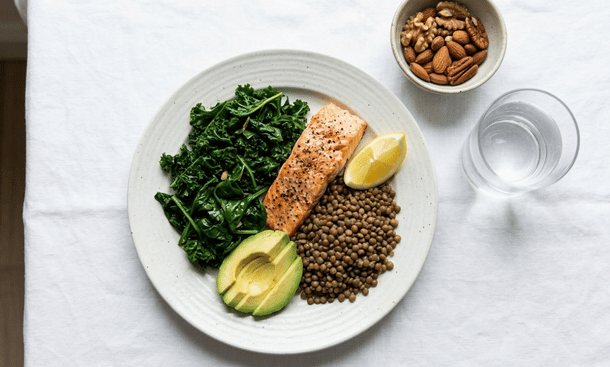
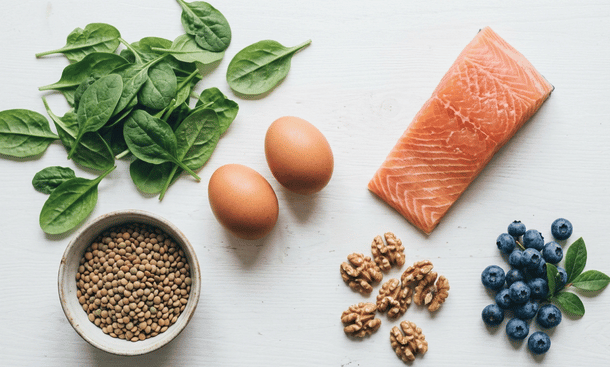
Dark leafy greens — spinach, kale, Swiss chard, arugula — are among the most nutrient-dense foods you can eat before pregnancy. They deliver natural folate, iron, calcium, and magnesium in forms your body absorbs efficiently alongside the fiber and antioxidants that support hormonal balance.
Eggs are one of the most complete preconception foods available and consistently underrated in nutrition conversations. They are one of the few dietary sources of choline, which supports fetal brain development from the earliest weeks, and they provide high-quality protein, vitamin D, and B12 in a single, affordable package.
Fatty fish — salmon, sardines, mackerel, and herring — deliver omega-3 DHA, which supports both egg quality and fetal neurological development. The concern about mercury is real but often overapplied. Lower-mercury options like salmon and sardines are safe to eat two to three times per week during preconception and pregnancy.
Legumes — lentils, chickpeas, black beans, edamame — are exceptional sources of folate, iron, and plant-based protein. They also support blood sugar stability, which matters more for fertility than most nutrition content acknowledges.
Full-fat dairy has a specific connection to fertility worth noting. Research from the Harvard Nurses’ Health Study found that women who consumed full-fat dairy had lower rates of ovulatory infertility compared to those consuming low-fat versions. The mechanism is not fully understood, but the pattern was consistent enough to make full-fat yogurt and whole milk worth including in a preconception diet.
Nuts and seeds — particularly walnuts, flaxseeds, pumpkin seeds, and Brazil nuts — provide healthy fats, zinc, selenium, and magnesium. Zinc and selenium both play direct roles in egg maturation and hormonal signaling.
Colorful vegetables and fruits provide the antioxidant load that protects eggs from oxidative stress — cellular damage caused by free radicals that accumulates over time and affects egg quality, particularly in women over 35.
What to cut out or cut back before you conceive
This section is not about being restrictive for its own sake. It is about understanding which inputs work against the hormonal and cellular environment you are trying to create.
Alcohol is the clearest one. Even moderate alcohol consumption has been associated with reduced fertility in women trying to conceive and with elevated risk in early pregnancy — often before a woman knows she is pregnant. Most reproductive specialists recommend eliminating alcohol entirely during the active preconception period.
Highly processed foods — packaged snacks, fast food, refined grain products, and foods high in added sugar — drive chronic inflammation and insulin resistance, both of which disrupt the hormonal signaling that regulates ovulation. This does not mean never having a slice of pizza. It means processed food should not be the foundation of your daily eating pattern.
Trans fats, which are partially hydrogenated oils found in some commercially fried foods and baked goods, have a documented negative effect on ovulatory function. They are less prevalent in food products than they were a decade ago due to regulatory changes, but they have not disappeared entirely. Checking ingredient labels for “partially hydrogenated oils” is still a worthwhile habit.
Excess caffeine is one where the research is genuinely mixed, but the most commonly cited safe threshold during preconception and early pregnancy is under 200 milligrams per day — roughly one to two cups of standard brewed coffee. High caffeine intake has been associated with longer time to conception and higher rates of early pregnancy loss in some studies.
High-mercury fish — swordfish, shark, king mackerel, tilefish, and bigeye tuna — should be limited or avoided. Mercury accumulates in tissue over time and can affect neurological development in early pregnancy. Canned light tuna is generally considered lower risk than albacore and fine in moderate amounts.
Blood sugar balance — the fertility connection nobody talks about enough
Insulin resistance, which is a condition where cells become less responsive to insulin and blood sugar regulation becomes less efficient, is one of the most underrecognized contributors to fertility challenges in women. It sits at the root of PCOS, affects ovulation directly, and can interfere with implantation even in women who have never been diagnosed with any metabolic condition.
You do not need a diabetes diagnosis for blood sugar dysregulation to be affecting your hormones. Chronically elevated blood sugar — driven by a diet heavy in refined carbohydrates and added sugars — triggers excess insulin production, which in turn drives up androgen levels, including testosterone. Elevated androgens disrupt the hormonal balance that regulates ovulation.
The dietary response to this is not a low-carb extreme. It is balance. Pairing carbohydrates with protein, fat, and fiber at every meal slows the rate at which glucose enters the bloodstream and keeps insulin levels more stable throughout the day.
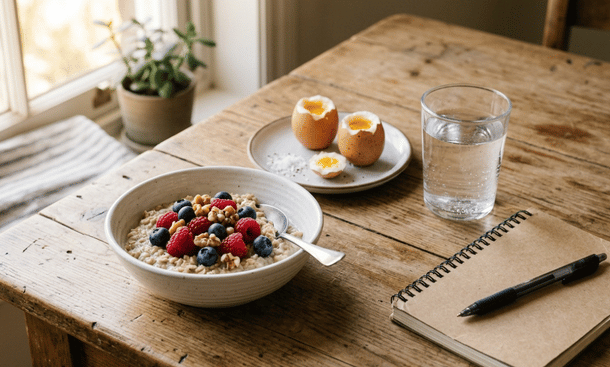
Practical examples: oatmeal with eggs and nut butter instead of oatmeal alone. Lentils with roasted vegetables and olive oil instead of white rice with nothing else. An apple with a handful of almonds instead of crackers with low-fat dip.
These are not dramatic dietary overhauls. They are small structural shifts that add up significantly over three to six months of consistent application.
Hydration, gut health, and the details that add up
Hydration is one of those topics that gets reduced to “drink more water” without enough context for why it actually matters preconception.
Water is the medium in which every metabolic process in your body occurs. Hormone transport, nutrient absorption, cervical mucus production, and the cellular environment of the uterine lining all depend on adequate hydration. Most adults are mildly dehydrated most of the time without noticing it. Aiming for two to three liters of water per day — more if you exercise or live in a hot climate — is a meaningful baseline.
Gut health has a more direct connection to hormonal balance than most people realize. The gut microbiome — the community of bacteria living in your digestive tract — plays a role in estrogen metabolism through a process involving a collection of gut bacteria sometimes called the estrobolome. When the gut microbiome is disrupted by a diet low in fiber and high in processed food, estrogen metabolism becomes less efficient, which can contribute to hormonal imbalances affecting the cycle.
Fermented foods — plain yogurt, kefir, sauerkraut, kimchi — and high-fiber plant foods support a diverse and balanced gut microbiome. This is not a dramatic intervention. It is a consistent dietary habit that pays off over time.
Reducing ultra-processed food, getting adequate sleep, managing stress, and eating enough fiber are all inputs that support gut health alongside direct dietary additions.

Building a realistic preconception eating pattern
The goal here is not a perfect diet. It is a consistent one.
Perfection in nutrition is a setup for abandonment. What actually produces results is an eating pattern you can sustain for three to six months before conception and carry into pregnancy without feeling like you have taken on a second job.
A realistic preconception eating pattern looks like this in practice: vegetables at most meals, quality protein at every meal, healthy fats included daily, processed food reduced but not eliminated, alcohol removed or minimal, and water as your primary beverage.
You do not need to track every macronutrient or eliminate entire food groups. What you do need is enough consistency that your nutrient levels are actually building over time rather than spiking and crashing with each week’s worth of choices.
Meal planning, even loosely, helps significantly. Spending twenty minutes on Sunday identifying what you are going to eat for the week removes the decision fatigue that leads to convenience food defaults on busy weeknights. It does not have to be elaborate. It just has to exist.
Give yourself a realistic timeline. Three months of consistent eating changes will do more for your preconception health than six weeks of intensity followed by two weeks of backsliding.
Wrapping it up
What you eat before pregnancy is not a footnote in your preparation. It is one of the most direct inputs you have into egg quality, hormonal balance, and your body’s readiness to conceive and sustain a healthy pregnancy. The changes do not need to be dramatic or perfect — they need to be consistent and grounded in what actually matters nutritionally.
Start with the foods that deliver the most impact: leafy greens, eggs, fatty fish, legumes, and colorful vegetables. Pull back on alcohol, processed food, and excess sugar. Stabilize your blood sugar, stay hydrated, and give your gut the fiber and fermented foods it needs to support your hormonal environment.
Three months of this, applied consistently, moves the needle in ways that a prenatal vitamin alone simply cannot.
When you are ready to get strategic about timing — tracking your cycle and identifying your actual fertile window — the page on how to track ovulation to get pregnant is the natural next step, covering exactly how to use your body’s signals to maximize your chances once your preconception foundation is in place.
