

A positive pregnancy test usually feels like a clear answer. Then somebody brings up false positives and now your brain’s doing somersaults. Fair enough. When you are trying to figure out what happened and when it happened, the idea of a test saying yes by mistake can feel brutal.
I’m Sophia M. Caldwell, I’m 37, and I write about pregnancy tracking with a focus on timing, patterns, and the stuff people actually worry about in real life. False positives are real, but they are not common. Most positive tests are true positives. The trick is understanding the situations where a positive result may not mean an ongoing pregnancy or may not tell the timeline as cleanly as you hoped. If you are piecing together the full conception story, this guide to figuring out when you conceived connects the big timeline. Right here, the focus is on what a false positive really is and what to do next.
What counts as a false positive pregnancy test
A false positive means a test says pregnant when there is not an ongoing pregnancy to confirm in the way you expected. That can happen for a few different reasons, and some of them are more complicated than they sound.
Sometimes the test result is not truly false in a strict biological sense. A fertilized egg may have implanted briefly and started producing hCG, but the pregnancy stopped developing very early. In that case the test picked up real hormone. It just did not lead to a continuing pregnancy.
Other times, the issue is not pregnancy tissue at all. It may be medication, a testing error, or a misleading line on the strip.
That distinction matters because a positive line can be real while the outcome is still uncertain.
Are false positives common
Not really. They are talked about a lot because they are emotionally intense, but they are much less common than false negatives.
Most of the time, if you get a clear positive on a home pregnancy test and you used it correctly, it is detecting hCG for a reason. The bigger question is what that hCG is connected to and whether it will keep rising.
So if you are staring at a positive and wondering if the whole thing is fake, take a breath. The odds are that something real triggered that result. The next step is figuring out what.
The most common reasons a test may look falsely positive
evaporation lines
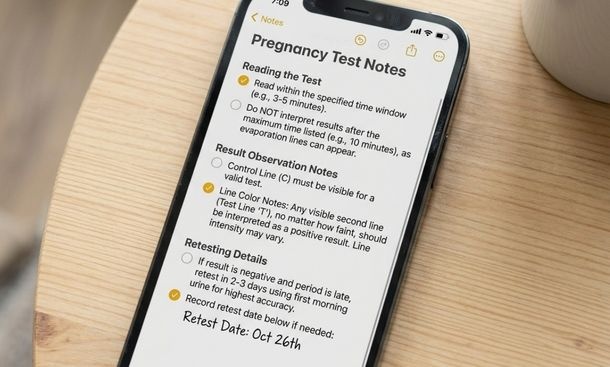
This one causes a ton of confusion. An evaporation line can appear after the test has dried. It may look grayish, faint, or colorless, and people often mistake it for a positive result.
Timing matters here. A test should be read inside the window listed in the instructions. If you check it way later and suddenly see a line, that result is not reliable.
Chemical pregnancy
This is one of the biggest reasons people talk about false positives. A chemical pregnancy happens when implantation occurs and hCG starts to rise, but the pregnancy stops developing very early. The test can be positive because hCG was really there.
Emotionally, it can feel like the test lied. Biologically, it did not. It picked up an early pregnancy that ended soon after.
Fertility medications containing hCG
Some fertility treatments include hCG, and that hormone can show up on a pregnancy test. If you are using that kind of medication, a positive result may reflect the medication rather than a new pregnancy unless enough time has passed.
Recent pregnancy or pregnancy loss
After giving birth, having a miscarriage, or ending a pregnancy, hCG can stay in the body for a while. A test may still turn positive during that time.
Certain medical conditions
Rarely, some medical conditions can affect hCG levels or interfere with testing. This is not the everyday explanation, but it can happen.
Evaporation line vs true positive
This is the comparison that trips up so many people. A true positive line usually has color and appears within the result window listed by the test. An evaporation line often shows up later and may look more like a shadow than a real dyed line.
A few things to look at:
- did the line appear within the correct time window
- does the line have pink or blue color depending on the test type
- is it clearly defined or more like a faint gray streak
- did the line get noticed only after the test sat around
If the line showed up late, I would not trust it. If it appeared on time and has visible color, it deserves more respect. At that point, the best move is usually to retest in 48 hours and see if the line becomes clearer.
Can a false positive help with conception timing
Sometimes yes, but with caution.
If the positive is from a real early rise in hCG, even in a chemical pregnancy, it still suggests implantation happened. That means conception likely happened several days earlier, usually around ovulation. In that sense, the result may still tell you something about timing.
But if the positive came from an evaporation line or leftover hCG from a recent pregnancy, then it is not useful for dating conception in the current cycle at all.
That is why context matters so much. One line on one test cannot carry the whole story by itself.
What to do if you think your positive might be false
The next move is not panic. It is sequence.
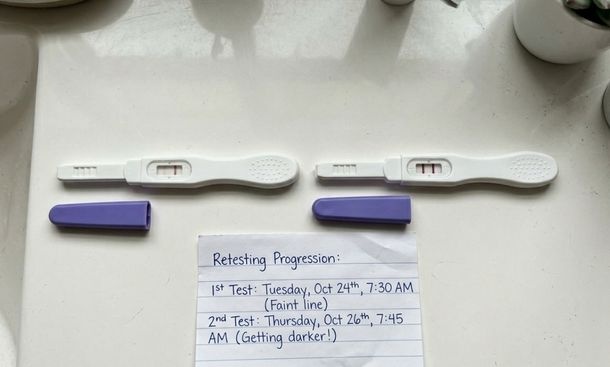
Take another test in 48 hours
If the result is from a new pregnancy, hCG should usually keep rising. A repeat test may become darker or at least stay clearly positive.
Use the first morning urine if possible
This can help when hCG is still low.
Check the timing of when you read the result
If you only noticed the line after the window closed, do not put too much weight on it.
Think about recent factors
Ask yourself:
- did I recently have a pregnancy loss
- did I recently give birth
- am I taking fertility medication with hCG
- did I use the test exactly as directed
Those details matter more than people realize.
When a positive is probably real
A positive result leans much more believable when:
- the line appeared within the correct time window
- it has actual color
- you are around or past your expected period
- the repeat test stays positive or gets darker
- you are not taking hCG medication
- there is no recent pregnancy that could explain leftover hormone
That does not tell you everything about how the pregnancy will progress, but it does make the result itself more trustworthy.
When a positive may not mean an ongoing pregnancy
This is one of the hardest parts emotionally. A positive test can reflect a real early pregnancy and still not mean the pregnancy will continue. Chemical pregnancies are the clearest example of that.
That is why doctors often look for more than one data point. They may want repeat tests, blood work, or an ultrasound depending on timing. A single positive test is important, but it is still one moment in a timeline.
If the positive line fades quickly, bleeding starts, or later tests turn negative, that may suggest a chemical pregnancy or another early loss. That is not your fault. And it is not because you read the test wrong.
What false positives do not mean
A possible false positive does not mean home tests are useless. They are still very helpful. It also does not mean every faint line is fake. Early positives can be faint and still be completely real.
The point is not to distrust every positive. The point is to read the result in context:
- test timing
- line color
- result window
- repeat testing
- recent medical history
That full picture tells you way more than one glance in a stressful moment.
How this affects the question of when conception happened
If the positive was real and caused by new hCG, then implantation likely already happened. That means conception probably happened about 6 to 12 days before the test turned positive, depending on your cycle and implantation timing.
If the result was not tied to a current pregnancy, then it does not help you date conception for this cycle.
This is why a positive test is helpful, but it is not a perfect calendar marker. It tells you pregnancy hormone is present. Then you work backward with ovulation, possible implantation timing, and the date of the test.
That is the kind of tracking that gives you a realistic conception window instead of a made-up exact date.
When to check with a healthcare provider
You should reach out if:
- positive and negative tests are alternating
- you have heavy bleeding after a positive
- you have strong pain
- you recently had a pregnancy loss and are unsure how to read the result
- you are using fertility meds and need help interpreting the test
A provider can look at blood hCG trends or other details that a home test cannot show.

The smartest way to think about a possible false positive
Do not treat one test like a courtroom verdict. Treat it like an important clue.
A positive result usually means hCG was detected for a reason. The next job is to figure out whether that reason points to a current pregnancy, a very early loss, residual hormone, or a misleading line. That sounds like a lot, but the process is simple: retest, check timing, compare results, and get support if the pattern stays confusing.
That approach keeps you grounded. It also keeps one emotional moment from writing the whole story before you have enough facts.
A false positive pregnancy test is possible, but it is not the most common explanation for a positive line. Most positives happen because hCG is really present. The key is understanding whether that hormone reflects a current pregnancy, a very early loss, residual hCG, or a testing issue like an evaporation line. If you want to connect test results to what stage of pregnancy you may actually be in, the next useful read is pregnancy symptoms 4 weeks: when did you conceive?.

As an author at Felyro.com, I create actionable content on pregnancy tracking, offering practical tools, tips, and insights that empower mothers-to-be to stay informed and confident throughout their pregnancy.