

Being told you are 4 weeks pregnant sounds straightforward until you stop and think about it for two seconds. Then it gets weird. If you are 4 weeks pregnant, did conception happen 4 weeks ago. Nope. That is not how pregnancy dating works, and this is where a lot of people get tripped up.
I’m Sophia M. Caldwell, I’m 37, and I write about pregnancy tracking in a way that makes the timeline feel less like a riddle. At 4 weeks pregnant, symptoms may be starting, tests may finally be turning positive, and the whole question of when conception happened gets real fast. If you want the full big-picture breakdown, this guide to figuring out when you conceived connects the timeline from period to ovulation to testing. Right here, the goal is to make sense of 4-week pregnancy symptoms and what they can actually tell you about conception timing.
What 4 weeks pregnant really means
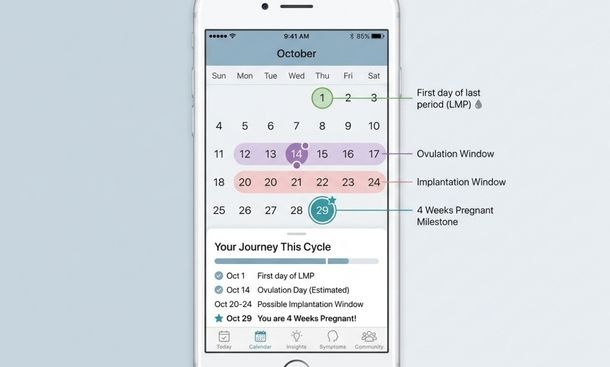
Pregnancy is usually dated from the first day of your last menstrual period, not from the day you conceived. That means when you are called 4 weeks pregnant, conception usually happened about 2 weeks earlier in a textbook cycle.
A rough version looks like this:
- week 1 starts with the first day of your last period
- ovulation often happens around week 2
- conception usually happens around ovulation
- implantation happens about 6 to 12 days later
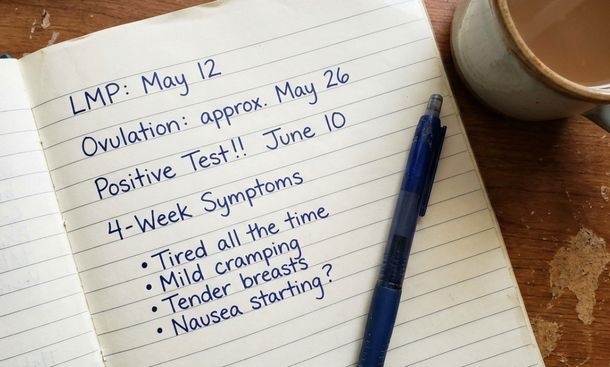
- by week 4, you may have a missed period and a positive test
So yeah, 4 weeks pregnant does not mean the embryo has been around for 4 weeks. In most cases, conception happened around 2 weeks ago, give or take depending on your cycle.
That difference matters because people often try to count backward from symptoms and get confused. The labels used in pregnancy are older than the actual pregnancy itself. Wild, but true.
When conception likely happened if you are 4 weeks pregnant
If your cycle is around 28 days and fairly regular, conception often happens about 14 days after the first day of your last period. That puts conception roughly 2 weeks before you hit the 4-week pregnant mark.
Let’s make it plain.
If the first day of your last period was july 1, then ovulation may have happened around july 14 or 15. Conception likely happened around then if sperm met the egg. By july 29, you might be called 4 weeks pregnant.
That is why 4-week symptoms can feel so early. They are early. Your body is only a short time past conception and possibly just past implantation.
Now if your cycle is longer or shorter, or if you ovulate earlier or later, that timeline can shift. But the main idea stays the same. Pregnancy dating usually adds about 2 weeks before conception even happened.
The most common pregnancy symptoms at 4 weeks
Symptoms at 4 weeks can be subtle. Some people feel a lot. Some feel almost nothing. Both can be normal.
Missed period
This is usually the biggest clue. A missed period is often what pushes someone to test in the first place.
Mild cramping
Some people feel light cramps around implantation or in very early pregnancy. They are usually milder than a regular period for many people, though not always.
Spotting
Light spotting can happen for some people around implantation. By 4 weeks, that may have already happened or just recently passed.
Breast tenderness
Breasts may feel sore, fuller, or more sensitive. This is common, but it can also happen before a period, so timing matters.
Fatigue
You may feel wiped out for no obvious reason. Early hormone shifts can hit energy hard.
Bloating
This one is sneaky because it feels so much like PMS. Hormonal changes can slow digestion and leave you feeling puffy.
Nausea
Some people get nausea later, but a few notice it early. If it shows up at 4 weeks, it is not impossible.
Mood changes
Hormones can affect mood early on too. You may feel weepy, irritable, calm, or just different.
None of these symptoms alone can tell you the exact day of conception. They can only support the timeline.
How symptoms at 4 weeks connect to conception timing
The symptoms you feel at 4 weeks are not happening because conception is happening right now. They are happening because conception likely happened around 2 weeks earlier and implantation has already occurred or recently occurred.
That distinction matters a lot.
For a home pregnancy test to turn positive, implantation usually needs to happen first so hCG can start rising. By 4 weeks pregnant, that process has often started enough for symptoms and testing to show something.
So if you are 4 weeks pregnant and feeling cramps, sore breasts, fatigue, or bloating, those symptoms are telling you that your body is reacting to early pregnancy hormones. They are not direct markers of the exact day conception happened. The conception date usually sits back near ovulation.
That is why the best estimate comes from combining:
- first day of your last period
- likely ovulation date
- intercourse during the fertile window
- implantation timing if known
- first positive test date
Put those together and you get a much better estimate than symptom guessing alone.
What if your cycle is not 28 days
A lot of people do not have a neat 28-day cycle, and that changes the timeline.
If you ovulate later than day 14, conception also happens later. That means if someone says you are 4 weeks pregnant based on your last period, the embryo may be a little younger than expected.
For example:
- a longer cycle may delay ovulation
- delayed ovulation means delayed conception
- delayed conception means symptoms and positive tests may show up later too
That is why exact dating often gets adjusted after an ultrasound. Early pregnancy is usually dated by last period at first, but later information can refine the estimate.
So if your symptoms seem “too light” or your positive test came “too late,” it may simply mean you ovulated later than average. That is not unusual.
Can symptoms at 4 weeks tell you exactly when you conceived
Not exactly. They can narrow things down, though.
If you know when your last period started and you tracked ovulation, you can make a strong estimate. If you also know when you first tested positive, the estimate gets even better. But symptoms themselves are not precise enough to date conception down to a specific day.
Let’s keep it grounded:
- sore breasts do not give you an exact conception date
- fatigue does not point to one exact day
- mild cramps can support the timeline but do not confirm it alone
- a missed period plus a positive test gives much more useful timing info
That is why symptom timing matters more than symptom drama. A quiet cycle with one clear test can tell you more than a noisy cycle full of confusing sensations.
What can make the timing feel confusing
A few things tend to throw people off.
Pregnancy weeks are counted before conception
This is the number one source of confusion. You are already considered about 2 weeks pregnant before conception usually happens.
Symptoms overlap with pms
At 4 weeks, symptoms can still feel a lot like the luteal phase. That makes it hard to trust what your body is telling you.
Implantation timing varies
If implantation happens earlier or later, the timing of symptoms and positive tests can shift too.
Ovulation may not have happened when the app guessed
Apps can estimate well, but they can still miss your actual ovulation day. If that date is off, your conception estimate moves with it.
The best way to estimate conception at 4 weeks
If you are trying to get as close as possible to the likely date, use this order:
Start with the first day of your last period
That gives the standard pregnancy dating framework.
Estimate ovulation
If your cycle is regular, ovulation often happens about 14 days before your next period. If you tracked with ovulation strips or temperature, even better.
Look at intercourse dates
Conception usually happens within about 24 hours after ovulation, but sperm can survive for up to 5 days before that.
Consider implantation and first positive test
If you had spotting or a positive test on a certain date, those can help confirm the likely window.
That process gives you a realistic conception range instead of a fake exact date. And honestly, that is usually the most accurate answer anyone can give without ultrasound or medical dating.
What symptoms at 4 weeks do not tell you
They do not tell you whether everything is progressing perfectly. They do not confirm an exact conception day. They do not tell you the sex of the baby, the exact implantation date, or anything dramatic like that.
They also do not have to be strong. One of the most common unnecessary worries is feeling “not pregnant enough” at 4 weeks. A lot of normal pregnancies are still very quiet at that point.
No symptom overload is required.

When to get support or more clarity
If your dates are really uncertain, your cycles are irregular, or your symptoms and tests are not lining up, a healthcare provider can help you sort it out. Blood tests or an early ultrasound can sometimes give a more accurate sense of timing.
This matters especially if:
- your cycle length varies a lot
- you are not sure when ovulation happened
- your test results are inconsistent
- you have pain or heavy bleeding
- you are trying to date the pregnancy for medical reasons
A home tracking timeline is helpful, but sometimes you need a little more than that.
The smartest way to think about 4 weeks pregnant
Think of 4 weeks pregnant as a label on the calendar, not the exact age from conception. Symptoms at this stage are signs that your body may be responding to early pregnancy hormones, but the actual conception date usually sits about 2 weeks earlier in a typical cycle.
That mindset clears up a lot of confusion. You stop asking, “Did I conceive four weeks ago,” and start asking, “When did I likely ovulate, implant, and test positive.” That is the sequence that actually tells the story.
Pregnancy symptoms at 4 weeks can be the first signs that something real is happening, but they do not mean conception happened 4 weeks ago. In most cycles, conception likely happened about 2 weeks earlier, around ovulation, with symptoms showing up after implantation and rising hormones. If you want to move one step earlier in the timeline and understand how home testing fits before the 4-week mark, the next useful read is pregnancy detection at home and conception clues.

As an author at Felyro.com, I create actionable content on pregnancy tracking, offering practical tools, tips, and insights that empower mothers-to-be to stay informed and confident throughout their pregnancy.