
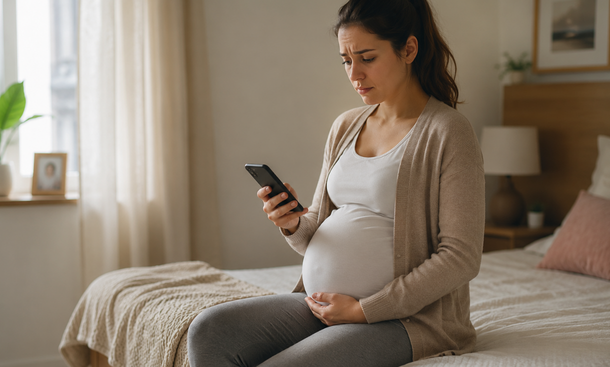
Bleeding during pregnancy can shake you up fast. Even a little spotting is enough to send your mind in ten directions. Still, bleeding does not always mean something is seriously wrong. Sometimes it is light spotting tied to normal changes in the cervix. Other times it can point to a problem that should not wait.
Spotting is usually light. It may show up as a few pink, red, or brown drops on your underwear or toilet paper. It often does not soak a pad. Bleeding is usually heavier. It may look more like a period or stronger than that. You may also notice clots, cramping, or a steady flow that keeps going.
Light spotting can happen around implantation, after sex, or after a pelvic exam because the cervix is more sensitive during pregnancy. Brown spotting can also be older blood leaving the body. But bleeding becomes more concerning when it gets heavier, turns bright red, or comes with cramps, dizziness, weakness, or strong pain.
- Light spotting is not always dangerous
- Heavy bleeding deserves fast advice
- Bleeding with pain changes the picture
- Later-pregnancy bleeding should never be brushed off
If you are bleeding during pregnancy, use a pad instead of a tampon so you can track the amount and color. You do not need perfect words. You only need to notice the symptom and respond. For the bigger safety picture, keep the full guide to warning signs during pregnancy
Why bleeding feels so alarming in pregnancy
Bleeding hits differently when you are pregnant because it feels loaded right away. It does not matter if it is a few drops or something heavier, your brain usually jumps to worst-case thoughts before anything else. That reaction is human. It is also why this symptom needs calm, clear guidance. Not every case of bleeding points to a serious problem, but it is also not the kind of symptom to wave off without thinking. The amount, color, timing, and what else is happening in your body all help tell the story. A little spotting after sex is a different situation from bright red bleeding with cramping. The body gives clues. The key is learning how to read them without spiraling or pretending they mean nothing.
One reason the symptom feels confusing is that light spotting can happen in perfectly ordinary situations. Cervical irritation is common in pregnancy because the area becomes more sensitive and has more blood flow. On the other hand, heavier bleeding can point to miscarriage, ectopic pregnancy, placental issues, or preterm labor depending on the stage of pregnancy. That range is exactly why women need better symptom guidance. The point is not to diagnose yourself. The point is to notice where your symptoms fall and let a provider help sort out what they mean.
Early pregnancy bleeding often brings the most fear
Early pregnancy bleeding is common enough that many women experience it, but common does not always mean easy. When bleeding happens in the first trimester, people often immediately think of miscarriage. That fear is understandable, especially if the bleeding gets heavier or comes with cramping. Still, some early bleeding turns out to be brief spotting that does not lead to the worst outcome. That is part of what makes the symptom emotionally so hard. You do not know which direction it is going when it starts.
There are a few warning signs that make early bleeding more urgent. Sharp one-sided pain, shoulder pain, dizziness, or faintness can raise concern for ectopic pregnancy and should never be ignored. Passing tissue or large clots matters too. Bright red bleeding that keeps increasing deserves fast medical attention. Even when the cause ends up being less severe, calling early is still the better move. It is easier to get peace of mind from a real evaluation than from hours of trying to guess what a symptom means in the bathroom at home.
Bleeding later in pregnancy changes the conversation
Second- and third-trimester bleeding deserves extra attention because the list of possible causes changes. Later bleeding can be linked to placenta previa, placental abruption, cervical change, or labor. That does not mean every later-pregnancy bleed is a catastrophe, but it does mean the symptom should not be handled casually. The farther along you are, the more important it becomes to get medical advice quickly, especially if bleeding is paired with pain, pressure, contractions, or reduced fetal movement.
Women sometimes wait too long because the amount seems small. But the amount alone does not always tell the whole story. A lighter bleed with steady pain can matter more than a slightly heavier bleed without other symptoms. This is why providers ask several questions together: how much blood, what color, any pain, any tightening, any leaking fluid, any movement change. Bleeding later in pregnancy almost always deserves a same-day call even if you are hoping it turns out to be something mild.
What details providers usually ask about
When you call about bleeding, you can expect questions about color, amount, timing, and what else is happening. They may ask whether the blood is pink, brown, or bright red. They may ask if it soaked a pad, stayed mostly on toilet paper, or came out in clots. They may ask whether you had sex recently, whether you have pain, and how far along you are. If you are later in pregnancy, they may ask about fetal movement and contractions too. These questions are not meant to make you feel tested. They are how the team decides whether you need immediate evaluation or faster monitoring.
It helps to answer simply. Say what you see. Say what you feel. Say whether it is changing. You do not need perfect medical language to be taken seriously. Providers are listening for patterns, not polished wording. The more honest and specific you are, the quicker they can guide the next step.
How to respond without making the situation harder
If bleeding starts, the best move is usually to pause, note the symptom, and call. Use a pad instead of a tampon so you can track the amount more easily. Rest while you arrange guidance. Avoid making assumptions based only on internet stories because other people’s situations may not match yours at all. If dizziness, heavy bleeding, or strong pain show up, move faster. That is not the moment to keep comparing possibilities for another hour.
One thing women often need to hear is that checking a symptom is not overreacting. In pregnancy, early attention is part of good care. Even if bleeding turns out to be minor, the evaluation is still worth it because it replaces fear and guessing with actual information. That alone can change the whole emotional weight of the day.
The color, timing, amount, and symptoms around bleeding all matter. Light spotting may be less urgent in some situations, but heavy bleeding, pain, dizziness, clots, or bleeding later in pregnancy should be checked quickly. You do not need to be dramatic to take bleeding seriously. You just need to respect the signal and get guidance.
For the full safety picture, keep the warning signs during pregnancy guide close. To keep building the bigger picture, the next step is severe headache during pregnancy warning signs.

Carlene R. Priddy offers strategic advice and practical guidance for governorsbefore, during, and after their mandatesto strengthen governance and public leadership.