
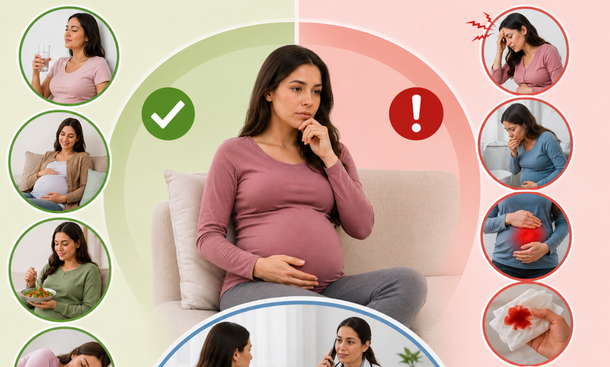
Pregnancy can be beautiful, strange, tiring, exciting, and a little unsettling all in the same week. Your body changes fast. Some symptoms come and go without meaning much. Others deserve more attention than people realize. That is why knowing the warning signs during pregnancy matters so much. Not because you should spend every day worried, but because peace of mind usually comes from knowing what is normal and what should not be ignored.
I’m Carlene R. Priddy. I’m 35, I care deeply about pregnancy care, and I love writing in a way that feels clear when life gets overwhelming. One of the hardest parts of pregnancy is sorting everyday discomfort from symptoms that may need medical attention. A little swelling in your feet after a long day may not mean much. Heavy bleeding, severe headache, leaking fluid, or a major drop in baby’s movement can tell a very different story.
The tricky part is that serious symptoms do not always look dramatic. Sometimes they start quietly. A little spotting that gets heavier. A headache that feels stronger than usual. Tightening that starts to come in a pattern. A weird sense that baby is moving less than normal. These are the moments where women often hesitate because they do not want to overreact. That hesitation is common, but it can slow down the care that matters.
The safest mindset during pregnancy is calm attention. You do not need to diagnose yourself. You do not need to panic every time something changes. You do need to notice what is happening, pay attention to patterns, and speak up when a symptom feels unusual, intense, or persistent.
Some warning signs matter in early pregnancy. Others become more important later on. Some are tied to your own health, like swelling with severe headache or signs of infection. Others are tied more closely to the baby, like reduced movement or leaking amniotic fluid. In real life, though, these categories often overlap. That is why it helps to look at the full picture instead of judging each symptom in isolation.
Vaginal bleeding during pregnancy: when spotting is fine and when it’s a real red flag
Bleeding during pregnancy is one of the symptoms that can scare women immediately, and honestly that reaction makes sense. Seeing blood when you are pregnant can stop your thoughts cold. The good news is that not all bleeding means something is seriously wrong. The difficult part is knowing when it may be minor and when it needs urgent care.
Spotting and bleeding are often grouped together, but they are not always the same thing. Spotting is usually light. You may notice a few pink, brown, or red spots on toilet paper or underwear. Bleeding is typically heavier and can feel more like a period or stronger than that. You may also notice clots, ongoing flow, or cramping.
That difference matters because light spotting can happen for less serious reasons. Early in pregnancy, some women notice light bleeding around the time the pregnancy implants. Spotting can also happen after sex because the cervix becomes more sensitive during pregnancy. A pelvic exam may trigger a little bleeding too. Brown spotting often means older blood and can look more alarming than it actually is.
Still, there is a line where bleeding deserves more than watchful waiting. If the flow is increasing, if the blood is bright red, or if bleeding comes with pain, dizziness, or weakness, the situation changes. In early pregnancy, bleeding with cramping can be linked to miscarriage. It can also be a warning sign of ectopic pregnancy, especially if there is sharp pain, shoulder pain, or faintness. Later in pregnancy, bleeding can point to conditions like placenta previa, placental abruption, or preterm labor.
- Heavy flow needs fast medical advice
- Bright red bleeding matters more than faint spotting
- Bleeding with cramps, dizziness, or weakness changes the picture
- Later-pregnancy bleeding should always be checked
If you notice bleeding that feels unusual, especially if it is more than a few spots or paired with pain, contact your provider. If it is heavy, painful, or accompanied by dizziness, seek urgent medical care. Women who want a more detailed breakdown can read the full explanation of bleeding during pregnancy and what it may mean.
Severe headache, blurry vision, and swelling: signs you should not brush off
Headaches are common during pregnancy, which is part of what makes this warning sign easy to dismiss. You may be tired, dehydrated, stressed, hungry, or sleeping badly. But a severe headache during pregnancy can mean more than a rough day, especially when it shows up with blurry vision, sudden swelling, or pain high in the abdomen.
That combination deserves respect because it can point to high blood pressure problems, including preeclampsia. Not every strong headache means preeclampsia, but this is one reason doctors and midwives take severe headache seriously. The headache itself matters. The symptoms around it matter even more.
A mild headache that improves after water, food, and rest may not be alarming. A headache that keeps going, feels stronger than usual, or comes with other changes belongs in a different category. Signs that make a headache more concerning include blurry vision, seeing spots, swelling in the face or hands, sudden weight gain, pain under the ribs, nausea that feels different from usual pregnancy nausea, or shortness of breath.
Swelling is one of those symptoms that can confuse people because some swelling in pregnancy is normal. Feet and ankles often swell more later in the day. Sudden swelling in the face, around the eyes, or in the hands tells a different story. If your rings suddenly feel tight and your face looks puffier than usual, do not ignore that shift.
- Headache that will not ease up
- Vision changes or seeing spots
- Swelling in face or hands
- Pain under the ribs or shortness of breath
If that pattern sounds familiar, the page on severe headache during pregnancy warning signs goes deeper into what deserves same-day attention.
Decreased fetal movement: what it means when baby is not moving like usual
Feeling your baby move is one of the most reassuring parts of pregnancy. It is personal. It is grounding. It gives you a sense that your baby is right there with you through the day. That is why a change in movement can feel so unsettling. Even when you cannot fully explain it, you know when the usual pattern seems off.
Babies do not move the exact same way every hour. They have sleep cycles. Some are more active at night. Some move more after meals. Some are naturally gentler than others. The important thing is not comparing your baby to someone else’s. The important thing is noticing your baby’s own rhythm.
Decreased fetal movement is not just about movement stopping completely. A real drop in movement, a noticeable change in strength, or a quieter pattern than usual can all matter. One of the biggest mistakes women make is waiting for total silence before they call. Reduced movement is enough reason to take it seriously, especially later in pregnancy when patterns are easier to recognize.
- Baby moving less than usual
- Movements feeling weaker than normal
- Usual active times turning much quieter
- Reduced movement with bleeding or pain matters even more
This is one warning sign where hesitation helps nobody. If movement still feels reduced after you stop and focus for a bit, call. Women who want the fuller breakdown can read decreased fetal movement: when baby moves less.
Contractions, cramping, and back pain before 37 weeks: could it be preterm labor
Tightening, pelvic pressure, cramps, lower back pain, and discharge changes can all show up in normal pregnancy too. That overlap is what makes early labor hard to spot sometimes. Women often tell themselves it is nothing serious because each symptom alone can seem manageable.
Preterm labor means labor that starts before 37 weeks. That does not mean every cramp leads to an early birth, but it does mean the body may be starting changes too soon. Tightening is more concerning when it starts to form a pattern, gets closer together, feels stronger over time, and does not settle down. Pressure, low back pain, watery discharge, spotting, or leaking fluid make the picture more important.
- Regular tightening or contractions
- Low dull backache that keeps going
- Pelvic pressure or cramping
- Watery discharge or leaking fluid
This page on signs of preterm labor before 37 weeks explains that warning pattern more fully.
Leaking fluid, fever, vomiting, and shortness of breath: the emergency signs to take seriously
Some warning signs during pregnancy fit into clear categories. Others feel more scattered at first, but they have one thing in common: they can signal an emergency. Leaking fluid, persistent fever, nonstop vomiting, sudden shortness of breath, chest pain, fainting, or severe pain all deserve fast attention.
Leaking amniotic fluid is one of the most important emergency signs to recognize. Fever can point to infection. Vomiting that prevents you from keeping fluids down can lead to dehydration. Pregnancy can make you winded more easily, but sudden or severe trouble breathing is different. These symptoms belong in the urgent category, not the wait-and-see category.
- Leaking fluid
- Fever that keeps going
- Vomiting with dehydration or weakness
- Shortness of breath, chest pain, or fainting
For the full urgent-symptom breakdown, read leaking amniotic fluid and other pregnancy emergencies.
How to tell a normal discomfort from a warning sign
A lot of pregnancy symptoms sit in a gray zone. That is what makes this hard. Cramping can be harmless or not. Headaches can be ordinary or more serious. Swelling can be expected late in the day or concerning when it shows up fast in the face and hands. The body does not always make it easy. That is why context matters so much. The amount, the timing, the pattern, and the other symptoms around it often tell you much more than the symptom alone. The best response is not to act like every change is an emergency, but also not to force every symptom into the most reassuring explanation just because that feels easier in the moment.
One useful question is whether the symptom feels usual for you. Another is whether it is getting stronger, lasting longer, or showing up with other changes. If the answer is yes, it deserves more attention. Pregnancy is one of those times when early calls to your provider are part of good care. You are not being dramatic by asking for guidance. You are doing exactly what pregnancy care is built around: noticing changes early enough to respond if needed. That habit matters much more than trying to be the kind of person who never calls.
When timing matters more than intensity
Some symptoms are important because of how strong they feel. Heavy bleeding and severe pain are obvious examples. But other symptoms matter because of when they happen. Contractions before 37 weeks deserve more attention than similar discomfort closer to term. Reduced fetal movement later in pregnancy matters because by then your baby’s pattern is easier to recognize. Leaking fluid at any stage deserves a call because it can change your care plan quickly. In other words, pregnancy warning signs are not only about intensity. Timing changes meaning, and that is one reason providers often ask first how far along you are.
This is also why a symptom that seemed mild at first can become more important once a pattern forms. A headache that keeps coming back and starts happening with vision changes tells a different story than a one-off headache after a rough night. Cramping that turns into repeated tightening tells a different story than a random discomfort that fades. Watching the pattern gives you more information than rating the symptom once and leaving it there.
Why women often wait too long to call
A lot of women second guess themselves. They worry they are overreacting. They do not want to bother the doctor. They tell themselves maybe the symptom will pass if they just lie down, drink water, or sleep a little. All of that is common. It is also one of the reasons some warning signs do not get checked as quickly as they should. The problem is not that women are careless. The problem is that pregnancy teaches a lot of women to normalize discomfort and stay agreeable even when their body is clearly asking for attention.
There is also the emotional side. Pregnancy can make every symptom feel loaded. Some women swing toward panic. Others swing toward denial because panic feels too exhausting. The goal is neither one. The goal is steady attention. Notice the sign. Look at the pattern. Call when the symptom is building, unusual, or paired with red flags. That middle ground is where most good decisions happen. You do not need perfect certainty before you ask for medical guidance.
Questions providers often ask about warning signs
When you call about a symptom, providers usually ask direct questions for a reason. They may ask how far along you are, when the symptom started, whether it is getting worse, what other symptoms are happening, and whether the baby is moving normally. They may ask about bleeding color, amount, pain level, swelling, contractions, or fever. None of this is meant to overwhelm you. It is how they judge whether you need same-day evaluation, home monitoring with follow-up, or urgent care right away.
It helps to answer simply. You do not need polished medical language. If bleeding is bright red and heavier than spotting, say that. If the headache started this morning and still has not eased up, say that. If the baby is moving but much less than usual, say that. Clear basic information is enough to get the conversation moving in the right direction. This is another reason symptom tracking, even informal tracking, can help during pregnancy. It gives you something real to describe instead of trying to recall everything under stress.
What not to do with major symptoms
When something feels wrong, there are a few habits that usually do not help. Do not spend hours trying to diagnose yourself online while the symptom keeps changing. Do not assume that because a symptom happened to someone else and turned out fine, yours will too. Do not use a tampon for pregnancy bleeding just because it seems easier to measure later. Do not wait out severe shortness of breath, fainting, or heavy bleeding to see if tomorrow feels different. The whole point of warning signs is that they deserve a quicker response than ordinary discomforts.
It is also wise not to let embarrassment lead the decision. Providers who care for pregnant women hear these calls all the time. They would almost always rather evaluate a symptom that turns out fine than learn later that somebody stayed home because she was worried about sounding anxious. Pregnancy care is built around caution for a reason. Fast questions are part of the process, not a disruption of it.
The role of instincts during pregnancy
Women often know something feels off before they can explain why. That instinct is not magic, and it is not a diagnosis, but it still matters. Maybe you cannot describe the movement change perfectly. Maybe you just know the headache feels different. Maybe the cramping plus the pressure plus the discharge change all together are making your stomach drop. Those reactions deserve respect. They should not replace medical advice, but they should push you toward it sooner.
People sometimes talk themselves out of calling because they do not have the right words. You do not need the right words. You need enough trust in yourself to say, something changed and I want guidance. That sentence alone can be enough to start getting the right help. In pregnancy, the smartest move is often not certainty. It is timely attention.
Why warning-sign education lowers fear instead of increasing it
Some people worry that learning about danger signs will make women more anxious. In practice, it often does the opposite. Uncertainty creates a lot of fear. Clarity lowers it. When you understand which symptoms are usually mild and which ones should speed up your response, the whole experience starts feeling more manageable. You do not have to panic at every ache, and you do not have to minimize every red flag either. You get a clearer frame for what deserves what kind of attention.
That kind of education also helps conversations at home. Partners often feel more useful when they understand the difference between common discomfort and symptoms that may need care. They can respond with more confidence and less confusion. In that sense, warning-sign knowledge supports more than only the pregnant woman. It improves the decision-making around her too.
Keeping a simple action plan helps
One practical thing that can help is having a simple plan in mind before a symptom starts. Know the number for your provider, maternity unit, or labor and delivery line. Know where you would go if urgent care became necessary. Keep your phone charged. If you are later in pregnancy, have a basic hospital bag idea in place. None of that is about expecting something to go wrong. It is about lowering friction if you do need to respond quickly.
Even a tiny bit of preparation can make a stressful moment feel more manageable. When symptoms show up, the goal is not to become an expert. The goal is to notice the warning sign, move toward help, and let professionals guide what comes next. That is more than enough.
What partners and family members should watch for too
Pregnancy warning signs are not only something the pregnant woman should carry alone in her head. Partners, family members, or anyone close by can be part of noticing changes too. Sometimes another person sees how pale you look, how swollen your face seems, or how short of breath you sound before you say it out loud. Sometimes they notice that the baby usually moves more after dinner and ask if things have felt quieter lately. That outside awareness can help because pregnancy is tiring, and tired people do not always assess their own symptoms clearly in the moment.
A supportive person does not need to become a medical expert. They only need to understand a few key ideas. Heavy bleeding is urgent. Severe headache with vision changes matters. Reduced movement later in pregnancy deserves a call. Repeated tightening before 37 weeks is not something to joke off. Leaking fluid, fever, or breathing trouble should move things faster. A calm, informed partner can help lower hesitation by saying, let’s call now and get a real answer instead of sitting with guesswork.
Why the same symptom can mean different things in different trimesters
Pregnancy changes by stage, and warning signs do too. Light spotting in early pregnancy may point to something very different than bleeding in the third trimester. Cramping early on can raise one set of questions, while contractions later can raise another. Headaches may be common all through pregnancy, but the context around them becomes more important after 20 weeks when blood pressure disorders enter the picture more clearly. Understanding that timing changes meaning is one of the best reasons not to rely on old advice from another stage of pregnancy or another person’s story.
That also explains why providers so often begin with how far along are you. They are not asking out of habit alone. They are sorting the symptom into the right stage-specific frame. A warning sign does not live by itself. It lives inside the trimester, the pattern, and the other symptoms around it. That is the frame that helps make better decisions.
Building confidence without ignoring risk
A lot of women think there are only two ways to approach pregnancy symptoms: either panic about everything or act unbothered about everything. The truth is much better than that. You can be informed, measured, and still fast when fast matters. Knowing the warning signs during pregnancy is really about building that kind of confidence. It gives you a steadier filter. You stop wondering whether every symptom deserves panic, and you stop feeling pressure to normalize every symptom just to stay calm.
That confidence grows from repetition. You learn that spotting and heavy bleeding are not the same. You learn that a small headache and a severe headache with vision changes are not the same. You learn that one random tightening and repeated contractions before 37 weeks are not the same. Once those differences become clearer, the whole experience feels less chaotic. You still respect risk, but you are not ruled by uncertainty.
Questions women often ask about warning signs
Women often ask whether they should wait a few hours first, whether a symptom still counts if it went away, and whether calling too often will make them seem anxious. Those are normal questions, but the safer pattern is usually to call when the symptom feels clearly different, intense, or linked to other changes. If a symptom eased up after being strong, that does not automatically mean it no longer matters. Bleeding that slows after being heavy still deserves reporting. Reduced movement that improves after a quiet spell may still deserve mention if the pattern feels off overall.
The fear of bothering your provider is one of the most unhelpful pregnancy habits around. Good maternity care expects questions. It expects symptom calls. It expects uncertainty. You are not failing at calm by reaching out. You are using the system the way it was meant to be used.
One clear rule to keep with you
If a symptom feels clearly different, clearly stronger, or clearly linked to other changes, it probably deserves a call instead of a private debate. That one rule catches a lot. Pregnancy warning signs are not about memorizing every possibility perfectly. They are about noticing when the body shifts out of the usual lane and responding early enough to get help if you need it.
That single habit of paying attention to the pattern instead of only the symptom can protect a lot. It keeps you from dismissing something that is building, and it also keeps you from drowning in fear every time your body changes. Pregnancy asks for a lot of judgment in a body that is changing week by week. The more clearly you understand the warning signs, the easier that judgment becomes.
That clarity helps women respond faster and feel less alone inside uncertainty.
Pregnancy asks a lot from women. You are expected to notice changes, stay calm, and somehow know when a symptom is ordinary and when it is something more. That is why understanding the warning signs during pregnancy matters. Not so you live on edge, but so you can respond with confidence when your body gives you a signal that should not be ignored.
Some symptoms may be mild and pass on their own. Others need attention fast. Bleeding, severe headache with blurry vision or swelling, decreased fetal movement, signs of preterm labor, leaking fluid, fever, and sudden breathing problems all deserve respect. If one warning sign feels the most immediate and easiest to misunderstand, it is probably bleeding during pregnancy: what’s normal and what’s not.

Carlene R. Priddy offers strategic advice and practical guidance for governorsbefore, during, and after their mandatesto strengthen governance and public leadership.