
Introduction
Pregnancy is a time of excitement, transformation, and anticipation — but it can also bring physical and emotional changes that sometimes feel overwhelming. While most pregnancies progress smoothly, it’s crucial for expectant mothers to understand that some symptoms may signal complications.
Knowing the warning signs during pregnancy can help you act quickly, seek medical advice, and ensure the health and safety of both you and your baby.
This comprehensive guide explains what’s normal, what’s not, and when to call your doctor. We’ll also cover early, mid, and late-pregnancy warning signs, helping you navigate each trimester with confidence.
why recognizing warning signs matters
Understanding your body is one of the most powerful forms of prenatal care.
Some pregnancy symptoms like fatigue, nausea, or mild swelling are entirely normal.
However, others may indicate more serious issues such as preeclampsia, gestational diabetes, infection, or premature labor.
Early detection allows your healthcare provider to take immediate action, preventing complications before they become critical. In short: listening to your body can save your life and your baby’s.
Early pregnancy warning signs (first trimester)
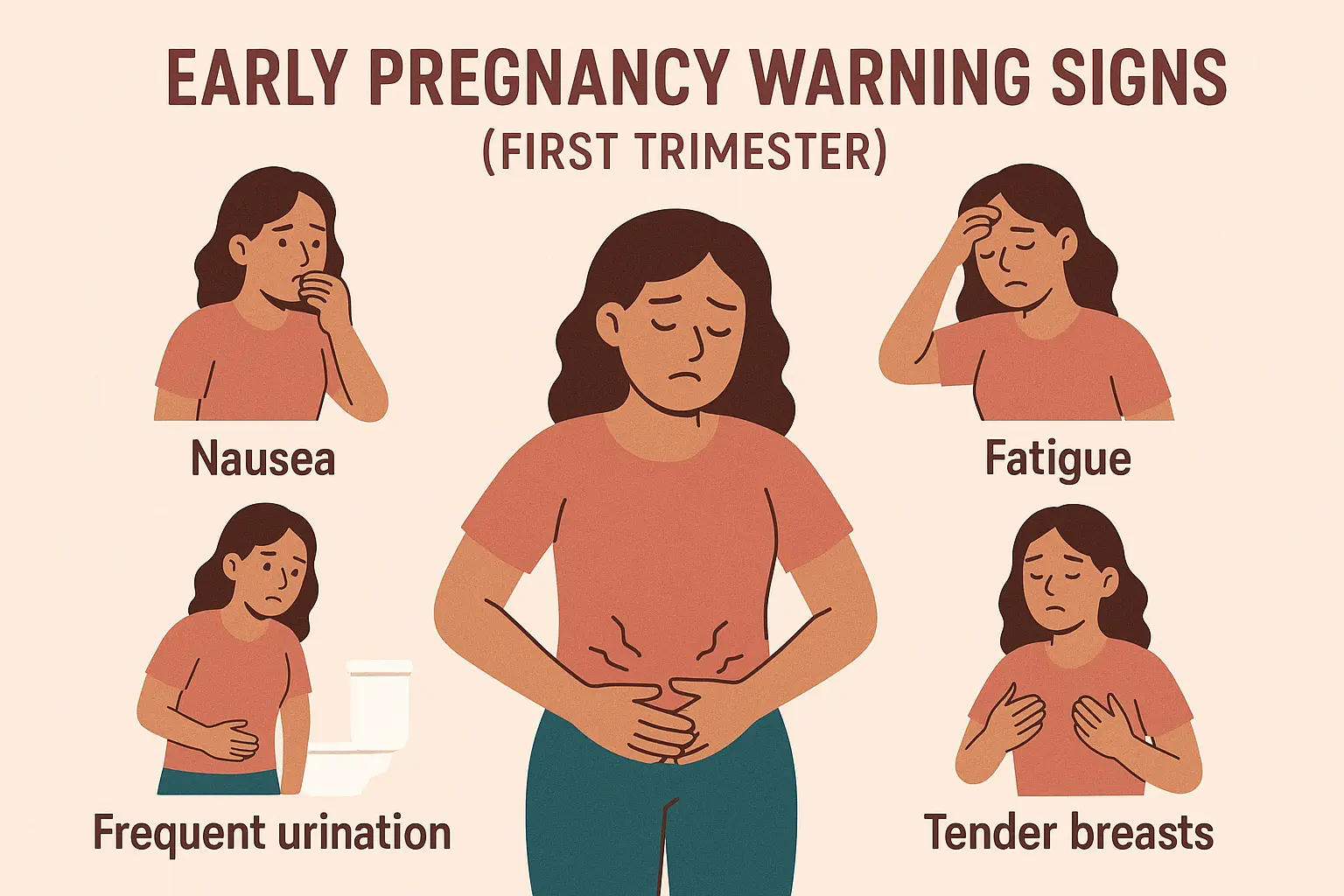
The first trimester (weeks 1–13) is a period of major hormonal changes and early fetal development. During this stage, you should watch closely for unusual symptoms that may signal a problem.
1. heavy bleeding or severe cramping
Light spotting can be normal during early pregnancy (implantation bleeding), but heavy bleeding with severe cramps is not.
It may indicate:
-
Miscarriage
-
Ectopic pregnancy (when the fertilized egg implants outside the uterus)
If you notice clots, intense abdominal pain, or dizziness, contact your healthcare provider immediately or go to the emergency room.
2. sharp one-sided abdominal pain
Persistent, sharp pain on one side of the abdomen can indicate an ectopic pregnancy, which requires urgent medical attention.
Other causes can include ovarian cyst rupture or early miscarriage.
3. high fever or infection symptoms
A fever above 38°C (100.4°F) that doesn’t subside may suggest infection, which could harm your developing baby.
Watch for chills, burning during urination, or unusual vaginal discharge.
4. severe nausea and vomiting (hyperemesis gravidarum)
Morning sickness is common, but if you’re unable to keep food or fluids down for over 24 hours, it may lead to dehydration and malnutrition.
This condition, known as hyperemesis gravidarum, requires medical treatment and sometimes IV fluids.
5. sudden dizziness or fainting
Mild dizziness is normal inearly pregnancy due to hormonal shifts, but fainting spells, rapid heartbeat, or persistent lightheadedness could mean anemia, dehydration, or low blood pressure.
Mid-pregnancy warning signs (second trimester)
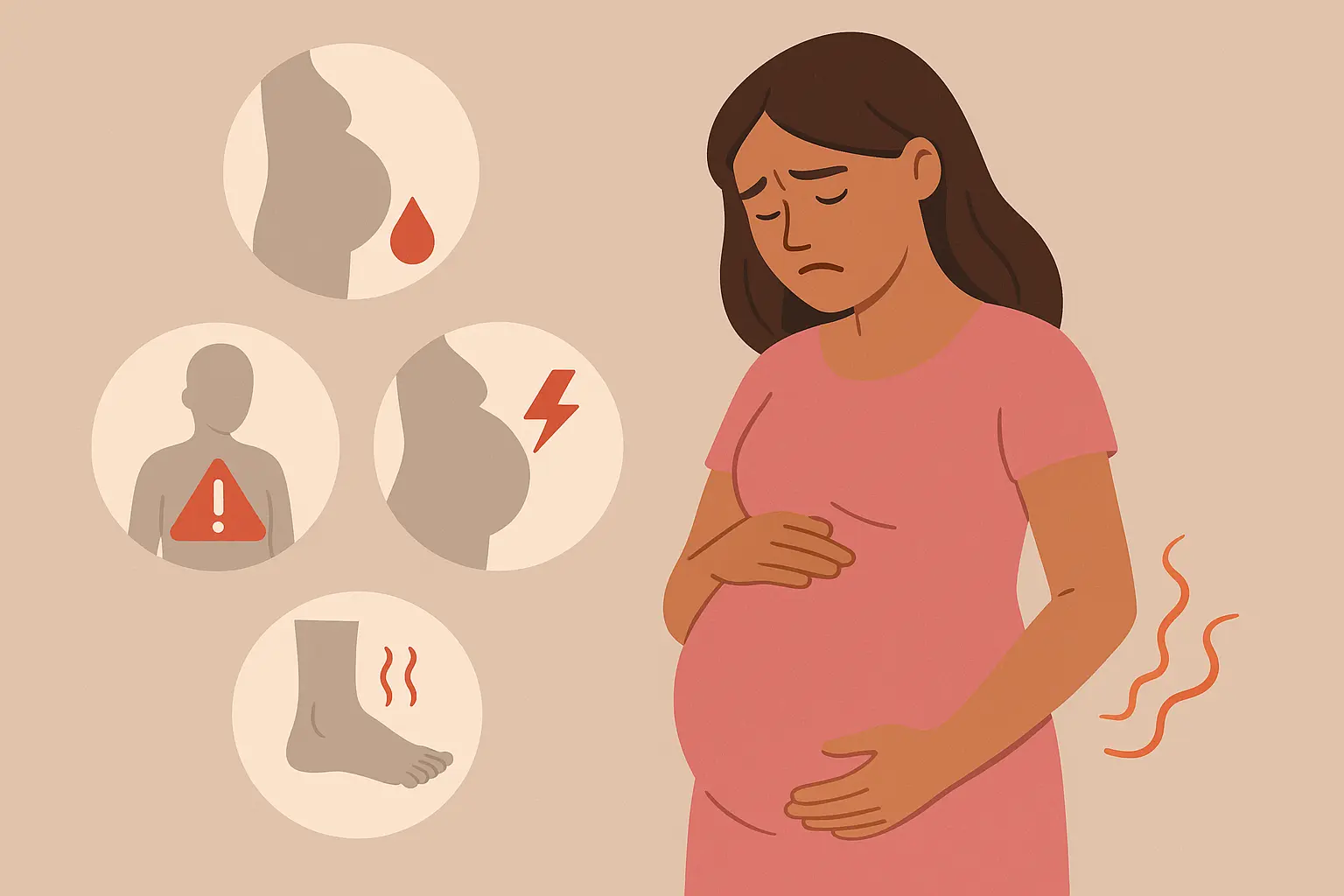
By the second trimester (weeks 14–27), most women feel better physically but complications can still occur. Here’s what to look out for:
1. severe abdominal pain or back pain
Sudden, strong pain in the lower back or abdomen may signal:
-
Placental abruption (placenta detaching from the uterine wall)
-
Preterm labor
-
Urinary tract infection (UTI)
Always call your doctor if you experience constant pain or tightening.
2. swelling of hands, face, or around the eyes
While mild swelling of feet or ankles is common, sudden or severe swelling—especially in the hands, face, or around the eyes—could be a symptom of preeclampsia, a dangerous rise in blood pressure that needs urgent attention.
3. severe headache or vision changes
Persistent headache, blurred vision, flashing lights, or seeing “spots” are also warning signs of preeclampsia.
Left untreated, it can lead to seizures or other life-threatening complications.
4. painful urination or blood in urine
UTIs are common during pregnancy, but if untreated, they can lead to kidney infection or preterm labor.
Symptoms to watch for: pain while urinating, cloudy or bloody urine, fever, or lower abdominal pain.
5. reduced fetal movement (after 20 weeks)
By mid-pregnancy, you should start to feel your baby move regularly.
If your baby’s movements slow down significantly or stop for more than a few hours, it’s essential to contact your healthcare provider for a fetal health check.
Late pregnancy warning signs (third trimester)
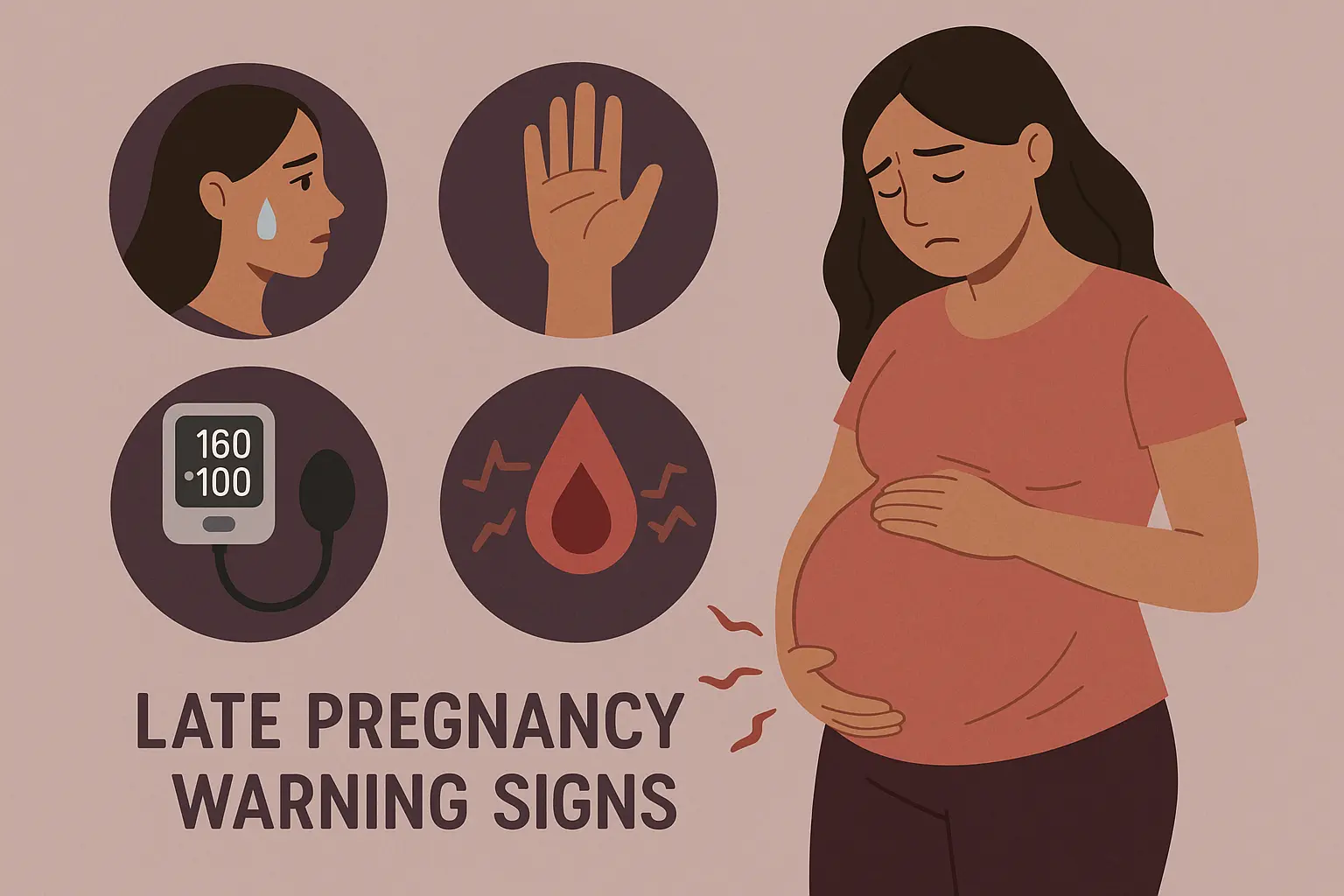
The third trimester (weeks 28–40) is when your body prepares for labor. However, it’s also when complications like preterm labor, high blood pressure, and fetal distress are more likely.
1. persistent or severe abdominal pain
If pain comes in waves, increases in intensity, or is accompanied by fluid leakage, you could be experiencing preterm labor.
Call your doctor immediately if contractions occur before 37 weeks.
2. vaginal bleeding or fluid leakage
Bright red bleeding may signal placental abruption or placenta previa (when the placenta covers the cervix.
Fluid leakage could mean your water has broken even if contractions haven’t started, contact your provider right away.
3. decreased fetal movement
As your pregnancy progresses, fetalmovements may change slightly due to less space, but a significant decrease or absence of movement after week 28 requires immediate evaluation.
4. sudden weight gain and upper abdominal pain
Rapid weight gain (more than 2 lbs in a week uper abdominal pain (under ribs), and swelling are red flags for preeclampsia.
Monitor your blood pressure and seek medical advice if you experience these symptoms.
5. Shortness of breath, chest pain, or severe fatigue
Mild shortness of breath is common due to the baby pressing on your diaphragm.
However, chest pain, severe breathlessness, or sudden fatigue could signal a blood clot or heart issue, which are rare but serious.
When to call your doctor immediately
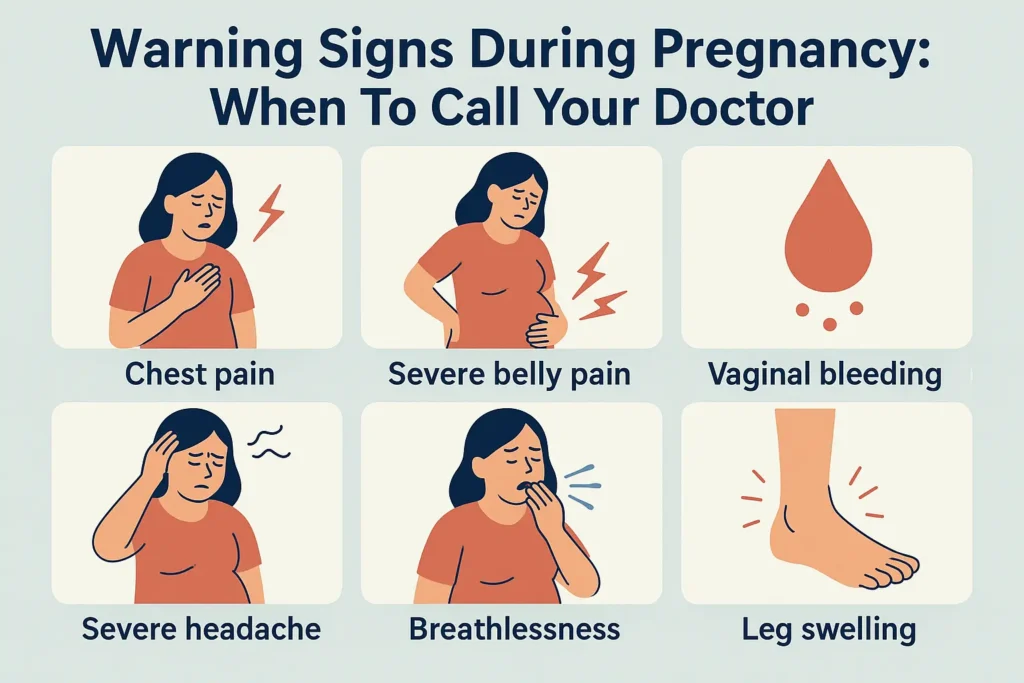
You should contact your healthcare provider or goto the emergency room if you experience:
-
Heavy vaginal bleeding
-
Sudden swelling of face/hands/feet
-
Severe headache or vision problems
-
Pain or burning when urinating
-
Persistent vomiting or inability to eat/drink
-
Dizziness or fainting
-
No fetal movement for more than 24 hours
-
Signs of preterm labor (cramps, contractions, or discharge before 37 weeks
When in doubt, always call your doctor even if you’re unsure whether your symptom is serious. It’s better to seek reassurance than to overlook a potential issue.
Emotional health warning signs during pregnancy

Pregnancy isn’t just physicalit deeply affects emotional well-being too.
Hormonal changes can trigger mood swings, but intense or persistent sadness, anxiety, or fear may indicate prenatal depression or anxiety.
Warning signs include:
-
Loss of interest in daily activities
-
Difficulty sleeping or excessive sleeping
-
Feeling hopeless or worthless
-
Persistent worry about your baby’s health
-
Thoughts of self-harm
If you experience any of these, speak to your doctor or mental health professional.
Emotional care is a vital part of pregnancy careou deserve support and compassion.
How to reduce the risk of complications
While not all complications can beprevented, you can greatly improve your chances of a healthy pregnancy by:
-
Attending all prenatal appointments
-
Taking prenatal vitamins (especially folic acid and iron)
-
Maintaining a balanced pregnancy diet
-
Drinking plenty of water
-
Exercising safely under medical guidance
-
Avoiding smoking, alcohol, and certain medications
-
Managing stress through rest, mindfulness, or yoga
Regular checkups allow early detection of problems, helping ensure a smoother pregnancy.
Faqs about warning signs during pregnancy

Q1: is cramping normal during pregnancy?
Mild cramping is common, but severe or onesided pain may signal complications like miscarriage or ectopic pregnancy.
Q2: can stress cause pregnancy complications?
Chronic stress may affect blood presure and sleep, but it’s rarely the direct cause of complications. However, managing stress is essential for overall health.
Q3: what if I’m unsure whether my symptom is serious?
When in doubt, always call your doctor. It’s safer to check than risk waitingtoo long.
Q4: what should I track daily?
Monitor fetal movements, swelling, blood pressure (if advised), and unusual pain or discharge.
conclusion
Pregnancy is a beautiful journey, but being informed about warning signs during pregnancy empowers you to act early and protect both your health and your baby’s.
From subtle changes to severe symptoms, every signal matters listen to your body, trust your instincts, and never hesitate to reach out for medical help. For further guidance on identifying and understanding crucial symptoms, check out our related article:Pregnancy Warning Signs You Shouldn’t Ignore

Kenya K. Foti shares strategic insights and practical advice for governors—before, during, and after their mandates—to help strengthen leadership and governance impact.