
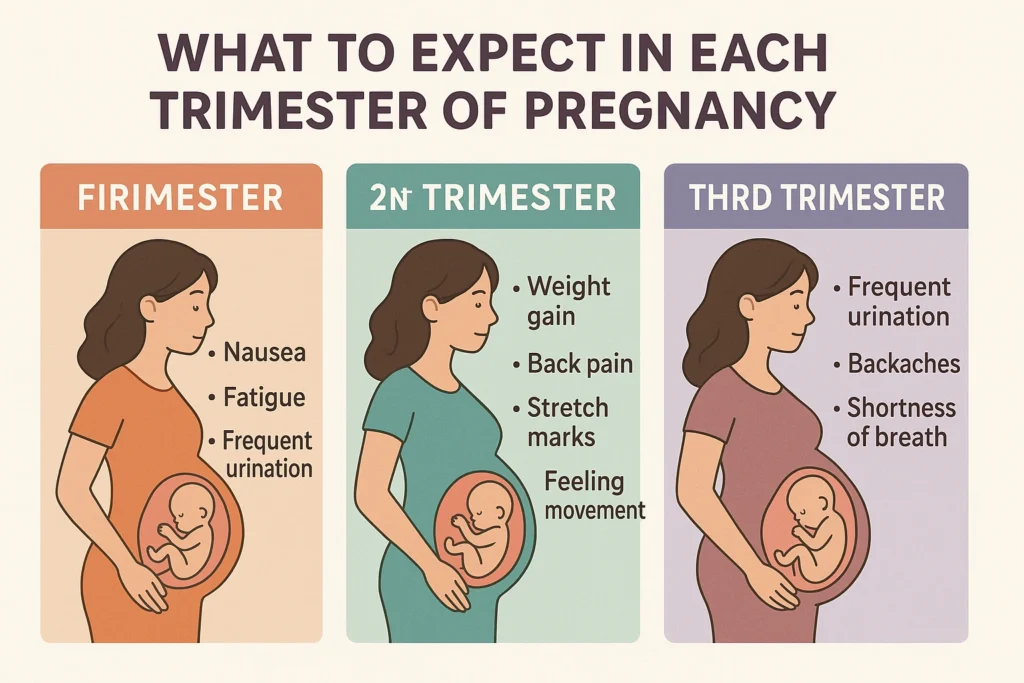
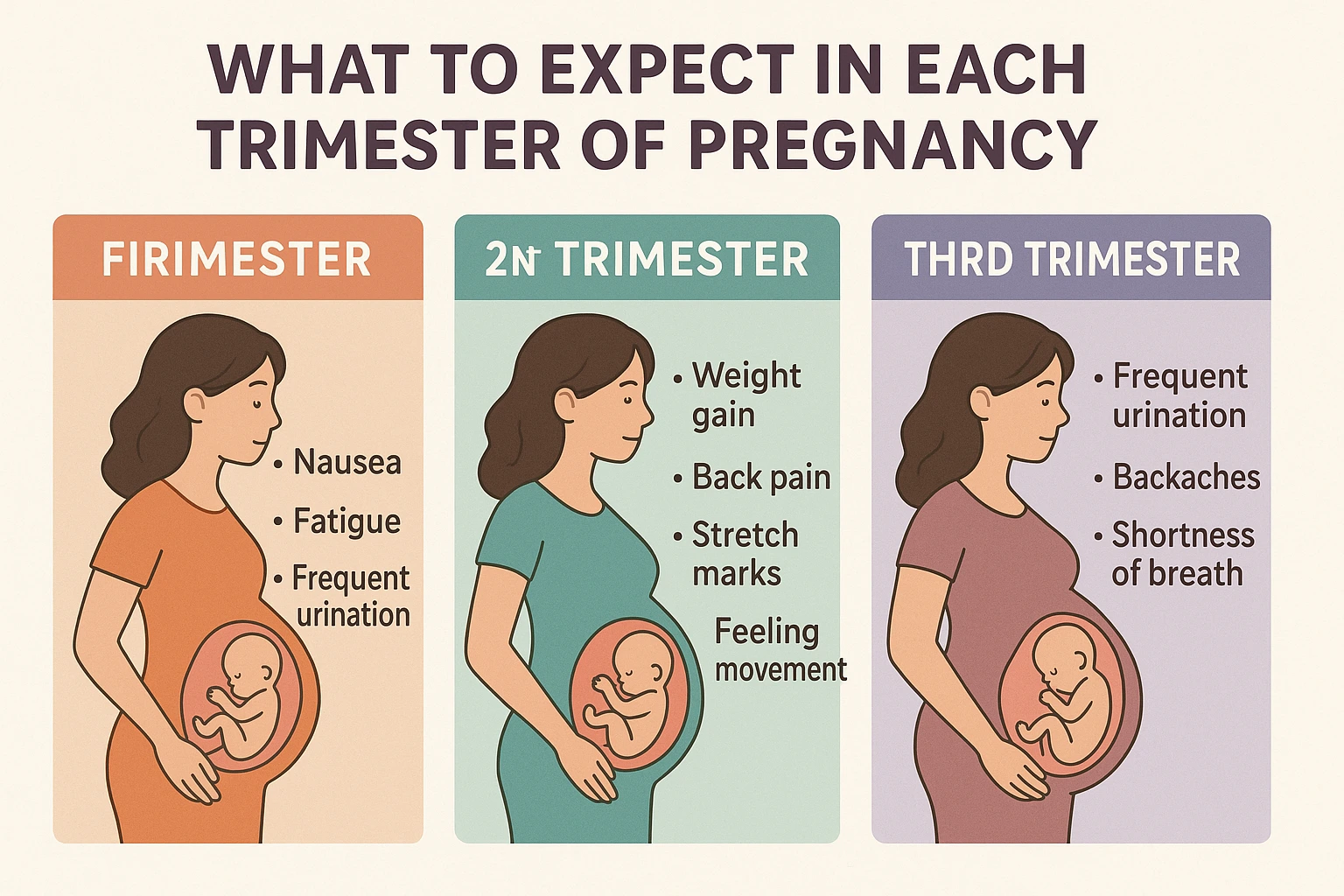
Pregnancy is one of the most transformative journeys a woman can experience physically, emotionally, and mentally. Over the course of approximately 40 weks, your body nurtures and grows new life while adapting to countless changes. Understanding what to expect in each trimester of pregnancy helps you feel more prepared, reassured, and confident throughout every stage.
Each trimester brings its ownmilestones, symptoms, and joys. From the first flutter of your baby’s heartbeat to the excitement of feeling your baby kick, knowing what’s normal and what to watch for makes your journey smoother and safer.
In this detailed guide, we’ll walk through every trimester explaining what happens to your body, how your baby develops, what medical checkups to expect, and how to take care of yourself during each phase.
First trimester (weeks 1–13): the beginning of new life
what’s happening to your body
The first trimester is a time of rapid change. From the moment of conception, your body begins preparing to support your developing baby. Hormones like estrogen and progesterone surge, leading to many early pregnancy symptoms.
You may experience:
-
Fatigue and the need for extra rest
-
Morning sickness (nausea and vomiting)
-
Tender or swollen breasts
-
Frequent urination
-
Mood swings
-
Food cravings or aversions
-
Bloating and mild cramping
These symptoms vary from person to person, and some women feel few changes at all. It’s also common to feel emotional ups and downs as you adjust to the reality of pregnancy.
Baby’s development

During the first trimester, your baby grows from a single fertilized cell into a tiny but complex organism.
By week 4, the embryo implants in your uterus. Around week 6, your baby’s heart starts beating, and by week 8, essential organs like the brain, liver, and kidneys begin to form.
By the end of week 12:
-
The baby is about the size of a lime (2.5 inches long).
-
Fingers and toes have formed.
-
Facial features become more defined.
-
The baby can make small movements, although you won’t feel them yet.
Medical checkups and prenatal care
Your first prenatal appointment usuallyhappens between weeks 6 and 8. During this visit, your doctor will:
-
Confirm your pregnancy with blood or urine tests.
-
Estimate your due date.
-
Conduct a physical exam.
-
Discuss medical history and prenatal vitamins.
You’ll also undergo your first ultrasound, often around week 8–10, to confirm your baby’s heartbeat and ensure the pregnancy is developing normally.
Tips for the first trimester

-
Start prenatal vitamins early. Folic acid supports brain and spinal development.
-
Eat small, frequent meals to manage nausea.
-
Stay hydrated and avoid caffeine in excess.
-
Get enough rest fatigue is normal and signals your body’s need for recovery.
-
Avoid smoking, alcohol, and certain medications.
-
Book your prenatal visits early toestablish consistent care.
Common concerns
-
Spotting: Light spotting may occur, but heavy bleeding or pain should be reported to your doctor.
-
Severe nausea: Persistent vomiting may indicate hyperemesis gravidarum and requires medical attention.
-
Emotional changes: Mood swings are normal, but severe anxiety or sadness may need support.
Second trimester (weeks 14–27): the most comfortable phase

What’s happening to your body
By the second trimester, many women notice relief romearly pregnancy symptoms. Energy returns, appetite improves, and morning sickness often fades. Your growing belly becomes noticeable as the uterus expands.
Common experiences include:
-
Round ligament pain (stretching in the lower abdomen)
-
Backaches
-
Heartburn or indigestion
-
Skin changes such as the “pregnancy glow”
-
Enlarging breasts and possible colostrum (early milk)
-
Feeling the baby move (quickening) usually between weeks 18–22
This trimester is often called the “honeymoon phase” of pregnancy you feel more energetic and connected to your baby.
Baby’s development
Your baby is now growing rapidly.
By week 20:
-
The baby measures about 6.5 inches long and weighs around 10 ounces.
-
You can often see your baby’s features clearly on an ultrasound.
-
The heartbeat can be heard using a Doppler device.
By week 27:
-
The baby’s organs are maturing.
-
The baby can hear sounds and may react to your voice.
-
Sleep-wake cycles begin forming.
-
Fat starts accumulating under the skin, preparing for life outside the womb.
Medical checkups and screenings

During the second trimester, prenatal care focuses on growth and early detection of complications.
Typical tests and appointments include:
-
Anatomy scan (week 18–22): A detailed ultrasound tocheck organs, limbs, and the placenta.
-
Blood tests: Screen for gestational diabetes (around week 24–28).
-
Measuring fundal height: To track the baby’s growth.
-
Monitoring blood pressure and urine: To detect early signs of preeclampsia
Tips for the second trimester
-
Eat a balanced diet rich in protein, calcium, and iron.
-
Stay active walking, swimming, or prenatal yoga are great choices.
-
Sleep on your left side to improve circulation to the baby.
-
Moisturize your belly to reduce itchiness and stretch marks.
-
Use proper posture to relieve back pain.
Common concerns
-
Leg cramps: Stretching before bed and drinking enough water can help.
-
Varicose veins: Elevate your legsand wear comfortable shoes.
-
Constipation: Eat fiber-rich foods and drink plenty of water.
-
Heartburn: Eat smaller meals and avoid lying down right after eating.
Emotional changes

During this period, many mothers feel more emotionally stable. You may also start bonding with your baby more deeply especially when you feel those first kicks.
It’s also a good time to start birth planning choosing your deliveryhospital, exploring birthing classes, and discussing preferences with your doctor.
Third trimester (weeks 28–40): preparing for birth
what’s happening to your body
As your due date approaches, your body prepares for laborand delivery. You may feel physically heavier and experience more fatigue.
Common third-trimester symptoms include:
-
Shortness of breath (as your uterus presses on your lungs)
-
Swelling in ankles, feet, and hands
-
Frequent urination
-
Back pain and pelvic pressure
-
Trouble sleeping
-
Braxton Hicks contractions (practice contractions)
These are signs that your body is getting ready for childbirth.
Baby’s development
Your baby undergoes crucial final growth and development during this trimester.
By week 32:
-
The baby weighs about 3.5 pounds and is about 16–17 inches long.
-
Bones are fully formed but still soft.
-
The baby starts to move into a head-down position for birth.
By week 37–40:
-
The baby’s lungs mature, preparing for breathing.
-
Fat layers increase to regulate body temperature.
-
Reflexes like sucking and grasping become strong.
-
Most babies are considered fullterm by week 39.
Medical checkups
During the final months, prenatal appointments become more frequent — typically every 2 weeks from week 28, and weekly from week 36.
Expect:
-
Blood pressure checks and urine tests for preeclampsia.
-
Fetal position checks toensure baby is head-down.
-
Group B strep test (around week 36).
-
Cervical exams to monitor dilation and effacement near due date.
Tips for the third trimester
-
Rest as much as possible. Fatigue increases as your belly grows.
-
Practice breathing and relaxation exercises.
-
Pack your hospital bag early (by week 36).
-
Stay hydrated to prevent cramps and swelling.
-
Track fetal movements your doctor may recommend “kick counts.”
-
Avoid standing for too long.
-
Discuss your birth plan and pain management options with your doctor.
Common concerns
-
Swelling and water retention: Mild swellingisnormal; severe swelling in hands, face, or eyes may signal preeclampsia.
-
Pelvic pain: Use pillows for support when sleping or sitting.
-
Leaking fluid: Could be amniotic fluid contact your provider.
-
Irregular contractions: Distinguish Braxton Hicks from true labor by timing them.
Signs labor is near
-
Regular contractions thatget stronger and closer together.
-
Water breaking (amniotic sac rupture).
-
Bloody show discharge with mucus and blood.
-
Back pain and pressure.
When in doubt, contact your doctor or hospital for guidance.
Postpartum: the “fourth trimester”

Although pregnancy ends at birth, your recovery and adjustment continue. The first 6–8 weeks after delivery are often called the “fourth trimester.”
Expect:
-
Vaginal bleeding (lochia
-
Breast engorgement or soreness
-
Emotional changes (baby blues or postpartum depression
-
Fatigue and sleep deprivation
Take care of yourself with nutritious food, rest, and emotional support. Breastfeeding, bonding, and recovery take time — be patient with your body and mind.
Faqs about pregnancy trimesters

Q1: how long does pregnancy last?
Typically around 40 weeks, divided into three trimesters:
-
First: weeks 1–13
-
Second: weeks 14–27
-
Third: weeks 28–40
Q2: when will I start to show?
Most women notice a baby bump between weeks 12–16, but it varies based on body type and previous pregnancies.
Q3: when will I feel my baby move?
Usually between weeks 18–22, though earlier for women who’ve been pregnant before.
Q4: can I exercise during pregnancy?
Yes! Low-impact activities like walking, swimming, or yoga are beneficial but always consult your doctor first.
Q5: what foods should I avoid?
Avoid undercooked meat, raw fish, unpasteurized cheese, caffeine in excess, and alcohol.
Pregnancy is an incredible journey marked by growth, discovery, and love. Each trimester brings unique experiences from the first heartbeat tthe first kick, and finally, the joy of meeting your baby.
By understanding what to expect in each trimester, you can approach every stage withconfidence, care, and calmness.For more guidance on recognizing important health signals during pregnancy, check out our related article:Warning Signs During Pregnancy: When To Call Your Doctor essential reading for protecting both you and your baby throughout pregnancy.

Carlene R. Priddy offers strategic advice and practical guidance for governorsbefore, during, and after their mandatesto strengthen governance and public leadership.