
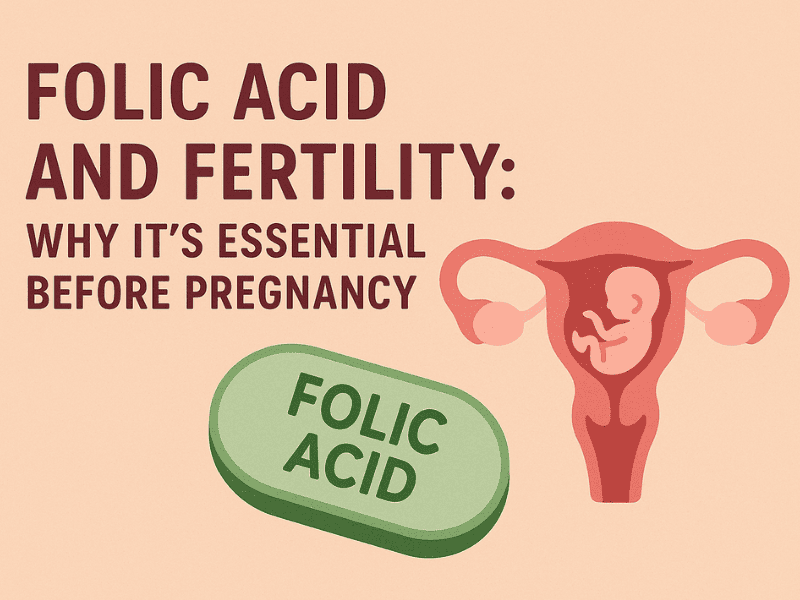
preparing your body for pregnancy is about more than just tracking ovulation or eating healthy it’s also about giving your body theright nutrients it needs to support conception and early fetal development. among the most vital nutrients for women trying to conceive, folic acid stands out as a true hero.
this b-vitamin plays a critical role in fertility, cellgrowth, and preventing birth defects, yet many women don’t realize how essential it is to start taking it before pregnancy even begins.
in this comprehensive guide, we’ll explore everything you need to know about folic acid and fertility from how it affects your reproductive health to how much you should take and the best food sources to include in your pre-pregnancy diet.
what is folic acid?
folic acid is the synthetic form of folate, a type of b-vitamin (vitamin b9 that your body needs for healthy cell division, dna synthesis, and red blood cell production.
while folate occurs naturally in foods like leafy greens, legumes, and citrus fruits, folic acid is the version found in supplements and fortified foods like cereals and bread.
your body uses folic acid to support new cell formation a process that’s crucial when you’re preparing for pregnancy, since both egg and sperm cells require healthy dna replication.
how folic acid affects fertility

folic acid is notjust for preventing birth defects it also plays a direct role in enhancing fertility in both women and men.
for women:
-
promotes regular ovulation: folate supports hormone balance, particularly in regulating estrogen and progesterone, which helps maintain healthy ovulation cycles
-
improves egg quality: folate contributes to dna repair and cellular health, reducing oxidative stress that can damage egg cells.
-
supports early fetal development: the earliest stages of pregnancy often before you even know you’re pregnant depend on proper folate levels to form the neural tube (which becomes your baby’s brain and spinal cord
-
reduces risk of miscarriage: studies have shown that women who take folic acid regularly before conception have lower rates of early pregnancy loss.
for men:
folic acid is just as important for men planning to become fathers. it helps in sperm production, dna stabiity, and reducing the risk of chromosomal abnormalities that can affect conception or fetal development.
why you should start folic acid before conception
one of the most comon misconceptions about folic acid is that it’s only needed after pregnancy begins. in reality, the opposite is true.
most birth defects that folic acid prevents like neural tube defects (ntds occur within the first 3–4 weeks of pregnancy, often before a woman even realizes she’s pregnant.
that’s why health experts, including the world health organization (who) and centers for disease control and prevention (cdc), recomend women of childbearing age to start taking folic acid at least three months before conception.
this preconception period allows your body to build sufficient folate stores to support both fertility and early fetal development.
recommended folic acid dosage before pregnancy
the recommended dosage of folic acid depends on your individual health and risk factors, but here’s a general guide:
-
for most women: 400 to 800 micrograms (mcgper day
-
for women with a history of neural tube defects: up to 4 milligrams (mg) per day (doctor-prescribed
-
for women with diabetes or obesity: higher doses may be recommended under medical supervision
it’s best to start taking folic acid daily for at least three months before trying to conceive and continue through the first trimester of pregnancy.
natural food sources of folate
while supplements are the most reliable way to get consistent folateintake, you should also enrich your diet with foods naturally high in folate.
folate rich foods to include in your daily meals:
-
leafy greens such as spinach, kale, and romaine lettuce
-
legumes like lentils, chickpeas, and black beans
-
citrus fruits such as oranges and grapefruits
-
asparagus and broccoli
-
avocado and brussels sprouts
-
fortified breakfast cereals and whole grains
-
nuts and seeds, especially sunflower seeds and almonds
combining these foods with a prenatal or folic acid suplement ensures your body receives steady and adequate folate levels for fertility and pregnancy support.
folic acid and ovulation health

folate plays a major role in supporting healthy ovulation the process of releasing a mature egg each month.
a deficiency in folate may contribute to irregular cycles, anovulation failure to ovulate), or poor egg quality.
research published in fertility and sterility found that women taking multivitamns containing folic acid had higher rates of regular ovulation compared to those who didn’t supplement.
this is because folic acid influences the production of reproductive hormones like estrogen and progesterone, which help regulate your menstrual cycle and fertility window.
folic acid and pcos (polycystic ovary syndrome
for women with pcos, maintaining optimal folate levels can be especially beneficial. pcos often causes hormonal imbalances and insulin resistance, both of which can afect fertility.
folic acid supports metabolic health by improving insulin sensitivity and reducing oxidative stress two major factors that can help restore regular ovulation in women with pcos.
some studies also suggest that combining folic acid with inositol another fertilitysupporting compound) can further improve ovarian function and egg quality in pcos patients.
for a full pre-pregnancy routine, read our comprehensive guide:
preconception checklist: what to do before you get pregnant
this article outlines all the practical step from vitamins to lifestyle changes to help you optimize fertility naturally.
folic acid and miscarriage prevention
low folate levels are linked to a higher risk of early pregnancy loss. this happens because folate deficiency can affect dna replication during cell division, leading to abnormal embryo development.
in one study published in the american journal of obstetrics and gynecology, women who took folic acid supplements before and during pregnancywere 50% less likely to experience miscarriage compared to those who didn’t.
folic acid supports a healthy uterine lining, reduces inflamation, and ensures the developing embryo receives adequate nutrients during implantation al critical for sustaining early pregnancy.
the connection between folic acid and male fertility
folic acid isn’t just a woman’s nutrient it’s equally important for male fertility. sperm cells undergo constant division and renewal, requiring healthy dna synthesis suported by folate.
deficiency in folate can lead to:
-
low sperm count
-
poor sperm motility
-
abnormal sperm shape (morphology)
-
increased dna fragmentation
men who take folic acid especially combined with zinc) often experience improved sperm health, leading to higher chances of conception.
folic acid vs. folate: which is better?
though folate and folic acid are often used interchangeably, they’re slightly different:
-
folate is the natural form found in foods.
-
folic acid is the synthetic version found in supplements and fortified foods.
however, some people have a genetic variation known as mthfr mutation, which makes it harder for their bodies to convert folic acid into its active form (methylfolate.
if you suspect you have this condition, look for suplements containing l-methylfolate, the bioavailable version your body can use directly.
how long should you take folic acid before pregnancy?
the ideal time to begin taking folic acid is at least three months before trying to conceive. this allows time for your folate levels to stabilize and for your body to fully benefit from the nutrient.
but don’t stop once you get pregnant continuing folic acid through your first trimester (and even beyond ensures ongoing support for your baby’s development.
folic acid and lifestyle factors
certain lifestyle habits can deplete your body’s folate levels or reduce its absorption:
-
smoking
-
alcohol consumption
-
excess caffeine
-
poor diet or frequent processed food intake
-
chronic stress
to enhance absorption, pair folic acid supplements with a balanced diet rich in vitamin c, b12, and iron. these nutrients work synergistically to improve folate metabolism and red blood cell production.
when to talk to your doctor

if you’re planning pregnancy and have any of the folowing conditions, it’s best to consult your doctor about folic acid dosage and supplementation:
-
family history of neural tube defects
-
diabetes or insulin resistance
-
epilepsy or use of anti-seizure medications
-
pcos or hormonal imbalances
-
anemia or vitamin b12 deficiency
your doctor may recommend a higher dose or a specific form of methylated folate based on your needs.
folic acid myths debunked
myth 1: folic acid is only for pregnant women.
false folic acid supports fertility and should be taken before conception.
myth 2: i can get enough folate from food alone.
not entirely true while food sources help, supplements ensure consistent levels for fertility and early pregnancy.
myth 3: taking more folic acid is always better.
wrong excess supplementation doesn’t boost fertility and can mask other deficiencies like vitamin b12. always stick to recommended doses.
folic acid and overall reproductive wellness
folic acid is a cornerstone of reproductive health not only does it improve fertility, but it also promotes hormonal balance, healthy blod flow, and egg quality.
when combined with a well-rounded preconception plan including proper nutrition, stress management, and regular medical checkups folic acid helps you prepare your body for a healthy conception and pregnancy journey.
folic acid is more than just a vitamin it’s the foundation of fertility, pregnancy success, and your baby’s future health. taking it before conception ensures that your body and your baby get the best possible start.
by starting a folic acid supplement early, eating a folaterich diet, and maintaining healthy habits, you create the perfect environment for conception and early development.
remember, every small step you take now from better nutrition to consistent suplementation strengthens your chances of a smooth pregnancy and a healthy baby.
