
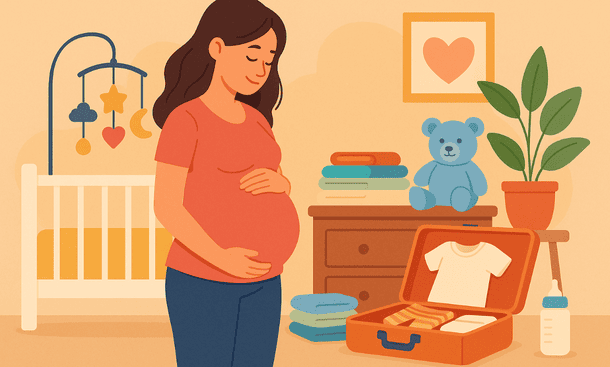
The third trimester spans weeks twenty-eight to birth and marks the final stage of pregnancy. Physical changes become more pronounced as the baby grows rapidly and the body prepares for labor. Mothers often experience fatigue, back discomfort, and difficulty sleeping. Understanding what to expect during these weeks helps manage symptoms and ensures both mother and baby remain healthy.
Physical changes and symptoms
In the third trimester, weight gain accelerates and the abdomen expands further. Back pain, pelvic pressure, and swelling in the feet or hands are common. Shortness of breath may occur as the uterus pushes against the diaphragm. Sleep can become uncomfortable, requiring support pillows or adjusted positions.
Maintaining gentle physical activity, such as walking or prenatal yoga, helps improve circulation and manage discomfort. Hydration, balanced nutrition, and rest remain essential. Regularly monitoring weight gain and reporting sudden changes to a healthcare provider ensures safety for both mother and baby.
Baby growth and development
The baby’s growth is rapid during the third trimester. Organs continue to mature, the brain develops extensively, and the lungs prepare for independent breathing. Movements become stronger and more coordinated, often noticeable throughout the day. By the final weeks, the baby typically assumes a head-down position in preparation for delivery.
Preparing for labor and delivery
Third trimester preparation involves creating a birth plan, discussing pain management options, and arranging support for delivery and postpartum care. Recognizing signs of labor, such as contractions, water breaking, or increased pelvic pressure, ensures timely response and reduces stress.
Attending prenatal classes can provide practical guidance on breathing techniques, labor positions, and postpartum recovery. Packing a hospital bag and preparing the home environment are simple but important steps. Being informed about labor and delivery contributes to confidence and reduces anxiety as the due date approaches.
Managing health and discomfort
Common discomforts in the third trimester include heartburn, leg cramps, and frequent urination. Adjusting diet, stretching, and staying hydrated can help alleviate symptoms. Regular checkups monitor maternal blood pressure, fetal growth, and overall well-being.
Supportive clothing, comfortable shoes, and proper posture reduce strain on muscles and joints. Emotional support from partners, family, and healthcare providers strengthens resilience during this stage. Prioritizing self-care ensures the mother is physically and mentally prepared for labor.
Emotional well-being
The final weeks of pregnancy often bring a mix of excitement, anxiety, and anticipation. Connecting with loved ones, practicing mindfulness, and preparing mentally for labor supports emotional stability. Journaling thoughts or experiences can help process feelings and track milestones.
Recognizing the emotional demands of late pregnancy and building a supportive environment fosters a positive mindset. Understanding the baby’s development and remaining engaged with weekly changes strengthens the bond between mother and child.
The third trimester is a period of growth, preparation, and anticipation. Being aware of physical and emotional changes, monitoring health, and preparing for labor ensures a smoother transition to motherhood. To continue supporting your pregnancy journey with practical tips, the pregnancy tracking tips guide offers advice on monitoring each stage week by week.

As an author at Felyro.com, I create actionable content on pregnancy tracking, offering practical tools, tips, and insights that empower mothers-to-be to stay informed and confident throughout their pregnancy.