
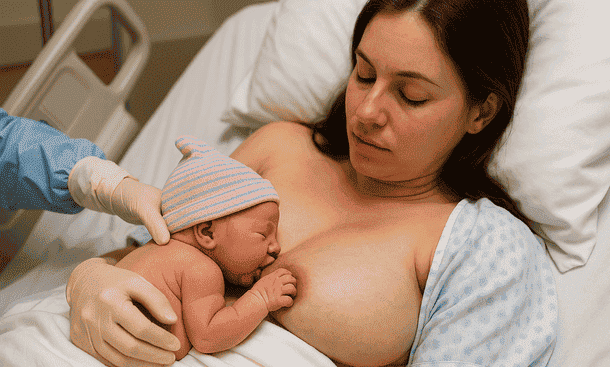
The first hours after birth are some of the most important for establishing breastfeeding. Newborns are alert and responsive, and your body is ready to provide the first milk your baby needs. These early moments help set a strong foundation for milk supply, bonding, and feeding routines. Understanding what to expect, how to position your baby, and how to recognize feeding cues can make the experience smoother and less stressful. Early support and practical guidance can turn these first hours into a confident start.
Skin-to-Skin Contact
Skin-to-skin contact immediately after birth is one of the most effective ways to encourage your baby to latch and feed. Holding your baby on your chest helps regulate their body temperature, heartbeat, and breathing. It also stimulates natural feeding instincts. Babies often show rooting and sucking reflexes when placed skin-to-skin. These simple actions make it easier for your baby to find the breast and start feeding successfully in the first hour.
Recognizing Feeding Cues
Newborns communicate their needs through subtle signs. Rooting, licking lips, hand-to-mouth movements, and fussiness are all ways your baby signals hunger. Responding promptly to these cues helps establish a routine and prevents frustration. Understanding your baby’s individual patterns in the first hours can make feeding smoother and more effective. Observing cues carefully also helps you feel more confident as a mother.
The First Latch
A proper latch is critical for effective breastfeeding. Position your baby so that their mouth covers both the nipple and part of the areola. This helps prevent nipple soreness and ensures your baby receives enough milk. Be patient; it may take a few attempts for both you and your baby to get comfortable. A correct latch during the first hours helps build a strong foundation for ongoing breastfeeding success.
Establishing Milk Supply Early
Frequent feeding in the first hours stimulates milk production. Newborns may feed every one to three hours, sometimes more often during alert periods. Each feeding sends signals to your body to increase supply. The early rhythm you establish sets the tone for consistent milk production in the days and weeks that follow. Even short sessions help strengthen this natural process.
Comfort and Positioning
Comfort is essential for both mother and baby. Try different positions to find what works best: cradle, cross-cradle, football hold, or side-lying. Using pillows for support can reduce strain on your back and arms. Comfortable positioning makes it easier to feed longer, encourages proper latch, and helps prevent early frustration or pain.
When to Ask for Support
It is normal to face challenges even in the first hours. Lactation consultants, nurses, and experienced mothers can provide guidance on positioning, latch, and managing initial difficulties. Early support can prevent common problems and build confidence. Observing your baby’s feeding behavior, weight, and satisfaction can help you know when extra guidance may be helpful.
Starting breastfeeding successfully in the first hours sets a positive tone for the weeks ahead. Paying attention to skin-to-skin contact, early cues, proper latch, and comfort helps build confidence and milk supply. For a broader understanding of breastfeeding benefits and long-term support, you may enjoy reading my article on the benefits of breastfeeding for moms and babies to see how these early steps connect to lasting health and bonding.

As a Felyro.com content author, I develop actionable content on breastfeeding, translating research-backed information into practical advice for mothers. My goal is to help families establish healthy feeding habits, improve maternal confidence, and support infant development.