

Nobody warned me about the heartburn. They warned me about morning sickness, about swollen ankles, about the exhaustion that hits you like a wall in the first trimester. But the heartburn? That one caught me completely off guard.
By my third trimester I was sleeping propped up on three pillows and keeping Tums on my nightstand like they were candy. And I remember standing in the pharmacy aisle one afternoon genuinely unsure whether what I was reaching for was safe or not.
If that sounds familiar you’re in good company. Heartburn affects somewhere between 17 and 45 percent of pregnant women and for many it gets worse as the pregnancy progresses. The good news is there are safe options. The not-so-good news is that not everything on the shelf qualifies.
Let’s go through all of it.
Why pregnancy causes heartburn in the first place
Understanding what’s actually happening makes it easier to manage. During pregnancy two things work against you when it comes to digestion.
First, progesterone — the hormone that surges during pregnancy to relax the uterine muscles — also relaxes the lower esophageal sphincter. That’s the valve between your esophagus and your stomach. When it relaxes too much stomach acid can creep back up. That burning sensation you feel in your chest and throat is that acid making contact with tissue it’s not supposed to touch.
Second, as your uterus grows it physically pushes upward on your stomach. Less room for your stomach means food and acid have fewer places to go. This is why heartburn tends to get worse in the second and third trimesters when your bump is really making itself known.
Safe antacids during pregnancy
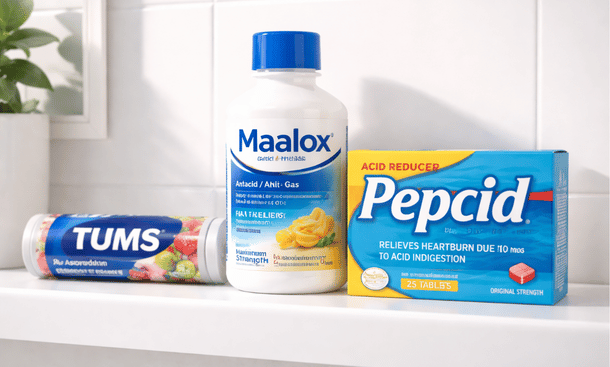
Calcium carbonate antacids — Tums, Rolaids
These are typically the first recommendation and for good reason. Calcium carbonate neutralizes stomach acid quickly and it’s considered safe throughout all three trimesters. As a bonus it also provides a small amount of calcium which your body needs more of during pregnancy.
The key with Tums is not to overdo it. Very high doses of calcium carbonate over a long period can cause what’s called milk-alkali syndrome — a buildup of calcium in the blood that can affect kidney function. Sticking to the recommended dosage on the label keeps you well within safe territory.
Aluminum and magnesium hydroxide — Maalox, Mylanta
These liquid antacids are also generally considered safe during pregnancy in moderate amounts. They work similarly to Tums by neutralizing acid in the stomach. Most providers are comfortable recommending them for occasional to moderate heartburn.
One note on magnesium — very high doses of magnesium late in pregnancy have been associated with some concerns around fetal bone development. At normal antacid doses this is not a meaningful risk but it’s worth knowing if you find yourself reaching for Mylanta multiple times a day every day.
Famotidine — Pepcid
This is where things get a little more serious in terms of effectiveness. Famotidine belongs to a class called H2 blockers. Instead of just neutralizing acid after it’s already there it actually reduces the amount of acid your stomach produces.
Pepcid is considered safe during pregnancy and it’s a common recommendation when regular antacids aren’t providing enough relief. It works better for persistent or frequent heartburn than calcium carbonate alone and it can be taken before meals to prevent symptoms rather than just treating them after the fact.
For the full breakdown of every medication category during pregnancy — from pain relief to allergy medications to sleep aids — the complete guide to safe medications during pregnancy covers it all in one place.
What about proton pump inhibitors
Proton pump inhibitors (PPIs) like omeprazole (Prilosec) and pantoprazole (Protonix) are stronger acid-reducing medications. They’re very effective but they fall into a different category during pregnancy.
Omeprazole is category C under the old FDA system — meaning there isn’t enough human data to be fully confident and animal studies have shown some concerns at high doses. Most providers reserve PPIs for cases where H2 blockers like Pepcid haven’t worked and the heartburn is severe enough to affect eating or sleeping.
If your heartburn is that bad the conversation with your OB is worth having. PPIs aren’t automatically off the table — they’re just a step up in terms of what warrants their use.
What to avoid
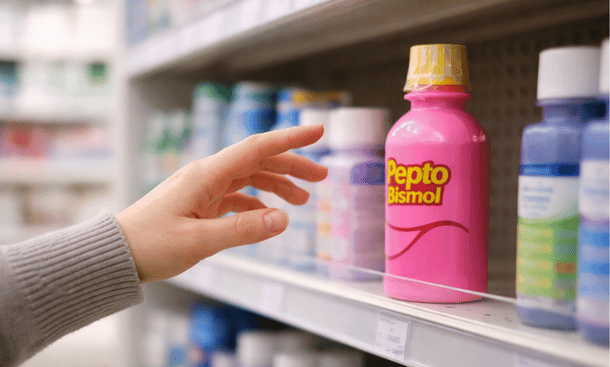
Pepto-Bismol and Kaopectate
These are the ones that catch people off guard because they seem so harmless. Both contain bismuth subsalicylate which is chemically related to aspirin. During pregnancy aspirin-related compounds carry real concerns — particularly in the third trimester where they can affect fetal blood flow and platelet function.
Pepto-Bismol should be avoided during pregnancy. This includes the chewable tablets not just the liquid. It’s one of those situations where the familiar pink bottle needs to stay on the shelf.
Sodium bicarbonate — baking soda remedies
Some people use baking soda dissolved in water as a home remedy for heartburn. During pregnancy this is not a good idea. High sodium intake can contribute to water retention and swelling which is already a common issue. And the gas it produces can cause additional discomfort on top of the heartburn you’re already dealing with.
Antacids with aspirin
Some combination antacid products include aspirin as an ingredient — Alka-Seltzer original is the most common example. Check labels carefully and avoid anything that lists aspirin or salicylate in the ingredients.
Lifestyle changes that actually make a difference
Medication helps but it works best alongside some practical adjustments. These are not groundbreaking but they genuinely reduce heartburn frequency when you stick with them.
Eating smaller meals more frequently puts less pressure on your stomach and the lower esophageal sphincter. Five or six small meals beats three large ones when heartburn is a regular issue.
Staying upright for at least an hour after eating gives your stomach time to process before you lie down. Gravity is working in your favor when you’re sitting or standing — use it.
Elevating the head of your bed by a few inches helps keep acid down overnight. Propping yourself up with pillows works too though actual bed elevation is more consistent.
Identifying your personal triggers is worth the effort. Common culprits include spicy food, citrus, tomato-based foods, chocolate, caffeine, and fatty or fried foods. Not everyone reacts to the same things so paying attention to what reliably sets yours off gives you a way to reduce symptoms without relying entirely on medication.
Loose comfortable clothing matters more than people think. Anything tight around the abdomen increases pressure on the stomach and makes reflux more likely.
When heartburn might be something else

Most pregnancy heartburn is exactly what it seems like. But there are situations where chest discomfort during pregnancy warrants a call to your provider rather than another Tums.
If you experience severe chest pain that doesn’t respond to antacids, pain that radiates to your arm or jaw, heartburn accompanied by significant nausea and upper right abdominal pain, or symptoms that feel qualitatively different from your usual heartburn — call your OB or go to triage. Preeclampsia can occasionally present with upper abdominal pain and it’s not something to wait out at home.
Also worth mentioning: if your heartburn is severe enough that you’re struggling to eat or keep food down, that’s a quality-of-life issue that deserves medical attention. There are effective options available and you do not have to just endure it.
A quick reference
Safe and recommended: Tums, Rolaids, Maalox, Mylanta, Pepcid
Use with provider guidance: Prilosec and other PPIs — effective but reserved for more severe cases
Avoid entirely: Pepto-Bismol, Kaopectate, baking soda remedies, any antacid containing aspirin or salicylate
Heartburn during pregnancy is one of those things that can genuinely wear you down over weeks and months. But you have real options that are well-studied and considered safe. Start with Tums or Maalox for occasional symptoms. Move to Pepcid if you need something that works more consistently. And talk to your OB if neither of those is cutting it.
You don’t have to white-knuckle your way through every meal for the rest of your pregnancy. That’s not what any of this is about.
If heartburn is keeping you up at night, you’re probably also dealing with sleep that feels impossible to come by. Between the discomfort, the anxiety, and a mind that won’t slow down, rest during pregnancy can feel out of reach. Sleep aids safe during pregnancy: what really works breaks down exactly which options are approved, which ones to use short-term only, and when it’s time to loop in your provider instead of going it alone.

Carlene R. Priddy offers strategic advice and practical guidance for governorsbefore, during, and after their mandatesto strengthen governance and public leadership.