

So your lower back is killing you and you’re walking around like a penguin trying to find a position that doesn’t hurt. I see you mama and I feel you. Back pain during pregnancy is one of those things that sneaks up on you and then just doesn’t let go. One day you’re fine and the next day you can’t bend over to tie your shoes without wincing.
I’m Carlene and I’ve been helping pregnant women in New York deal with back pain for years now. The truth is that some level of back pain affects about 50 to 70 percent of pregnant women so if you’re dealing with it you’re definitely not alone. Your center of gravity shifts as your belly grows your ligaments loosen up thanks to relaxin hormone and your posture changes to accommodate all that extra weight up front.
But here’s what I want you to know. You don’t have to just grit your teeth and suffer through nine months of back pain. There are safe effective exercises and stretches that can give you real relief without any medication. I’m talking about movements that target the specific muscles that get stressed during pregnancy and help support your changing body.
Why Your Back Hurts During Pregnancy
Before we jump into exercises let me explain what’s actually happening in your body because it helps you understand why certain movements work. As your uterus expands your abdominal muscles stretch and weaken which means they can’t support your spine as well as they used to. Your back muscles have to pick up the slack and they get tired and tight.
The hormone relaxin loosens your joints and ligaments to prepare your pelvis for childbirth but it affects all your joints not just the ones in your pelvis. This makes your spine less stable and more prone to strain. Plus as your belly grows you naturally shift your weight forward and arch your lower back to compensate which puts extra pressure on your lumbar spine.
Add in the fact that your breasts get heavier which pulls your shoulders forward and creates upper back tension and you’ve got a recipe for all over back discomfort. The good news is that targeted exercises can strengthen the muscles that support your spine and stretch out the ones that get tight and painful.
Pelvic Tilts Are Your Foundation
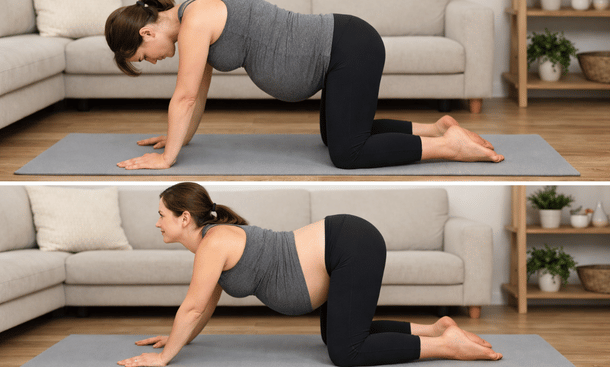
Pelvic tilts are hands down the best exercise for pregnancy back pain and they’re super simple to do. You can do them standing against a wall sitting on an exercise ball or on your hands and knees. I’m gonna explain the hands and knees version because it takes pressure off your back and feels really good.
Get down on your hands and knees with your hands directly under your shoulders and knees under your hips. Start with your back in a neutral position. Now gently tilt your pelvis forward and arch your back slightly like a cow looking up at the ceiling. Hold that for a couple seconds. Then tilt your pelvis back and round your spine like a cat arching its back. Tuck your chin toward your chest.
Go back and forth between these two positions moving slowly and breathing deeply. Do about 10 to 15 repetitions. This movement strengthens your abdominal muscles stretches your back and helps improve your posture. A lot of women tell me this is the one exercise that gives them immediate relief when their back is screaming.
Cat Cow Stretch Opens Everything Up
The cat cow stretch is basically a flowing version of pelvic tilts and it feels amazing when your back is tight. Start in the same hands and knees position. As you inhale drop your belly toward the floor lift your chest and tailbone up and look slightly forward. This is cow pose.
As you exhale round your spine tuck your tailbone under pull your belly button toward your spine and drop your head. This is cat pose. Flow between these two positions matching your movement to your breath. Inhale into cow exhale into cat. Do this for about one to two minutes.
This stretch mobilizes your entire spine from your neck down to your tailbone. It also gently works your core muscles which need to stay strong to support your back. The rhythmic movement combined with deep breathing helps release tension and can be really calming when you’re stressed about the pain.
Hip Flexor Stretches Make a Huge Difference
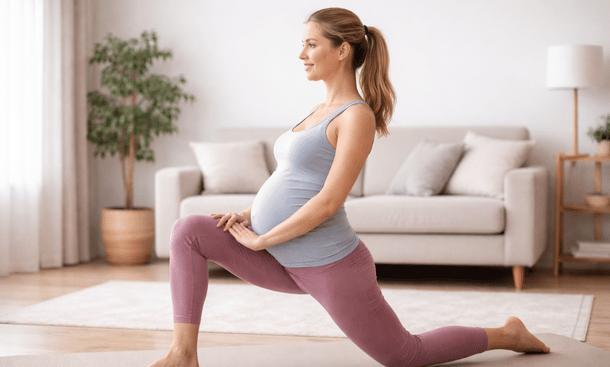
Tight hip flexors are a sneaky cause of lower back pain that a lot of people don’t realize. When you sit a lot during the day your hip flexors get short and tight which tilts your pelvis forward and increases the arch in your lower back. Stretching them out can provide major relief.
Try this kneeling hip flexor stretch. Kneel on your right knee with your left foot flat on the floor in front of you like you’re proposing. Keep your back straight and gently push your hips forward until you feel a stretch in the front of your right hip and thigh. Hold for 30 seconds then switch sides. Do this two or three times on each side.
You can also do a standing version if getting down on the floor is too hard. Stand and take a big step back with your right foot keeping both feet pointing forward. Bend your left knee and gently press your hips forward until you feel the stretch in your right hip flexor. This one is easier to do throughout the day when you need quick relief.
Child’s Pose Is Pure Relief
Child’s pose is a resting yoga position that gently stretches your lower back hips and thighs. Start on your hands and knees then sit your hips back toward your heels and stretch your arms out in front of you on the floor. Let your forehead rest on the floor or on a folded towel if that’s more comfortable.
If your belly is too big to sit all the way back just go as far as you comfortably can. You can also widen your knees to make room for your belly. Hold this position for as long as it feels good breathing deeply and letting your back muscles relax. This is one you can do multiple times a day whenever you need a break.
The gentle stretch combined with the relaxed position helps release tension in your entire back. A lot of women use this as their go to stretch when they wake up with back pain or after being on their feet all day.
Squats Build Supporting Strength
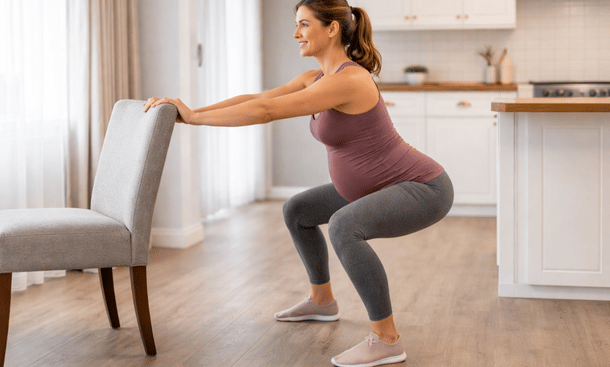
Squats are amazing during pregnancy because they strengthen your legs glutes and core which all help support your back. Plus they prepare your body for labor by opening up your pelvis and building stamina. The key is doing them with good form so you don’t make your back pain worse.
Stand with your feet slightly wider than hip width apart toes pointing slightly outward. Keep your chest up and your back straight. Lower down like you’re sitting back into a chair keeping your knees over your ankles not past your toes. Go down as far as is comfortable then push through your heels to stand back up.
Start with just body weight and focus on form. As you get stronger you can hold light dumbbells at your sides. Aim for two to three sets of 10 to 12 squats. If full squats are too hard try mini squats where you only go down a few inches. You can also hold onto a chair or countertop for balance and support.
Bridging Strengthens Your Glutes and Core
Bridge pose strengthens your glutes hamstrings and lower back muscles while being safe for pregnancy. Lie on your back with your knees bent and feet flat on the floor hip width apart. Keep your arms at your sides. Press through your heels and lift your hips up toward the ceiling squeezing your glutes at the top.
Hold for a few seconds then lower back down with control. Do 10 to 15 repetitions. This exercise is safe to do on your back until about 20 weeks of pregnancy. After that you should avoid lying flat on your back for extended periods because it can compress a major blood vessel.
Once you hit the second trimester you can modify this by propping your upper back and shoulders on a couch or exercise ball so you’re at an incline instead of flat. This keeps the benefits of the exercise without the risks of lying completely flat.
Wall Sits Build Endurance
Wall sits are great for building strength and endurance in your legs and core without putting stress on your back. Stand with your back against a wall and walk your feet out about two feet. Slide down the wall until your thighs are parallel to the floor like you’re sitting in an invisible chair.
Hold this position for 20 to 30 seconds keeping your back flat against the wall and your core engaged. As you get stronger you can work up to holding for 45 to 60 seconds. Do two to three sets with rest in between. This exercise teaches you to engage your leg muscles instead of relying on your back to hold you up which translates to better posture throughout the day.
Swimming and Water Exercise Are Game Changers

If you have access to a pool get in that water as much as possible. Swimming and water aerobics are hands down the best exercises for pregnancy back pain because the water supports your weight and takes all the pressure off your spine and joints.
Simple water walking back and forth across the pool gives you a great low impact workout. Doing gentle leg kicks while holding onto the pool edge stretches your hips and strengthens your legs. Even just floating on your back which you can do in water even in late pregnancy provides relief and lets your spine decompress.
The resistance of the water also provides a gentle strength workout without any impact. A lot of women tell me that the hour or two after swimming is the only time their back doesn’t hurt. If you can swing it try to get in the pool two or three times a week.
What to Avoid and When to Stop
Not all exercises are safe during pregnancy and some can actually make back pain worse. Avoid any exercises that require you to lie flat on your back after 20 weeks. Skip exercises that involve twisting your spine like full sit ups or exercises with weights held overhead that arch your back.
Listen to your body and stop immediately if you feel sharp pain dizziness shortness of breath vaginal bleeding or contractions. Some muscle soreness the next day is normal but sharp pain during exercise is not. Stay hydrated drink water before during and after exercising and don’t let yourself get overheated.
If your back pain is severe or accompanied by numbness tingling down your legs or loss of bladder control you need to see your doctor right away. These could be signs of something more serious like sciatica or a herniated disc that needs medical attention.
Creating Your Daily Routine
The key to getting relief from pregnancy back pain is consistency. Doing these exercises once isn’t gonna cut it. Try to do at least 15 to 20 minutes of stretching and strengthening every day. I know that sounds like a lot when you’re exhausted but trust me it makes a difference.
Start your day with cat cow stretches and pelvic tilts to wake up your spine. Take breaks during the day to do hip flexor stretches and child’s pose especially if you sit at a desk. End your day with some gentle squats and bridges to keep your muscles strong. Even spreading these throughout the day in small chunks works better than trying to do a long workout all at once.
Combine your exercises with other back pain relief strategies like using a pregnancy support belt wearing supportive shoes and being mindful of your posture. The more tools you have in your toolkit the better you’ll feel overall.
The bottom line is that pregnancy back pain is super common but you don’t have to just accept it as part of the deal. These exercises are safe effective and can give you real relief when you do them regularly. Your back is working overtime right now and it deserves some extra care and attention.
For more ways to stay comfortable during pregnancy including tips on managing all your symptoms safely check out the complete guide that covers everything from nausea to fatigue.

Carlene R. Priddy offers strategic advice and practical guidance for governorsbefore, during, and after their mandatesto strengthen governance and public leadership.