

Look, I’m gonna be blunt—when you’re logging miscarriage history, fertility treatments, or medical complications into an app, you deserve to know where that information ends up. Recent investigations exposed some platforms sharing sensitive health data with third parties without clear consent, and honestly? It’s enraging. After combing through privacy policies for every tool in our extensive breakdown of leading pregnancy tracking platforms, I’m exposing which apps respect your data, which bury sketchy practices in fine print, and what red flags should send you running before you input another symptom.
I didn’t think much about this stuff during my first pregnancy back in 2018. Downloaded whatever app my friends recommended, entered everything from my last period date to my medical history to intimate symptoms I wouldn’t even tell my sister about. Never once considered where that data was going or who might have access to it. Naive? Absolutely. But also pretty typical because these apps don’t exactly advertise their sketchy data practices.
Then around 2022, major news outlets started reporting on how period tracking and pregnancy apps were selling user data to advertisers, sharing information with data brokers, and in some cases, that data could potentially be used against women in states with restrictive abortion laws. That’s when I actually read the privacy policies I’d blindly agreed to years earlier and realized I’d handed over incredibly sensitive medical information to companies with zero accountability about how they used it.
After going deep into privacy policies for every major pregnancy app and talking to way too many privacy experts who made me even more paranoid, I’m breaking down which apps actually respect your data, which ones bury sketchy practices in fine print nobody reads, and what red flags should send you running before you input another symptom.
Why Pregnancy Data Is Especially Sensitive
The Unique Vulnerability of Reproductive Health Information
Pregnancy data isn’t just regular health information—it’s specifically sensitive in ways that make it more valuable to companies and potentially more dangerous to users. Understanding why this data matters so much helps you make smarter choices about what to share and with whom.
First off, pregnancy indicates major life changes which makes you extremely valuable to advertisers. Companies know pregnant women and new parents spend serious money on baby gear, healthcare, insurance, housing upgrades, family vehicles, and approximately eight million other things. Your pregnancy data tells them exactly when to target you with specific products and how to personalize ads based on your situation.
Insurance companies theoretically aren’t supposed to discriminate based on pregnancy, but data brokers aggregate information from multiple sources in ways that aren’t always transparent or legal. If your pregnancy app data gets sold to data brokers who then sell it to insurers or employers, there’s potential for discrimination even if it’s not supposed to happen.
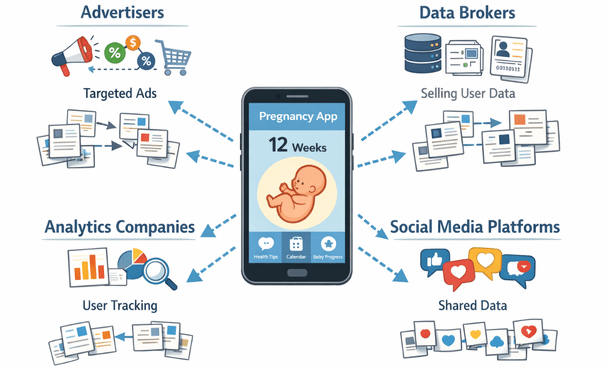
In states with restrictive reproductive healthcare laws, pregnancy tracking data has become potentially legally risky. If you’re tracking a pregnancy that ends—whether through miscarriage, medical management, or termination—that data could theoretically be subpoenaed or accessed by law enforcement. This sounds dystopian but it’s happened in actual cases already.
Medical complications, genetic conditions, high-risk factors, mental health symptoms during pregnancy—all this extremely personal health information gets logged into apps that may or may not protect it adequately. Unlike healthcare providers bound by HIPAA regulations, most pregnancy apps aren’t covered by those protections and have way more freedom to share your data.
What Data These Apps Actually Collect
The amount of information pregnancy apps gather goes way beyond what you actively input. Yeah, they’re tracking the symptoms you log and appointments you enter, but they’re also collecting tons of behavioral data you probably don’t realize you’re sharing.
Obviously there’s the stuff you deliberately enter: last menstrual period, due date, symptoms, weight, medications, medical history, ultrasound results, test results, mood tracking, sexual activity, and anything else the app prompts you to log. This is the data you’re aware of sharing because you’re actively typing it in.
Then there’s usage data the app collects automatically: how often you open the app, which features you use most, how long you spend on different screens, what articles you read, what questions you search for, what community posts you view or interact with. This behavioral data paints a detailed picture of your concerns, interests, and pregnancy experience even without explicit medical information.
Location data is huge and most people don’t realize how revealing it is. If you’ve granted location permissions, apps know when you’re at your OB’s office, when you visit the hospital, when you’re at a pharmacy picking up prescriptions. Combined with other data points, location tracking can reveal sensitive information about your healthcare and decisions.
Device information and unique identifiers let apps track you across different platforms and connect your pregnancy app data with your other online activity. That anonymous user ID in the app gets linked to your advertising profile, your social media accounts, your search history, creating a comprehensive data picture that’s supposedly anonymized but often isn’t.
Red Flags in Privacy Policies Nobody Reads
Problematic Language That Signals Data Sharing
Privacy policies are intentionally dense and confusing, written by lawyers to protect companies rather than inform users. But certain phrases and structures signal that an app is doing things with your data you probably wouldn’t be comfortable with if you understood what they actually meant.
“We may share your information with trusted partners” is corporate speak for “we sell your data to third parties.” Trusted partners sounds reassuring but it just means companies they have business relationships with—advertisers, data brokers, analytics firms. This phrase gives them permission to share basically anything with basically anyone as long as they have some business arrangement.
“Aggregated and anonymized data” sounds safe because hey, it’s anonymous right? Except anonymization often isn’t as robust as companies claim. Studies have shown that supposedly anonymized data can frequently be re-identified when combined with other available information. Your “anonymous” pregnancy data matched with your age, location, and a few other data points often leads directly back to your real identity.
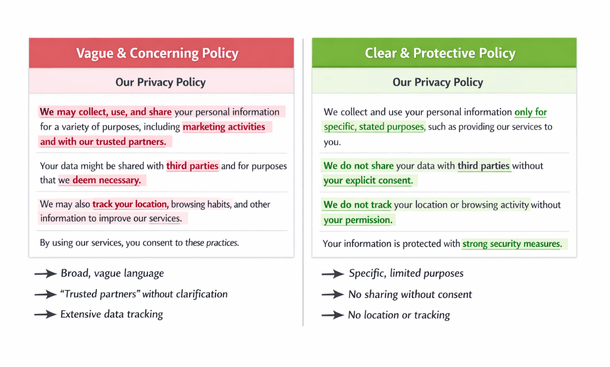
“For research purposes” sounds benign and maybe even noble, but without clear limitations this clause lets companies share your data with researchers who may have commercial interests or whose security practices you have no way of evaluating. Research is important but you should have explicit control over whether your sensitive pregnancy data gets used this way.
“To improve our services” is the catch-all justification for basically any data usage. Companies use this phrase to justify sharing data with third-party analytics services, advertising platforms, anyone they claim helps them improve the app. It’s so vague it means everything and nothing.
Lack of data deletion guarantees is actually the absence of language rather than specific phrases. If a privacy policy doesn’t clearly state that you can request data deletion and they’ll actually do it within a specific timeframe, assume your data lives forever in their systems and any systems they’ve already shared it with.
What’s Not in the Privacy Policy
Sometimes the biggest red flags are what companies don’t disclose rather than what they do. If you can’t find clear answers to basic questions, that’s intentional vagueness that should concern you.
How long do they retain your data? If the policy doesn’t specify retention periods or just says “as long as necessary,” that means forever. Your pregnancy data from ten years ago could still exist in their databases being used for purposes that didn’t even exist when you originally shared it.
Who exactly are these third parties they share with? If they won’t name specific partners or categories of partners, they’re hiding something. Transparency about data sharing means listing actual company types—advertising networks, analytics providers, specific platforms—not just vague references to business associates.
Can they change the policy retroactively? Some apps claim the right to update privacy policies and have those changes apply to data they already collected under previous policies. This means you agreed to one set of terms but they can change the rules later about data you already shared.
What happens if the company gets sold? Many policies include clauses saying if the company is acquired, all your data transfers to the new owner under whatever terms that new owner has. Your data becomes an asset sold along with the company, with no guarantee the new owner will respect the privacy promises you originally agreed to.
Apps That Actually Protect Your Privacy
The Few Platforms Taking Data Security Seriously
Not all pregnancy apps are cavalier about user privacy. Some have built their entire value proposition around protecting your data because they recognize how sensitive this information is and how badly other apps have screwed this up.
Clue isn’t pregnancy-specific but they’re the gold standard for period and fertility tracking privacy. They’re based in Europe and subject to GDPR, they don’t sell user data, they’ve committed to never sharing data with law enforcement without legally valid requests, and they’re extremely transparent about their practices. If you’re using their pregnancy mode, you’re getting the same strong privacy protections.
Their privacy policy is actually readable by normal humans instead of being designed to obscure. They clearly state what data they collect, why they collect it, who they share it with (spoiler: basically nobody), and how you can delete everything. They’ve also been vocal advocates for reproductive privacy rights, which matters when choosing who to trust with this data.
Ovia made substantial privacy improvements after getting called out a few years ago for sharing data with employers. Their current policy is significantly better, they let you opt out of data sharing, they’re more transparent about who receives what information. Are they perfect? No. But they responded to criticism by actually improving rather than just releasing PR statements.
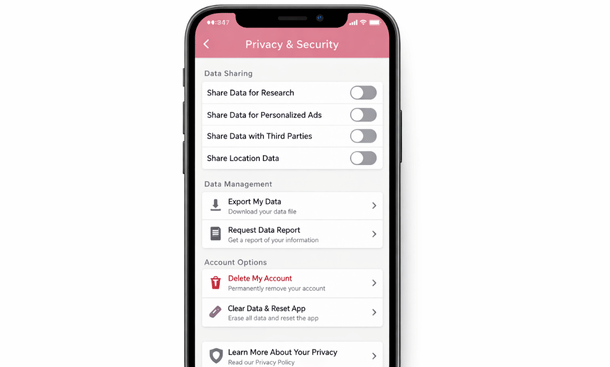
Glow similarly overhauled their privacy practices after concerns were raised. They now offer detailed privacy controls, clear opt-outs for data sharing, and more specific information about what they do with your data. They’re not as strong as Clue on privacy advocacy but functionally they give users reasonable control.
What Good Privacy Practices Actually Look Like
When evaluating any pregnancy app’s privacy protections, look for these specific practices that indicate they’re taking your data security seriously rather than just paying lip service to privacy concerns.
End-to-end encryption for sensitive data means even the company can’t access certain information you store in their app. This is rare in pregnancy apps but it’s the gold standard. Most apps encrypt data in transit and at rest but they still have the ability to decrypt and access it. True end-to-end encryption means only you can access your most sensitive information.
Data minimization is the principle of collecting only what’s actually necessary for the app to function. Apps committed to privacy don’t collect every possible data point just because they can. They thoughtfully limit data collection to what’s genuinely needed and document why each piece of information is necessary.
Transparent third-party audits mean the company has paid independent security researchers to evaluate their practices and published those findings. This external validation matters way more than company claims about how secure they are.
Clear data export and deletion tools should be easy to find and actually work. You should be able to download all your data in a usable format and delete your entire account including all associated data with minimal friction. If these features are buried or require contacting support, that’s intentional resistance to giving you control.
No advertising or marketing partnerships eliminates the primary financial incentive for selling your data. Apps that charge for premium features or subscriptions instead of relying on advertising revenue don’t need to monetize your information by sharing it with advertisers.
What You Can Do to Protect Yourself
Practical Steps Beyond Just Reading Policies
Understanding privacy risks is one thing, actually protecting yourself requires specific actions you can take right now to minimize exposure of your sensitive pregnancy data.
Use privacy-focused apps when possible even if they’re slightly less feature-rich than alternatives. The tradeoff between comprehensive features and strong privacy protection usually favors privacy when you’re dealing with reproductive health data.
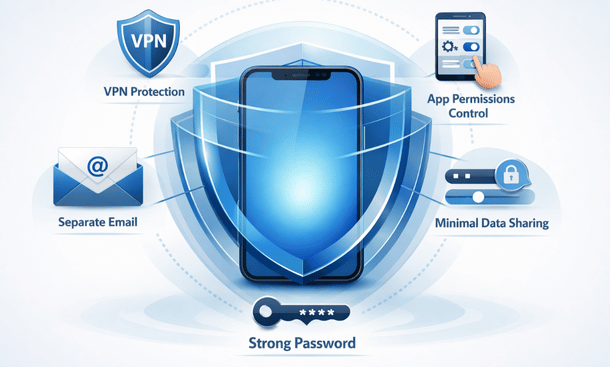
Review and minimize permissions regularly. Does your pregnancy app really need access to your photos, contacts, microphone, location? Probably not. Go into your phone’s settings and revoke any permissions that aren’t absolutely essential for the core tracking functionality you actually use.
Create a separate email account specifically for pregnancy and health apps. This isolates that data from your primary digital identity and makes it harder for data brokers to connect your pregnancy information with all your other online activity. Use privacy-focused email services rather than Gmail which scans email content for advertising purposes.
Avoid linking to social media even when apps offer easy Facebook or Google login options. This direct connection lets more data flow between platforms. Create separate login credentials even though it’s slightly less convenient.
Use a VPN particularly when accessing pregnancy apps on public wifi. This encrypts your internet traffic so your ISP, network administrators, or others on the network can’t see what apps you’re using or what data you’re transmitting.
Don’t overshare in community features even in apps with otherwise good privacy practices. Anything you post in public or semi-public forums should be information you’re comfortable with potentially becoming public. Community posts often aren’t protected by the same privacy policies as your personal tracking data.
Screenshot important data instead of relying solely on app storage. Keep your own records of critical information like test results, measurements, appointment notes. If you delete the app or they change policies, you still have your data.
Read privacy updates when apps send notification about policy changes. Companies love sneaking policy changes past users by sending an email saying “we’ve updated our terms” that nobody reads. Those updates often reduce privacy protections or expand data sharing, and that’s when you should consider switching apps.
When to Just Not Use an App At All
Sometimes the smartest privacy choice is opting out entirely. Pregnancy apps offer convenience but they’re not medically necessary. Humans had healthy pregnancies for thousands of years before smartphone tracking existed.
If you’re in a state with restrictive reproductive healthcare laws and you’re concerned about potential legal implications, seriously consider using paper-based tracking instead of any app. Old-fashioned notebook or a printable tracker gives you the same functionality without any digital footprint that could potentially be accessed.
If you’ve experienced pregnancy loss or complications and you’re worried about that data being used against you for insurance or employment, manual tracking eliminates digital records that could be subpoenaed or breached.
If you’re just generally uncomfortable with the level of data exposure that all apps require, that discomfort is valid and worth respecting. Your peace of mind matters more than app convenience.
The Bigger Picture: Why This Matters
Beyond Individual Privacy to Systemic Issues
Pregnancy app privacy isn’t just about individual users protecting personal information—it’s part of much larger conversations about reproductive rights, data capitalism, and surveillance.
The same data practices that let companies target you with diaper ads based on your pregnancy tracking also create databases that could theoretically be used to prosecute people for pregnancy outcomes. Whether or not you personally are at risk, supporting apps with strong privacy protections pushes the entire industry toward better practices that protect everyone.
Data about reproductive health shouldn’t be commodified and sold to the highest bidder. The normalization of apps collecting and sharing intimate health information without meaningful consent has created an ecosystem where your most private experiences become products sold to advertisers and data brokers.
Regulation is slowly catching up but companies have had years to build business models around data exploitation. GDPR in Europe provides stronger protections but US users have limited legal protections around health app data. Apps that voluntarily adopt stricter privacy standards deserve support because they’re choosing to prioritize users over profit.
Your individual choices about which apps to use and which data practices to accept send market signals. When users abandon apps over privacy concerns or choose privacy-focused alternatives, companies notice. Collective choices drive industry change more effectively than waiting for regulations that may never come.
Before you trust any app with sensitive pregnancy information, take time to understand not just what data they’re collecting but also how their technical integration with other services might expose your information. Check out our analysis of pregnancy apps that sync with wearables and health platforms because those convenient integrations often create additional privacy vulnerabilities—your pregnancy data flowing through Apple Health, Fitbit, or other services means multiple companies now have access to information you thought you were sharing with just one app, each with their own privacy policies and data practices you need to evaluate.
Bottom line: your pregnancy data belongs to you and companies shouldn’t get to profit from it without your genuine informed consent. Choose apps that respect that principle, minimize what you share even with apps you trust, and don’t feel guilty about being protective of information this sensitive and personal.

As an author at Felyro.com, I create actionable content on pregnancy tracking, offering practical tools, tips, and insights that empower mothers-to-be to stay informed and confident throughout their pregnancy.