

I remember the first time I really read the back of a medication label during pregnancy. I mean actually read it — not just glance at the dosage instructions. It was a bottle of something I had taken a hundred times before without a second thought. And there it was in small print: “Do not use during pregnancy.”
That moment changed how I approached everything in the medicine cabinet for the rest of my pregnancy. Not with panic — but with intention.
The reality is that some medications carry genuine documented risks during pregnancy. Not theoretical risks based on one small study. Real risks with real evidence behind them. And a lot of women don’t find out until they’re already pregnant and standing in a pharmacy wondering what they can safely reach for.
This article is the other side of the coin. If you’ve been reading through the safe options — pain relievers, antacids, sleep aids, allergy medications — this is where we talk about what needs to stay on the shelf and exactly why.
How medication risk during pregnancy gets assessed
Before getting into the list it helps to understand the framework. The FDA used to classify medications during pregnancy using a letter system — A, B, C, D, and X. While the system has been updated in recent years many providers and pharmacists still reference these categories informally.
Category D means there is positive evidence of human fetal risk but the potential benefits may still warrant use in certain serious situations. Category X means the risks clearly outweigh any possible benefit and these medications are contraindicated during pregnancy entirely.
Most of what we’ll cover falls into one of these two categories or has specific trimester-based concerns that make them inappropriate for routine use.
For a complete picture of what is considered safe — organized by symptom and trimester — the complete guide to safe medications during pregnancy is the place to start before this one.
NSAIDs: ibuprofen and naproxen
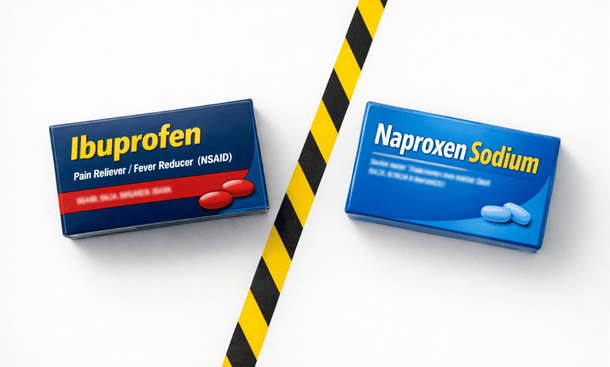
Nonsteroidal anti-inflammatory drugs are probably the most commonly taken medications that people don’t realize are problematic during pregnancy. Ibuprofen (Advil, Motrin) and naproxen (Aleve) are in essentially every medicine cabinet and they work well — outside of pregnancy.
During pregnancy the concerns are real and trimester-specific.
In the first trimester some studies have linked NSAID use to increased risk of miscarriage and certain cardiac and abdominal wall defects. The evidence isn’t conclusive but it’s significant enough that most providers recommend avoiding them entirely in those early weeks.
In the third trimester the concern becomes more acute. NSAIDs can cause premature closure of the ductus arteriosus — a blood vessel in the fetal heart that needs to remain open until after birth. They can also reduce amniotic fluid levels and affect fetal kidney function. After 30 weeks ibuprofen and naproxen are considered contraindicated by most clinical guidelines.
The second trimester is a gray area where some providers allow very short-term NSAID use in specific circumstances. But given that acetaminophen is a safe and effective alternative for pain and fever the question becomes — why take the risk when you don’t have to.
Aspirin at regular doses
Regular-dose aspirin — 325mg — shares many of the same concerns as other NSAIDs. It’s chemically related, carries similar risks for fetal blood flow especially in the third trimester, and is generally not recommended for routine pain or fever management during pregnancy.
The important distinction here is low-dose aspirin at 81mg which some providers specifically prescribe for high-risk pregnancies — particularly for women at elevated risk of preeclampsia or with certain clotting conditions. That’s a deliberate clinical decision made with full awareness of the pregnancy. It’s not the same as grabbing regular aspirin for a headache.
If you were taking regular aspirin before pregnancy for any reason — heart health, pain management, anything — have that conversation with your OB early. Do not just continue it without guidance.
Bismuth subsalicylate: pepto-bismol and kaopectate
This one surprises people every time. Pepto-Bismol feels so benign — it’s pink, it’s been around forever, it’s sold right next to the antacids. But bismuth subsalicylate is chemically related to aspirin and carries the same category of concerns during pregnancy.
In the third trimester specifically the salicylate component can affect fetal platelet function and blood flow. Pepto-Bismol and Kaopectate in all their forms — liquid, chewable tablets, caplets — should be avoided during pregnancy. This is one of those situations where the familiar and harmless-seeming option is genuinely not appropriate.
Safe alternatives for nausea are available. Safe alternatives for diarrhea and digestive upset exist. You do not need to reach for Pepto-Bismol.
Accutane and oral retinoids
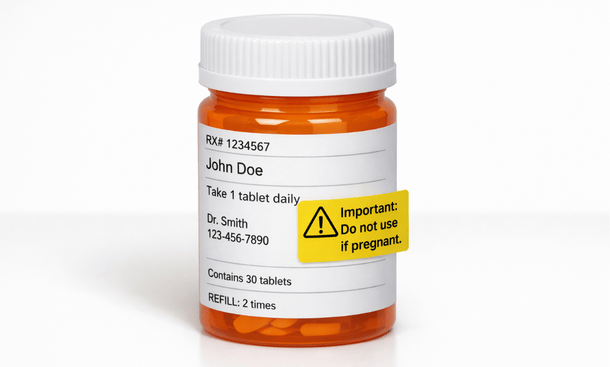
Isotretinoin — sold under the brand name Accutane — is one of the most clearly dangerous medications during pregnancy that exists. It is a known teratogen meaning it directly causes birth defects. The risk is not theoretical or statistical. It is well-documented and severe.
Fetal exposure to isotretinoin is associated with a pattern of birth defects including craniofacial abnormalities, heart defects, brain malformations, and developmental disabilities. The risk exists even with very short exposure during early pregnancy.
Because of this isotretinoin is only prescribed through a program called iPLEDGE which requires documented negative pregnancy tests and two forms of contraception for women of childbearing age. If you were taking Accutane before becoming pregnant and the pregnancy was unplanned, contact your OB immediately and be honest about your medication history.
Other oral retinoids like acitretin carry similar risks and are similarly contraindicated during pregnancy.
Topical retinoids: A more nuanced conversation
Prescription topical retinoids — tretinoin creams used for acne or anti-aging — are a more nuanced situation. The systemic absorption through skin is much lower than with oral retinoids which is why some providers consider low-concentration topical retinoids lower risk than oral forms.
That said most OBs and dermatologists recommend discontinuing topical retinoids during pregnancy out of an abundance of caution. The benefit of clearer skin is simply not worth any potential risk when there are pregnancy-safe alternatives for acne management.
Over-the-counter retinol products fall into a similar category. The concentrations are lower but the guidance is still generally to avoid them during pregnancy until more definitive safety data exists.
Certain antibiotics
Most antibiotics are safe during pregnancy — bacterial infections need to be treated and untreated infections carry their own serious risks. But a few specific antibiotic classes carry documented concerns.
Tetracyclines — including doxycycline and minocycline — can bind to calcium in developing fetal bones and teeth causing permanent discoloration of baby teeth and potential effects on bone development. They are generally avoided after the first trimester and many providers avoid them entirely during pregnancy.
Fluoroquinolones — ciprofloxacin and similar — have shown effects on cartilage development in animal studies. Human data is less conclusive but most providers avoid them during pregnancy when an alternative exists.
Trimethoprim — often found in combination with sulfamethoxazole as Bactrim — is a folate antagonist that carries particular concern in the first trimester when folic acid is critical for neural tube development. It is also avoided near delivery due to effects on neonatal bilirubin.
This doesn’t mean you refuse antibiotics during pregnancy. It means your provider should know you’re pregnant so they can prescribe the appropriate option from the many safe alternatives available.
Decongestants in the first trimester
Pseudoephedrine — the active decongestant in Sudafed and the “D” versions of Claritin-D and Zyrtec-D — is specifically flagged for first trimester avoidance. Some studies have linked first trimester pseudoephedrine use to gastroschisis — a birth defect where the intestines form outside the body wall.
The association isn’t proven definitively but it’s strong enough that most guidelines recommend avoiding pseudoephedrine during the first trimester entirely. After that window some providers consider short-term use acceptable for significant congestion but it remains a conversation rather than an assumption.
Phenylephrine — the decongestant in many pharmacy versions of Sudafed — has less data overall and is treated with similar caution.
Herbal supplements that aren’t as safe as they sound

This is a category that doesn’t get enough attention. Herbal supplements are sold without a prescription, they’re marketed as natural, and they feel inherently safer than pharmaceutical medications. During pregnancy that assumption needs to be revisited.
Blue cohosh and black cohosh have been used historically to stimulate labor and can cause uterine contractions. They should be completely avoided during pregnancy especially in the first and second trimesters.
Dong quai is used in traditional medicine for various gynecological purposes and can stimulate uterine muscle activity. Not appropriate during pregnancy.
Pennyroyal in concentrated form has historically been used as an abortifacient. Even in tea form it carries significant risk.
High-dose vitamin A supplements — not beta-carotene but preformed vitamin A above 10,000 IU — can be teratogenic at very high doses similar to the retinoid medications discussed above.
Ephedra and ma huang are stimulants that have been associated with serious cardiovascular complications and are not appropriate during pregnancy.
The overarching principle is this: “natural” is not a safety guarantee. Many of the most potent and dangerous substances in the world are completely natural. Every supplement you’re considering during pregnancy deserves a conversation with your provider — not just a Google search.
Medications that need provider review not elimination
Some medications that are used during pregnancy require careful management rather than automatic discontinuation. Stopping certain medications abruptly — particularly psychiatric medications, blood pressure medications, thyroid medications, and seizure medications — can pose risks that are greater than the medication itself.
If you are taking prescription medications for chronic conditions and you become pregnant or are planning to become pregnant, work with your provider to review each medication individually. Do not stop anything suddenly without guidance. The goal is an informed decision based on your specific situation — not a blanket rule.
Knowing what to avoid is just as important as knowing what’s safe. NSAIDs, Pepto-Bismol, oral retinoids, certain antibiotics, first-trimester decongestants, and many herbal supplements all carry documented concerns during pregnancy. Some are absolute avoids. Others depend on trimester or specific circumstances.
The pharmacy aisle is a lot less overwhelming when you know exactly what you’re looking for and what to leave behind. And when in doubt your OB or midwife is always the right call before you take anything you’re unsure about.
If all of this has you wondering what the very first weeks of pregnancy look like in terms of medication safety — especially that nerve-wracking first trimester when everything feels highest stakes — safe medications in the first trimester: what’s actually ok to take walks through exactly what’s approved during that critical early window so you’re not left guessing when it matters most.

Carlene R. Priddy offers strategic advice and practical guidance for governorsbefore, during, and after their mandatesto strengthen governance and public leadership.