
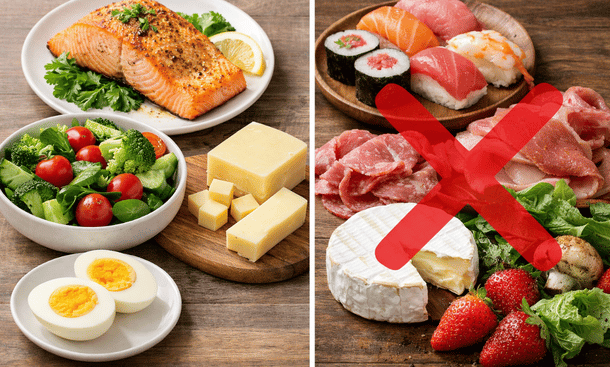
Finding out you’re pregnant comes with this weird mix of excitement and sudden paranoia about everything you put in your body. I remember standing in the grocery store during my first pregnancy, staring at the deli counter and genuinely wondering if one turkey sandwich could actually hurt my baby.
The internet didn’t help. Every website had a different list of forbidden foods, and half of them contradicted each other. Some made it sound like you could barely eat anything, while others were way too casual about actual risks.
So let me break down the real deal about which foods to avoid during pregnancy and why. This isn’t about scaring you or making you paranoid. It’s about understanding the actual risks so you can make informed choices without stressing over every single bite.
Why Some Foods Are Off Limits
Your immune system is naturally suppressed during pregnancy so your body doesn’t reject the baby. That’s great for keeping your pregnancy going, but it also means you’re more vulnerable to foodborne illnesses that wouldn’t normally make you super sick.
Certain bacteria and parasites that might just give a non-pregnant person an upset stomach can cause serious complications during pregnancy. We’re talking miscarriage, stillbirth, preterm labor or severe illness in your baby.
Some foods also contain high levels of mercury or other contaminants that can affect your baby’s developing brain and nervous system.
The good news is that most food safety rules are pretty straightforward once you understand the reasoning behind them.
Raw and Undercooked Seafood
Sushi, sashimi, oysters, clams and any other raw seafood are off the table during pregnancy. Raw fish can harbor parasites and bacteria like listeria and salmonella that pose serious risks.
I was genuinely sad about giving up sushi. It was one of my favorite foods before pregnancy. But the risk of parasitic infection or food poisoning just wasn’t worth it.
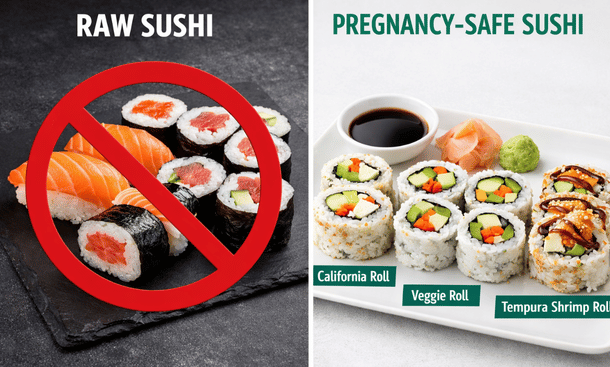
Some women eat vegetarian sushi rolls or fully cooked options like California rolls made with cooked crab or shrimp tempura rolls. Just make sure everything is fully cooked and from a reputable restaurant with good food safety practices.
Cooked seafood is actually really good for you during pregnancy because of the omega-3 fatty acids. Just make sure it’s heated to at least 145 degrees Fahrenheit.
High-Mercury Fish
Not all fish are created equal when it comes to mercury content. Large predatory fish accumulate mercury in their tissues over time, and high mercury levels can damage your baby’s developing nervous system.
Avoid shark, swordfish, king mackerel, tilefish, bigeye tuna and marlin completely. These fish have the highest mercury levels.
Limit albacore tuna to six ounces per week. The chunk light tuna has less mercury and you can have up to 12 ounces weekly.
Safe fish options include salmon, sardines, anchovies, trout, herring and pollock. These are low in mercury and high in beneficial omega-3s.
I ate salmon twice a week throughout both my pregnancies. It became one of my favorite meals and I actually felt good knowing I was getting those brain-building nutrients for my baby.
Deli Meats and Hot Dogs
This one surprised me at first. Deli meats, lunch meats, hot dogs and other processed meats can be contaminated with listeria, a bacteria that can cross the placenta and cause serious infections.
Listeria is particularly dangerous because it can survive and even grow in refrigerator temperatures. Pregnant women are about 10 times more likely than other people to get listeria infection.
The solution is simple though. Heat deli meats and hot dogs until they’re steaming hot, at least 165 degrees. The heat kills any potential listeria bacteria.
I’ll be honest, I gave up deli sandwiches entirely during my first pregnancy because I was paranoid. By my second pregnancy, I just heated the turkey or ham in the microwave for 30 seconds before making my sandwich. Problem solved.
Unpasteurized Dairy Products
Unpasteurized milk and cheeses made from raw milk can contain harmful bacteria including listeria, salmonella, E. coli and campylobacter.
Soft cheeses are the main concern here. Avoid brie, camembert, feta, queso blanco, queso fresco, blue cheese and goat cheese unless the label specifically says it’s made with pasteurized milk.
Hard cheeses like cheddar, Swiss, parmesan and mozzarella are generally safe because they have lower moisture content and are less likely to harbor bacteria.
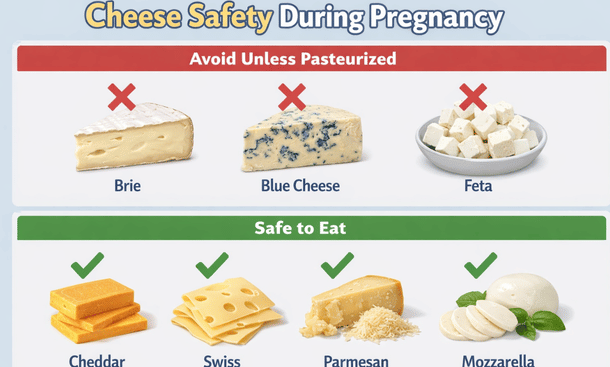
Read labels carefully. Many soft cheeses sold in regular grocery stores are actually made with pasteurized milk and are totally safe. I found pasteurized feta and goat cheese that I could enjoy without worry.
The same goes for unpasteurized juice or cider. Stick to pasteurized versions or freshly squeezed juice that you make yourself at home.
Raw or Undercooked Eggs
Raw or undercooked eggs can contain salmonella bacteria. That means no runny yolks, no cookie dough, no homemade Caesar dressing, no raw cake batter.
Make sure eggs are cooked until both the white and yolk are firm. Scrambled eggs should be fully cooked through with no liquid remaining.
Store-bought products like mayonnaise, salad dressings and ice cream are usually made with pasteurized eggs and are safe. But homemade versions using raw eggs should be avoided.
I really missed over-easy eggs with runny yolks. That was probably my biggest food sacrifice during pregnancy. But fully cooked scrambled eggs became my morning protein staple.
Raw or Undercooked Meat and Poultry
Raw or rare meat and poultry can contain harmful bacteria and parasites like toxoplasma, E. coli and salmonella.
Cook beef, pork and lamb to at least 145 degrees with a three-minute rest time. Ground meats should reach 160 degrees. Poultry needs to hit 165 degrees.
Use a meat thermometer to be sure. Don’t rely on color alone because meat can brown before it reaches a safe internal temperature.
This meant no more medium-rare steaks for me during pregnancy. Everything had to be well done. I made peace with it by focusing on flavor through marinades and seasonings.
Also be careful about cross-contamination. Use separate cutting boards for raw meat and other foods. Wash your hands thoroughly after handling raw meat.
Unwashed Produce
Fruits and vegetables can carry harmful bacteria and parasites from soil or contaminated water. Toxoplasma in particular can live on unwashed produce and cause serious problems during pregnancy.
Wash all produce thoroughly under running water, even if you plan to peel it. Use a produce brush for firm fruits and vegetables.
Pre-washed salad greens should still get an extra rinse at home. Don’t trust that the washing was thorough enough.
I got into the habit of washing everything as soon as I got home from the grocery store. It became part of my routine and gave me peace of mind.
Raw Sprouts
Alfalfa, clover, radish and mung bean sprouts are particularly risky because bacteria can get into the seeds before the sprouts even grow. Washing doesn’t remove it.
The warm, humid conditions needed to grow sprouts are also ideal for bacteria growth. Several outbreaks of salmonella and E. coli have been linked to raw sprouts.
Cooked sprouts are safe if they’re heated to at least 165 degrees. But honestly, I just avoided sprouts entirely during pregnancy. Not worth the risk for something I didn’t crave anyway.
Excess Caffeine
Caffeine crosses the placenta and your baby’s developing system can’t metabolize it efficiently. High caffeine intake has been linked to miscarriage and low birth weight.
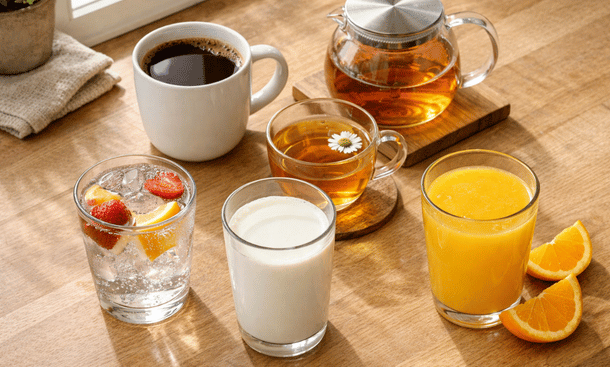
Most experts recommend limiting caffeine to 200 milligrams per day during pregnancy. That’s about one 12-ounce cup of coffee.
Remember that caffeine is also in tea, soda, energy drinks and chocolate. It adds up quickly if you’re not paying attention.
I switched to half-caff coffee in the morning and made sure I wasn’t having other sources of caffeine throughout the day. Some days I went fully decaf and honestly didn’t miss it as much as I thought I would.
Alcohol
There is no known safe amount of alcohol during pregnancy. Alcohol passes directly to your baby through the umbilical cord and can cause fetal alcohol spectrum disorders.
These disorders can cause physical abnormalities, learning disabilities, behavioral problems and developmental delays that last a lifetime.
The safest choice is to avoid alcohol completely during pregnancy. If you drank before you knew you were pregnant, don’t panic. Just stop now and talk to your doctor if you’re concerned.
I had friends who said one glass of wine here and there was fine, but I personally didn’t want to take any chances. Nine months of avoiding alcohol felt like a small sacrifice for my baby’s health.
Excess Vitamin A
High doses of vitamin A, particularly from supplements or liver, can cause birth defects. Avoid liver, liver products like pate, and supplements containing retinol or retinyl palmitate.
Vitamin A from plant sources like carrots and sweet potatoes is fine because your body only converts what it needs.
Check your prenatal vitamin to make sure it doesn’t contain more than 3,000 micrograms of preformed vitamin A.
Herbal Teas and Supplements
Just because something is natural doesn’t mean it’s safe during pregnancy. Many herbs can trigger contractions or cause other complications.
Avoid teas and supplements containing cohosh, dong quai, yohimbe, ephedra and others. Even common herbs like chamomile should be consumed in moderation.
Stick to pregnancy-safe teas like ginger, peppermint and raspberry leaf in the third trimester. Always check with your doctor before trying any herbal products.
I stuck to plain hot water with lemon or ginger tea when I needed something warm and soothing.
Street Food and Questionable Restaurants
This isn’t about being snobby. It’s about food safety standards. Street vendors and restaurants with questionable hygiene practices pose higher risks for foodborne illness.
If you’re traveling or in an unfamiliar area, stick to restaurants with good reputations and visible cleanliness. Skip the sketchy taco truck no matter how good it smells.
Hot, freshly cooked food is generally safer than anything that’s been sitting out at room temperature.
Leftovers That Have Been Sitting Too Long
Leftovers are fine during pregnancy, but you need to be more careful about storage and timing than usual.
Refrigerate leftovers within two hours of cooking. Eat them within three to four days. Reheat to at least 165 degrees, not just warm.
When in doubt, throw it out. Your heightened risk for food poisoning during pregnancy means you can’t take chances on questionable leftovers.
I labeled everything in my fridge with dates so I knew exactly how long things had been sitting there.
Foods That Might Trigger Heartburn
This isn’t about safety but comfort. Many women develop terrible heartburn during pregnancy, especially in the third trimester.
Spicy foods, citrus, tomato-based sauces, chocolate, caffeine, fatty or fried foods and carbonated drinks commonly trigger heartburn.
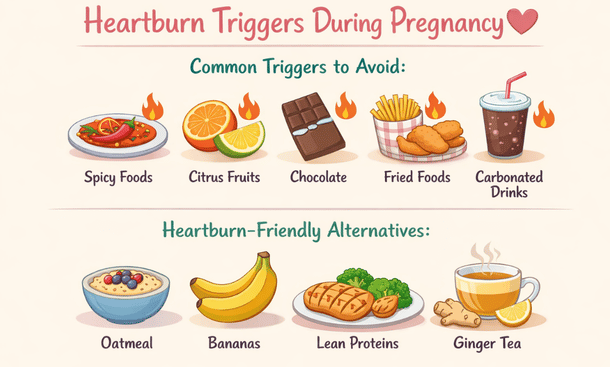
You don’t have to avoid these completely unless they bother you. But if you’re suffering from heartburn, cutting back on triggers can make a huge difference.
I had to give up spicy food entirely in my third trimester. The heartburn was so bad that it wasn’t even worth it.
What About Occasional Slip-Ups
Let me be real with you. If you accidentally eat something from the avoid list, don’t panic. The risks are real but they’re also relatively small for any single exposure.
I once ate a salad with blue cheese crumbles before I realized it wasn’t pasteurized. I called my doctor, she reassured me that one exposure was unlikely to cause problems, and everything was fine.
The guidelines exist to minimize risk over the course of your entire pregnancy. One mistake doesn’t mean something bad will definitely happen.
That said, don’t use this as an excuse to regularly ignore food safety rules. The guidelines exist for good reasons.
Reading Labels Like a Pro
Get in the habit of reading ingredient lists and looking for key words like pasteurized, fully cooked and heated.
Check country of origin on seafood to avoid fish from areas with higher contamination levels.
Look for safe handling instructions on meat and poultry packaging.
When eating out, don’t be afraid to ask how food is prepared. Any good restaurant will accommodate pregnancy food safety questions.
Trusting Your Instincts
If something looks, smells or tastes off, don’t eat it. Your heightened sense of smell during pregnancy might actually be your body’s way of protecting you from questionable food.
I developed a serious aversion to anything that seemed even slightly sketchy. My body knew what it was doing.
The Bottom Line
Navigating food restrictions during pregnancy can feel overwhelming at first, but it becomes second nature pretty quickly. The key foods to avoid are raw or undercooked animal products, high-mercury fish, unpasteurized dairy, unwashed produce and alcohol.
Most restrictions are temporary and serve to protect you from foodborne illnesses that could harm your baby. With a little awareness and some simple precautions, you can enjoy a varied, delicious diet while keeping both of you safe.
Focus on what you can eat rather than what you can’t. There are so many nutritious, satisfying foods that are completely safe during pregnancy.
For the complete picture of pregnancy nutrition from essential vitamins to meal planning, explore our comprehensive pregnancy nutrition guide. Understanding what to avoid is just one part of pregnancy nutrition. You also want to make sure you’re getting enough protein to support your baby’s growth and your changing body. Check out our detailed guide on protein during pregnancy…

Carlene R. Priddy offers strategic advice and practical guidance for governorsbefore, during, and after their mandatesto strengthen governance and public leadership.