
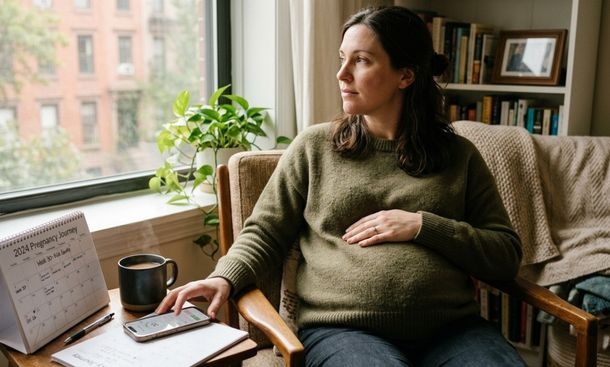
Cramps can send your mind straight into detective mode. You feel that pull or that little ache low in your belly and now you’re wondering if it means your period is coming, if implantation happened, or if you’re already in early pregnancy territory. That spiral is common. It happens fast too.
I’m Sophia M. Caldwell, I’m 37, and I write a lot about pregnancy tracking in a way that respects how messy real life can be. Early pregnancy cramps are one of those signs people latch onto because they feel physical and immediate. The problem is they are not exclusive to pregnancy. Timing is what gives them meaning. If you want the bigger view that ties cramps into ovulation, implantation, and pregnancy dating, this guide to figuring out when you conceived connects the full timeline. Right now, let’s stay focused on what cramps may mean and when they actually matter.
Why cramps happen so early
Your body does a lot after ovulation, whether pregnancy happens or not. Hormones shift. The uterine lining changes. Digestion can slow down. Muscles can feel different. So some cramping in the second half of your cycle is normal.
If conception happens, a fertilized egg usually implants in the uterine lining around 6 to 12 days after ovulation. Some people believe that implantation can come with mild cramping. Then, once pregnancy starts developing, your uterus and blood flow continue changing, which can also create sensations that feel like light cramps or pulling.
That is why cramps can show up before a missed period, around the time of a missed period, or in the early days after a positive test. Same body region. Different possible reasons.
What early pregnancy cramps usually feel like
Most people who notice early pregnancy cramps describe them as mild. Not the kind of pain that stops you in your tracks. More like:
- light pulling
- dull aching
- low abdominal pressure
- little twinges
- a stretching feeling
Some feel them in the center. Some feel them off to one side. Some notice them more in the lower back. They may come and go. They may last a few minutes or drift in and out over a couple of days.
That mild quality matters. Severe pain is not something to write off as normal early pregnancy cramping. If pain is strong, sharp, one-sided, or paired with heavy bleeding, that is a different situation and it deserves medical attention.
Can implantation cramps tell you when you conceived
They can help narrow the window, but they cannot give you an exact date.
Here’s the logic. Conception usually happens within about 24 hours of ovulation if sperm meets the egg. Implantation happens later, usually 6 to 12 days after ovulation. So if you felt cramps that truly lined up with implantation, conception likely happened roughly a week earlier.
Say you ovulated on june 8 and noticed light cramps on june 16. Those cramps would not mean you conceived on june 16. They could suggest implantation around that date, which would point back to conception around june 8 or june 9.
That distinction gets lost a lot online. People say “I think I conceived when I had implantation cramps.” Nah, not exactly. If those cramps were related, they happened after conception, not during it.
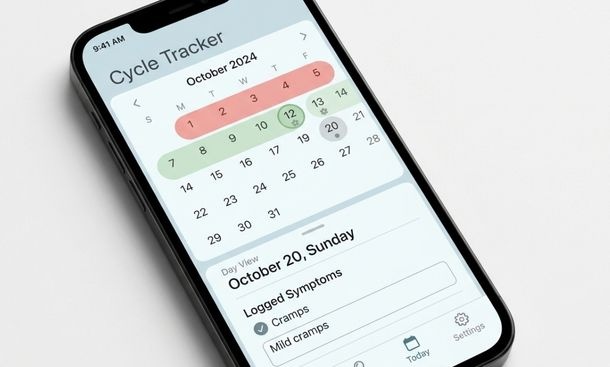
Cramps before your period vs cramps in early pregnancy
This is where most people get tripped up. Pre-period cramps and early pregnancy cramps can feel extremely similar.
Period cramps often
- build as your period gets closer
- become stronger for some people
- lead into bleeding
- come with your usual PMS pattern
Early pregnancy cramps often
- stay mild
- do not turn into a normal period
- may appear around implantation timing
- can continue on and off after a missed period
Still, none of that is a hard rule. Some periods start with light cramps and barely any warning. Some early pregnancies feel exactly like PMS. So you want to look at the full pattern, not just one symptom.
Ask yourself:
- did these cramps happen around 6 to 12 days after ovulation
- are they lighter than my usual period cramps
- did they happen without my normal bleeding pattern
- do they feel different from what I usually get
Those questions will give you a better read than just trying to decide if a cramp “feels pregnant.”
What causes cramps in very early pregnancy
A few things may be going on.
Implantation
This is the big one people think about first. Some believe the embryo attaching to the uterine lining can trigger mild cramping. Not everyone feels it and not everyone agrees on how noticeable it is, but the timing makes it a common suspect.
Uterine changes
Once pregnancy begins, the uterus starts responding right away. Blood flow increases. Hormones shift. Ligaments and tissues begin adjusting even before you are showing.
Digestive changes
Progesterone can slow digestion and cause gas, bloating, and pressure. That can absolutely feel like cramping even when the uterus is not the main issue.
Increased body awareness
Let’s be real for a second. When you think you might be pregnant, you notice everything. Sensations that usually pass under the radar suddenly feel loaded with meaning. That does not mean they are fake. It just means they may feel louder.
When cramps are more likely just regular luteal phase symptoms
Sometimes a cramp is just a cramp. The luteal phase can do that.
Cramps are more likely to be normal post-ovulation symptoms when:
- they happen every month in roughly the same pattern
- they start soon after ovulation
- they lead into a normal period
- they come with your usual PMS signs and no other major change
Progesterone can cause bloating, pelvic heaviness, low back discomfort, and low-level cramps before a period. If you know your body tends to do that, it is worth respecting your normal pattern instead of assuming every cycle is different.
That said, one cycle can still surprise you. Tracking helps because it lets you compare what is typical with what is new.
When cramping may be more meaningful
Cramps become more interesting when they line up with a possible conception timeline and break from your usual pattern.
That might look like:
- sex during the fertile window
- ovulation around a known date
- mild cramps around 7 to 10 days later
- very light spotting or no spotting
- no normal period after that
- a positive test follows
That pattern does not prove what happened down to the hour, but it is useful. It helps you estimate when conception likely occurred and when implantation may have followed.
What early pregnancy cramps do not prove
A lot of people want cramps to be a clear answer. They are not.
Cramps do not prove implantation. They do not confirm pregnancy. They do not tell you whether a pregnancy is progressing normally. They do not replace a pregnancy test or medical care when symptoms are concerning.
That can sound frustrating, but it is also freeing. You do not have to solve the whole mystery from one body sensation. You can use cramps as one clue in a bigger pattern.
That bigger pattern includes:
- your last period
- your likely ovulation day
- intercourse dates
- any spotting
- when you test
- whether your period arrives
That is how you move from guessing to something more grounded.
When to take a pregnancy test if you have cramps
Testing too early is where a lot of confusion starts. If your cramps are related to implantation, hCG may only just be starting to rise. That means a home test can still be negative even if pregnancy has started.
In general, testing on the day your period is due or after gives you a better shot at a reliable result. If you test early and it is negative, that is not always the end of the story. If your period still does not come, test again in a day or two.
A positive test gives the cramping more context. A negative test taken too early does not erase the possibility.
When cramping is not normal
Mild cramping can be normal in early pregnancy. Severe pain is another story.
You should not brush it off if you have:
- strong or sharp pain
- pain mostly on one side
- heavy bleeding
- dizziness or fainting
- shoulder pain
- fever
Those symptoms can signal something more serious, including an ectopic pregnancy or another medical issue. If that kind of pain shows up, get checked out.
How to track cramps without losing your mind
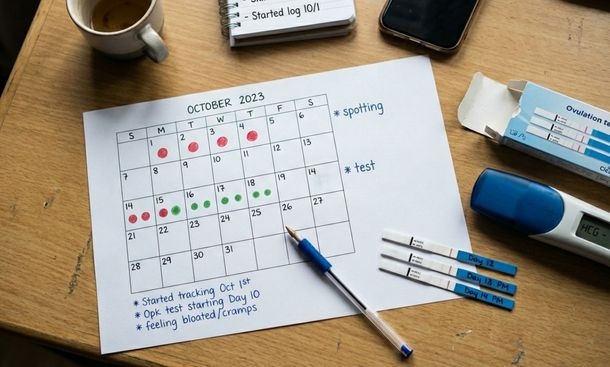
You do not need to become a full-time scientist about this. A simple note on your phone is enough.
Write down:
- when the cramps started
- where you felt them
- whether they were mild or strong
- whether spotting showed up
- your likely ovulation day
- when your period is due
- when you tested
This does two things. First, it gives you a clearer picture if the cycle turns out to be a pregnancy. Second, it keeps you from rewriting the timeline later based on anxiety or hope. Memory gets slippery when a lot is riding on the answer.

The smartest way to read cramps in context
The best way to think about early pregnancy cramps is as supporting evidence. Not the lead actor. If they show up in the right part of your cycle and your period never arrives, they matter more. If they happen on a schedule that matches your normal PMS, they may mean a lot less.
You are looking for alignment, not certainty from one symptom.
That means:
- matching cramps to ovulation timing
- watching whether bleeding follows
- noticing if the sensation is usual or unusual for you
- confirming with testing when the timing is right
That is the kind of tracking that actually helps. Not doom-scrolling symptom threads at midnight while trying to compare your left-side twinge to someone else’s.
Early pregnancy cramps can be part of the picture when you are trying to work out conception timing, but they are most useful when you read them alongside ovulation, implantation timing, and the date your period was due. Mild cramps may line up with early pregnancy. They may also be regular luteal phase symptoms. The timeline is what gives them meaning. If you want to understand how testing fits into that same window, the next smart read is negative pregnancy test: could it be too early?.

As an author at Felyro.com, I create actionable content on pregnancy tracking, offering practical tools, tips, and insights that empower mothers-to-be to stay informed and confident throughout their pregnancy.