

A negative pregnancy test can mess with your head real quick. You thought the timing lined up, your body feels different, maybe your period is late, and still that little window says no. So now what. Did the test catch the truth or did you just test too early.
I’m Sophia M. Caldwell, I’m 37, and I spend a lot of time writing about pregnancy tracking in a way that feels useful in real life. One of the biggest mistakes people make is assuming a negative result means the story is over. Sometimes it does. Sometimes it absolutely does not. If you are trying to work out timing from ovulation to implantation to testing, this guide to figuring out when you conceived gives you the full map. Right here, the goal is simpler: understand why a negative test can happen even when pregnancy is still possible.
Why a pregnancy test can be negative at first
Home pregnancy tests look for hCG in your urine. That hormone only starts building after implantation. Not after sex. Not right after ovulation. After implantation.
That timing matters a lot.
A basic sequence looks like this:
- sex happens during the fertile window
- ovulation happens
- fertilization may happen within about 24 hours
- implantation usually happens 6 to 12 days later
- hCG begins to rise after implantation
- the test turns positive once hCG is high enough to detect
So if you test before implantation or very soon after, the test may still be negative even if conception already happened. That is the part that trips people up. A negative test does not always mean no conception. It can just mean not enough hormone yet.
The most common reason for a negative test: timing
Most false negatives come down to one thing. Testing too early.
People test early for all kinds of reasons. They have symptoms. They are anxious. They are hopeful. They just want to know. Totally fair. But if you are only a few days past ovulation, the biology may not be ready to give you a clear answer.
Even if implantation happened, hCG still needs time to rise to a detectable level. That can vary from person to person and pregnancy to pregnancy. Some tests are more sensitive than others, but none can force your body to reveal something before it is ready.
A lot of people get the most reliable result on the day their period is due or after. Testing before that can work, sure, but it also raises the chance of getting a negative that is not final.
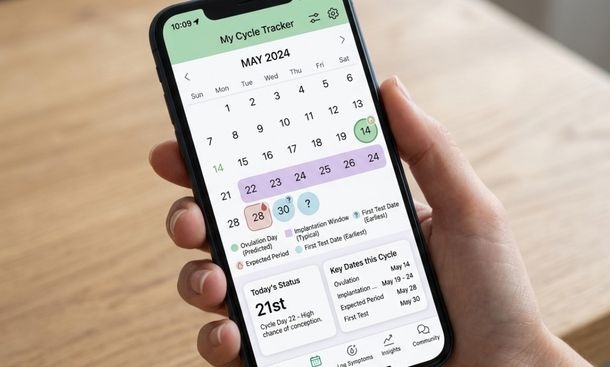
How early is too early
This depends on your cycle and how sure you are about ovulation.
If you ovulated later than you thought, then your whole testing timeline shifts. That is one reason app predictions can throw people off. An app may say your period is due, but if ovulation happened late, your period might not actually be late at all.
A rough guide:
- less than 10 days past ovulation is often very early
- 10 to 12 days past ovulation can still be early for some people
- the day your period is due is a more reliable testing point
- 1 to 3 days after a missed period gives an even clearer answer
That is not a hard law. Some people test positive sooner. Some need more time. The point is that a negative result carries way more uncertainty when it is early.
Signs you may have tested too soon
A negative test feels a little different when the timing still leaves room for pregnancy. A few signs point in that direction.
Your period is not actually due yet
This sounds obvious, but cycle math gets messy fast, especially if you are going by an app estimate.
You do not know exactly when you ovulated
If ovulation is an estimate, then “late period” may also be an estimate.
You have symptoms but they started recently
If your symptoms began around implantation timing, hCG may still be low.
The test was taken with diluted urine
Testing later in the day after drinking a lot of water can affect results. First morning urine often gives a stronger reading when hCG is still low.
The second line never had much chance to show
Some very early tests are simply too early for any visible line, even with a sensitive test.
Symptoms plus a negative test: what does that mean
This is where things get maddening.
You can absolutely feel symptoms and still test negative for a few reasons:
- pregnancy hormones may still be too low to detect
- your symptoms may be from the luteal phase, not pregnancy
- ovulation may have happened later than expected
- you may be pregnant but only a few days away from a clearer result
Symptoms alone cannot settle it. That is the hard truth. Breast tenderness, mild cramping, fatigue, bloating, and even nausea can show up before a period too. So if the test is negative, symptoms keep you in maybe territory until time gives you a better answer.
That is why timing beats guessing. Symptoms matter more when they line up with ovulation, implantation, and a missed period.
Can a negative test happen after implantation
Yes. Totally possible.
Implantation does not instantly create a strong test line. Once implantation happens, hCG starts rising, but it may still take a bit before the hormone reaches the test’s detection threshold. This is especially true if implantation happened on the later end of the normal range.
Say implantation happened 11 or 12 days after ovulation. That is later, but still within a normal window. If you tested the same day or the next morning, hCG might still be too low to catch. A couple of days later, the result could be different.
That is why people can say, “I swear I felt pregnant and the first test was negative,” and both things can be true.
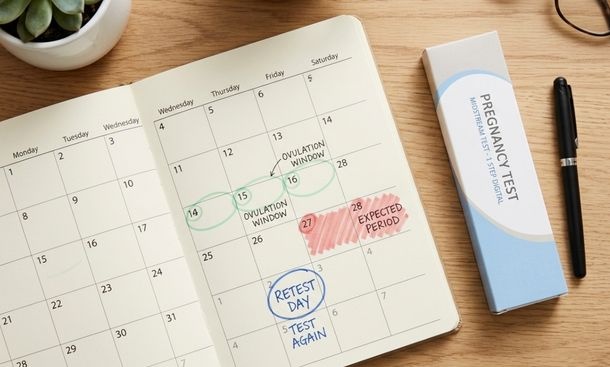
What to do after a negative pregnancy test
Do not let one early result run the whole show. The next step depends on timing.
If your period is not due yet
Wait a bit. I know, not fun. But testing again too soon may only give you the same unclear answer.
If your period is due today
You can test again in 1 to 2 days if your period does not arrive.
If your period is already late
Retest in 48 hours with first morning urine if possible.
If the negative tests keep coming and your period still does not show
It may be time to consider late ovulation, stress, illness, travel, or another cycle disruption. If the delay continues and you are unsure what is going on, check in with a healthcare provider.
The point is to build a sequence, not put all the pressure on one strip.
Things that can affect your result
A few factors can make a negative result more likely even when pregnancy is possible.
Testing at the wrong time of day
First morning urine is often best because it is more concentrated.
Drinking a lot of water beforehand
Too much fluid can dilute hCG levels in urine.
Using the test too early
Still the number one issue.
Not following the test instructions closely
Reading the result too soon or too late can make things confusing.
Assuming app dates are exact
Apps are helpful, but they estimate. If ovulation is off, your whole testing plan may be off too.
When a negative test probably does mean no pregnancy
Not every negative is a false negative. Sometimes the answer really is no.
That becomes more likely when:
- you are several days past your expected period
- you used the test correctly
- your urine was concentrated
- you have repeated negative tests
- bleeding starts like a normal period
At that point, the result starts carrying more weight. The farther you get from the likely implantation window without a positive test, the less likely pregnancy becomes.
Still, if your period remains absent and something feels off, it is worth paying attention. Bodies do not always follow the neatest script.
How to use a negative result to estimate conception timing
A negative test does not just give you a yes or no. It also gives you timeline information.
If you tested very early and got a negative, conception may still have happened but implantation may have occurred later. If you tested after a missed period and the result stayed negative, conception becomes less likely for that cycle.
That is useful when you are trying to reconstruct what happened. A negative test on 7 days past ovulation means very little. A negative test 4 days after a missed period means much more.
So when you log a test, log it with context:
- date of the test
- likely days past ovulation
- whether your period was due
- whether you used first morning urine
- what happened next
That kind of note helps you read the cycle more clearly than just writing “negative” and spiraling from there.
When to get medical advice
Most of the time, the answer is just to wait and retest. But there are situations where you should not just sit on it.
Get checked sooner if:
- your period is very late and tests remain negative
- you have strong pain or heavy bleeding
- you feel dizzy or faint
- your cycles are suddenly very irregular
- you have reason to suspect an ectopic pregnancy
A home test is useful, but it is not the whole story in every case.
The smartest mindset for an early negative
Treat an early negative pregnancy test as a snapshot, not a final verdict. It tells you what the test could see at that moment. That is all.
If the timing was early, leave room for uncertainty. If the timing was solid and the negative repeats, trust that more. The key is to match the result to the timeline instead of letting the line alone decide everything.
That shift helps a lot emotionally too. You stop expecting one test to carry more meaning than it really can.
A negative pregnancy test can absolutely be too early, especially when implantation may have happened late or ovulation was later than expected. The result means the test did not detect enough hCG at that moment, not necessarily that conception never happened. The clearest answer comes from timing, retesting when appropriate, and reading symptoms in context. If you want to understand the other side of the equation and how a positive result can sometimes mislead to, the next useful read is false positive pregnancy test: what it really means.

As an author at Felyro.com, I create actionable content on pregnancy tracking, offering practical tools, tips, and insights that empower mothers-to-be to stay informed and confident throughout their pregnancy.