
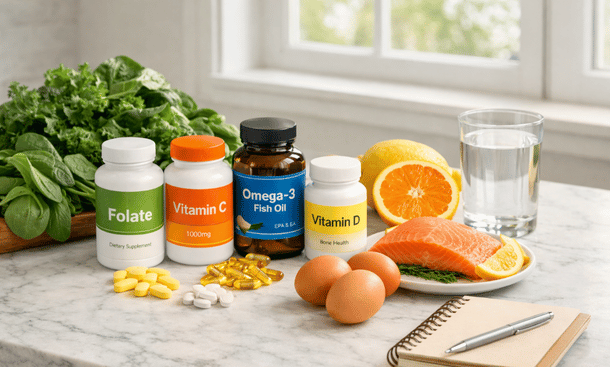
Walking into the vitamin aisle when you’re trying to get pregnant is like staring at a wall of confusion. Prenatal this, folic acid that, omega-3 everything. And then there’s your friend telling you about some supplement her doctor recommended that’s completely different from what you’re seeing online.
Here’s what nobody tells you upfront: the supplements you take before conception can be just as important as the ones you take during pregnancy. Your body needs time to build up certain nutrients, and some of them play critical roles in fertility and early fetal development before you even know you’re pregnant. This is a fundamental part of preparing your body for pregnancy, and getting it right matters more than most people realize.
Let me break down exactly what you need, why you need it, and how much to take. No fluff, just the facts you can actually use.
Why Supplements Matter Before Conception
Even if you’re eating a solid , it’s tough to get optimal levels of every nutrient from food alone. Modern soil is depleted of minerals compared to decades ago. Stress burns through certain vitamins faster. And some nutrients, like folate, are needed in amounts that are really hard to get from diet alone when you’re preparing to conceive.
Plus, your baby’s neural tube develops within the first 28 days of pregnancy. Most women don’t even know they’re pregnant yet at that point. If you wait until you get a positive test to start taking the right supplements, you’ve already missed a critical window.
Starting supplements three months before you try to conceive gives your body time to reach optimal levels. Think of it as stocking the shelves before opening the store.
Folate: The Non-Negotiable
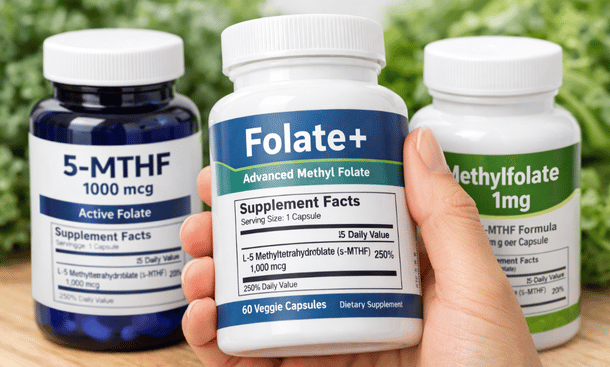
This is the big one. Folate, specifically the active form called methylfolate or 5-MTHF, is essential for preventing neural tube defects like spina bifida. The neural tube closes by day 28 of pregnancy, which is why you need adequate folate before conception.
How Much You Need
The standard recommendation is 400 to 800 micrograms daily. Some women need more, especially if you have a genetic variation called MTHFR that affects how your body processes folate. If you’ve had a previous pregnancy affected by a neural tube defect, your doctor might recommend up to 4,000 micrograms.
Folate vs Folic Acid
Here’s where it gets a little technical. Folic acid is the synthetic form found in most supplements and fortified foods. Your body has to convert it to the active form, methylfolate, before it can use it. Some people, particularly those with MTHFR mutations, don’t convert it efficiently.
Look for supplements that contain methylfolate or 5-MTHF instead of folic acid. It’s more expensive, but it’s already in the active form your body can use immediately. Brands like Thorne, Pure Encapsulations, and Seeking Health make quality methylfolate supplements.
Iron: Building Your Blood Supply
Your blood volume increases by almost 50 percent during pregnancy. You need iron to make hemoglobin, the protein in red blood cells that carries oxygen to your baby. Starting with adequate iron stores before conception prevents anemia during pregnancy, which can cause fatigue and increase risk of preterm birth.
How Much You Need
Most prenatal vitamins contain 18 to 27 milligrams of iron. If you’re already anemic or have heavy periods, you might need more. Get your ferritin levels checked, which measures your iron stores. Optimal ferritin for conception is between 50 and 100 nanograms per milliliter.
Types of Iron
Iron supplements can cause constipation and upset stomach. Ferrous bisglycinate is the most easily absorbed form and tends to cause fewer digestive issues than ferrous sulfate. Take iron with vitamin C to increase absorption, but away from calcium and coffee which block absorption.
If you’re plant-based, you need even more attention to iron since non-heme iron from plants isn’t absorbed as well as heme iron from animal sources.
Vitamin D: The Sunshine Vitamin
Vitamin D deficiency is incredibly common, especially if you live in northern climates or have darker skin. It affects fertility, implantation rates, and pregnancy outcomes. Low vitamin D is linked to gestational diabetes, preeclampsia, and preterm birth.
How Much You Need
Get your levels tested. Optimal vitamin D for fertility is between 40 and 60 nanograms per milliliter. Most people need 2,000 to 4,000 IU daily to maintain healthy levels, but some need more.
Vitamin D is fat-soluble, so take it with a meal that contains fat for better absorption. Most prenatal vitamins contain 400 to 1,000 IU, which often isn’t enough if you’re deficient.
Omega-3 Fatty Acids: DHA and EPA
Omega-3s, particularly DHA, are crucial for fetal brain and eye development. They also reduce inflammation, which can improve egg quality and implantation rates.
How Much You Need
Aim for at least 300 milligrams of DHA daily before and during pregnancy. Many experts recommend 500 to 1,000 milligrams combined DHA and EPA.
Look for high-quality fish oil that’s been tested for mercury and other contaminants. Brands like Nordic Naturals, Carlson, and Wiley’s Finest have good reputations. If you’re vegetarian or vegan, algae-based DHA supplements work too.
Some prenatal vitamins include omega-3s, but often not enough. You might need a separate supplement.
Iodine: For Thyroid Health
Your thyroid hormones regulate metabolism and are essential for fetal brain development. Iodine deficiency is the leading cause of preventable intellectual disability worldwide. Even mild deficiency during pregnancy can affect your baby’s cognitive development.
How Much You Need
The recommended intake is 150 micrograms daily before pregnancy and 220 micrograms during pregnancy. Prenatal vitamins should contain at least 150 micrograms. If you don’t use iodized salt or eat much seafood and dairy, you might need more.
Don’t overdo it though. Too much iodine can also cause thyroid problems. Stick to recommended amounts unless your doctor advises otherwise.
B Vitamins: The Energy Boosters
B vitamins work together to support energy production, nervous system function, and red blood cell formation. Several are particularly important for fertility and pregnancy.
Vitamin B12
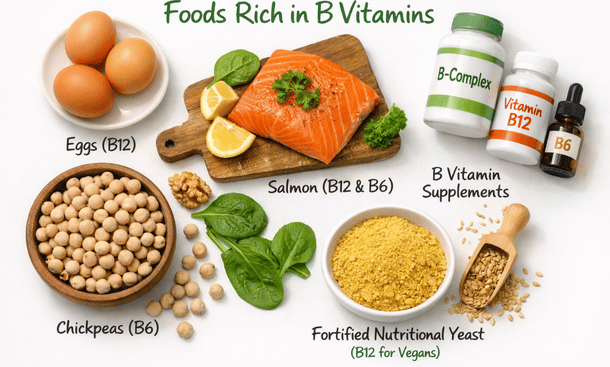
B12 is essential for DNA synthesis and nervous system development. Deficiency can cause neural tube defects and developmental delays. You need 2.4 micrograms daily before pregnancy.
If you’re plant-based, you must supplement B12 since it’s only found naturally in animal products. Look for methylcobalamin or adenosylcobalamin, the active forms.
Vitamin B6
B6 helps regulate hormones and may reduce morning sickness once you’re pregnant. It’s also involved in developing your baby’s brain and nervous system. Most prenatal vitamins contain adequate amounts, usually 10 to 25 milligrams.
Choline: The Forgotten Nutrient
Choline is critical for fetal brain development and reducing risk of neural tube defects, but it’s often left out of prenatal vitamins or included in insufficient amounts.
How Much You Need
Pregnant women need 450 milligrams daily, but most prenatal vitamins contain only 10 to 55 milligrams. Egg yolks are the best food source, with one large egg providing about 150 milligrams.
Look for a prenatal vitamin that includes at least 200 to 300 milligrams of choline, or take a separate choline supplement. Alpha-GPC and CDP-choline are highly bioavailable forms.
Coenzyme Q10: For Egg Quality
CoQ10 is an antioxidant that supports cellular energy production. Research suggests it may improve egg quality, particularly in women over 35 or those with diminished ovarian reserve.
How Much You Need
Studies typically use 200 to 600 milligrams daily. The ubiquinol form is more easily absorbed than ubiquinone, especially as you get older.
CoQ10 isn’t typically included in prenatal vitamins, so this would be an add-on supplement. Talk to your doctor, especially if you’re over 35 or have fertility concerns.
Prenatal Vitamins: The All-in-One Solution
A high-quality prenatal vitamin covers most of your bases, but not all prenatals are created equal.
What to Look For
Choose a prenatal that contains methylfolate instead of folic acid, adequate iron and iodine, a good B-complex, and at least some vitamin D. The label should specify the forms of nutrients, not just generic names.
Some of the better brands include Thorne Basic Prenatal, Ritual Essential Prenatal, FullWell Prenatal, and Garden of Life Prenatal. These tend to be pricier than drugstore brands, but they use better forms of nutrients and are more transparent about sourcing.
When to Take Your Prenatal
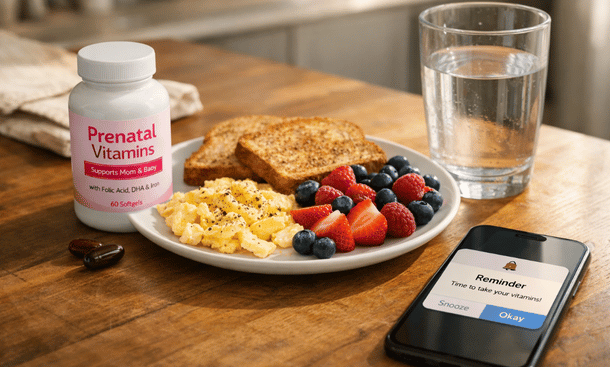
Take your prenatal with food to reduce nausea. If it still bothers your stomach, try taking it at night before bed. Some women do better splitting the dose, taking half in the morning and half at night.
What About Your Partner
Male fertility matters just as much as yours. Sperm takes about 74 days to mature, so what your partner does now affects sperm quality three months from now.
Key Supplements for Men
Zinc supports testosterone production and sperm health. Men need 11 milligrams daily. CoQ10 may improve sperm motility and count. Vitamin C, vitamin E, and selenium act as antioxidants protecting sperm from damage. Omega-3s support sperm membrane health.
Many companies make male fertility supplements, or he can take a quality multivitamin plus additional CoQ10 and omega-3s.
When Not to Take Certain Supplements
More isn’t always better. Some supplements can actually be harmful in excess during pregnancy.
Vitamin A in the retinol form can cause birth defects in high doses. Stick to less than 10,000 IU daily, and make sure your prenatal uses beta-carotene instead of preformed vitamin A. Herbs like black cohosh, dong quai, and saw palmetto may affect hormones and aren’t recommended when trying to conceive.
Always tell your doctor about every supplement you’re taking. Some can interact with medications or aren’t appropriate if you have certain health conditions.
Testing Your Levels
Don’t just guess about what you need. Ask your doctor to check your vitamin D, iron and ferritin, B12, and thyroid function before you start trying to conceive.
Knowing your baseline helps you supplement appropriately instead of taking random amounts and hoping for the best. Some nutrients, like iron and vitamin D, can build up to toxic levels if you take too much for too long.
Most insurance covers these tests as part of preconception care. If yours doesn’t, many direct-to-consumer lab companies offer affordable testing.
The Bottom Line
Starting supplements three months before trying to conceive gives your body time to optimize nutrient levels. At minimum, you need a quality prenatal vitamin with methylfolate, adequate iron, vitamin D, and omega-3s.
Consider adding choline if your prenatal doesn’t include enough, and CoQ10 if you’re over 35. Get your levels tested so you know what you actually need instead of guessing.
Remember that supplements support but don’t replace a healthy diet. You’re building the foundation for a healthy pregnancy, and that takes both good nutrition and the right supplementation working together.
For more on building that nutritional foundation, check out our complete guide to pre pregnancy diet. And if you want the full picture of preconception preparation including sleep and exercise strategies, explore our comprehensive resource on preparing your body for pregnancy.
Your body’s doing something incredible. Give it the tools it needs to do the job right.
