
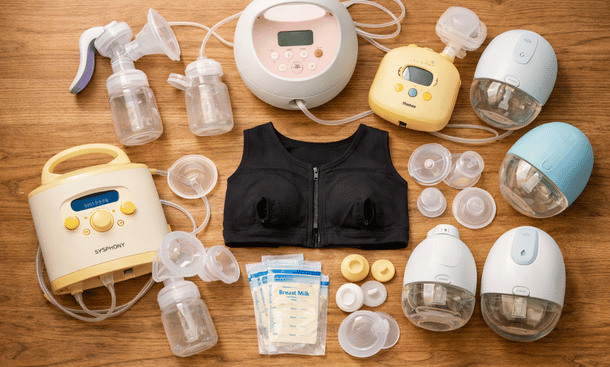
Look, I’m not gonna sugarcoat it. Choosin’ a breast pump in 2026 feels like pickin’ a phone plan—too many options, confusing specs, and everyone’s got an opinion. You’ve got manual pumps, electric pumps, wearable pumps, hospital-grade pumps, and about fifty brands all screamin’ that they’re the best. Add in insurance coverage that varies wildly and advice from your mom, your sister, and that random person on Instagram, and yeah, it’s overwhelming.
I’m Lauren K. Mitchell, and I’ve spent the last decade helpin’ moms navigate this exact mess. I’ve got a background in maternal health, I’m a total breastfeeding nerd, and I’ve personally tested more pumps than I can count. I live right here in New York City where I’ve pumped on the subway, in office bathrooms, in my car stuck in traffic on the BQE, and pretty much everywhere in between.
Here’s what I know for sure. The best pump isn’t the most expensive one or the one with the most Instagram ads. It’s the one that actually fits your life—your work schedule, your baby’s needs, your budget, and your sanity level at 2 AM when you’re pumpin’ for the third time that night.
This guide breaks down everything you need to know to make a smart decision. We’re coverin’ the different types of pumps out there and what each one’s actually good for, the real differences between hospital-grade and personal models, which specific electric pumps are worth your money, whether wearable pumps live up to the hype, how to choose based on your actual situation, and what accessories you genuinely need versus what’s just clutter.
No fluff, no sponsored nonsense, just straight talk from someone who’s been there and who helps moms figure this out every single day.
Understanding the Main Types of Breast Pumps
Before you can pick a specific model, you gotta understand the basic categories. Each type of pump serves different needs and works better for certain situations.
Manual pumps are the simplest option. You squeeze a handle to create suction, and you control everything with your own hand. They’re cheap, quiet, portable, and they work anywhere without needin’ batteries or outlets. The downside? Your hand gets tired real quick, and you can only pump one side at a time. Manual pumps are perfect as backups or for moms who only pump occasionally—maybe once a day to build a small freezer stash or to relieve engorgement. But if you’re pumpin’ multiple times daily, the repetitive motion gets old fast.
Single electric pumps take the hand work out of the equation. A motor creates the suction automatically, but you’re still doin’ one breast at a time. These are a step up from manual in terms of convenience without the price tag of double pumps. They work well for occasional pumpin’ or for moms who have plenty of time and don’t mind the slower pace. The reality is that most workin’ moms find single pumps too time-consumin’ when they’re tryin’ to squeeze pumpin’ into lunch breaks.
Double electric pumps are the workhorses. You pump both breasts simultaneously, cuttin’ your session time in half. These are what most insurance plans cover, and they’re the go-to for moms who are back at work or exclusively pumpin’. You get adjustable suction and speed settings, most have letdown modes that mimic baby’s nursin’ pattern, and many now come with rechargeable batteries for portability. The trade-off is size and noise—they’re bulkier than other options and they make a rhythmic motor sound that some moms find embarrassin’.
Wearable pumps are the newest category and they’re changin’ the game. These compact, wireless units fit inside your bra so you can move around while pumpin’. No tubes, no bottles to balance, total freedom to multitask. Brands like Elvie and Willow pioneered this space and now there’s options at various price points. The catch is they’re expensive, insurance coverage is inconsistent, and they don’t work equally well for everyone. Moms with heavy letdowns or high output often find the collection capacity too small and the suction too gentle.
Hospital-grade pumps are the heavy artillery. These big, powerful machines are built for NICU situations, supply issues, exclusive pumpin’ for multiples, or any scenario where you need maximum power and reliability. They’re not somethin’ you buy—you rent them monthly, usually with insurance coverage if there’s medical necessity. Most moms don’t need hospital-grade, but when you do need one, nothin’ else comes close.
Each pump type has its place. The key is matchin’ the type to your specific situation, which is exactly what we’re gonna help you figure out. If you’re still tryna wrap your head around which category makes the most sense for your lifestyle and pumpin’ schedule, understanding the complete breakdown of how each type works in real-world use gives you the foundation to make a confident choice.
When You Need Hospital-Grade Power vs. a Personal Pump
This is one of the biggest points of confusion. Your lactation consultant mentions hospital-grade pumps, your insurance form lists both options, and suddenly you’re wonderin’ if your regular pump’s gonna be good enough or if you’re settin’ yourself up for failure.
Let’s clear this up. Hospital-grade pumps aren’t just expensive versions of personal pumps. They’re fundamentally different in how they’re built and what they’re designed to do. The motor is stronger and maintains consistent suction even with heavy, prolonged use. They use closed systems with barriers that prevent any milk particles from gettin’ into the motor, which makes them safe for multiple users. And they’re engineered to last for years of constant use without losin’ performance.
Personal pumps, even really good ones, are designed for one user over one baby’s breastfeeding journey. The motors are less powerful, the parts wear out faster with intensive use, and while many now have closed systems too, they’re not built to the same heavy-duty standards.
So when do you actually need hospital-grade? If your baby’s in the NICU and can’t nurse directly, you’re askin’ your body to establish full milk supply without baby’s help. That’s tough, and hospital-grade pumps give you the best shot at success during those critical early weeks. Preemie babies especially benefit because they can’t create strong suction themselves yet.
Supply issues are another legit reason. If you’re strugglin’ to make enough milk and you’ve tried everythin’ else—more frequent pumpin’, hydration, all that stuff—a more powerful pump might be what tips the scale. Personal pumps sometimes don’t empty breasts as thoroughly, and incomplete emptying signals your body to make less milk.
Exclusive pumpers who are in it for six months or more often find hospital-grade worth it. Personal pumps can start losin’ efficiency after months of six to eight sessions daily. Hospital-grade machines handle that workload without degradation.
Moms of multiples are basically producin’ double or triple the milk and pumpin’ more frequently. Hospital-grade handles that demand better.
But here’s the other side. Most breastfeeding situations don’t require hospital-grade. If you’re primarily nursin’ and pumpin’ occasionally or regularly for work, a quality personal pump works great. Insurance typically covers a solid mid-range personal pump at no cost, versus hospital-grade rentals that run fifty to a hundred and fifty bucks monthly.
The money adds up fast. Three months of rental is two to four hundred and fifty dollars. Six months is three to nine hundred. If you’re payin’ out of pocket without medical necessity, you might actually be better off with a high-end personal pump.
Some moms split the difference—rent hospital-grade for the first critical months to establish supply, then transition to personal once things stabilize. That’s a smart strategy if you’ve got specific early challenges but expect things to level out.
The bottom line is hospital-grade pumps solve specific problems. If you’ve got one of those problems, they’re worth every penny. If you don’t, a personal pump serves you just fine without the rental fees or bulk. Knowin’ exactly when hospital-grade power is worth the investment versus when a solid personal pump does everything you need helps you make the financially smart choice without second-guessin’ yourself.
The Best Electric Pumps That Actually Deliver
Alright, let’s get into the specific models that are worth your attention. I’ve tested these pumps personally, talked to hundreds of moms about their experiences, and I’m gonna give you the real story on what works and what doesn’t.
Spectra S1 and S2 have earned their cult following for good reason. The S2 is plug-in only and runs about a hundred and sixty dollars retail, though insurance usually covers it completely. The S1 is identical except it’s got a rechargeable battery and costs about forty bucks more. Both use a closed system so you don’t worry about milk gettin’ into the tubing or motor. The suction is strong but gentle—it’s powerful enough to empty well without bein’ painful. The two-phase expression starts with a massage mode to trigger letdown, then automatically switches to expression mode. You can adjust suction strength and cycle speed independently, which gives you serious control over findin’ what works for your body. The night light is clutch for overnight sessions. And these pumps are genuinely quiet compared to most electrics. The main complaints are that the flanges are stiff plastic that some moms find uncomfortable, and the letdown mode runs for two full minutes which is too long if you letdown faster. But overall, Spectra pumps are reliable workhorses that perform consistently.
Medela Pump in Style is the OG that’s been around forever. The newest version with MaxFlow technology has gotten upgrades but it’s still fundamentally the same design. Medela is known for strong, aggressive suction. Some moms love this—it helps them empty thoroughly and quickly. Others find it too intense even on lower settings. The motor is noticeably louder than Spectra, which matters if you’re pumpin’ in shared spaces. The huge advantage with Medela is parts availability. You can find replacement valves and membranes at Target, Walmart, basically everywhere. If somethin’ breaks at midnight, you can probably get a replacement locally instead of waitin’ for shipping. Medela uses an open system though, so you gotta be more diligent about condensation in tubes and regular cleaning. Insurance covers the basic models. Street price out of pocket is around two hundred and fifty to three hundred bucks.
Motif Luna is what tons of moms end up with because it’s a primary insurance option through Aeroflow and similar suppliers. And honestly, it’s surprisingly good for a free insurance pump. Closed system, rechargeable battery that lasts multiple sessions, adjustable suction and speed, compact and lightweight. The interface is dead simple—just buttons, no fancy display—which some people appreciate and others find too basic. There’s no memory function so you reset your preferences every session. Suction is middle-of-the-road. Not as gentle as Spectra, not as aggressive as Medela. For most moms that’s perfect. The valves and membranes seem to wear out a bit faster than other brands, so stock up on replacements. The best thing about Motif Luna is it’s completely free through insurance with zero hassle. Hard to complain about a functional double electric that costs you nothin’.
Lansinoh SignaturePro doesn’t get enough credit. This pump is seriously quiet—like, the quietest electric I’ve tested. If you’re pumpin’ in bathroom stalls at work or near sleepin’ people, that matters. It’s got three different pumpin’ styles beyond just adjustable strength and speed—massage, expression, and combination. Most moms find one they like and stick with it, but havin’ options is nice. The flanges are designed with ComfortFit technology that’s supposed to be more ergonomic, and the pump comes with two flange sizes in the box instead of just one standard size. Battery life is excellent. Charges via USB which is convenient. Closed system keeps things clean. The downside is replacement parts aren’t as widely available as Medela. You can get ’em online easily but not necessarily at your local drugstore. Insurance coverage varies—some plans include it, others don’t. Out of pocket it’s about a hundred and seventy dollars, which is reasonable.
Elvie Stride is worth mentionin’ as a hybrid option. It’s not a traditional pump and it’s not a fully wearable pump—it’s somewhere in between. The motor clips to your bra or sits in your pocket, connected to collection cups via short tubes. You get more mobility than a traditional pump but you’re not completely wireless. The pump’s controlled through an app which tracks volume and lets you adjust settings. Suction is gentler than traditional pumps. The collection cups are small and discrete under clothes, which is the point, but that also means limited capacity if you produce a lot per session. Price is steep at around three hundred dollars and assembly is more involved. But for moms who need somethin’ between traditional and wearable, it fills that niche.
What actually matters when you’re comparin’ these pumps? Suction strength is important but more isn’t always better. You want efficient emptying without pain. Noise level makes a difference if you’re pumpin’ around people. Battery life and portability matter if you pump in multiple locations. Ease of cleaning affects your daily sanity—fewer parts and dishwasher-safe components save time. And honestly, insurance coverage is the reality check. The best pump is the one you can afford, and if insurance covers it that eliminates financial stress.
Don’t feel bad about takin’ the free insurance option even if it’s not the fanciest model. A mid-range electric that’s fully covered will serve you better than a premium pump you had to stretch your budget for. And remember, wrong flange size ruins any pump’s performance. Make sure you’ve got the right fit before you judge whether a pump works for your body.
Once you’ve got your electric pump sorted, some moms wonder if they should add a wearable for specific situations or if the traditional electric is all they need. Diggin’ into the reality of how wearable pumps actually perform in daily life—the good, the frustrating, and the leaky—helps you decide if that’s a worthwhile addition to your pumpin’ setup or if you’re better off stickin’ with what works.
Wearable Pumps: Separating Hype from Reality
Wearable pumps promise the dream—pump while you’re workin’, cookin’ dinner, chasin’ your toddler around, basically livin’ your life instead of bein’ chained to a wall outlet for twenty minutes. And for some moms in specific situations, they genuinely deliver on that promise. For others, they’re expensive gadgets that end up in the back of the closet after a few frustrating weeks.
Elvie Pump basically created this category. Each unit is completely wireless and self-contained—motor, battery, collection container, everything fits inside your bra. You control it through a Bluetooth app that tracks output in real time, adjusts settings, and keeps session history. The pumps are discrete under clothes and genuinely quiet. The app is slick and some moms love havin’ all that data. The suction is gentler than traditional electrics, which works great if you’ve got strong letdown and produce easily. But if you need aggressive suction to empty well, Elvie feels weak. The collection containers hold about five ounces max per side, and you don’t wanna risk overflowin’, so if you regularly pump four-plus ounces per breast you’re watchin’ the app nervously. Cleaning involves multiple small parts that need disassemblin’ after every session. The silicone valve is particularly finicky—put it back wrong and your suction dies. Battery lasts one or two sessions before needin’ a charge. Price is brutal at around five hundred bucks for a double set, and insurance coverage is spotty. But for moms who produce moderate amounts and value mobility above everything, Elvie can be life-changin’.
Willow makes two distinct models and it’s important to know the difference. Willow 360 is their original design with a unique feature—you can pump directly into disposable milk bags that fit inside the pump. No need to transfer from bottles to bags later if you’re buildin’ a freezer stash. The pump is larger and egg-shaped, sits at an angle in your bra, and you gotta lean forward when startin’ to get the milk flowin’ into the bag properly. Some moms find this comfortable, others say it’s bulky and obvious under shirts. The bag system is either genius or expensive dependin’ on perspective—the proprietary bags cost about a dollar each, and if you’re pumpin’ six times daily that’s six bucks a day, over a hundred and eighty a month just on bags. Willow Go is their newer, simpler version. It’s smaller, doesn’t use bags, you pump into reusable containers only, and it’s cheaper at around three hundred dollars versus five hundred for the 360. Both use app control though the Go also has physical buttons. Suction on Willow pumps is a bit stronger than Elvie. Battery life on the 360 is better—usually a full day on one charge. Cleaning is similar hassle with lots of small parts.
The budget wearable category has exploded with brands like Momcozy, Tsrete, Bellababy, and others makin’ pumps under two hundred bucks for a double set. Momcozy is the most popular budget option. The pumps look similar to Elvie—compact units that sit in your bra with app control and adjustable suction. Here’s the honest truth. They work for some moms, especially for light occasional use. The affordability makes wearables accessible to people who can’t drop five hundred dollars. But quality control is inconsistent. Some units work great for months, others lose suction after two weeks or the battery dies fast. Customer service is hit or miss. Suction strength is usually the weakest point—even maxed out, they often don’t empty as thoroughly as premium wearables or traditional pumps. The parts are cheaper quality and wear out faster. If you just need somethin’ for occasional use and budget is tight, a Momcozy might be worth tryin’. Just manage your expectations and keep your receipt.
So who actually benefits from wearable pumps? Moms who produce moderate amounts per session—two to four ounces per breast—are the sweet spot. If you’re regularly pumpin’ six or seven ounces per side, you’ll overflow these things. Moms with strong letdowns who empty easily do well. If you need twenty-five minutes and really strong suction, wearables will frustrate you. Work-from-home moms love wearables because you can pump durin’ Zoom calls or while doin’ household stuff. The multitaskin’ ability is real. Moms who pump once or twice daily for a bottle or small stash are perfect candidates—you’re not askin’ the pump to handle heavy-duty exclusive pumpin’ schedules. And moms who avoid pumpin’ because they hate sittin’ still might actually pump more consistently with the freedom a wearable provides.
Wearables are less ideal for exclusive pumpers who need max efficiency. The slightly weaker suction and incomplete emptying can impact supply over time. They’re not great for oversupply situations where you produce a lot and max out capacity constantly. And they’re definitely not worth it if budget is tight unless insurance covers them. Three to five hundred dollars on a pump that might not work for your body is a big gamble.
Let’s talk about the leaking issue nobody mentions in the ads. Wearable pumps leak. Not always, not for everyone, but enough that it’s a real consideration. Because the pump sits horizontally instead of hangin’ down like traditional pumps, milk has to work against gravity a bit. If you move wrong, lean over, or the pump shifts position, milk can leak out around the seal or spill from the collection area. This is especially true with angled designs like Willow 360. Some moms never have problems, others end up pumpin’ in the bathroom anyway because they can’t risk spillin’ milk all over their work clothes. The silicone shields need perfect seals, and if the fit isn’t right for your breast shape, you’re gonna struggle.
Battery life sounds good on paper but degrades fast with daily charging. After a few months, pumps that used to last three sessions might barely make two. You’re chargin’ two separate units which means two cables to track. Bluetooth connections can be finicky—sometimes one pump connects and the other doesn’t, sometimes they disconnect mid-session for no reason. And while you can technically do light activity while wearin’ them, anything too active and you risk the pumps shiftin’ or losin’ suction. You’re not goin’ for a run or doin’ yoga. Light household tasks, desk work, drivin’—that works. Anythin’ more vigorous doesn’t.
The cleaning and maintenance is more involved than traditional pumps. Five or six small parts per pump, disassemble after every session, wash everything, dry completely, reassemble correctly before next use. The valves and seals wear out faster in my experience. Do this wrong and your suction suffers or you get leaks. With traditional pumps there’s more margin for error. Sterilizin’ is trickier too because different parts have different rules—some dishwasher-safe, others not, some can boil, others warp.
Insurance coverage for wearables is all over the place. Some plans explicitly cover them, others only cover traditional electrics, some will cover part if you pay the difference. You gotta call your insurance or work with a supplier who can check. Even with partial coverage you’re often payin’ a couple hundred out of pocket.
Should you take the wearable plunge? If you’ve got the budget, produce moderate amounts, have strong letdown, and value mobility highly, they’re worth tryin’. Start with established brands like Elvie or Willow for better customer service. If you’re exclusively pumpin’ or need maximum output, stick with traditional electrics. If budget is tight, don’t stretch financially for a wearable when a traditional pump works great and costs less. And remember, you can have both—some moms use traditional at home for power sessions and wearable for work flexibility.
The technology is cool but it’s not magic. Wearables solve specific problems for specific people. If you’re one of those people, they’re fantastic. If you’re not, forcin’ it leads to frustration and wasted money. Figurin’ out how to actually choose a pump based on your real-world schedule, budget, and needs—rather than gettin’ distracted by features that sound cool but might not matter for your situation—is what leads to a decision you’ll be happy with six months in.
How to Choose Based on Your Actual Life
Forget the marketing for a minute. Forget what worked for your sister or what that Instagram mom swears by. The right pump for you comes down to your specific situation—your work schedule, where you’ll be pumpin’, how often, and what you can realistically afford and manage.
Start with your pumpin’ schedule because this drives everything else. If you’re plannin’ to primarily breastfeed and only pump occasionally—maybe once a day to build a small freezer stash or cover an evening out—your needs are completely different from someone who’s gonna be exclusively pumpin’ or back at work pumpin’ three times during an eight-hour shift.
Look at your maternity leave and return-to-work timeline realistically. Goin’ back at six weeks means you need reliable equipment fast. Twelve weeks or six months at home gives you more time to establish nursin’ and maybe less intense pumpin’ needs. Think about your work environment too. Do you have a dedicated lactation room with privacy and outlets? Are you pumpin’ in your car between appointments? Workin’ from home where you can pump at your desk? Each scenario points to different equipment.
Consider your baby’s feedin’ pattern and your nursin’ goals. If baby’s nursin’ well and gainin’ weight, you might only pump when separated. If you’re supplementin’ or dealin’ with latch issues, you might be pumpin’ after every feedin’ to protect supply. Be honest about your lifestyle. Are you constantly on the go or do you have a routine schedule? Do you have childcare support that gives you predictable breaks, or are you solo parentin’ where multitaskin’ is survival?
Write this stuff down. When you’re comparin’ pumps later, refer back to your actual situation instead of gettin’ distracted by fancy features you don’t need.
Insurance coverage deserves its own attention because it can save you hundreds of dollars. Most plans are required to cover one breast pump per pregnancy thanks to the Affordable Care Act, but the details vary wildly. Some plans only cover specific models, some require particular suppliers, some have restrictions about when you can order. Call your insurance directly or check their website for covered pumps. Don’t assume your plan matches your friend’s.
Most insurance works through durable medical equipment suppliers like Aeroflow, Edgepark, or Byram Healthcare. These companies handle paperwork and ship the pump to you. You fill out a form with insurance info and due date, they process it. The pumps covered are typically mid-range double electrics—Spectra S2, Medela Pump in Style, Motif Luna. Solid workhorses that’ll do the job for most moms. If you want an upgrade like a rechargeable version or premium model, many suppliers let you pay the difference out of pocket. That might be fifty to a hundred bucks instead of full retail.
Some plans cover wearables but it’s less common. You usually need to specifically request it and maybe justify why you need wearable versus traditional. Timing matters too. Most companies let you order about a month before your due date. Too early and they might deny it. Too late and you risk not havin’ it when needed.
Now let’s talk categories. Manual pumps work for occasional use—once daily or less. They’re quiet, portable, cheap, simple. But multiple daily sessions and your hand will hate you. Great as backups even if you have electric. Single electric pumps are middle ground—cheaper than double, less tiring than manual, but twice as long because you do one breast at a time. Fine if you pump once or twice daily with time to spare. For most workin’ moms the time factor makes them impractical.
Double electric pumps are the standard for good reason. Efficient, usually insurance-covered, work for any schedule from occasional to exclusive. This is the safe bet if you’re unsure what your needs will be. Wearable pumps are specialized for specific situations. Fantastic if you need multitaskin’ ability or lack private spaces with outlets. But expensive, insurance coverage is spotty, don’t work equally well for everyone. Don’t make wearable your only pump unless you’re confident it’ll work for your body and budget handles it. Hospital-grade is for medical situations—NICU, severe supply issues, exclusive pumpin’ for multiples. You rent monthly, usually with insurance if there’s medical necessity.
Most moms end up with double electric as main pump, maybe manual as backup, possibly wearable if they want flexibility and can afford it. That’s reasonable.
Features that actually matter versus marketing fluff—suction strength and adjustability are important. Multiple levels let you find what’s comfortable and effective. Some pumps have ten levels, others five. More options is generally better but past a point it’s diminishing returns. Cycle speed is how many sucks per minute. Adjustin’ this separately from suction strength gives you more control. The combination should let you mimic different nursin’ phases.
Closed system versus open system affects hygiene. Closed systems have barriers preventin’ milk from gettin’ into tubing and motor. Less mold risk, less contamination concern. Open systems are fine with diligent cleaning and tube replacement, but closed is better if available. Battery versus plug-in affects portability. Rechargeable is convenient but batteries degrade over time. Plug-in only is cheaper and you never worry about battery life, but you’re stuck near outlets. Best is pumps that do both.
Noise level matters more than you think. Pumpin’ at work in shared bathrooms or thin-walled offices, quieter pumps are worth seekin’. Spectra and Lansinoh are notably quieter than Medela. Letdown mode mimics quick light suckin’ babies do at the start to trigger milk flow. Most modern pumps have this and it genuinely helps most women get better output. Not a dealbreaker but nice. Memory settings remember preferred levels so you don’t adjust every time. Convenient but not critical. Night lights are surprisingly helpful for middle-of-the-night sessions when you don’t wanna fully wake up.
What doesn’t matter much? Pump color. Fancy carryin’ cases. Bluetooth connectivity unless you’re gettin’ wearable where it’s functional. Extra bottles beyond the two included—buy separately if needed.
Think about size and portability based on where the pump lives and how often you move it. Pumpin’ primarily at home where it sits on your nightstand, size doesn’t matter much. Commuting to work daily carryin’ it back and forth, weight and compactness become important. Some pumps come with bags or backpacks. Convenient if you like them, but you can toss the pump in whatever bag you normally carry if it fits.
Budget reality check. Insurance coverage means zero to maybe a hundred bucks for standard double electric. Most budget-friendly option and no shame takin’ the free pump. Payin’ entirely out of pocket, manual pumps are twenty to fifty dollars, single electrics sixty to a hundred twenty, double electrics a hundred fifty to three hundred, wearables three hundred to five hundred. Hospital-grade rentals are fifty to a hundred fifty monthly which adds up long-term.
What’s worth spendin’ extra on? Rechargeable battery instead of plug-in only is worth twenty to forty bucks if you pump away from home regularly. Quieter pump is worth payin’ more if noise is a concern. Closed system is worth seekin’ for peace of mind. What’s not worth it? Fancy bags and accessories—get cheaper alternatives. Premium brands when mid-range does the same thing. Multiple pumps unless you genuinely need backups in different locations.
Remember pumpin’ has costs beyond the pump. Replacement parts like valves and membranes every month or two. Storage bags if freezin’ milk. Possibly pumpin’ bra. Maybe extra bottles. Budget for the ecosystem, not just the pump.
Flange size is so important it deserves emphasis. Wrong size ruins any pump’s performance. The flange goes over your nipple and areola. It needs to fit your anatomy. Too big and you get poor suction with areola pulled in. Too small and nipple rubs the sides causin’ pain and damage. Most pumps come with 24mm or 25mm standard. This works for maybe half of women. The other half need bigger or smaller.
Measure the diameter of just your nipple when not erect, add four millimeters. If your nipple is 16mm, you probably need 20mm flange. If it’s 20mm, you need 24mm. When pumpin’, your nipple should move freely in the tunnel without areola bein’ pulled in. Tiny bit of space around nipple. If nipple’s rubbin’ sides or turnin’ colors, go down a size. If areola’s gettin’ sucked in, go up. Most brands sell flanges in multiple sizes separately, typically 15mm to 36mm. You might need different sizes for each breast. Pumpin’ shouldn’t hurt. If it does, check flange size before assumin’ the pump’s the problem.
Timing your purchase—if usin’ insurance, order about a month before due date. Gives you time to receive it, unpack, read instructions, maybe practice before baby arrives. Don’t wanna be learnin’ pump assembly three days postpartum while engorged. Payin’ out of pocket, order whenever, but havin’ it before baby comes is smart. Even if you’re plannin’ to primarily nurse, you might need to pump sooner than expected if baby’s in NICU, latch issues happen, or you’re separated for medical reasons.
If considerin’ wearable as addition to insurance-covered pump, wait until after baby arrives and breastfeeding’s established. You’ll have better sense of supply, schedule, whether the investment’s worth it for your situation.
Red flags to avoid—super cheap prices on major brands usually means knockoff or used. Breast pumps are single-user items for safety. Don’t buy used except hospital-grade designed for multiple users. Even barely-used pumps, you don’t know if milk got in the motor or how it was cleaned. Pumps with overwhelmingly negative reviews about the same issue should be avoided. One or two bad reviews is normal. Dozens complainin’ about the same thing is a pattern. Brands with no replacement parts available are bad bets. If you can’t get new valves when yours wear out, pump becomes useless. Stick with established brands where parts are available.
Makin’ your final decision comes down to shortlistin’ two or three pumps meetin’ your basic criteria, then comparin’ them on factors that matter most to you. If noise is top concern, prioritize quietest option. If portability matters most, go most compact. Read recent reviews from actual moms in similar situations. Check what’s covered by insurance and start there. If multiple options are covered, pick the best fit. If none feel right, decide if upgrade is worth payin’ out of pocket. Trust your gut. If a pump feels right based on research, go with it. You can always adjust later if needed.
No pump is permanent. If your first choice doesn’t work out, you can switch. If needs change as baby grows, you can add different equipment. This isn’t lifelong commitment, just a tool to get you through breastfeeding stage. Once you’ve narrowed down to a category and know your must-have features, havin’ all the right accessories and supplies ready to go makes the actual pumpin’ experience way less frustrating and keeps you from scramblin’ at the last minute when you realize you’re missin’ somethin’ critical.
The Accessories That Actually Make a Difference
The pump itself is just the foundation. If you wanna make pumpin’ sustainable day after day without losin’ your mind, you need the right support gear. Not the cute Instagram stuff that looks good in photos—the practical tools that keep you functional at 2 AM when you’re on your third pump session of the night.
Extra flanges are your most critical backup. Your pump came with one or two sets in standard sizes, probably 24mm. That’s great until one cracks, you need a different size, or you just don’t wanna wash pump parts at midnight because you need them again at 3 AM. Buy at least one extra set in your correct size. Two extra sets is even better so you can rotate through them and only wash parts once or twice daily instead of after every session. If you’re still figurin’ out your size, buy a variety pack with 21mm, 24mm, and 27mm. Try each and see which gives best output and comfort. Once you know, stock up on that size.
Hard plastic flanges are standard but silicone flanges or inserts are available too. The silicone feels softer and more comfortable for lots of women. BeauGen cushions are silicone inserts that fit inside regular flanges to improve comfort and fit. They’re about twenty bucks and many moms say they’re game-changers. Make sure you’re buyin’ flanges compatible with your specific pump brand. Most have proprietary designs that don’t mix and match though universal adapters exist.
Hands-free pumpin’ bras are non-negotiable if you’re pumpin’ regularly. Holdin’ flanges to your chest for twenty minutes multiple times daily is miserable. Pumpin’ bras have openings or slits that hold flanges in place so you can let go and use your hands for somethin’ else—scrollin’ your phone, eatin’, workin’, whatever. There are pull-over styles that look like sports bras with holes, and clip styles that look more like nursin’ bras with panels that open. Both work fine, mostly personal preference.
Simple Wishes Supermom bra is the most popular, around forty dollars, fits wide range of sizes with adjustable straps and band. It’s not pretty but it works reliably. Kindred Bravely and Dairy Fairy make pumpin’ bras that look more like actual bras, fifty to sixty dollars, good if you want somethin’ less obviously a pumpin’ contraption. Budget option is Momcozy hands-free bra at about fifteen bucks on Amazon. Not as durable or adjustable but for occasional use or backup it does the job. Some moms like havin’ two so one’s always clean. Make sure the bra works with your specific pump and flange size.
Replacement parts—valves, membranes, duck bills dependin’ on your brand—are essential to pump suction and they wear out way faster than you’d think. These tiny silicone pieces create suction and control milk flow. When they get stretched, torn, or grimy, your pump loses suction even if motor’s fine. You’re supposed to replace every four to eight weeks with regular use. In reality some wear out in two weeks with heavy pumpin’. Keep extras on hand so you’re not panickin’ when your pump suddenly stops workin’ right.
These parts are cheap—five to fifteen dollars per set. Buy a couple packs when you get your pump. Different pumps use different parts. Spectra uses duck bills and backflow protectors. Medela uses yellow valves and white membranes. Make sure you’re buyin’ the right ones for your model. Name-brand parts are more reliable than generic knockoffs. Yeah cheaper versions exist on Amazon but quality’s inconsistent. Spendin’ an extra few bucks for official parts is worth it. Store spare parts somewhere clean and dry. Small ziplock or container works fine.
Milk storage bags and containers are necessary if you’re buildin’ a freezer stash or pumpin’ at work. Storage bags are most common—disposable plastic bags designed for breast milk, pre-sterilized, take up minimal freezer space when laid flat, you can write date and amount right on them. Lansinoh bags are gold standard. Durable, double zipper seal is reliable, six-ounce size perfect for most feeds. Box of fifty runs about fifteen dollars. Medela bags are similarly popular and priced. Budget brands like Target’s Up & Up work fine too. Main risk with cheaper bags is occasional leaks so don’t fill to the very top.
For eco-friendly and budget-conscious long-term, reusable containers work. Regular baby bottles with tight lids or dedicated breast milk storage bottles. Downside is they take up way more freezer space. Make sure containers are BPA-free and designed for freezer use. How many bags do you need? Pumpin’ three times daily at work is fifteen bags weekly, sixty monthly. Buy in bulk if you’re pumpin’ for a while. Don’t reuse milk storage bags. They’re not designed to be washed and reused. Risk of contamination isn’t worth the couple bucks saved.
Cleaning supplies keep your pump parts hygienic without makin’ it harder than necessary. Good bottle brush set is essential—one regular brush for bottles and flanges, skinnier brush for valve holes and narrow bottle necks. OXO makes solid set for about ten bucks. Dish soap is fine for daily washin’. You don’t need special breast pump soap. Use whatever you wash dishes with, rinse thoroughly, air dry.
Microwave steam bags like Medela Quick Clean are super convenient for sanitizin’. Put clean parts in bag with water, microwave few minutes, steam sanitizes everything. Pack of five bags lasts twenty uses each, hundred sanitizin’ sessions for about ten bucks. Way easier than boilin’ water on stove. Dryin’ rack specifically for pump parts keeps everything organized with proper air flow. Boon Grass or similar designs work well. You don’t technically need this—layin’ parts on clean towel works—but it’s convenient.
Dishwasher baskets for small parts are clutch if washin’ in dishwasher. Otherwise valves and membranes fall through rack or get blasted by water jets. Mesh bag or basket keeps everything contained, few bucks on Amazon. Dish soap, brushes, steam bags, and rack run maybe thirty to forty bucks total and last your entire pumpin’ journey.
Cooler bags and ice packs keep milk safe if you’re pumpin’ away from home. Small insulated cooler with ice packs keeps milk cold for several hours. Essential if pumpin’ at work without fridge access or pumpin’ on the go. Medela cooler set comes with insulated bag and four ice packs for about twenty dollars, fits four bottles perfect for workday. Sarah Wells makes nicer-lookin’ bags that don’t scream “breast milk,” forty to fifty dollars, well-insulated and look like regular lunch bags. You can also use any small cooler or insulated lunch bag you already have with ice packs. No need to buy pump-specific if you’ve got somethin’ that works.
Key is havin’ enough ice packs to stay frozen your entire time away. Gone eight hours, you might need more than what comes in basic set. Buy extras. Freeze ice packs overnight so they’re ready in mornin’. Keep extras in freezer so you always have frozen ones available. Breast milk is safe room temperature about four hours, in cooler with ice packs about twenty-four hours, in fridge four days. Knowin’ these guidelines helps you plan storage strategy.
Car chargers and battery packs enable mobile pumpin’. If pumpin’ in your car—parking lot at work, between errands, durin’ commute as passenger—you need power source. Most electric pumps that plug in can use car charger. Plug into car’s 12V outlet and pump while car’s runnin’. Check what adapter your pump needs. Some use standard AC adapters that work with universal car inverters, others have specific car chargers from manufacturer. Medela and Spectra both sell car chargers, usually fifteen to twenty-five dollars. Worth it if you pump in car regularly.
If your pump has rechargeable battery, keep it charged and you don’t need car charger. But batteries die at worst times so havin’ backup power is smart. Portable battery packs are another option. Some pumps charge via USB meanin’ you can use phone charger battery pack to run pump. Great for pumpin’ where you don’t have outlet or car—outdoor events, airplanes, random locations. Make sure battery pack has enough power output for your pump. Pumps draw more power than phones. Check pump requirements and match to battery pack that handles it.
Nipple cream and comfort items help because pumpin’ can be rough on nipples, especially early weeks or with frequent pumpin’. Lanolin cream like Lansinoh or Earth Mama is standard. Thick, moisturizin’, safe for baby so you don’t wipe off before nursin’. Tube costs about ten dollars and lasts forever because you only need tiny bit. If sensitive to lanolin or prefer plant-based, Earth Mama Nipple Butter works well. Coconut oil is cheap natural alternative.
Apply cream after pumpin’ and let nipples air dry before puttin’ bra back on when possible. Moisture trapped against skin causes irritation. Hydrogel pads like Lansinoh Soothies provide instant cooling relief for sore or damaged nipples. Keep in fridge and they feel amazing when you’re hurtin’. Reusable for few days, cost ten to fifteen dollars per pack. If dealin’ with serious damage—cracks, bleedin’, blisters—see lactation consultant. That pain level usually means somethin’s wrong with flange fit or pump settings, not normal wear.
What you don’t actually need—fancy designer pump bags, your pump fits in regular tote or backpack just fine. UV sanitizers are expensive and no more effective than steam bags or boilin’ water. Wipe warmers for flanges, just run flanges under warm water if you think warmth helps letdown. Lactation supplements and teas don’t have solid evidence, see lactation consultant before throwin’ money at supplements. Million different bottles and nipples, your pump comes with bottles fine for collectin’ and storin’, buy different nipples later if baby develops preference. Specialized pump cleaners, regular dish soap works. Label makers for milk bags, just use sharpie.
Assemblin’ a starter kit without breakin’ the bank—must-haves are one extra set of flanges in your size, one hands-free pumpin’ bra, two packs replacement valves and membranes, one box milk storage bags, basic bottle brush set, microwave steam bags, cooler bag with ice packs, nipple cream. Total cost probably a hundred to a hundred fifty dollars. Nice-to-haves if budget allows are second pumpin’ bra, extra flange sizes to test, car charger, portable battery pack, dryin’ rack. Add another fifty to a hundred.
Don’t buy everything at once. Start with basics, see what you actually use and find yourself needin’, then add from there. Every mom’s experience is different and what’s essential for one might be unnecessary for another. Watch for sales at Target and Amazon on pumpin’ accessories. Stock up on storage bags when they’re on sale. Accept hand-me-downs for some stuff—unopened storage bags, never-used pump parts, gently used pumpin’ bras all fine. Don’t accept used flanges, valves, or anything touchin’ milk directly unless from someone you really trust and you’re gonna sanitize thoroughly.
Organizin’ and storin’ your gear keeps you sane. Designate specific spot for pump stuff. Basket or bin holdin’ pump, accessories, cleaning supplies keeps everything together. Keep it wherever you pump most—bedroom, nursery, kitchen. Pack work bag night before if pumpin’ at work—include pump, pumpin’ bra, extra parts, storage bags, cooler bag. Leavin’ anythin’ for mornin’ when you’re rushin’ is recipe for forgettin’ critical items. Keep backup parts and supplies at work if you’ve got locker or space. If you forget somethin’ at home you’re not screwed.
Store milk bags in the box they came in so they stay clean and organized. Label pump parts if you’ve got multiple sets—tape with “Set A” and “Set B” helps you rotate evenly so one set doesn’t get way more worn. Replace valves and membranes every four to eight weeks with regular use, sooner if you notice decreased suction. Replace flanges when they crack, warp, or show visible wear. Replace tubing if you see condensation that won’t dry, discoloration, or mold. Replace pumpin’ bras when elastic wears out and they’re not holdin’ flanges securely, usually several months to a year. Keep runnin’ list of what you need to restock. When you use last storage bag, add it to list right then so you don’t forget.
Havin’ the right accessories lined up means you’re not scramblin’ when somethin’ breaks or runs out. It’s the difference between pumpin’ bein’ a manageable part of your routine versus a constant source of stress and frustration. And when you pair good accessories with the right pump choice for your needs, breakin’ down every pump type and what each one actually does best in daily use helps you see how all the pieces fit together into a system that actually works for your life.
Making Your Best Choice for 2026
Alright, we’ve covered a lot of ground here. You now know the major pump categories and what each one’s genuinely good for. You understand when hospital-grade power is worth the investment versus when a solid personal pump does everything you need. You’ve got the real story on which specific electric models deliver consistent results and which ones are overhyped. You know the truth about wearable pumps—who they work for and who they frustrate. You’ve got a framework for matchin’ a pump to your actual schedule and budget instead of just buyin’ whatever’s trendin’ on social media. And you understand which accessories are essential versus which ones are just clutter.
Here’s what matters most. The best breast pump for you isn’t the most expensive one or the one with the most features. It’s the one that fits into your life without makin’ you miserable. It’s the one you’ll actually use consistently because it works with your schedule, your work situation, your baby’s needs, and your financial reality.
If you’re primarily nursin’ and pumpin’ occasionally, a manual or single electric might be all you need. If you’re back at work pumpin’ multiple times daily, a double electric is pretty much essential and insurance probably covers a good one. If you’re dealin’ with NICU, supply issues, or exclusive pumpin’ for multiples, don’t mess around—get a hospital-grade rental. If you need mobility and multitaskin’ ability and you’ve got the budget, wearables might transform your experience. And whatever category you choose, make sure you’ve got the right flange size, because wrong fit ruins even the best pump.
Don’t let perfect be the enemy of good. You don’t need the fanciest pump with every bell and whistle. You need reliable equipment that empties your breasts efficiently without causin’ pain, that fits into your daily routine, and that you can afford without stressin’ about money. The mom pumpin’ with a free insurance Motif Luna who’s got her flange size right and her accessories organized is gonna have better results than the mom who spent five hundred bucks on a premium wearable that doesn’t work for her body.
Give yourself permission to adjust as you go. If your first pump choice isn’t workin’ out after givin’ it a fair shot, switch. If your needs change as baby gets older or your work situation shifts, add different equipment. This isn’t a permanent decision you’re stuck with forever. It’s temporary gear to support you through the breastfeeding stage, however long that is for you.
Remember that pumpin’ is just a tool. It’s not a measure of how good a mom you are. Whether you exclusively pump, occasionally pump, or decide pumpin’ isn’t for you—all of that’s valid. The goal is to support your feedin’ journey in whatever form that takes, not to make yourself crazy chasin’ some perfect pumpin’ ideal.
Insurance coverage is your friend so use it. Most plans cover a solid pump at zero cost. Take advantage of that. If you want upgrades or additions later, you can add them, but start with what’s free and available. Work with suppliers who handle the paperwork for you. Don’t make it harder than it needs to be.
Get your accessories lined up before baby comes so you’re not scramblin’ in those first overwhelming weeks. Extra flanges in the right size, hands-free pumpin’ bra, replacement parts, storage bags, cleaning supplies, cooler if you’ll be pumpin’ away from home. Havin’ this stuff ready means one less thing to worry about when you’re exhausted and learnin’ how to keep a tiny human alive.
If you’re feelin’ overwhelmed by all the options and variables, that’s completely normal. This is complicated and the stakes feel high because you want to make the right choice for your baby. Take it one step at a time. Figure out your pumpin’ schedule first. Check your insurance coverage second. Narrow down your category third. Then look at specific models within that category. You don’t have to make every decision at once.
And if you’re still not sure where to start after readin’ all this, goin’ back to understand exactly which pump type matches your daily routine and pumpin’ frequency gives you the clearest path forward. Once you know whether you need the portability of a manual, the efficiency of a double electric, the freedom of a wearable, or the power of hospital-grade, the rest of the decisions get way easier.
Your breastfeeding journey is yours. The pump that supports that journey should work for you, not against you. You’ve got the information now to make a smart, confident choice. Trust yourself. You know your life, your baby, and your needs better than any expert or any ad campaign. Pick what makes sense for your situation and don’t second-guess yourself.
You’ve got this, mama.

As a Felyro.com content author, I develop actionable content on breastfeeding, translating research-backed information into practical advice for mothers. My goal is to help families establish healthy feeding habits, improve maternal confidence, and support infant development.