

Why starting before pregnancy is the whole point
Here is something most prenatal vitamin packaging won’t tell you directly: by the time you find out you’re pregnant, some of the most critical developmental windows have already opened and closed.
Your baby’s neural tube, the early structure that becomes the brain and spinal cord, closes by around day 28 of pregnancy. That’s often before a missed period. Your baby’s heart begins beating around week five or six. Organ formation is largely underway in the first trimester.
None of that waits for you to buy a prenatal vitamin after a positive test.
Starting at least three months before you begin trying to conceive gives your body time to build up the nutrient stores that early pregnancy will immediately draw on. Folic acid in particular needs time to accumulate in your red blood cells to be protective. One month is the clinical minimum. Three months is better.
The nutrients that actually matter — and why
Not all prenatal vitamins are created equal. The label can look impressive while still missing key nutrients or including forms your body can’t use well. Here is what to actually look for.
Folic acid — 400 to 800 mcg The most well-established prenatal nutrient. Adequate folic acid before and in early pregnancy reduces the risk of neural tube defects by up to 70 percent. This is not negotiable.
Iron — 27 mg Your blood volume will increase dramatically during pregnancy. Iron supports that expansion and prevents anemia, which is common in pregnant women and linked to fatigue, preterm birth, and low birth weight. Many women are already mildly iron deficient before pregnancy without knowing it.
Choline — 250 to 450 mg Choline is critical for fetal brain development and is structurally similar in importance to folic acid — yet most prenatal vitamins contain little to none of it. Your body makes some choline on its own, but not enough during pregnancy. Eggs and liver are the richest food sources. If your prenatal skips this, you need to supplement separately or eat eggs daily.
Iodine — 150 mcg Iodine supports your thyroid, which regulates fetal brain development in the first trimester. Many women who avoid iodized salt or dairy can be deficient without realizing it.
DHA — 200 mg minimum DHA, a type of omega-3 fatty acid, supports fetal brain and eye development. The body cannot make adequate DHA on its own. If your prenatal doesn’t include it, add a separate fish oil or algae-based DHA supplement.
Vitamin D — 600 IU minimum, often more Vitamin D deficiency is widespread and linked to fertility issues, gestational diabetes, and immune complications during pregnancy. Many providers recommend 1,000 to 2,000 IU daily, but check your levels first so you can dose appropriately.
Calcium — 200 to 300 mg Full pregnancy calcium needs (around 1,000 mg a day) are better met through food than supplements. Most prenatals include a partial amount because large calcium doses interfere with iron absorption. Dairy, fortified plant milks, and leafy greens cover the rest.
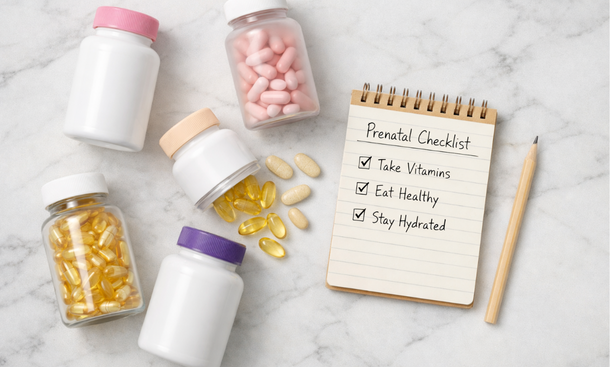
Folic acid vs. methylfolate: which one do you need
This is a question worth asking your doctor directly.
Folic acid is the synthetic form of folate used in most supplements and fortified foods. Your body converts it into the active form it can use. For most women, that process works fine.
But roughly 40 to 60 percent of the population carries a variation of the MTHFR gene — MTHFR stands for methylenetetrahydrofolate reductase, an enzyme involved in processing folate. Women with certain MTHFR variants convert folic acid less efficiently, which means standard doses may not give them full protection.
Methylfolate is the active, pre-converted form of folate. It bypasses the conversion step entirely, making it a better choice for women with MTHFR variants.
You can request MTHFR genetic testing through your doctor, though it’s not universally recommended as a screening test. If you have a family history of neural tube defects, recurrent miscarriages, or have been told you have an MTHFR variant, ask specifically about switching to methylfolate.
If you’re not sure, some prenatal vitamins now include methylfolate instead of or alongside folic acid. That’s not a bad middle-ground approach.
What to look for on a prenatal vitamin label
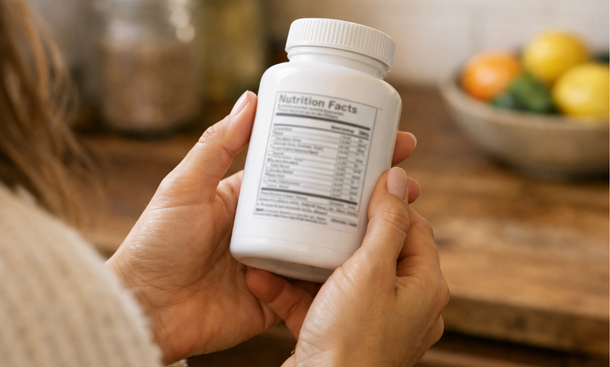
Reading a supplement label is its own skill. Here is a short field guide.
Form matters. Look for methylfolate over folic acid if possible, ferrous bisglycinate over ferrous sulfate for iron (it’s gentler on the stomach), and vitamin D3 over D2 (D3 is more effective at raising blood levels).
Third-party testing. Look for certifications from USP (U.S. Pharmacopeia), NSF International, or Informed Sport on the label. These indicate the product has been independently tested for purity and accuracy of dosing. Supplements are not FDA-regulated before they go to market, so third-party verification matters.
Serving size. Some prenatals require two or three capsules to deliver the full nutrient dose listed on the label. If you check the per-serving amounts and see low numbers, check how many capsules constitute one serving.
Fillers and additives. If you have sensitivities, scan for artificial colors, gluten, or common allergens.
The supplements worth adding alongside your prenatal
A good prenatal vitamin is a foundation, not a complete solution. Depending on your diet, health history, and lab results, these additions are worth discussing with your provider.
Separate DHA/fish oil. If your prenatal doesn’t include at least 200 mg of DHA, add one. An algae-based DHA supplement is the better option if you don’t eat fish regularly — it’s also the original source that fish get their DHA from.
Vitamin D. Get your levels tested. If you’re deficient, which is more likely than not for women who spend most of their time indoors, a standalone vitamin D3 supplement at a therapeutic dose will close that gap faster than a prenatal’s standard 400–600 IU.
Magnesium glycinate. Magnesium supports sleep quality, muscle function, and blood sugar regulation. Many women are mildly deficient, and the form glycinate is well-tolerated and unlikely to cause the digestive discomfort that other forms of magnesium can.
Probiotics. A healthy gut microbiome during pregnancy may support immune function and reduce the risk of certain complications. Evidence is still developing here, but quality probiotics are generally low-risk and worth considering.
CoQ10. Coenzyme Q10 is an antioxidant that supports egg quality and mitochondrial function, the energy-producing activity inside cells. It’s particularly discussed for women over 35 or those with diminished ovarian reserve. The evidence is promising though not yet definitive. Talk to your reproductive endocrinologist or OB before adding it.
What most prenatal vitamins quietly leave out
Even well-reviewed prenatal vitamins commonly fall short in a few areas.
Choline. As mentioned, this is chronically under-dosed in prenatals. Many contain 0 to 55 mg when needs during pregnancy are 450 mg daily. If your prenatal doesn’t cover it, add a separate choline supplement (choline bitartrate is widely available) or make eggs a daily staple.
Omega-3s. Many prenatals skip DHA entirely or include very small amounts. Always check this line specifically.
Vitamin K2. K2 helps direct calcium to bones and away from arteries. It’s rarely included in prenatals despite being important for both maternal and fetal bone development. Fermented foods like natto are rich sources; otherwise, a standalone K2 supplement is inexpensive.
Adequate iron in a tolerable form. Ferrous sulfate, the most common form of iron in supplements, causes nausea and constipation in a significant number of women. If iron is making you feel sick, ask about switching to ferrous bisglycinate — same mineral, much gentler on the digestive system.

Journaling and Wellness
How to choose without getting overwhelmed
The supplement market for women trying to conceive is enormous and deliberately confusing. Here is a simple framework.
Start with your bloodwork. Know your vitamin D, iron, and thyroid levels before spending money on targeted supplements. Guessing at deficiencies is less effective and occasionally counterproductive.
Pick a prenatal with third-party certification, methylfolate, and at least some DHA. If it checks those three boxes, it’s a solid starting point.
Add a separate DHA supplement if your prenatal includes less than 200 mg. Add a choline supplement if yours doesn’t address it. Then talk to your doctor about what your labs say you specifically need.
You don’t need the most expensive option. You need the right option for your body — and that starts with knowing what your body actually needs before you buy anything.
keep building your preconception plan
Getting your supplement routine right is one foundational piece of a larger preconception puzzle. Once your nutrition is dialed in, the next smart step is understanding your cycle — because knowing when you’re actually ovulating is what makes timing possible. The article on ovulation tracking for pregnancy walks you through every method, from basal body temperature charting to OPK strips, in plain language that actually makes sense.
And if you want to step back and see how supplements, timing, and lifestyle all connect, the complete guide to preparing for pregnancy is the place to start.
