
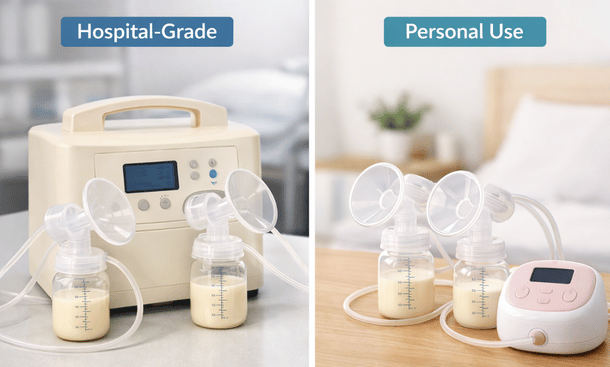
So your lactation consultant mentioned a hospital-grade pump, and now you’re wonderin’ if your regular Spectra’s gonna cut it—or if you gotta shell out big bucks for somethin’ stronger. Here’s the thing: hospital-grade pumps aren’t just fancy marketing. They’ve got serious power and are built different, but that doesn’t mean every mama needs one. I’m gonna walk ya through exactly when these heavy-duty machines make sense (NICU situations, low supply, multiples) and when a solid personal pump does the job just fine. Before we dive in, know that choosing the right equipment is just one piece of the puzzle when you’re comparing all your pumping options in 2026.
What Actually Makes a Pump Hospital-Grade
Let’s clear up the confusion right off the bat. Hospital-grade doesn’t just mean expensive or powerful. It’s a specific designation that refers to pumps built to meet certain standards for multi-user safety and durability.
The biggest difference is the motor system. Hospital-grade pumps use what’s called a closed system with a barrier between the pump mechanism and the collection kit. This means there’s zero chance of milk particles gettin’ into the motor or tubing, which makes them safe to rent out to multiple users. Each mom uses her own personal collection kit, which is the flanges and bottles and tubing, but the motor unit itself can be shared.
Personal pumps, even really good ones, are designed for single-user use. Some have closed systems too, but they’re not built to the same heavy-duty standards. The motors aren’t meant to run for hours and hours every single day for years on end.
Hospital-grade pumps also maintain consistent suction strength over time. A personal pump might start strong but lose some oomph after months of daily use. Hospital-grade machines are engineered to deliver the same performance whether it’s day one or day three hundred.
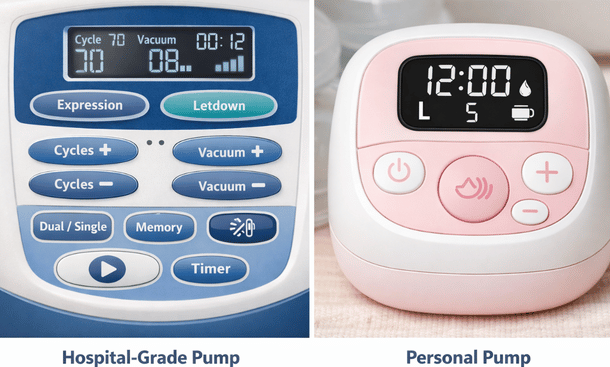
The suction itself tends to be stronger and more customizable. You get finer control over both the speed, which is how many sucks per minute, and the strength, which is how much vacuum pressure. This precision matters when you’re tryin’ to mimic a baby’s natural nursing pattern as closely as possible.
When You Actually Need Hospital-Grade Power
Most moms do just fine with a quality personal pump. But there are specific situations where hospital-grade makes a real difference and might even be medically necessary.
If your baby’s in the NICU and can’t nurse directly, you’re basically askin’ your body to establish a full milk supply without the baby’s help. That’s a tall order. Hospital-grade pumps give you the best shot at buildin’ and maintainin’ supply during those critical early weeks when your body’s figurin’ out how much milk to make.
Preemie moms especially benefit from the stronger suction. Preterm babies often can’t create the strong vacuum needed to effectively drain the breast, so if you’re pumpin’ to eventually bottle-feed or tube-feed, you need a pump that can do what baby can’t yet.
Supply issues are another big reason to consider hospital-grade. If you’re strugglin’ to make enough milk and you’ve already tried all the usual stuff like more frequent pumpin’, lots of water, and lactation cookies that may or may not actually work, a more powerful pump might help. Sometimes personal pumps just don’t empty the breast thoroughly enough, and that incomplete emptying signals your body to make less milk. It’s a vicious cycle.
Exclusive pumpers who are in it for the long haul often find hospital-grade pumps worth the investment. If you’re pumpin’ six to eight times a day for six months or more, you want equipment that won’t crap out on you halfway through.
Moms of multiples are basically doin’ double or triple duty. Your supply needs are higher and you’re pumpin’ more often. A hospital-grade pump handles that workload better than most personal pumps.
The Real Deal on Personal Double Electric Pumps
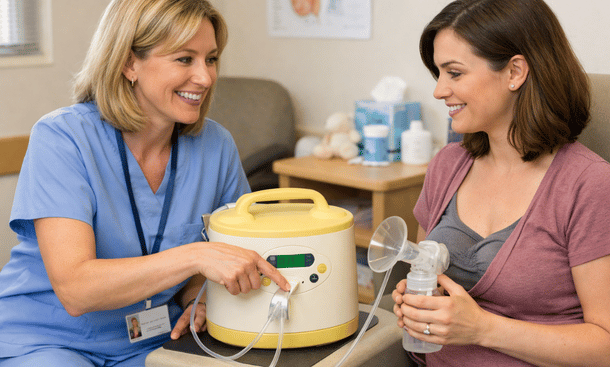
Personal double electric pumps have come a long way in the last few years. Brands like Spectra, Medela, Motif, Lansinoh, and others are puttin’ out pumps that work really well for the vast majority of breastfeeding moms.
These pumps are designed for one user over the course of one baby’s breastfeeding journey, sometimes longer if you’re lucky. They’ve got adjustable suction and speed settings, most have rechargeable batteries for portability, and many now include features like night lights and memory settings that remember your preferred levels.
The beauty of personal pumps is convenience. They’re compact enough to toss in a work bag or diaper bag. They’re yours to keep, so you can use them on your own schedule without worryin’ about rental return dates. And they’re usually covered by insurance, which means you’re payin’ little to nothin’ out of pocket.
For moms who are primarily nursing and pumpin’ occasionally to build a freezer stash or cover work hours, personal pumps are perfect. Even for moms who are pumpin’ pretty regularly, like three or four times a day at work, a good personal pump handles that just fine.
The limitations show up in extreme use cases. If you’re exclusively pumpin’ from day one and doin’ eight sessions a day, some personal pumps start to lose efficiency after a few months. The motor might still run but it doesn’t pull as strong. Parts wear out faster with heavy use.
Personal pumps also vary a lot in quality. A thirty-dollar pump from Amazon is not the same as a two-hundred-dollar Spectra, even though they’re both technically double electrics. Motor strength, build quality, replacement parts availability—all that stuff matters.
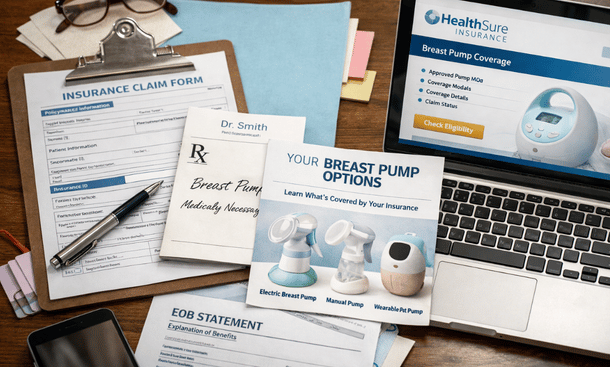
Insurance coverage through the Affordable Care Act usually gets you a mid-range personal pump. You can often upgrade to a better model by payin’ the difference out of pocket. It’s worth lookin’ into what your specific plan covers before you commit.
Insurance Coverage and Rental Options
Here’s where things get practical. Hospital-grade pumps aren’t somethin’ you typically buy outright. They run anywhere from a thousand to two thousand dollars new, which is just not realistic for most families.
Instead, you rent them. Medical supply companies, lactation consultants, and some hospitals offer monthly rentals. You pay a monthly fee, usually between fifty and a hundred and fifty bucks dependin’ on the model, and you use your own collection kit that you purchase separately.
The good news is that insurance often covers hospital-grade pump rentals when there’s a medical need. NICU stays, diagnosed low supply issues, and other documented medical situations usually qualify. You’ll need a prescription or letter of medical necessity from your pediatrician or OB, but once you’ve got that, your insurance company processes it like they would any other durable medical equipment.
Some insurance plans limit how long they’ll cover a rental. You might get coverage for the first month or two, or until baby reaches a certain age. Check with your insurance company about their specific policies before you commit to a long-term rental on your own dime.
If you’re payin’ out of pocket, do the math. If you only need it for a month, rental makes total sense. But if you’re lookin’ at six months of rentals, you might actually come out ahead buyin’ a high-end personal pump instead.
There are also hospital-grade pumps available for purchase now, usually older models or refurbished units. If you know you’ll need one long-term and insurance won’t cover a rental, this might be an option worth explorin’.
Mom’s Insurance Workspace
Cost Comparison Over Time
Let’s talk money because that’s a real consideration for most of us.
A quality personal pump covered by insurance costs you nothin’ upfront. Even if you upgrade to a fancier model, you’re maybe payin’ fifty to a hundred and fifty dollars out of pocket for the difference. You own it, you keep it, you can use it for future babies if you want.
Hospital-grade rental at seventy-five bucks a month adds up quick. Three months is two hundred and twenty-five dollars. Six months is four hundred and fifty. A full year is nine hundred dollars. And you don’t own it at the end—you’re returnin’ it.
But here’s the other side. If you need hospital-grade power and you try to make do with a personal pump that’s not cuttin’ it, you might end up supplementin’ with formula because your supply tanks. Formula’s expensive. Or you burn out from pumpin’ twice as long to get the same output and you quit breastfeeding earlier than you wanted. There’s a cost to that too, even if it’s not a dollar amount.
For short-term medical situations, rental is a no-brainer. Nobody needs to own a hospital-grade pump forever. But for long-term use, runnin’ the numbers and maybe considerin’ a purchase makes sense.
Some moms split the difference. They rent a hospital-grade pump for the first few critical months to establish supply, then transition to a personal pump once things are stable. That gives you the best of both worlds without breakin’ the bank.
Performance Differences That Actually Matter
Alright, beyond the specs and the price tags, what does the performance difference actually feel like?
Hospital-grade pumps empty your breasts more completely. You can often see and feel the difference. After a session with a hospital-grade pump, your breasts feel soft and thoroughly drained. With some personal pumps, you might still feel a little fullness even after your usual pumpin’ time.
That thorough emptying does two important things. First, it tells your body to keep makin’ milk at that level or even increase production. Second, it reduces your risk of clogged ducts and mastitis because you’re not leavin’ milk sittin’ in there.
The suction pattern is also more sophisticated. Hospital-grade pumps usually have multiple letdown modes and expression phases that really do mimic how babies nurse. Babies don’t just suck at one steady rhythm. They do quick, light sucking to trigger letdown, then switch to slower, deeper pulls to get the milk out, then sometimes speed up again when flow slows down.
Personal pumps have gotten better at this but hospital-grade machines are still the gold standard. You can program in specific patterns, adjust mid-session, and fine-tune everything to match what works for your body.
Comfort is subjective but a lot of moms report that hospital-grade pumps feel more comfortable even with stronger suction. The theory is that the more natural rhythm is gentler on your nipples even though the vacuum is technically stronger.
Making Your Decision
So how do you actually decide which way to go?
Start with your situation. Are you dealin’ with a medical issue like NICU, premature birth, or diagnosed low supply? If yes, talk to your healthcare provider about a prescription for a hospital-grade rental. Insurance will likely cover it and you’ll have the equipment you need when you need it most.
If you’re in a normal, healthy breastfeeding situation where you’re plannin’ to primarily nurse and pump occasionally or regularly for work, a personal pump is almost certainly all you need. Use your insurance benefit to get a good one and don’t overthink it.
If you’re plannin’ to exclusively pump from the start, think about your timeline. Pumpin’ for three months? Personal pump is fine. Pumpin’ for a year or more? Consider whether a hospital-grade rental for at least the first few months makes sense to help establish a strong supply, then transition to personal.
Budget matters too. If money’s tight and insurance will cover a personal pump but not a rental, don’t stress about not havin’ hospital-grade. A good personal pump and consistent pumpin’ schedule will serve you well.
Location is another factor. If you’re pumpin’ in multiple places throughout the day, you need portability. Hospital-grade pumps mostly live in one spot. Some moms keep the hospital-grade at home for overnight and early morning sessions, then take a personal pump to work.
Don’t be afraid to switch gears if your first choice isn’t workin’. Rented a hospital-grade pump but you’re only usin’ it once a day and it feels like overkill? You can return it and switch to personal. Started with personal but your supply’s droppin’ and you’re not emptyin’ well? Talk to your doctor about steppin’ up to hospital-grade.
Getting Set Up for Success
Whichever route you go, make sure you’ve got the right flange size. This is huge and so many moms don’t realize their flanges don’t fit right. The flange is the part that goes over your nipple and areola. If it’s too big or too small, you won’t empty effectively no matter how powerful your pump is.
Your nipple should move freely in the tunnel without your areola gettin’ pulled in. If you’re gettin’ rubbing, chafing, or your nipple’s turnin’ white or purple, your flanges don’t fit. Most pumps come with standard sizes but you can order different sizes separately.
Learn how to use your specific pump properly. Hospital-grade pumps especially have a learnin’ curve. Don’t just turn it to max suction and hope for the best. Start lower and gradually increase. Use the letdown mode if your pump has one. Pay attention to what settings give you the best output and the most comfort.
Keep your equipment clean. Both hospital-grade and personal pumps need regular cleaning of all the parts that touch milk. Follow the manufacturer’s guidelines. Some parts can go in the dishwasher, others need hand washing. Replace parts that wear out like valves and membranes.
Have backup parts on hand. Nothin’ worse than havin’ a valve split at ten PM when you need to pump before bed. Keep extras of the small parts that tend to wear out or get lost.
Your Next Steps
Now that you understand the real differences between hospital-grade and personal pumps, you’re in a way better position to make the right call for your situation. The power and performance boost of hospital-grade equipment can be a game-changer when you genuinely need it, but for most everyday breastfeeding scenarios, a solid personal pump gets the job done without the rental fees or bulk.
If you’ve decided a personal electric pump is the way to go, you’ll wanna dig into which specific models actually deliver on their promises. I’ve tested all the major brands and put together honest reviews of the top electric breast pumps that won’t let you down, coverin’ everything from suction strength to how loud they are when you’re pumpin’ in that tiny office bathroom. And for a complete rundown of every pump option on the market this year, including how electrics stack up against wearables and manual pumps, check out my full comparison guide that breaks down the best breast pumps available so you can nail down exactly what works for your lifestyle.

As a Felyro.com content author, I develop actionable content on breastfeeding, translating research-backed information into practical advice for mothers. My goal is to help families establish healthy feeding habits, improve maternal confidence, and support infant development.