

Trying to pin down when you conceived can make your brain do laps. You look at your app, count backward from your missed period, then start wondering if that light cramp or tiny bit of spotting meant something real. I get it. I’m Sophia M. Caldwell, I’m 37, I’ve spent years writing about pregnancy tracking, and this is one of the questions people come back to again and again.
Implantation symptoms can help you narrow the window, but they are not a perfect timestamp. That part matters. Your body is not a subway schedule. It does not run right on the dot every single month. Still, if you understand how implantation works and where it lands in your cycle, you can get a much clearer sense of when conception likely happened. If you want the full timeline from sex to ovulation to testing, this guide to figuring out when you conceived lays the whole thing out in a way that actually makes sense.
What implantation really is
Implantation happens after an egg is fertilized and starts traveling down the fallopian tube toward the uterus. Once that fertilized egg becomes a blastocyst, it needs to attach to the lining of the uterus. That attachment is implantation.
This usually happens about 6 to 12 days after ovulation. For a lot of people, the most common range is around 8 to 10 days after ovulation. So if you are trying to figure out conception timing, that little stretch matters more than most people realize.
Conception itself usually happens within about 24 hours after ovulation if sperm is there waiting. Sperm can survive in the reproductive tract for up to 5 days. So if you had sex a few days before ovulation, conception could still happen later when the egg is released. Implantation comes after all that. It is not the same moment as fertilization, even though people mix those up all the time.
That mix-up is where the confusion starts. Someone says they felt implantation on a certain date and assumes that was the date they conceived. Not quite. If implantation symptoms were real, conception most likely happened several days earlier.
Can you actually feel implantation
Maybe. But let’s keep it real. Not everybody feels anything.
Some people notice a little spotting. Some feel mild cramping. Some say they feel more tired or a little off. A whole lot of people feel nothing at all and still have a perfectly healthy pregnancy. So if you did not notice a sign, that does not mean implantation did not happen.
The bigger issue is that many implantation symptoms overlap with normal luteal phase symptoms. That post-ovulation stretch can bring bloating, breast tenderness, mood changes, low energy, and cramps even when pregnancy did not happen. Progesterone does a lot of the same stuff either way. That is why implantation symptoms are clues, not proof.
If you think you noticed something unusual, the smartest move is to place it on your cycle timeline. Ask yourself:
- when did I likely ovulate
- how many days later did the symptom show up
- was it different from my usual pre-period pattern
- did I later get a positive pregnancy test
That combo tells you way more than one symptom by itself.
The most talked-about implantation symptoms
Let’s break down the signs people usually mean when they say implantation symptoms.
Light spotting
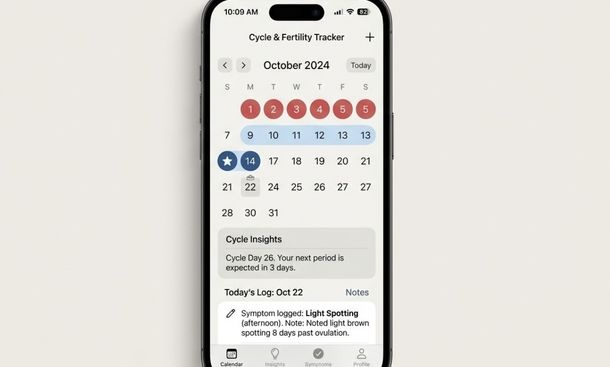
Implantation bleeding gets talked about a lot. Sometimes too much, honestly. It is usually described as very light spotting, often pink or brown, and much lighter than a regular period. It may last a few hours or a couple of days.
But not everyone gets it. And spotting can happen for other reasons too. Hormonal shifts, cervical irritation, or the start of a period can all look similar. If the spotting happened about a week after ovulation and stayed light, it could line up with implantation. If it turned into a full flow, that points more toward your period.
Mild cramping
Implantation cramps are usually described as mild and short-lived. Not everybody notices them, and when they do show up, they are often less intense than menstrual cramps. Think twinges, pulling, or a little pressure rather than full-on pain.
Again though, post-ovulation progesterone can cause similar feelings. So timing matters more than drama. A small cramp around 8 to 10 days after ovulation is more interesting than random cramping at any point in the month.
Breast tenderness
Tender breasts can happen in early pregnancy, but they also happen before a period. By themselves, they are not great for confirming implantation. If they feel stronger than usual or last longer than your normal PMS window, that can be one piece of the puzzle.
Fatigue
This one is tricky. Some people feel wiped out early, but life in general can do that too. Hormonal shifts after implantation may contribute to fatigue, though it is usually not the strongest sign on its own.
Changes in discharge
Some people notice increased cervical mucus or creamy discharge. That can happen in early pregnancy, but it is not a reliable implantation sign by itself. Bodies vary a lot here.
When implantation symptoms may point to conception timing
This is where things get useful.
Say you think you ovulated on april 10. If you had what looked like implantation spotting on april 18, then conception likely happened around april 10 or april 11, not april 18. That is the key distinction.
A basic timeline looks like this:
- sex happens during the fertile window
- ovulation happens
- fertilization happens within about 24 hours if sperm meets egg
- implantation happens about 6 to 12 days later
- hCG starts rising after implantation
- a pregnancy test turns positive after hCG gets high enough
So if you are working backward from symptoms, implantation signs can help you estimate conception as happening roughly a week earlier. Not on the same day. That one little shift can clear up a lot.
People often get thrown by pregnancy dating too. If a doctor says you are 4 weeks pregnant, that count starts from the first day of your last period, not the day you conceived. Actual conception usually happens about 2 weeks after that in a textbook 28-day cycle. Real life is messier, sure, but the principle stays the same.
What makes implantation timing harder to read
A few things can blur the picture.
You may not know your exact ovulation day
Apps estimate. Ovulation tests help more. Basal body temperature can help too. But unless you were doing close tracking, the date may still be an estimate. If your ovulation date is off, your implantation estimate shifts too.
Symptoms can overlap with pms
This is probably the biggest problem. The luteal phase and early pregnancy can feel almost identical at first. Same hormones, same body parts, same confusion.
Not everyone gets implantation bleeding
A lot of people expect spotting and then worry when they do not see it. No spotting does not mean no pregnancy.
Stress can distort memory
Once you are wondering if you are pregnant, every sensation starts to feel loaded. That is normal. It also makes it easy to overread things you might ignore in any other cycle.
How to use implantation signs without fooling yourself
You do not need to ignore your body. You just want to read it with some discipline.
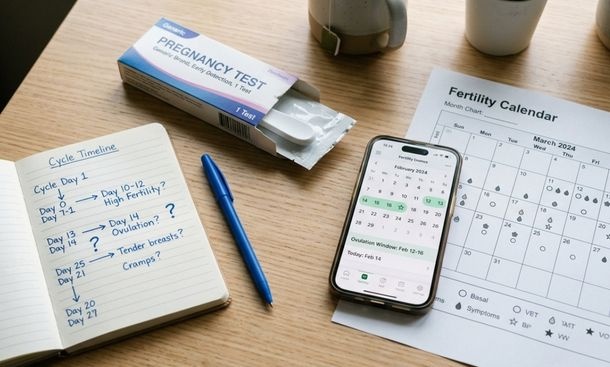
Start with your likely ovulation date. Then count forward. If symptoms showed up around 6 to 12 days later, implantation is possible. After that, look for confirmation from testing.
The best time to take a home pregnancy test is usually after implantation has happened and hCG has had a little time to build. Testing too early is where people get burned. You can absolutely be pregnant and still get a negative result if implantation happened late or hCG is still too low.
If you are tracking seriously, write down:
- date of your last period
- possible ovulation day
- days you had sex in the fertile window
- any spotting or cramps
- date of your first positive test
That gives you a cleaner record than trying to remember it all later when emotions are high and dates start blending together.
What implantation symptoms do not tell you
They do not tell you the exact hour you conceived. They do not confirm pregnancy on their own. They do not tell you whether a pregnancy is viable. And they do not replace a test or medical advice if something feels wrong.
Heavy bleeding, sharp pain, dizziness, or anything that feels intense is not something to brush off as implantation. Mild twinges are one thing. Severe symptoms are another story.
A lot of online talk makes implantation sound dramatic, like you are supposed to have some crystal-clear body signal that settles the whole mystery. Nah. For many people, the signs are subtle or nonexistent. The power is in the timeline, not in one magic symptom.

The best way to think about implantation symptoms
Think of implantation symptoms as supporting evidence. They are not the star witness. The real value is how they line up with ovulation, intercourse dates, and test results.
If you had sex during your fertile window, likely ovulated a few days later, then noticed light spotting or cramping about a week after that, the pattern can absolutely support a likely conception window. That is useful. Especially if you are trying to make sense of early symptoms before a test goes fully positive.
Still, your clearest answer usually comes from combining cycle tracking with test timing. Symptoms alone can start the conversation. They rarely finish it.
Implantation symptoms can help you narrow down when conception may have happened, but they work best when you place them in the full rhythm of your cycle. Spotting, cramps, breast tenderness, and fatigue may matter most when they show up about 6 to 12 days after ovulation. Even then, they are clues, not guarantees. If you are trying to tell the difference between normal post-ovulation changes and real early pregnancy signs, the next piece to look at is luteal phase symptoms vs pregnancy signs.

As an author at Felyro.com, I create actionable content on pregnancy tracking, offering practical tools, tips, and insights that empower mothers-to-be to stay informed and confident throughout their pregnancy.