
When I found out I was pregnant, I genuinely thought I had the nutrition thing handled. I ate reasonably well, I wasn’t skipping meals, I knew about folate. Turns out I knew about 30 percent of what I actually needed to know.
Pregnancy nutrition isn’t complicated, but it is specific. And at 27, when your body is already in a strong biological place, giving it the right fuel makes a real difference — not just for your baby’s development but for how you feel day to day. The nausea, the fatigue, the mood shifts — what you eat affects all of it more than most people realize.
This isn’t about being perfect. It’s about being informed. And if you want to see how nutrition fits into the full picture of what a healthy pregnancy at 27 looks like, the complete guide to being pregnant at 27 connects all the pieces together.
The nutrients that matter most
Let’s start with what your body actually needs more of during pregnancy, because the list is more specific than “just eat healthy.”
Folate. This is the one most people have heard of, and for good reason. Folate — or folic acid in its synthetic form — is critical for neural tube development in the first four weeks of pregnancy, often before you even know you’re pregnant. The recommendation is 400 to 800 micrograms daily, ideally starting before conception. Leafy greens, legumes, and fortified grains are your best food sources.
Iron. Your blood volume increases by nearly 50 percent during pregnancy. Iron is what makes that possible. Without enough of it, you’re looking at anemia, which means fatigue that goes beyond normal pregnancy tiredness. Red meat, lentils, spinach, and pumpkin seeds are solid sources. Pair them with vitamin C to improve absorption.
Calcium. Your baby is building a skeleton. If you’re not taking in enough calcium, your body will pull it from your bones. Dairy, fortified plant milks, sardines, and broccoli all contribute. Aim for around 1,000 milligrams per day.
DHA. This omega-3 fatty acid is essential for fetal brain and eye development. Fatty fish is the most efficient source — salmon, sardines, and mackerel are all good options. If you don’t eat fish regularly, a DHA supplement derived from algae is a smart addition.
Vitamin D. Most people are deficient without knowing it, and pregnancy increases the stakes. Vitamin D supports calcium absorption, immune function, and fetal bone development. A blood test before or early in pregnancy will tell you where you actually stand.
Choline. Often overlooked but genuinely important for brain development. Eggs are one of the best sources — specifically the yolk, which people used to throw away. Aim for at least one or two whole eggs per day if you can tolerate them.
What a realistic daily plate looks like
Nobody wants a meal plan that reads like a clinical handout. So here’s what this actually looks like in practice — not perfect, not aspirational, just functional.
Breakfast — something with protein and complex carbs. Eggs on whole grain toast. Greek yogurt with berries and a handful of nuts. Oatmeal with nut butter and banana. The goal is to stabilize your blood sugar early because fluctuations make nausea worse.
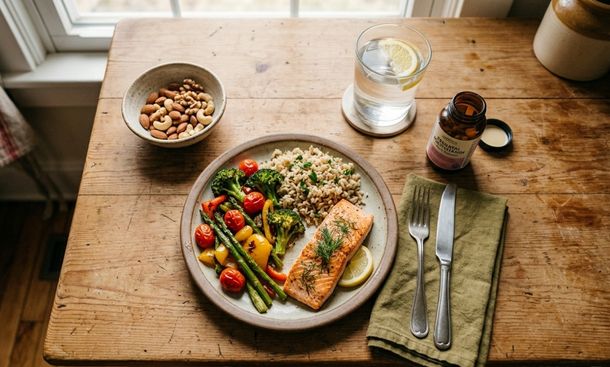
Lunch — build around a protein and vegetables. A big salad with chickpeas and avocado. A lentil soup with a side of whole grain bread. Leftover salmon with roasted vegetables. Keep it filling enough that you’re not reaching for something processed at 3pm.
Dinner — similar structure. Lean protein, cooked vegetables, a complex carb. This is where you can work in fatty fish two or three times a week for your DHA.
Snacks — this is where most pregnant women underestimate their needs. Your blood sugar drops faster during pregnancy, and ignoring hunger signals makes everything worse. Nuts, cheese, hummus with vegetables, a piece of fruit with nut butter — these are your friends.
The foods to avoid, and why
This list is shorter than most people expect, which is reassuring.
Raw or undercooked meat, fish, and eggs. The risk here is bacterial contamination — salmonella, listeria, toxoplasma. Well-cooked versions of the same foods are completely fine.
High-mercury fish. Swordfish, shark, king mackerel, and tilefish accumulate mercury in ways that can affect fetal neurological development. Salmon, shrimp, sardines, and canned light tuna are all low-mercury and safe in reasonable amounts.
Unpasteurized dairy and soft cheeses. Brie, camembert, certain blue cheeses — the concern is listeria, a bacteria that can cross the placenta. Hard cheeses and pasteurized versions of soft cheeses are generally safe.
Deli meats and hot dogs. Unless heated until steaming, these carry a listeria risk. It’s not a guarantee of harm, but it’s an avoidable risk.
Liver and liver products. High in vitamin A — more specifically, retinol — which in large amounts is linked to birth defects. Occasional small amounts are probably fine, but it’s not worth making it a regular part of your diet.
Alcohol. No established safe amount during pregnancy. This one isn’t complicated.
Caffeine. The guidance is to keep it under 200 milligrams per day — roughly one small to medium coffee. More than that is associated with increased miscarriage risk and low birth weight.
The prenatal vitamin question
A prenatal vitamin is not a replacement for eating well. It’s a safety net for the gaps — and there will be gaps, especially during the first trimester when you can barely look at food without feeling sick.
When choosing a prenatal vitamin, look for:
- At least 400 mcg of folate (methylfolate is more bioavailable than folic acid for some people)
- Iron, ideally in a gentle form like ferrous bisglycinate if regular iron upsets your stomach
- DHA, either included or as a separate supplement
- Vitamin D at meaningful levels — 1,000 to 2,000 IU is reasonable if you’re not testing
- Iodine, which supports thyroid function and fetal brain development
Gummy prenatals tend to be lower in iron. If you’re choosing a gummy for tolerability reasons during the first trimester, consider adding a separate iron supplement once nausea eases.
When eating well feels impossible
The first trimester makes all of this sound theoretical. When you’re nauseous from the moment you wake up and the smell of cooking protein sends you running, “eat a balanced plate” is not useful advice.
In those weeks, survival mode is valid. Crackers, plain rice, toast, fruit — whatever you can keep down. Focus on staying hydrated. Take your prenatal vitamin at night with food if morning is impossible. Do what you can. The second trimester usually brings enough relief that you can start rebuilding a more balanced approach.
Don’t let the gap between ideal nutrition and what you can actually manage during the first trimester become a source of guilt. Your body is remarkably good at prioritizing what the baby needs, even when your intake isn’t perfect.
Nutrition during pregnancy doesn’t have to be obsessive or complicated. It has to be informed. Knowing which nutrients matter, which foods to genuinely avoid, and how to fill the gaps with a good prenatal vitamin gives you a practical framework that works in real life — not just on paper.
When you’re ready to think about staying active during pregnancy — how to keep moving safely, what to modify by trimester, and why exercise actually supports everything we covered here — safe pregnancy workouts at 27 is the natural next step. Movement and nutrition work together more than people give them credit for.
Carlene R. Priddy writes about pregnancy care, maternal wellness, and the real experience of navigating motherhood in your twenties and thirties. She is based in New York.

Carlene R. Priddy offers strategic advice and practical guidance for governorsbefore, during, and after their mandatesto strengthen governance and public leadership.