
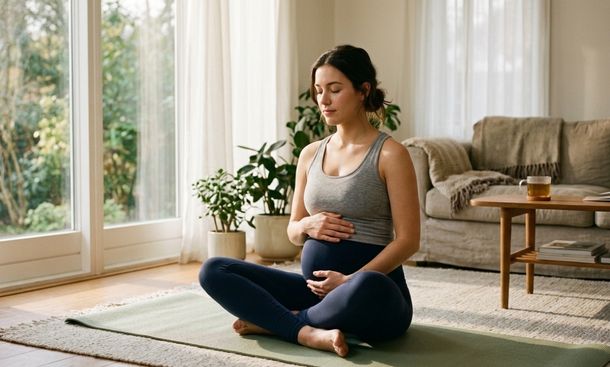
When I found out I was pregnant, one of my first thoughts — after the initial wave of emotion — was whether I could keep working out. I had a routine I genuinely loved, and the idea of giving it up for nine months felt like a lot. Turns out I didn’t have to. I just had to get smarter about it.
Exercise during pregnancy is not only safe for most women — it’s actively recommended. The American College of Obstetricians and Gynecologists suggests at least 150 minutes of moderate-intensity aerobic activity per week during pregnancy, spread across most days. That’s the same guidance as for non-pregnant adults. The difference is in the how, not the how much.
At 27, your body is strong and adaptable. With the right modifications, staying active through all three trimesters is absolutely achievable — and it pays off in ways that go well beyond physical fitness. If you want to understand how exercise connects to the bigger picture of a healthy pregnancy, the complete guide to being pregnant at 27 gives you that full context.
Why exercise during pregnancy actually matters
The benefits of staying active during pregnancy are well-documented and genuinely significant. Regular moderate exercise during pregnancy is associated with lower rates of gestational diabetes, reduced risk of preeclampsia, better weight management, shorter labor, and faster postpartum recovery. It also has a measurable positive effect on mood — which matters a lot when your hormones are doing things you didn’t sign up for.
For the baby, maternal exercise is associated with healthier birth weight and better cardiovascular development. The research on this has gotten stronger over the past decade.
Beyond the clinical benefits, staying active keeps you connected to your body during a period when it can feel like it’s changing faster than you can keep up with. That connection matters.
What changes by trimester — and why
Pregnancy doesn’t stay the same for nine months, and your workouts shouldn’t either. Here’s how to think about each phase.
First trimester
Fatigue and nausea are the main obstacles here, not physical limitation. Your body’s capacity hasn’t changed much yet, but your energy levels may have dropped significantly. This is not the time to push for personal records.
If you had an existing workout routine, you can largely continue it with minimal modification in the first trimester. The main exceptions are contact sports, activities with high fall risk, and anything that involves lying flat on your back for extended periods — though brief periods on your back are generally fine this early.
On the days when nausea is bad, gentle movement like walking or light stretching is enough. Don’t fight your body during the first trimester. You’re already doing a lot.
Second trimester
This is usually the golden window. Nausea has typically eased, energy has returned, and your bump is present but not yet large enough to significantly affect your center of gravity. Most women feel their best physically during weeks 13 through 27.
This is the trimester to establish a consistent routine if you haven’t already. The modifications that become necessary are:
- Avoiding exercises that require lying flat on your back for extended periods, as the uterus can compress the vena cava and reduce blood flow
- Reducing high-impact jumping or running if it causes discomfort — some women run comfortably through the second trimester, others find it uncomfortable by week 16
- Avoiding heavy overhead pressing that compresses the spine
- Paying attention to any coning or doming at the midline during core work — a sign of excessive intra-abdominal pressure
Third trimester
Your center of gravity has shifted, your joints are more lax due to the hormone relaxin, and your lung capacity may feel reduced as the baby takes up more space. Balance becomes a genuine consideration.
In the third trimester, exercise looks more like intentional movement than a traditional workout. Walking, swimming, prenatal yoga, stationary cycling, and resistance work with moderate weights are all appropriate. Swimming in particular is excellent in the third trimester — the water supports your weight and removes the joint stress that other activities create.
Listen to your body more carefully in these weeks. It will tell you clearly when something isn’t working.
The best exercises during pregnancy
These are the categories that work well across most of pregnancy, with obvious modifications as you progress.
Walking. Genuinely underrated. Low impact, sustainable, requires no equipment, and you can adjust intensity easily. A 30-minute walk most days covers a significant portion of the weekly recommendation.
Swimming and water aerobics. Excellent for all three trimesters. The buoyancy reduces joint stress, and the resistance of water provides a full-body workout without impact.
Prenatal yoga. Builds flexibility, strength, and — critically — breath awareness and body connection that is genuinely useful during labor. Look for classes or videos specifically designed for pregnancy, as some standard yoga poses are contraindicated.
Strength training. Maintaining muscle mass during pregnancy supports posture, reduces back pain, and makes recovery faster. Use moderate weights, avoid holding your breath during exertion (Valsalva maneuver), and modify positions as needed.
Stationary cycling. A safe alternative to outdoor cycling that removes fall risk while maintaining cardiovascular fitness. The seat can be adjusted to accommodate your bump comfortably.
Pelvic floor exercises. These deserve their own category because they’re not optional. A strong pelvic floor supports your growing uterus, reduces the risk of urinary incontinence, and aids in postpartum recovery. Kegels are the most well-known, but working with a pelvic floor physiotherapist gives you a program that’s actually specific to your needs.
What to stop doing
Some activities need to be paused for the duration of pregnancy, regardless of your fitness level.
Contact sports. Any sport where you could take a hit to the abdomen — martial arts, ice hockey, basketball at a competitive level — carries too much risk.
Activities with high fall risk. Skiing, horseback riding, gymnastics, mountain biking. Even a low-probability fall becomes a different calculation when you’re pregnant.
Scuba diving. The pressure changes put the baby at risk of decompression illness. This one is a clear stop.
Hot yoga and exercising in excessive heat. Core body temperature elevation above a certain threshold is associated with neural tube defects in early pregnancy and heat-related complications later. Avoid saunas, steam rooms, and any exercise environment that significantly raises your body temperature.
Exercises that create significant coning at the midline. Traditional crunches, full sit-ups, and some plank variations can cause issues with diastasis recti — separation of the abdominal muscles. This doesn’t mean avoiding all core work, but it means being specific about which exercises you choose.
Signs to stop and call your doctor
Exercise during pregnancy is safe, but your body will signal you when something is wrong. Stop immediately and contact your provider if you experience:
- Vaginal bleeding or fluid leaking
- Chest pain or difficulty breathing disproportionate to your exertion level
- Dizziness or feeling faint
- Calf pain or swelling — a potential sign of deep vein thrombosis
- Regular painful contractions
- Decreased fetal movement after exercise
These are not reasons to avoid exercise. They’re reasons to pay attention.
A note on starting from scratch
If you weren’t particularly active before pregnancy, starting an exercise routine during pregnancy is still encouraged — but start conservatively. Walking is the safest entry point. Begin with 10 to 15 minutes a day and build from there. Don’t use pregnancy as the moment to try a high-intensity program you’ve never done before.
Talk to your provider before starting anything new, particularly if you have any pregnancy complications like placenta previa, preeclampsia, or a history of preterm labor.
Staying active during pregnancy at 27 is one of the most straightforward investments you can make in how you feel day to day and how your body handles labor and recovery. It doesn’t require a gym membership or a complicated plan — it requires consistency, smart modifications, and paying attention to what your body tells you.
And when you’re ready to talk about the side of pregnancy that doesn’t get nearly enough attention — the anxiety, the mental load, the emotional weight of becoming a mother — pregnancy anxiety and mental health at 27 is where we go next. Physical health and mental health during pregnancy are more connected than most people acknowledge, and that piece covers both honestly.

Carlene R. Priddy offers strategic advice and practical guidance for governorsbefore, during, and after their mandatesto strengthen governance and public leadership.