

Alright let’s have some real talk about all those pregnancy support products you keep seeing everywhere. The belly bands the massive body pillows the wedges the back braces. Are they actually gonna help you or are they just clever marketing designed to empty your wallet when you’re desperate for relief. I’m Carlene and I’ve seen every pregnancy product under the sun come through my office in New York and I’m gonna give you the straight truth about what actually works.
Here’s the thing. Some of these products genuinely make a difference and can help you feel so much better during pregnancy. Others are basically expensive pieces of fabric that don’t do much. The trick is knowing which is which before you drop 50 or 100 bucks on something that’s gonna end up shoved in the back of your closet.
I’m gonna break down the most popular support products tell you what they’re supposed to do whether they actually deliver and who benefits most from each one. By the end of this you’ll know exactly what’s worth buying and what you can skip.
Maternity Support Belts Actually Help
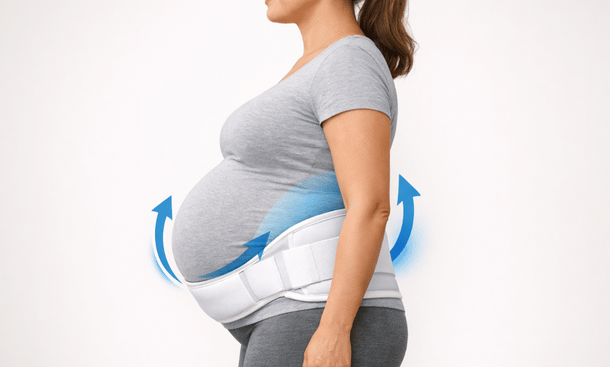
Let me start with maternity support belts because these are probably the most popular and most effective support product out there. A good support belt wraps around your lower back and under your belly providing lift and support to take pressure off your spine and pelvis.
The way they work is pretty straightforward. As your belly grows it pulls your center of gravity forward which makes your lower back arch more to compensate. This puts strain on your back muscles and ligaments. A support belt helps redistribute some of that weight and provides external support so your back doesn’t have to work as hard.
Most women find that support belts help most during the second and third trimesters when their belly is really out there. They’re especially helpful if you’re on your feet a lot during the day walking around working standing in the kitchen cooking. The belt gives you that extra support so you can stay active longer without your back screaming at you.
There are different styles of support belts. Some are simple bands that go under your belly. Others wrap around your entire lower torso with adjustable straps. The more adjustable ones tend to work better because you can customize the fit as your belly grows and change the support level throughout the day.
A few things to know before buying one. They should feel supportive but not tight or restrictive. You should still be able to breathe normally and move around. If it’s digging in or making you uncomfortable it’s either the wrong size or not positioned correctly. Most belts are sized based on your pre pregnancy clothing size but check the specific brand’s sizing chart.
Expect to pay anywhere from 20 to 50 bucks for a decent support belt. The cheap ones under 20 dollars tend to be flimsy and don’t provide much actual support. The super expensive ones over 60 dollars aren’t necessarily better than mid range options. Brands like Belly Bandit and ChongErfei get good reviews from women who’ve actually used them.
Pregnancy Pillows Can Transform Your Sleep
Now let’s talk about pregnancy pillows because sleep is such a struggle when you’re pregnant and a good pillow setup can honestly change your life. Regular pillows just don’t cut it when you’re trying to support your belly back and knees all at once.
The two main types are U shaped pillows and C shaped pillows. U shaped pillows are huge and wrap all the way around you providing support on both sides. C shaped pillows are a bit smaller and support either your front or back depending on which way you face. There are also smaller wedge pillows that you can use to prop up specific areas.
U shaped pillows are great if you toss and turn a lot at night because you get support no matter which way you roll. The downside is they take up a ton of space in bed and your partner might end up getting kicked to the couch. They’re also bulky to wash and store.
C shaped pillows are more manageable size wise but you might need to flip them around if you change positions during the night. A lot of women use a C shaped pillow plus a small wedge under their belly for extra support. This combo gives you flexibility without taking over the entire bed.
Wedge pillows are small triangular pillows that you can tuck under your belly or behind your back. They’re cheap usually around 15 to 25 dollars and easy to move around. Some women prefer using multiple wedges instead of one giant pillow because they can customize the support exactly where they need it.
The key to pregnancy pillows is sleeping on your side which is the safest position after the first trimester. Left side is ideal because it improves circulation to the baby but either side works. Tuck the pillow between your knees to keep your hips aligned and support your belly so it’s not pulling on your back.
Good pregnancy pillows run anywhere from 30 to 80 dollars depending on size and quality. Look for ones with removable washable covers because you’re gonna want to wash it and ones filled with something that holds its shape. Cheap polyester fill gets flat and lumpy fast. Brands like Leachco and PharMeDoc are popular and reasonably priced.
Back Support Cushions for Sitting
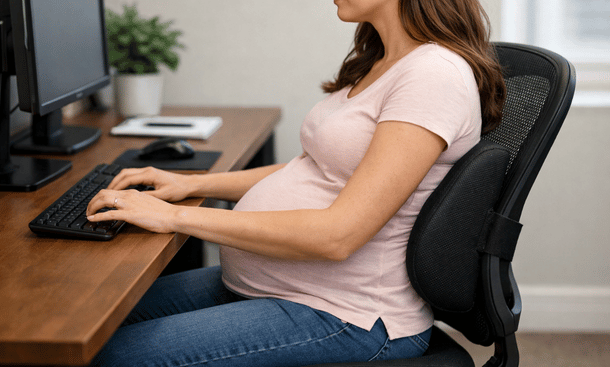
If you sit at a desk all day or spend a lot of time in the car a lumbar support cushion can help with back pain. These are small cushions that fit behind your lower back providing support and helping you maintain better posture while sitting.
The problem with sitting during pregnancy is that it’s hard to maintain good posture when your belly is throwing off your balance. You end up slumping or arching your back too much which leads to pain and stiffness. A lumbar cushion fills in that gap between your lower back and the chair keeping your spine in better alignment.
Look for one that’s firm enough to actually provide support but not so hard that it’s uncomfortable. Memory foam ones are popular because they conform to your shape. Make sure it has a strap or non slip backing so it doesn’t slide around on your chair.
These are pretty affordable usually 20 to 40 dollars and you can use them after pregnancy too. They’re also small enough to move between your office chair car seat and couch at home. Some women keep one at work and one at home so they always have support.
Belly Bands vs Support Belts What’s the Difference
You might see belly bands and support belts and wonder if they’re the same thing. They’re similar but not quite identical. Belly bands are usually simpler tubes of stretchy fabric that go over your belly. They provide gentle compression and can help hold up unbuttoned pants in early pregnancy.
Support belts are more structured with actual support panels and usually some kind of closure system like velcro. They’re designed specifically to take weight off your back and pelvis. Belly bands are more about comfort and coverage while support belts are about actual physical support.
In early pregnancy a simple belly band might be all you need. As you get bigger and your back starts hurting more you’ll probably want to upgrade to a real support belt. Some products combine both features giving you a band that also has built in support.
Maternity Support Leggings and Compression
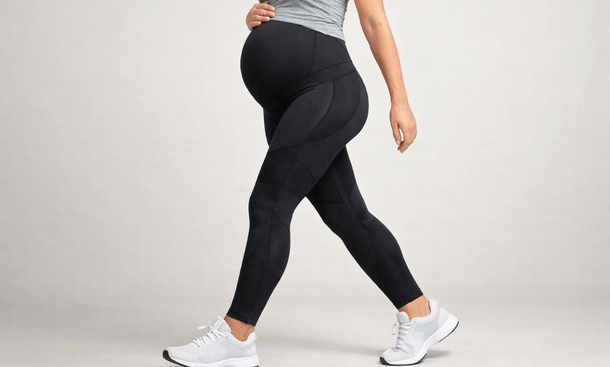
Compression leggings designed for pregnancy are another product that some women swear by. These aren’t just regular leggings. They have graduated compression that’s tighter at the ankles and looser at the top which helps with circulation and can reduce swelling in your legs and feet.
The compression also provides gentle support to your belly and back similar to a belly band but built right into the leggings. They’re great if you’re on your feet a lot or if you’re dealing with varicose veins or leg swelling.
The downside is they’re expensive usually 40 to 80 dollars a pair and you’ll probably want at least two pairs so you can wash them. They also need to fit properly to work right. Too tight and they’re uncomfortable and restrict circulation. Too loose and they don’t provide any benefit.
If you’re already dealing with significant leg swelling or varicose veins these might be worth the investment. If you just want general support you’ll probably get more bang for your buck with a separate support belt that you can wear with regular leggings or pants.
What About Kinesiology Tape
You might have seen pregnant women with colorful strips of tape on their bellies and backs. This is kinesiology tape or KT tape and it’s designed to support muscles and joints without restricting movement. Some physical therapists and chiropractors use it for pregnancy related pain.
The tape works by lifting the skin slightly which is supposed to reduce pressure on pain receptors and improve circulation. It can be applied in different patterns depending on where you’re having pain. For pregnancy it’s often used on the lower back or under the belly.
The evidence for whether it actually works is mixed. Some women say it helps a lot while others don’t notice any difference. It’s also kind of a pain to apply yourself and it can be expensive if you’re going to a professional to have it done regularly.
If you’re curious about it ask your doctor or physical therapist about trying it. A roll of KT tape is around 15 to 20 dollars so it’s not a huge investment to experiment with. Just make sure you’re not allergic to the adhesive before covering large areas of skin.
Do You Really Need All This Stuff
Here’s my honest take. You don’t need every pregnancy support product on the market. What you need depends on your specific issues and how your body is handling pregnancy. Some women sail through with just a regular pillow and never need extra support. Others need multiple products to stay comfortable.
If you’re dealing with significant back pain a quality support belt is probably worth the money. If you can’t sleep because you can’t get comfortable a pregnancy pillow is a game changer. If you sit at a desk all day a lumbar cushion helps. But if you’re not having those specific problems don’t feel like you have to buy everything just because other pregnant women have it.
My advice is to wait until you actually need something before buying it. Don’t stock up on support products in your first trimester when you might never use them. As specific issues come up invest in targeted solutions. You can always order stuff online and have it in a couple days if you suddenly need it.
Also don’t be afraid to try cheaper options first. You can experiment with regular pillows arranged strategically before dropping 60 bucks on a pregnancy pillow. You can try an inexpensive support band before upgrading to a fancy belt. Sometimes the simple solution works just fine.
When to Skip the Products and See a Doctor
Support products are great for normal pregnancy discomfort but they’re not a substitute for medical care. If your back pain is severe constant or accompanied by other symptoms like numbness tingling or loss of bladder control you need to see your doctor not just buy a support belt.
If you have sudden severe swelling in your legs especially if it’s only on one side that could be a blood clot and you need medical attention immediately. Support products won’t fix that and delaying care could be dangerous.
Same thing with severe abdominal pain or if your belly feels hard all the time. These could be signs of preterm labor or other complications. A support belt isn’t gonna help and you need to get checked out.
The bottom line is that these products are tools to help you feel more comfortable during a normal healthy pregnancy. They work best when combined with other strategies like the exercises and stretches that target pregnancy discomfort and taking care of yourself overall. Use them smart, don’t go broke buying every gadget out there, and know when to ask for professional help instead.

Carlene R. Priddy offers strategic advice and practical guidance for governorsbefore, during, and after their mandatesto strengthen governance and public leadership.