
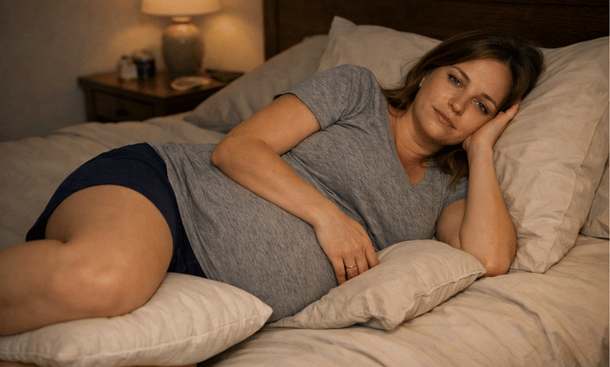
Everyone tells you to sleep while you can before the baby comes. What nobody mentions is that sleeping while you’re actually pregnant can be one of the hardest things you’ll do in those nine months.
Between the back pain, the frequent bathroom trips, the leg cramps that wake you up at 3am, and a brain that decides bedtime is the perfect moment to run through every possible worry — restful sleep starts to feel like something that happens to other people.
I went through a stretch in my third trimester where I was averaging maybe four broken hours a night. I was desperate. And I remember wondering whether there was anything I could actually take to help without putting my baby at risk.
The answer is yes — with some important nuance. Here’s what I found out.
Why sleep is so hard during pregnancy
It helps to understand what’s working against you because the solutions are different depending on the cause.
Physical discomfort is the most obvious one. Your bump makes finding a comfortable position genuinely difficult. Hip pain, back pain, and that constant pressure on your bladder mean your body wakes itself up whether you want it to or not.
Hormonal shifts play a role too. Progesterone makes you feel sleepy early in pregnancy but also fragments your sleep. Estrogen fluctuations can contribute to vivid dreams and lighter sleep cycles.
Anxiety is a real factor that doesn’t get talked about enough. Worrying about the birth, the baby, your relationship, your job — all of it tends to surface at night when there’s nothing else to distract you. For some women this crosses into genuine prenatal anxiety that deserves its own attention.
Heartburn and restless leg syndrome round out the list of common culprits. If you’ve been dealing with heartburn keeping you up, the previous article on safe antacids during pregnancy has practical solutions worth reading before adding a sleep aid on top.
For the complete picture of every medication category during pregnancy the complete guide to safe medications during pregnancy covers everything in one organized place.
Unisom sleepTabs (Doxylamine): the most recommended àption

Doxylamine succinate is the active ingredient in Unisom SleepTabs — and it has one of the strongest safety records of any sleep aid used during pregnancy.
Here’s something most people don’t realize. Doxylamine combined with vitamin B6 is the exact formula in Diclegis and Bonjesta — prescription medications specifically approved for morning sickness during pregnancy. The same ingredient that helps with nausea also has sedating properties that can help with sleep. That dual function is part of why OBs are so comfortable recommending it.
For sleep specifically, the standard recommendation is one Unisom SleepTab (25mg doxylamine) taken about 30 minutes before bed. It’s a first-generation antihistamine which means it does cause drowsiness — and that’s exactly the point here.
A few things worth knowing. It can cause grogginess the next morning especially in the first few days of use. It works better as an occasional tool than a nightly habit. And if you find yourself needing it every single night for weeks that’s a conversation to have with your provider about what’s actually driving the sleep disruption.
Benadryl (Diphenhydramine): acceptable but with caveats
Diphenhydramine is the active ingredient in Benadryl and in most products marketed as “Simply Sleep” or “ZzzQuil.” It’s another first-generation antihistamine with sedating effects and it’s been used during pregnancy for a long time.
Most providers consider occasional Benadryl use acceptable during pregnancy. The concerns around it are similar to doxylamine — next-day grogginess, tolerance that builds fairly quickly with regular use, and the fact that it’s treating a symptom rather than addressing the underlying cause of the sleep disruption.
There are also some studies that have explored a possible association between first-trimester diphenhydramine use and certain birth defects though the evidence is not conclusive. Because of this some providers prefer doxylamine over diphenhydramine during the first trimester specifically. After that window most OBs are comfortable with either one used occasionally.
The practical difference between the two comes down to individual response. Some women find Benadryl works better for them. Others prefer doxylamine. Both are short-term tools, not long-term solutions.
What about melatonin
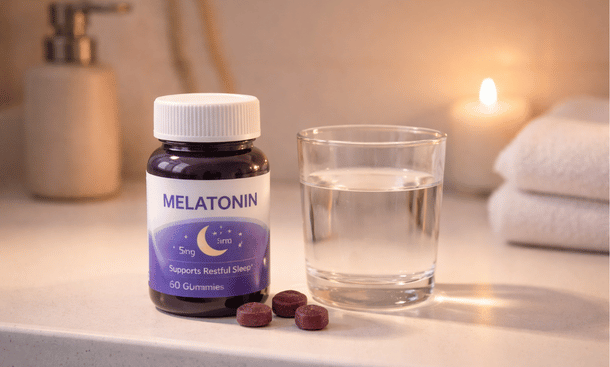
Melatonin is where a lot of pregnant women land because it feels more natural than an antihistamine. And the instinct makes sense — melatonin is a hormone your body already produces to regulate sleep cycles.
The honest answer is that melatonin during pregnancy is not well studied enough to make a confident recommendation either way. It’s not on the clearly unsafe list but it’s also not on the clearly safe list the way doxylamine is. The doses in most OTC supplements — often 5mg or 10mg — are significantly higher than what your body naturally produces, and the effects of supplemental melatonin on fetal development aren’t fully understood.
Some providers are fine with low-dose melatonin (0.5mg to 1mg) used occasionally. Others prefer to stick with doxylamine because the safety data is more established. This is a conversation worth having with your OB rather than a decision to make on your own based on the supplement aisle.
Medications to avoid for sleep during pregnancy
This section matters because some sleep aids that seem harmless absolutely are not during pregnancy.
Prescription sleep medications like zolpidem (Ambien) and benzodiazepines like Xanax or Valium carry real risks during pregnancy including potential effects on fetal development and neonatal withdrawal symptoms. These are not something to continue taking during pregnancy without explicit guidance from your provider who is aware you are pregnant.
Herbal sleep supplements are a category that gets glossed over because they’re sold without a prescription. Valerian root, kava, passionflower — these have not been adequately studied during pregnancy and some have properties that could be problematic. “Herbal” and “natural” do not automatically mean safe when you’re growing a human being.
Alcohol is sometimes used as a sleep aid outside of pregnancy and it goes without saying that this is not an option during pregnancy for any reason including sleep.
Combination sleep products that include pain relievers — like NyQuil or PM versions of Tylenol, Advil, or Motrin — need to be evaluated ingredient by ingredient. Tylenol PM contains diphenhydramine plus acetaminophen which is generally considered acceptable. Advil PM contains diphenhydramine plus ibuprofen which is not appropriate during pregnancy for the same reasons regular ibuprofen isn’t.
Anxiety and sleep: when they’re connected
For a lot of pregnant women sleep disruption isn’t primarily a physical problem. It’s the thoughts. The worry that spirals as soon as the lights go out.
Prenatal anxiety is more common than most people realize and it deserves to be taken seriously rather than pushed through. If your sleeplessness is driven primarily by anxiety — racing thoughts, persistent worry, difficulty relaxing — a sleep aid is treating the wrong thing.
Non-medication approaches to anxiety-related insomnia during pregnancy include cognitive behavioral therapy for insomnia (CBT-I) which has solid evidence behind it and no medication risks. Progressive muscle relaxation, guided meditation apps designed for pregnancy, and talking to a therapist who specializes in perinatal mental health are all options worth exploring.
If anxiety is significantly affecting your quality of life during pregnancy, talk to your OB honestly about it. There are medications used for anxiety during pregnancy — certain SSRIs for example — but these involve a careful risk-benefit discussion with a provider who knows your full picture. It’s not a decision made casually but it’s also not a conversation to avoid out of fear.
Non-Medication Strategies That Actually Help

Before or alongside any medication, these practical adjustments make a genuine difference for a lot of women.
A pregnancy body pillow changes everything for physical comfort. Supporting your bump from the front and having something between your knees takes significant pressure off your hips and lower back. It sounds like a small thing until you try it.
Keeping your bedroom cool and dark signals to your body that it’s time to sleep. Pregnancy already raises your core body temperature so a cooler room counteracts that.
White noise or a fan can help if you’re a light sleeper or if your mind tends to latch onto sounds during the night.
Limiting fluids in the two hours before bed reduces how often your bladder wakes you up. You still need to stay hydrated during the day — just front-load it earlier.
A consistent wind-down routine — the same sequence of low-stimulation activities in the hour before bed — helps your nervous system recognize that sleep is coming. Screens off, lights dimmed, something calm and repetitive.
When to Talk to Your Provider
If you are regularly getting fewer than six hours of sleep per night, if your sleep disruption is affecting your ability to function during the day, or if anxiety feels like it’s taking over — bring it up at your next appointment. Don’t minimize it or assume it’s just part of pregnancy.
Sleep deprivation during pregnancy has real consequences for both maternal and fetal health. It’s associated with longer labor, higher rates of cesarean delivery, postpartum depression, and impaired immune function. You deserve support in managing it — not just a shrug and a “that’s just pregnancy.”
Doxylamine (Unisom SleepTabs) is your safest, most well-studied option for occasional pregnancy sleep support. Benadryl is an acceptable alternative used occasionally. Melatonin is a conversation with your provider rather than an assumption. And if anxiety is driving your sleeplessness the solution is probably not a sleep aid at all.
You don’t have to spend your entire pregnancy running on empty. There are real options and real support available.
Once you know what’s safe to take during pregnancy it’s just as important to know what needs to stay on the shelf entirely. Some medications that seem completely harmless — things people take every day without thinking — carry real risks during pregnancy. Medications to avoid during pregnancy: the real list breaks down exactly what to skip and the specific reasons behind each one so you’re never guessing at the pharmacy.

Carlene R. Priddy offers strategic advice and practical guidance for governorsbefore, during, and after their mandatesto strengthen governance and public leadership.