

You know that feeling when you walk out of your ultrasound appointment and suddenly remember all the questions you meant to ask? Or worse, you’re sitting there during the scan, watching the sonographer move that wand around, and you’re too nervous or overwhelmed to speak up even though you have no idea what’s happening?
Been there, done that, bought the T-shirt. With my first pregnancy, I was so focused on just seeing my baby on the screen that I forgot to ask anything useful. Then I’d get home and my brain would kick in with a million questions. By my second pregnancy, I learned to come prepared with an actual list.
The thing is, ultrasound appointments are some of your best opportunities to get real information about how your baby’s developing. But you gotta know what to ask. So let me give you the questions that actually matter, the ones that’ll help you understand what’s going on and leave feeling informed instead of confused.
Questions about measurements and growth
These are probably the most important questions because measurements tell you so much about your baby’s development.
Is my baby measuring on track for their gestational age? This is the big one. You want to know if your baby’s size matches up with how far along you are. Don’t just accept “everything looks good” – ask for specifics.
What percentile is my baby measuring in? Understanding whether your baby’s in the 30th percentile versus the 70th percentile helps you know if you’re having a smaller or larger baby. Remember, anywhere between 10th and 90th is normal.
Are all the measurements proportional to each other? Sometimes one measurement might be different from the others. You want to know if the head, abdomen, and limbs are all growing proportionally or if there are discrepancies.
How does this scan compare to my previous ultrasounds? Growth patterns matter more than single measurements. Is your baby following their own curve consistently?
What’s the estimated weight and how accurate is that estimate? Estimated fetal weight can be off by a pound or more, so it’s good to understand the margin of error. Don’t make major decisions based solely on weight estimates late in pregnancy.

Questions about your baby’s anatomy and organs
During the anatomy scan especially, but really at any detailed ultrasound, you should ask about what they’re seeing.
Can you show me the four chambers of the heart? The heart is complex and seeing all four chambers pumping normally is reassuring. Ask them to point out what they’re looking at.
Are both kidneys present and functioning? They should be able to see both kidneys and the bladder, which indicates the kidneys are producing urine.
Is the brain developing normally? They check specific brain structures during the anatomy scan. Ask what they’re looking for and whether they saw everything they needed to see.
Is the spine completely closed? This checks for neural tube defects. They should be able to show you the vertebrae lined up with no gaps.
Are all four limbs present with normal bone development? Make sure they counted all the fingers and toes, or at least tried to if your baby was cooperating.
Did you get good views of everything you needed to see? Sometimes the baby’s position makes it hard to see certain things. If they couldn’t see something clearly, ask when you should come back for a recheck.
Questions about the placenta
The placenta is literally your baby’s life support system, so understanding how it’s functioning matters.
Where is my placenta located? Knowing if it’s anterior, posterior, fundal, or low-lying helps you understand why you might or might not be feeling kicks strongly yet.
Is the placenta away from my cervix? If you have a low-lying placenta or placenta previa early on, ask if they expect it to move up as your uterus grows. Most do.
Does the placenta look healthy and mature for this stage? The texture and grade of the placenta change throughout pregnancy. You want to know if yours looks appropriate for how far along you are.
Is blood flow to the placenta normal? If they did Doppler studies, ask about the results. Good blood flow means your baby’s getting adequate oxygen and nutrients.
How thick is the placenta? Thickness should roughly correspond to gestational age. Too thick or too thin can sometimes indicate issues.

Placenta Ultrasound Guide
Questions about amniotic fluid
Your amniotic fluid levels can tell you a lot about how things are going.
Are my fluid levels normal? Get the actual measurement – whether it’s AFI (amniotic fluid index) or the deepest pocket measurement – and ask where it falls in the normal range.
If my fluid is low, what can I do about it? Sometimes increasing hydration helps with borderline low fluid. Ask if there are any steps you can take.
If my fluid is high, what does that mean? High fluid can sometimes indicate gestational diabetes or other issues. Ask what they’re looking for and if you need additional testing.
How often should we recheck fluid levels? If there’s any concern about your fluid, ask how frequently they want to monitor it.
Questions about fetal position and presentation
Especially later in pregnancy, position matters for delivery planning.
Which way is my baby facing right now? Early on this doesn’t matter much, but knowing if they’re head down, breech, or transverse later in pregnancy is important.
If my baby is breech, when should we talk about options? Most babies turn head-down by 34 to 36 weeks. If yours hasn’t, ask about external cephalic version or other options.
Is there enough room for my baby to turn? Fluid levels and baby’s size affect whether they can still flip positions.
Where is my baby’s back positioned? Knowing if the back is anterior or posterior can help you understand why you’re feeling kicks where you are.
Questions about the umbilical cord
The cord connects your baby to the placenta, so its health matters.
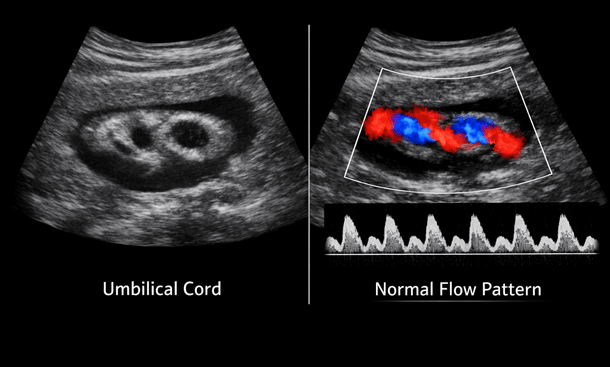
Does the umbilical cord have three vessels? Normal is two arteries and one vein. A two-vessel cord (missing one artery) might warrant additional monitoring.
Is blood flow through the cord normal? If they did Doppler ultrasound, ask about the resistance and flow patterns. You want low resistance and good forward flow.
Is the cord wrapped around anything? Nuchal cords (around the neck) are super common and usually not a problem, but it’s natural to want to know.
Where does the cord insert into the placenta? Most of the time it’s a central insertion, which is ideal. Sometimes it’s marginal or velamentous, which might need monitoring.
Questions when something looks unusual
If the sonographer or doctor mentions any findings that seem concerning, here’s what to ask.
What exactly did you find and what does it mean? Get them to explain in plain language, not just medical jargon.
Is this a common finding? Sometimes things that sound scary are actually present in a significant percentage of totally healthy pregnancies.
What are the next steps? Do you need more testing? A follow-up ultrasound? Consultation with a specialist?
What’s the best-case and worst-case scenario? Understanding the range of possibilities helps you prepare mentally without assuming the worst.
How will this affect my pregnancy and delivery? Some findings require nothing more than extra monitoring. Others might change your birth plan.
Should I be doing anything differently? More rest? Special diet? Avoiding certain activities? Get specific recommendations.
When will we know more? If additional testing is needed, ask about the timeline for getting results and answers.
Questions about the ultrasound images
Don’t be afraid to ask them to help you understand what you’re seeing on the screen.
Can you show me where the baby’s head, body, and limbs are? Especially early on when everything looks like a blob, having them point things out helps tremendously.
What am I looking at when I see black areas? Understanding that black equals fluid helps you make sense of the image.
Why does the baby look weird in this image? Sometimes the angle makes your baby look strange. Ask them to explain the view.
Can I get printed copies of the images? Most places give you a few printouts, but you can usually request more if you want them.
Are you able to determine the sex? If you want to know and they haven’t mentioned it, go ahead and ask. Sometimes they need a better angle.
Can my partner/support person come look at the screen? If they’re in the waiting room and something cool is happening, ask if they can come in.
Questions about scheduling and follow-up
Logistics matter, especially if you need additional monitoring.
When is my next ultrasound scheduled? Make sure you know the timeline before you leave.
Why am I getting another ultrasound? Understanding the purpose helps you know what to expect and what they’ll be checking.
How soon should I hear from you about today’s results? Some results are available immediately, others need to be reviewed by your OB.
Should I call if I notice anything concerning before my next appointment? Get clear guidance on warning signs to watch for.
Do I need to do anything special to prepare for my next scan? Full bladder, empty bladder, fasting – get the prep instructions while you’re there.
Questions about Doppler and specialized studies
If your doctor orders Doppler ultrasound or other specialized testing, understand why.
Why are we checking blood flow? Doppler studies are usually ordered for specific reasons. Ask what they’re looking for.
What would abnormal blood flow indicate? Understanding the implications helps you grasp why this test matters.
How often will we need to repeat Doppler studies? If blood flow needs monitoring, ask about the frequency.
Are there any risks to Doppler ultrasound? Doppler is safe, but it uses slightly higher energy than regular ultrasound. Most doctors agree the benefits far outweigh any theoretical risks.

Collaborative Ultrasound Discussion
Questions about high-risk factors
If you have a high-risk pregnancy, you’ll probably need more frequent ultrasounds.
How often will I need ultrasounds? Get a clear schedule so you can plan accordingly.
What specific things are you monitoring? Understand which measurements or factors are most important for your particular situation.
At what point would we need to intervene? Know what thresholds would trigger action like early delivery or other interventions.
Are there signs I should watch for between appointments? Decreased movement, unusual pain, or other symptoms that warrant immediate attention.
Should I be seeing a maternal-fetal medicine specialist? For some high-risk conditions, a specialist’s expertise is valuable.
Questions you shouldn’t be afraid to ask
Look, some questions might feel dumb, but trust me, your doctor has heard them all before.
Can you explain that again in simpler terms? If they used medical jargon you didn’t understand, make them break it down.
Is this normal? Never be embarrassed to ask this. It’s your baby and your pregnancy.
Why are you measuring that? Understanding the purpose behind each measurement helps you learn what matters.
Can I take a video of the screen? Some offices allow this, some don’t. Never hurts to ask.
How confident are you in these results? Ultrasound has limitations. Sometimes views aren’t clear or measurements can vary.
Should I be worried? If you’re anxious about something, just ask directly. Your doctor can either reassure you or explain what they’re watching.
Making the most of your appointment time
Here’s how to actually get your questions answered without feeling rushed.
Bring a written list of questions. Seriously, write them down before the appointment. You will forget otherwise.
Prioritize your questions. Put the most important ones first in case you run out of time.
Bring your partner or support person. Two sets of ears are better than one, especially when you’re emotional or overwhelmed.
Take notes during the appointment. Or ask if you can record the conversation on your phone so you can review it later.
Don’t save all your questions for the very end. Ask as they go along when things are relevant.
If the sonographer can’t answer medical questions, ask when you’ll speak with your doctor to discuss results. Sometimes techs aren’t allowed to interpret findings.
Following up after the appointment
Sometimes questions come up after you leave.
Is it okay to call with questions later? Most offices are happy to answer follow-up questions.
How long should I wait for results? If you haven’t heard anything and they said you would, follow up.
Can I get a copy of the full report? You have a right to your medical records. Ask how to request them.
Should I bring my ultrasound images to my next OB appointment? Your doctor’s office should have access to the results, but having your own copies doesn’t hurt.
The bottom line on asking questions
Your ultrasound appointments are opportunities to get valuable information about your baby’s health and development. Don’t waste them by being too nervous or embarrassed to speak up.
Good doctors and sonographers want you to understand what’s happening. They’d rather spend a few extra minutes answering questions than have you leave confused or worried.
Come prepared, ask what you need to ask, and don’t leave until you understand the answers. This is your baby, your pregnancy, your body. You deserve to have all the information you need to feel confident and informed. If you want to understand every aspect of your pregnancy ultrasound results – from what those measurements mean to how to read the images yourself – our comprehensive guide breaks down everything you need to know for a stress-free ultrasound experience.
And if you want to dive even deeper into interpreting those measurements and understanding what the numbers on your report actually mean, check out our complete guide on pregnancy ultrasound measurements explained so you can be fully informed about every aspect of your baby’s development throughout your pregnancy.

As an author at Felyro.com, I create actionable content on pregnancy tracking, offering practical tools, tips, and insights that empower mothers-to-be to stay informed and confident throughout their pregnancy.