

You’ve probably heard a million times that you won’t sleep once the baby comes, but what about now? Most women don’t realize that the quality of your sleep right now actually affects your ability to conceive in the first place. Your body does some seriously important hormonal work while you’re catching those precious hours of rest, and skimping on sleep can throw everything off balance.
Getting your sleep schedule on track is an essential step in preparing your body for pregnancy, and honestly, it’s one of the easier changes to make compared to overhauling your entire diet or starting a new exercise routine. But like everything else with fertility, the devil’s in the details.
Let me walk you through exactly how sleep affects your fertility, what happens when you’re not getting enough, and what you can do starting tonight to improve your chances of conceiving.
How Sleep Controls Your Reproductive Hormones
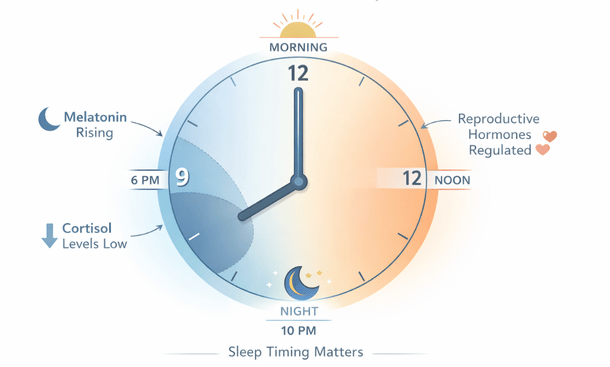
Your body operates on a 24-hour internal clock called the circadian rhythm. This clock regulates everything from body temperature to hormone production, including the reproductive hormones that control your menstrual cycle and ovulation.
When you sleep, your brain produces melatonin, often called the sleep hormone. But melatonin does way more than just make you drowsy. It acts as a powerful antioxidant in your ovaries, protecting your eggs from damage. It also helps regulate the production of luteinizing hormone and follicle-stimulating hormone, which control ovulation.
Leptin and ghrelin, hormones that regulate hunger and metabolism, are also controlled by your sleep patterns. When these get out of whack from poor sleep, they mess with your insulin sensitivity and can throw off your entire hormonal balance. For women with polycystic ovary syndrome, this connection between sleep and insulin is especially critical.
Cortisol, your stress hormone, follows a specific daily pattern when you’re sleeping well. It should be low at night and gradually rise in the early morning. Chronic sleep deprivation keeps cortisol elevated, which can suppress ovulation and interfere with the delicate hormone dance your body needs for conception.
The Research: What Studies Show About Sleep and Fertility
This isn’t just theory. Multiple studies have connected sleep problems with fertility issues.
Women who sleep less than seven hours per night have lower pregnancy rates compared to those getting seven to eight hours. One study found that women undergoing fertility treatments who slept seven to eight hours had the highest success rates, while those sleeping six hours or less, or nine hours or more, had lower rates.
Shift workers, who have severely disrupted circadian rhythms, show higher rates of irregular periods, longer time to pregnancy, and increased miscarriage risk. Even occasional night shifts can affect your cycle regularity.
Sleep apnea, a condition where breathing repeatedly stops during sleep, is linked to fertility problems in both men and women. It causes oxygen deprivation and sleep fragmentation that disrupt hormone production.
The connection goes both ways too. Fertility struggles cause stress and anxiety, which makes sleep harder, creating a vicious cycle that’s tough to break.
How Much Sleep Do You Actually Need
The sweet spot for fertility seems to be seven to eight hours per night. Not six, not nine or ten, but that middle range.
Sleeping less than seven hours regularly puts you in a state of chronic sleep deprivation. Your body treats this as a stressor, and stressed bodies don’t prioritize reproduction. From an evolutionary perspective, your body thinks times are tough and now isn’t a good time to get pregnant.
Sleeping more than nine hours regularly might signal underlying health issues like depression, thyroid problems, or sleep disorders that also affect fertility. Or it might mean your sleep quality is so poor that you need excessive time in bed to get adequate rest.
That said, individual needs vary slightly. Some people genuinely function best on slightly more or less sleep. Pay attention to how you feel. If you’re waking up refreshed, maintaining steady energy throughout the day, and not relying on caffeine to function, you’re probably getting enough.
Sleep Quality Matters as Much as Quantity
Lying in bed for eight hours doesn’t count if you’re tossing and turning all night. Sleep quality, how well you actually sleep during those hours, is just as important as the total time.
Deep sleep, also called slow-wave sleep, is when your body does most of its physical restoration. Growth hormone gets released, tissues repair themselves, and your immune system strengthens. Skipping deep sleep means your body can’t properly maintain itself, including your reproductive system.
REM sleep, when you dream, is critical for emotional regulation and stress management. Not getting enough REM sleep makes you more anxious and irritable, which raises cortisol and affects fertility.
Sleep fragmentation, waking up repeatedly even if you fall back asleep quickly, prevents you from cycling through sleep stages properly. You might be in bed for eight hours but only getting the restorative value of five or six.
What’s Sabotaging Your Sleep Right Now
Before we fix the problem, let’s identify what’s causing it. A bunch of common habits and environmental factors mess with sleep without you realizing it.
Screen Time Before Bed
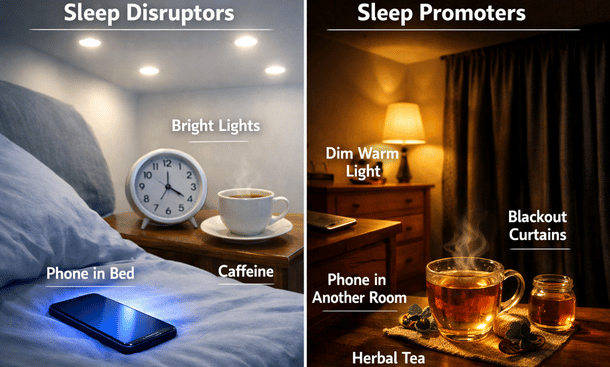
Your phone, tablet, laptop, and TV emit blue light that suppresses melatonin production. Your brain interprets this light as daytime, making it harder to fall asleep even when you’re exhausted. Scrolling through social media also keeps your mind active and engaged when it should be winding down.
Caffeine Too Late in the Day
Caffeine has a half-life of about five to six hours. That means if you have coffee at 3 PM, half the caffeine is still in your system at 9 PM. Even if you can fall asleep, caffeine reduces deep sleep quality. If you’re trying to conceive, stick to morning coffee only and keep it to one cup as we discussed in our guide on vitamins and supplements
Inconsistent Sleep Schedule
Going to bed and waking up at wildly different times throws off your circadian rhythm. Your body can’t anticipate when it should produce melatonin and cortisol if the timing changes constantly. This is especially problematic if you’re trying to track ovulation, since irregular sleep can make cycles less predictable.
Bedroom Environment
Temperature, light, and noise all affect sleep quality. Most people sleep best in a cool room, around 65 to 68 degrees. Even small amounts of light can disrupt melatonin production. Noise, even if it doesn’t fully wake you, can fragment your sleep stages.
Stress and Racing Thoughts
Anxiety about fertility itself often becomes a sleep disruptor. You lie there mentally calculating ovulation days, worrying about whether this month will work, replaying conversations with your doctor. Cortisol stays elevated, your mind won’t shut off, and sleep becomes impossible.
Building Better Sleep Habits Starting Tonight
Small changes to your routine and environment can make a massive difference. You don’t need to implement everything at once, but the more you do, the better you’ll sleep.
Set a Consistent Schedule
Pick a bedtime and wake time that allows for eight hours of sleep, then stick to it every single day, including weekends. Your body will start producing melatonin at the right time automatically once the pattern is established. Set a phone alarm not just for waking up, but also for starting your bedtime routine.
Create a Wind-Down Routine
Start preparing for sleep 30 to 60 minutes before bed. This signals your body that it’s time to shift gears. Your routine might include dimming the lights, taking a warm shower or bath, doing some gentle stretching, reading a physical book, or practicing relaxation techniques. The specific activities matter less than doing them consistently in the same order.
Handle the Screen Problem
Put your phone in another room at least an hour before bed. If you absolutely must use screens in the evening, enable night mode or blue light filters, but honestly, it’s better to just avoid them. Get an actual alarm clock instead of using your phone so you’re not tempted to check it if you wake up during the night.
Optimize Your Sleep Environment
Invest in blackout curtains or a sleep mask. Even the glow from a digital clock can interfere with melatonin production. Keep your bedroom cool, between 65 and 68 degrees. Use a fan both for temperature control and white noise if you’re sensitive to sounds. Make sure your mattress and pillows are comfortable and supportive.
Watch Your Evening Eating and Drinking
Finish eating at least two to three hours before bed. A full stomach makes sleep uncomfortable and can cause reflux. Stay hydrated throughout the day but taper off liquids in the evening so you’re not waking up multiple times to use the bathroom. Avoid alcohol close to bedtime. While it might make you drowsy initially, it fragments sleep later in the night and reduces REM sleep.
Manage Stress and Racing Thoughts
If your mind races when you lie down, try a brain dump before bed. Spend ten minutes writing down everything you’re thinking about, worrying about, or need to remember for tomorrow. Getting it out of your head and onto paper helps you let go of it. Progressive muscle relaxation, where you systematically tense and release different muscle groups, can also help your body physically relax.
Meditation or breathing exercises work for some people. Try the 4-7-8 technique: breathe in for four counts, hold for seven, exhale for eight. Do this four times. It activates your parasympathetic nervous system and tells your body it’s safe to rest.
Exercise Timing and Sleep
Regular physical activity improves sleep quality and helps regulate your circadian rhythm. But timing matters. Exercise raises your core body temperature and releases cortisol and adrenaline. For most people, working out too close to bedtime makes it harder to fall asleep.
Try to finish moderate to intense exercise at least three to four hours before bed. Morning or afternoon workouts are ideal. If evening is your only option, stick to gentle activities like yoga, walking, or stretching.
That said, some people sleep fine after evening workouts. Pay attention to how your body responds and adjust accordingly. For more on building an exercise routine that supports fertility, check out our guide on the best exercises before pregnancy
When Sleep Problems Need Professional Help
Sometimes poor sleep is a symptom of an underlying condition that needs medical attention. Don’t struggle indefinitely if basic sleep hygiene isn’t working.
Sleep Apnea
If you snore loudly, wake up gasping for air, or your partner notices you stop breathing during sleep, talk to your doctor about sleep apnea. This condition is more common in people who are overweight but can affect anyone. It severely disrupts sleep quality and oxygen levels, affecting both fertility and pregnancy outcomes.
Insomnia Disorder
If you’ve had trouble falling asleep or staying asleep at least three nights per week for more than three months, and it’s affecting your daily functioning, you might have chronic insomnia. Cognitive behavioral therapy for insomnia is highly effective and doesn’t involve medication.
Restless Leg Syndrome
Uncomfortable sensations in your legs that create an irresistible urge to move them can make sleep impossible. This condition is often related to iron deficiency, which we talked about in the context of preconception vitamins. Getting your iron levels checked and treated might solve the problem.
Thyroid Issues
Both hypothyroidism and hyperthyroidism can severely affect sleep. Since thyroid function is critical for fertility anyway, get this checked as part of your preconception workup if you haven’t already.
Your Partner’s Sleep Matters Too
Sperm production and quality are also affected by sleep. Men who sleep less than six hours per night or more than nine hours show reduced sperm count and motility. Sleep deprivation lowers testosterone levels, which affects both libido and sperm production.
Encourage your partner to adopt better sleep habits alongside you. Making it a team effort increases accountability and makes the lifestyle changes feel less isolating.
Tracking Your Sleep
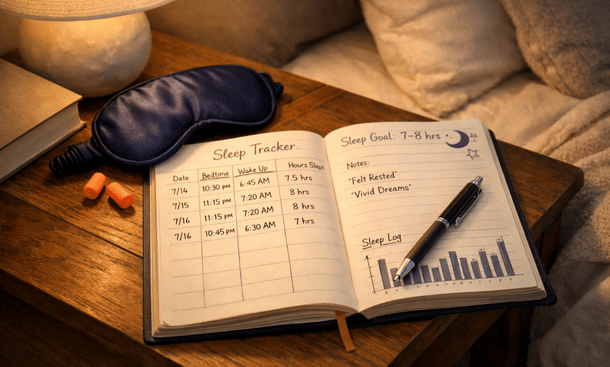
You don’t need fancy technology, but paying attention to your sleep patterns helps you identify what works and what doesn’t. Keep a simple sleep diary for a couple weeks. Note when you went to bed, when you woke up, how long it took to fall asleep, how many times you woke during the night, and how rested you felt in the morning.
If you want more detailed data, fitness trackers and apps can monitor sleep stages, though their accuracy varies. Take the specific numbers with a grain of salt, but trends over time can be useful.
Some fertility tracking apps include sleep logging features, which helps you see connections between sleep quality and cycle characteristics.
Managing Sleep During the Two-Week Wait
The time between ovulation and when you can take a pregnancy test is notoriously stressful. Anxiety spikes, you’re hyperaware of every possible symptom, and sleep often suffers as a result.
Be extra intentional about your wind-down routine during this time. The relaxation techniques we talked about earlier become even more important. Avoid obsessive symptom googling, especially before bed. Consider taking a break from fertility forums or social media groups if they’re increasing your anxiety.
Remember that stress during the two-week wait won’t prevent implantation if it’s going to happen, but it will make you miserable. Prioritize your mental health and sleep quality regardless of the outcome.
The Bottom Line
Sleep isn’t a luxury when you’re trying to conceive. It’s a biological necessity that directly affects your hormones, egg quality, and ability to get pregnant. Seven to eight hours of quality sleep per night gives your body the rest it needs to function optimally.
Start with the basics: consistent schedule, screen-free evenings, cool dark bedroom, and a relaxing bedtime routine. Give these changes at least two weeks before expecting major improvements. Your body needs time to reset its circadian rhythm and establish new patterns.
If sleep problems persist despite good habits, or if you suspect an underlying sleep disorder, talk to your doctor. Treating sleep issues now sets you up not just for easier conception, but for a healthier pregnancy once it happens.
Sleep is just one piece of your preconception preparation. For a complete approach to getting your body ready, explore our comprehensive guide on preparing your body for pregnancy, which covers everything from nutrition to fitness to creating your full three-month plan.
Your body’s about to do something incredible. Give it the rest it needs to make it happen.
