

I’ll never forget the advice my mother-in-law gave me three days after my daughter was born. She showed up at my apartment with a massive pot of oatmeal and told me I needed to eat a bowl every single morning or my milk would dry up. I was exhausted and terrified so I ate that oatmeal religiously for weeks even though I hate oatmeal.
Turns out she wasn’t completely wrong. Oats do have properties that support lactation. But the idea that one magic food controls your entire milk supply? That’s not how any of this works.
Your nutrition absolutely impacts your milk production, your energy levels, and your overall ability to sustain breastfeeding long-term. But it’s about patterns and balance, not about forcing down foods you hate or spending a fortune on lactation cookies that may or may not do anything.
Let me break down what actually matters when it comes to eating to support your milk supply. This is based on research, not just things your grandmother swears by, though sometimes those overlap.
How Nutrition Actually Affects Milk Production
Your body prioritizes milk production. Even if your diet is less than ideal, your body will pull from its own nutrient stores to make milk for your baby. That’s why exclusively breastfeeding moms often feel depleted and exhausted. You’re literally giving your body’s resources to another human.
But here’s the thing. Your body can only do that for so long before it impacts your milk supply, your health, or both. If you’re not taking in enough calories or nutrients to support lactation, eventually production will suffer.
Breastfeeding burns an extra 300-500 calories per day on average. More if you’re feeding twins or exclusively pumping. That’s significant. If you’re trying to restrict calories to lose baby weight while also trying to build milk supply, you’re working directly against yourself.
Your body also needs adequate hydration to produce milk. Breast milk is about 90 percent water. If you’re chronically dehydrated, your body will prioritize keeping you alive over making milk. That’s just basic biology.
Certain nutrients play specific roles in lactation. Protein provides the building blocks for milk production. Healthy fats support brain development in your baby and keep you satiated. B vitamins help with energy metabolism which matters when you’re running on minimal sleep.
The goal isn’t perfection. It’s consistently giving your body what it needs to do the demanding work of feeding another human.
The Galactagogues That Actually Work
Galactagogues are foods or herbs that are believed to increase milk supply. Some have decent research behind them. Others are mostly tradition and anecdotal evidence. Let me give you the real breakdown.
Oats are probably the most commonly recommended food for milk supply and there’s actually some science here. Oats contain beta-glucan which may increase prolactin levels. They’re also high in iron and low iron can decrease milk production.
You don’t need to eat plain oatmeal if you hate it. Granola, overnight oats, oat milk, even oat-based lactation cookies all count. Just watch the added sugar in processed versions.
Fenugreek is an herb that’s been used for centuries to boost supply. It can be effective but it doesn’t work for everyone. Some women see results within 24-72 hours and others notice no difference at all. We’ll talk more about supplements in a minute but fenugreek seeds can be added to foods too.
Brewer’s yeast is high in B vitamins, iron, and protein. It’s a common ingredient in lactation cookies and can be added to smoothies or baked goods. Some women swear by it though the research is limited.
Fennel seeds have been traditionally used to support lactation in many cultures. The evidence is mostly anecdotal but fennel is safe and some women find it helpful. You can drink fennel tea or add the seeds to cooking.
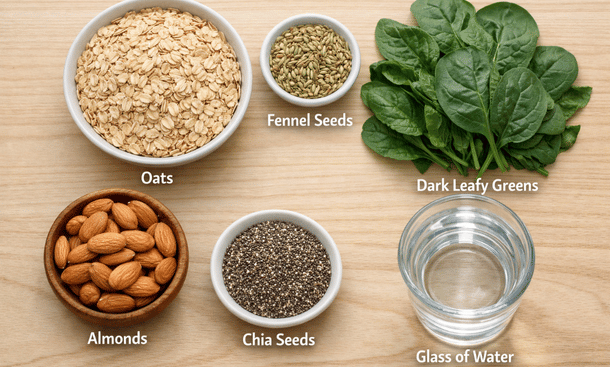
Dark leafy greens like spinach and kale are rich in phytoestrogens that may support milk production. They’re also packed with calcium, iron, and folate which you need for energy and overall health.
Nuts and seeds, especially almonds, are high in protein and healthy fats. They’re easy to grab when you’re nursing constantly and don’t have time for real meals.
Garlic has been shown to potentially increase milk supply and may even make breast milk taste slightly different in a way that encourages babies to nurse more. Unless your baby seems bothered by it, garlic is a great addition to your diet.
Here’s what matters more than any individual food though. Eating enough total calories and getting adequate protein throughout the day will do more for your supply than obsessing over specific galactagogues.
Building Realistic Meals That Support Lactation
The problem with most lactation diet advice is that it’s completely impractical for a new mom. Nobody has time to prepare elaborate meals when they’re nursing every two hours and running on four hours of sleep.
You need foods that are nutrient-dense, easy to prepare or grab quickly, and actually appealing enough that you’ll eat them. Here’s what that looks like in real life.
Breakfast ideas: Overnight oats made the night before with nuts, chia seeds, and fruit. Greek yogurt with granola and berries. Eggs scrambled with spinach and cheese. Smoothies with protein powder, oats, nut butter, and banana. Avocado toast with an egg on whole grain bread.
The goal is protein plus complex carbs plus some healthy fat. This combination keeps you full longer and provides sustained energy.
Lunch and dinner: Think simple proteins with vegetables and whole grains. Grilled chicken or salmon with roasted vegetables and quinoa. Stir fry with tofu or shrimp and lots of vegetables over brown rice. Bean and vegetable soup with whole grain bread. Pasta with chicken, spinach, and a cream sauce.
One-pot meals are your friend. Anything you can make in a slow cooker or instant pot. Casseroles you can freeze in portions. You’re looking for nutritious food that doesn’t require standing in the kitchen for an hour.
Snacks: This is crucial because you’ll be snacking constantly while nursing. Keep easy options accessible. Trail mix, cheese and crackers, hummus and vegetables, hard-boiled eggs, protein bars, apple slices with peanut butter, lactation cookies if you like them.
Have snacks everywhere. By your bed, by the couch where you nurse, in your diaper bag, in the car. You need to be able to grab food easily throughout the day.
The Hydration Factor Nobody Emphasizes Enough
I cannot stress this enough. Drink water. Like, a lot of water. Way more than you think you need.
A good rule is to drink to thirst plus a little more. Many lactation consultants recommend drinking a full glass of water every time you nurse or pump. That can feel excessive but it works.
Get a large water bottle with measurements on it so you can track intake. Aim for at least 100 ounces per day if you’re exclusively breastfeeding. More if it’s hot or you’re exercising.
Your urine should be pale yellow. If it’s dark, you’re not drinking enough. If you feel thirsty, you’re already slightly dehydrated.
Some women notice an immediate correlation between hydration and output. Skip drinking for a few hours and your next pumping session yields noticeably less. Stay hydrated and output stays consistent.
Herbal teas count toward hydration. Lactation teas with fenugreek, fennel, and other galactagogues can help with both hydration and potentially supply. Just avoid excessive caffeine which can be dehydrating and may affect some babies.
Avoid alcohol in significant amounts as it can decrease milk production and isn’t great for your baby. An occasional drink is fine for most moms but regular heavy drinking will impact supply.
What About Lactation Supplements and Cookies
Walk into any store in Brooklyn and you’ll find lactation cookies, brownies, smoothie mixes, and various supplements all promising to boost your supply. Some work, some are just expensive snacks.
Lactation cookies typically contain oats, brewer’s yeast, and flax seeds. If you enjoy them and they help you eat more calories, great. But you can make your own for way less money or just eat the ingredients separately.
The key is that they’re usually calorie-dense which helps if you’re struggling to eat enough. But there’s nothing magic about cookies specifically. You could get the same benefits from a bowl of oatmeal with ground flax and some nuts.
If you want to try supplements like fenugreek capsules or blessed thistle, that’s fine. Just understand what you’re doing and watch for any reactions. If you want to understand which lactation supplements actually work and when they’re worth the investment, there’s detailed research and honest reviews to help you decide.
Focus on food first. Supplements are meant to supplement an already decent diet, not replace eating real meals.
Foods That Might Decrease Supply
Just as some foods may help, others can potentially hurt your supply. The research here is limited but worth knowing about.
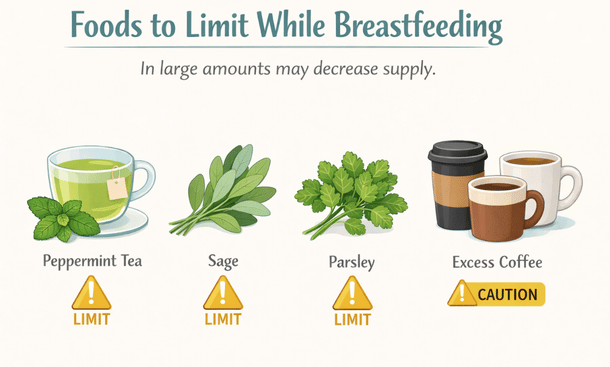
Peppermint and spearmint in large amounts may decrease supply. A couple pieces of gum or an occasional mint tea probably won’t matter but drinking peppermint tea multiple times daily might.
Sage and parsley in culinary amounts are fine but large medicinal doses may reduce supply. These herbs are sometimes used intentionally when weaning.
Cabbage leaves are used to relieve engorgement because they can decrease supply. Don’t use them unless you’re trying to reduce production.
Some women notice their supply dips with too much caffeine though moderate amounts are generally fine. If you’re drinking four espressos a day and your supply tanks, try cutting back and see what happens.
Eating for Long-Term Breastfeeding Success
The first few weeks postpartum are survival mode and that’s fine. Eat whatever you can manage. Accept the meals people bring you. Order takeout. Do what you need to do.
But as you settle into breastfeeding, establishing better eating patterns will help you sustain this long-term. You can’t run on granola bars and coffee forever without it catching up to you.
Meal prep when you have energy. Make double batches and freeze portions. Stock your pantry and freezer with easy nutritious options. Accept help from people who offer to bring meals.
Your nutritional needs remain elevated as long as you’re breastfeeding. Don’t drastically cut calories trying to lose weight quickly. Your body needs fuel to make milk and keep you functional.
If you’re dealing with stress around milk production or just the general overwhelm of new motherhood, know that taking care of your mental health is just as important as what you eat. Your body can’t effectively respond to the demand you’re placing on it if you’re constantly running on empty and stressed out.
Remember that supporting your milk supply naturally isn’t about one single factor. It’s the combination of frequent milk removal, adequate nutrition, proper hydration, and managing the stress that can interfere with letdown and production.
The Bottom Line on Food and Milk Supply
You don’t need a perfect diet to make enough milk. You need a decent diet consistently. Eat enough calories, prioritize protein and whole foods when possible, stay hydrated, and include some of the foods known to support lactation.
Give yourself permission to be realistic. This isn’t the time to stress about eating perfectly or to try restrictive diets. Your body is doing something extraordinary and it needs fuel.
If adding oats or fennel or whatever makes you feel like you’re actively supporting your supply, great. If forcing yourself to eat foods you hate stresses you out, skip it and focus on eating well overall.
Your baby needs a fed, relatively sane mother more than they need you to eat a specific superfood. Take care of yourself and your body will take care of making milk.

As a Felyro.com content author, I develop actionable content on breastfeeding, translating research-backed information into practical advice for mothers. My goal is to help families establish healthy feeding habits, improve maternal confidence, and support infant development.