

I sat in my apartment at three in the morning, my six-week-old daughter screaming while I frantically googled “is my baby starving” with tears running down my face. My breasts felt empty. She’d been nursing for what felt like hours. I was convinced my body was failing us both.
Turns out I wasn’t failing at all. My supply was actually fine. I just had no idea what normal breastfeeding looked like or how milk production actually worked. Nobody had explained that constant nursing doesn’t mean you’re running out of milk. Nobody told me that soft breasts don’t mean empty breasts. And definitely nobody warned me that the stress and anxiety I was feeling would make the whole situation worse.
If you’re reading this because you’re worried about your milk supply, you’re not alone. Supply concerns are one of the most common reasons women stop breastfeeding earlier than they planned. Sometimes those concerns are legitimate and your body needs support. Other times your supply is perfectly adequate but you’ve been given terrible information about what’s normal.
Either way, there are real, evidence-based strategies you can use to support and increase your milk production naturally. I’m not talking about magic pills or sketchy advice from internet forums. I’m talking about working with your body’s natural processes to optimize supply through proven methods.
This isn’t about being perfect or following some impossible standard. It’s about understanding how lactation works, identifying what might actually be affecting your supply, and having practical tools you can use when you need them. Because the difference between successful breastfeeding and giving up often comes down to having the right information at the right time.
Let me walk you through everything I wish someone had told me when I was sitting there panicking at 3am.
How Your Body Actually Makes Milk (And Why Most “Low Supply” Isn’t Real)
Before you try to increase your milk supply, you need to understand how milk production actually works. Because most women who think they have low supply don’t. They just don’t know what normal looks like.
Your breasts started preparing to make milk during pregnancy. By your second trimester you already had colostrum waiting. When your baby was born and your placenta came out, your hormones shifted dramatically. Within two to three days your milk came in and suddenly you had these rock-hard breasts that felt completely foreign.
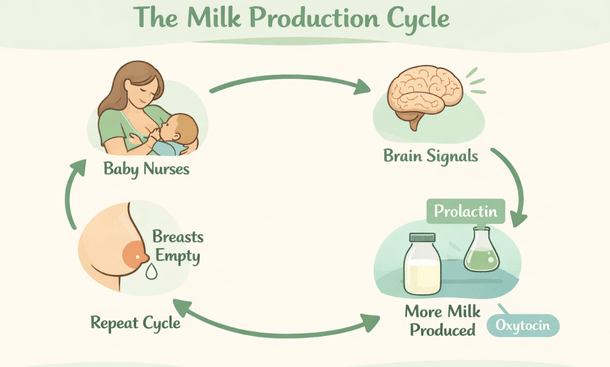
But here’s what matters most. Once your milk comes in, production switches to a supply and demand system. Your body makes milk based on how much milk gets removed from your breasts. Empty breasts make milk faster. Full breasts slow down production.
Every time your baby nurses or you pump, your body releases prolactin, which tells your milk-making cells to produce more milk. It also releases oxytocin, which triggers your letdown reflex so the milk actually flows out. This happens multiple times during every single feeding session.
The more frequently milk gets removed, the more your body makes. That’s why newborns nurse constantly and that’s completely normal, not a sign that you’re running low. They’re literally programming your supply to match their needs.
Most moms panic about supply for reasons that have nothing to do with actual production. Your breasts feel soft instead of full? That’s normal once you’re past the first few weeks. It just means your supply has regulated to match what your baby needs. You can’t pump much milk? Babies are way more efficient than pumps. Some women respond great to pumping and others don’t, regardless of how much milk they’re making. Your baby is fussy at the breast? Could be gas, could be tired, could be a million things besides hunger.
The real indicators of whether your baby is getting enough milk are simple. Six or more wet diapers in 24 hours after the first week. Steady weight gain of about five to seven ounces per week in the early months. Your baby has periods of alert wakefulness and seems generally satisfied after most feedings.
If those things are happening, your supply is fine even if it doesn’t feel that way to you.
True low supply only affects about two to five percent of women. So why does everyone panic about it? Because babies behave in ways that feel alarming when you don’t know they’re normal. They want to nurse every hour. They nurse for 45 minutes, pop off, and act hungry again 20 minutes later. They cluster feed for hours in the evening.
All of that is normal newborn behavior. They have tiny stomachs. Breast milk digests quickly. They nurse for comfort and temperature regulation and processing their brand new existence, not just for calories.
The times when supply genuinely needs support are when milk isn’t being removed effectively or frequently enough. If your baby has a tongue tie that prevents good milk transfer. If you’re trying to put a newborn on a feeding schedule instead of nursing on demand. If you’re going long stretches without emptying your breasts because you’re separated from your baby or dealing with other challenges.
Understanding how the supply and demand system actually functions gives you the foundation for everything else. You can’t increase supply by working against your body’s natural processes. You increase it by optimizing those processes and removing any obstacles that might be interfering.
Once you grasp this basic biology, the strategies for supporting and increasing milk production make a lot more sense. You’re not trying to trick your body into making more milk. You’re working with the system that’s already in place.
If you want to dive deeper into the mechanics of milk production and learn how to tell the difference between normal breastfeeding patterns and actual supply issues, understanding how your supply actually responds to demand will give you confidence when things feel uncertain.
Power Pumping and Hands-On Techniques That Actually Work
If you need to increase your supply quickly, power pumping is one of the most effective tools you have. It mimics cluster feeding, which is what your baby does naturally when they want to boost your production.
The concept is simple. You pump frequently in a concentrated time period to send your body the message that demand just increased. You’re triggering multiple letdowns and stimulating prolactin production over and over in a short window.
The standard power pumping protocol takes exactly one hour. Pump for 20 minutes, rest for 10 minutes, pump for 10 minutes, rest for 10 minutes, pump for 10 minutes. Done. You do this once per day, ideally at the same time each day, for at least three to five days. Most women see results within that timeframe.
Pick a time when you can commit to this without interruptions. Morning is usually best because prolactin levels are naturally highest then, but the best time is whatever time you can actually stick to consistently. This is in addition to your regular nursing or pumping schedule, not a replacement for it.
The first session usually doesn’t yield much milk and that’s completely normal. You’re not trying to drain your breasts completely. You’re stimulating them. By day two or three you should notice more letdowns during the session. Around day three to five most women see their regular pumping sessions throughout the day producing more output.

Beyond power pumping, there are hands-on techniques that improve milk removal and increase supply. Breast compressions while nursing or pumping make a significant difference. When you notice milk flow slowing down, use your hand to compress the breast. Squeeze and hold for a few seconds, release, repeat. This mimics what babies do when they’re actively nursing and it triggers additional letdowns.
Massage before and during feeding sessions helps move milk through the ducts. Use your fingertips to compress breast tissue from the chest wall toward the nipple. Some women find that gentle circular massage around the entire breast before nursing helps them get a stronger initial letdown.
Hand expression after pumping or nursing can empty your breasts more completely than pumping alone. Many women can hand express an additional half ounce to full ounce after they think they’re done pumping. That extra stimulation tells your body to make more.
Warmth promotes letdown. A warm compress on your breasts before nursing, or pumping right after a warm shower, can help milk flow more easily. The physical warmth helps override tension that can interfere with oxytocin release.
Make sure your pump flange size is correct if you’re pumping regularly. Most women use flanges that are too large. Your nipple should move freely in the tunnel without your areola getting pulled in. Poor flange fit means inefficient milk removal, which undermines everything else you’re doing.
Switch nursing is another technique that can boost supply. Instead of completely emptying one breast before moving to the other, switch back and forth between breasts two or three times during a feeding session. This gives you multiple letdowns on each side and increases overall stimulation.
The key with all these techniques is consistency. Doing power pumping once or doing breast compressions occasionally won’t change much. You need to commit to doing them regularly for at least several days to see results.
These methods work because they’re based on the fundamental principle of milk production. More frequent and effective milk removal equals more milk production. You’re not doing anything magical or complicated. You’re just optimizing the natural supply and demand system.
When you combine proper pumping techniques with the other strategies we’ll cover, you give yourself the best possible chance of increasing production to where you need it. Learning the specific power pumping schedule and techniques that help your body respond most effectively makes this process much more manageable than trying to figure it out on your own.
The Foods and Nutrition That Actually Support Milk Production
What you eat directly impacts your ability to make milk. Your body will prioritize milk production even if your diet isn’t great, pulling from its own nutrient stores to feed your baby. But it can only do that for so long before it affects either your supply, your health, or both.
Breastfeeding burns an extra 300 to 500 calories per day on average. That’s significant. If you’re trying to restrict calories while also trying to build milk supply, you’re working directly against yourself. Your body needs fuel to do the demanding work of feeding another human.
Hydration matters more than most people realize. Breast milk is about 90 percent water. If you’re chronically dehydrated, your body prioritizes keeping you alive over making milk. That’s basic biology. Aim for at least 100 ounces of water per day if you’re exclusively breastfeeding. A good rule is to drink a full glass of water every time you nurse or pump.
Your urine should be pale yellow. If it’s dark, you’re not drinking enough. If you feel thirsty, you’re already slightly dehydrated. Keep a large water bottle with measurements on it so you can track your intake throughout the day.
Certain foods are known as galactagogues, meaning they’re believed to increase milk supply. Some have decent research behind them and others are mostly tradition and anecdotal evidence, but many women find them helpful.
Oats are probably the most commonly recommended food and there’s actually some science here. Oats contain beta-glucan which may increase prolactin levels. They’re also high in iron, and low iron can decrease milk production. You don’t need to force down plain oatmeal if you hate it. Granola, overnight oats, oat milk, even oat-based lactation cookies all count.
Dark leafy greens like spinach and kale are rich in phytoestrogens that may support milk production. They’re also packed with calcium, iron, and folate which you need for energy and overall health. Throw them into smoothies, eggs, pasta dishes, wherever you can fit them in.
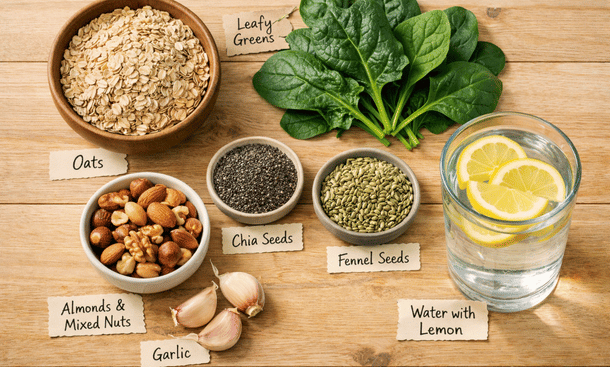
Nuts and seeds, especially almonds, are high in protein and healthy fats. They’re easy to grab when you’re nursing constantly and don’t have time for real meals. Keep trail mix everywhere. By your bed, by the couch where you nurse, in your diaper bag, in the car.
Garlic has been shown to potentially increase milk supply and may even make breast milk taste slightly different in a way that encourages babies to nurse more. Unless your baby seems bothered by it, garlic is a great addition to your diet.
Fennel seeds have been traditionally used to support lactation in many cultures. The evidence is mostly anecdotal but fennel is safe and some women find it helpful. You can drink fennel tea or add the seeds to cooking.
Here’s what matters more than any individual food though. Eating enough total calories and getting adequate protein throughout the day will do more for your supply than obsessing over specific galactagogues.
Build meals around protein plus complex carbs plus healthy fats. This combination keeps you full longer and provides sustained energy. Breakfast could be Greek yogurt with granola and berries, or eggs scrambled with spinach and cheese, or overnight oats with nuts and fruit. Lunch and dinner might be grilled chicken or salmon with roasted vegetables and quinoa, or stir fry with tofu and vegetables over brown rice, or bean soup with whole grain bread.
One-pot meals are your friend. Anything you can make in a slow cooker or instant pot. Casseroles you can freeze in portions. You need nutritious food that doesn’t require standing in the kitchen for an hour when you’re exhausted.
Some foods might decrease supply and are worth being cautious about. Peppermint and spearmint in large amounts may reduce production. A couple pieces of gum or occasional mint tea probably won’t matter but drinking peppermint tea multiple times daily might. Sage and parsley in culinary amounts are fine but large medicinal doses may lower supply. These herbs are sometimes used intentionally when weaning.
The bottom line is that you don’t need a perfect diet to make enough milk. You need a decent diet consistently. Eat enough calories, prioritize protein and whole foods when possible, stay hydrated, and include some of the foods known to support lactation. Give yourself permission to be realistic about what you can manage as a new mom.
Your baby needs a fed, relatively sane mother more than they need you to eat specific superfoods. Take care of yourself and your body will take care of making milk. When you’re thinking about the complete picture of supporting lactation naturally through nutrition, focusing on foods that provide real nutritional value will give you much better results than expensive supplements that may or may not work.
Supplements and Herbs – What’s Worth Your Money and What Isn’t
Walk into any health food store and you’ll find dozens of lactation supplements promising to boost your supply. Some work for some women. Others are expensive placebos. Let me save you the money and confusion by breaking down what the research actually says.
First, understand what supplements can and can’t do. No supplement can fix a supply issue caused by insufficient milk removal. If your baby has a tongue tie preventing effective milk transfer, or you’re only pumping twice a day when you need to pump six times, fenugreek isn’t going to solve that problem. Supplements work best when your milk removal is already adequate but your body needs extra support to meet demand.
Fenugreek is the most commonly recommended lactation supplement. The typical dose is 3,500 to 4,000 milligrams per day, usually split into three doses. Most women who respond to fenugreek notice a difference within 24 to 72 hours. If you don’t see any change after a week, it’s probably not going to work for you.
Here’s the reality about fenugreek. It works for some women and does absolutely nothing for others. There’s no way to predict which category you’ll fall into except to try it. The most common side effect is smelling like maple syrup. Your sweat and urine will have a sweet maple scent. It’s weird but harmless.
Fenugreek can cause digestive issues like gas, bloating, and diarrhea. Start with a lower dose and work up to minimize this. Take it with food. Don’t take fenugreek if you have a peanut or chickpea allergy because it’s in the same plant family. Avoid it if you have asthma as it can worsen symptoms. It can lower blood sugar so if you’re diabetic, talk to your doctor first.
Blessed thistle is often recommended alongside fenugreek. The typical dose is 1,200 to 1,500 milligrams three times per day. Like fenugreek, you should see results within a few days if it’s going to work. Blessed thistle can cause stomach upset and nausea, especially on an empty stomach. Take it with food and plenty of water.
The research on blessed thistle specifically is limited. Most studies showing positive results used it in combination with fenugreek, so it’s hard to say how much blessed thistle contributes on its own. Many women take the combination because their lactation consultant recommended it.
Moringa has gained popularity as a superfood and lactation supplement. It’s nutritionally dense, high in vitamins, minerals, and protein. Some small studies suggest moringa can increase milk supply but the research is still limited. The typical dose is 250 to 1,000 milligrams per day in capsule form or about a teaspoon of powder mixed into smoothies or food.
Moringa generally has fewer side effects than fenugreek. Some women report mild stomach upset but most tolerate it well. It’s more expensive than fenugreek but some women prefer it because it doesn’t cause the maple syrup smell or digestive issues.
Brewer’s yeast isn’t an herb, it’s a nutritional supplement high in B vitamins, iron, protein, and chromium. The idea is that B vitamins support energy production and overall health, which indirectly supports lactation. There’s no established dose for brewer’s yeast as a galactagogue. Most lactation recipes use two to four tablespoons.
Brewer’s yeast can cause gas and bloating. It has a slightly bitter taste that some people dislike. You can mix it into smoothies, oatmeal, or baked goods to mask the flavor. The benefit is that even if it doesn’t directly increase supply, you’re getting good nutrition during an incredibly demanding time.
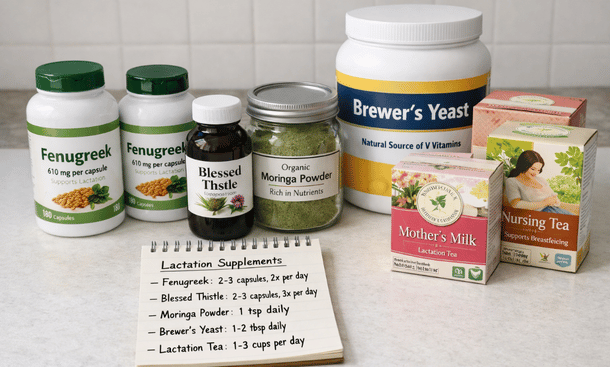
Lactation teas typically contain a blend of galactagogue herbs like fenugreek, fennel, anise, and blessed thistle. They’re convenient and help with hydration. The downside is that you’re getting much lower doses of herbs in tea form compared to capsules. You’d need to drink multiple cups per day to get therapeutic doses.
If drinking lactation tea encourages you to hydrate more and gives you a psychological boost, it’s worth it. Just don’t expect dramatic results from tea alone.
Here’s when supplements actually help versus when they’re just a band-aid. They’re most helpful when you’ve established good milk removal patterns but your supply is slightly lower than you’d like. When you’re nursing or pumping frequently with good technique but want every possible advantage. When you’re recovering from illness or stress that temporarily affected your supply.
Supplements are not helpful when your baby isn’t effectively removing milk due to anatomical issues. When you’re not nursing or pumping frequently enough. When you have insufficient glandular tissue or medical conditions affecting hormones. In those situations you need to address the root problem, not throw supplements at it.
Let’s talk money because supplements add up fast. Fenugreek and blessed thistle are relatively cheap, maybe 15 to 20 dollars per month. Moringa can run 30 to 50 dollars. Proprietary blends can cost 40 to 60 dollars or more per month.
Give any supplement at least three to five days to see if it makes a difference. If your supply hasn’t increased at all after a week, it’s probably not going to. Move on to a different approach instead of continuing to spend money on something that isn’t helping.
Supplements work best as part of a comprehensive approach. Make sure you’re removing milk frequently and effectively. Make sure you’re eating enough calories and staying hydrated. Make sure you’re getting some sleep and managing stress. Think of supplements as one tool in your toolkit, not the entire toolkit.
If you’re considering supplements as part of your strategy, understanding which ones have actual evidence behind them versus which ones are mostly marketing hype will help you make informed decisions without wasting money on products that won’t help your specific situation.
Why Stress Destroys Your Supply and How to Actually Manage It
Nobody warns you that stress can literally shut down your milk supply. You might expect sore nipples and exhaustion, but the idea that anxiety about your supply will actually decrease your supply? That’s the cruelest irony of breastfeeding.
When you’re stressed, your body releases cortisol. That’s your main stress hormone and it exists for good evolutionary reasons. The problem is that cortisol directly interferes with oxytocin, the hormone responsible for your milk ejection reflex. High cortisol levels inhibit oxytocin release, which means your milk won’t let down even when your breasts are full.
Your body doesn’t know the difference between actual danger and modern motherhood stress. Cortisol spikes whether you’re being chased by a predator or staring at a pile of unopened mail while your baby screams and you haven’t showered in four days. From an evolutionary standpoint, if cortisol is flooding your system, this isn’t a safe time to be nursing a vulnerable infant. So your body prioritizes survival over milk production.
The result is that you sit there nursing or pumping and nothing happens. Or milk comes out much more slowly than usual. You feel your breasts are full but the milk won’t release. It’s incredibly frustrating and of course that frustration creates more stress, which creates more cortisol, which blocks more oxytocin. It’s a vicious cycle.
Chronic stress also affects prolactin, the hormone that actually makes milk. While acute stress mainly impacts letdown, ongoing elevated cortisol can decrease prolactin production over time. That means chronic stress can reduce the amount of milk your body makes, not just how well it flows.
Sleep deprivation makes everything worse because lack of sleep increases cortisol levels. New moms are caught in a terrible cycle where stress causes poor sleep which causes more stress which decreases milk production which causes more anxiety.
How do you know if stress is affecting your supply? You feel full or engorged but milk won’t come out when you nurse or pump. You have inconsistent letdowns where some sessions milk flows easily and others nothing happens even though everything else is the same. Your supply is fine when you’re calm but tanks during stressful periods. You notice a direct correlation between stressful events and decreased output.
Here’s what doesn’t work: telling yourself to “just relax.” You can’t think your way out of a stress response. Your nervous system doesn’t work that way. Cortisol doesn’t care that logically you know you should calm down. Feeling guilty about being stressed makes everything worse.
What does work is giving your nervous system concrete tools to down-regulate the stress response. Before every nursing or pumping session, take six deep breaths. Inhale for four counts, hold for four, exhale for six. This activates your parasympathetic nervous system and reduces cortisol. Do this every single time. It takes less than a minute and it signals your body to shift from stress mode to rest mode.
Skin-to-skin contact with your baby increases oxytocin production in both of you. Taking off your shirt and your baby’s shirt and holding them against your chest releases the exact hormone you need for letdown while simultaneously reducing cortisol. Try to do at least 10 to 15 minutes of skin-to-skin daily.
If you’re pumping while separated from your baby, pull up photos and videos of them on your phone. Your brain releases oxytocin in response to seeing your baby’s face even when they’re not physically present. Some women smell a piece of their baby’s clothing while pumping. Engaging multiple senses amplifies the oxytocin response.
Warm compresses on your breasts before nursing promote relaxation and help trigger letdown. Use a warm washcloth, a heating pad on low, or pump after a warm shower. The physical warmth helps override the tension that stress creates.
Your physical environment affects your stress levels more than you realize. Set up a comfortable nursing station where you actually want to sit. Use softer lighting instead of harsh overhead lights. Minimize interruptions by putting your phone on do not disturb. Have water and snacks within reach because thirst and hunger are stressors.
You cannot address stress without addressing sleep. Sleep deprivation is one of the biggest drivers of elevated cortisol in new mothers. When someone offers to hold the baby so you can shower or do laundry, sleep instead. The laundry can wait. Your cortisol levels can’t.
If you have a partner, work out a system where you get at least one longer stretch of sleep. Maybe they handle the first part of the night so you can sleep from eight in the evening to midnight uninterrupted. Or they do the early morning shift so you can sleep until seven. Some women pump before their longest sleep stretch and have their partner give one bottle feeding so they can get four to five hours of unbroken sleep.
Your stress levels are directly affected by how supported you feel. If you’re trying to do everything alone, your cortisol stays elevated and your supply suffers. Your partner needs to understand that helping you stay calm isn’t just being nice, it’s directly impacting your ability to feed your baby.
Be specific about what you need. Not vague requests for help but concrete tasks. “I need you to handle dinner every night this week.” “I need you to take the baby for an hour every evening so I can decompress.” “I need you to stop asking me questions during nursing sessions.”
Accept help from people who offer it. If someone wants to bring a meal, say yes. If your mom offers to do laundry, let her. Asking for help isn’t weakness. It’s recognizing that milk production requires your body to feel safe and resourced, which doesn’t happen when you’re drowning in stress and responsibilities.
Sometimes stress management isn’t enough on its own. If you’re having intrusive thoughts, persistent feelings of dread, panic attacks, or if anxiety is interfering with your ability to function, talk to your doctor. Postpartum mood disorders are common and treatable. Some women need medication to manage postpartum anxiety or depression and there are many medications that are safe while breastfeeding.
Taking care of your mental health isn’t separate from taking care of your milk supply. They’re interconnected. You can’t nurse effectively when your nervous system is constantly in fight-or-flight mode. Managing the stress that directly impacts your hormones and milk letdown is just as important as any of the physical strategies for increasing production.
Putting It All Together – Your Action Plan for Increasing Supply
Now that you understand the individual pieces, let’s talk about how to combine them into an actual plan that works in real life. Because knowing what to do and actually implementing it when you’re exhausted and overwhelmed are two different things.
Start by figuring out if you actually have a supply issue or if what you’re experiencing is normal breastfeeding behavior. Check the objective markers first. Is your baby having at least six wet diapers in 24 hours? Are they gaining weight appropriately, about five to seven ounces per week in the early months? Do they seem generally satisfied after most feedings?
If yes, your supply is probably fine even if it doesn’t feel that way. The solution isn’t necessarily to increase production but to understand what normal looks like so you can stop panicking. Constant nursing doesn’t mean low supply. Soft breasts don’t mean empty breasts. Fussiness doesn’t automatically mean hunger.
If the objective markers show your baby isn’t getting enough, or if you’re exclusively pumping and your output is significantly lower than what your baby needs, then you do need to actively work on increasing supply. Here’s how to approach it systematically.
First, address milk removal. This is the foundation everything else builds on. If milk isn’t being removed frequently and effectively, nothing else you do will make much difference. For nursing, make sure your baby’s latch is good and they’re transferring milk efficiently. If you suspect tongue tie or other anatomical issues, get them evaluated by a lactation consultant or pediatric dentist who specializes in ties.
For pumping, make sure your flange size is correct and your pump is working properly. Replace valves and membranes regularly because worn parts decrease suction. Pump at least eight times in 24 hours if you’re exclusively pumping, including once during the night when prolactin levels are highest.
Add power pumping once a day for five to seven days. Pick a consistent time, ideally morning. Do the full one-hour protocol: 20 minutes pump, 10 minutes rest, 10 minutes pump, 10 minutes rest, 10 minutes pump. This is in addition to your regular pumping or nursing schedule. Most women see increased output within three to five days.
Use hands-on techniques during every feeding or pumping session. Do breast compressions when milk flow slows. Massage before and during to help move milk through the ducts. Hand express after pumping to fully empty your breasts and provide additional stimulation.
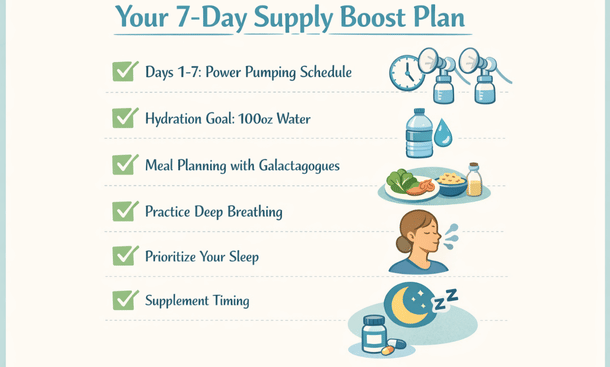
Focus on nutrition and hydration simultaneously. Eat enough calories to support lactation, at least 300 to 500 extra per day. Include galactagogue foods like oats, dark leafy greens, nuts, and garlic in your regular meals. Don’t wait until you’re starving to eat. Have snacks readily available everywhere you spend time.
Drink at least 100 ounces of water per day. Keep a large water bottle with you at all times. Drink a full glass every time you nurse or pump. If your urine is dark yellow, you’re not drinking enough. Dehydration directly impacts milk volume.
If you want to try supplements, start with fenugreek at the full recommended dose of 3,500 to 4,000 milligrams daily. Give it a full week to work. If you see results, continue taking it. If you see no change after seven days, it’s not going to work for you and you can stop. Don’t waste money on expensive proprietary blends until you’ve tried the basics.
Address stress management as a non-negotiable part of your plan, not an optional extra. Do deep breathing before every nursing or pumping session. Incorporate skin-to-skin contact with your baby daily. Create a comfortable, calm environment for feeding sessions. Look at photos of your baby if you’re pumping while separated.
Prioritize sleep however you can. Accept help from your partner or other support people so you can get at least one longer stretch of sleep per day. Let go of non-essential tasks. The dishes can wait. Your body needs rest to produce milk effectively.
Track your progress so you know what’s working. If you’re nursing, track wet and dirty diapers and watch weight gain at pediatrician appointments. If you’re pumping, write down your output at each session so you can see patterns and improvements. Many women find it motivating to see the numbers increase over several days.
Be realistic about timelines. You probably won’t see dramatic overnight changes. Realistic goals are increasing output by 25 to 50 percent over the course of a week. That might mean going from two ounces per pumping session to three ounces, or from four ounces to six ounces. Small consistent improvements add up.
If you implement all these strategies consistently for a full week and see absolutely no improvement, schedule a consultation with an International Board Certified Lactation Consultant. They can do a weighted feed to see exactly how much milk your baby is transferring, assess for anatomical issues you might have missed, and help you troubleshoot what’s actually going on.
Sometimes despite doing everything right, you genuinely can’t produce enough milk due to insufficient glandular tissue, hormonal disorders, or other medical issues. If that’s your situation, supplementing with formula while continuing to breastfeed as much as you can is a completely valid choice. Fed is fed, and combination feeding is still giving your baby the benefits of breast milk.
The goal isn’t perfection or meeting some arbitrary standard. The goal is giving your body the best possible conditions to produce milk and removing obstacles that might be interfering. When you understand the complete picture of how to support your supply naturally through multiple complementary approaches, you give yourself the best chance of reaching your breastfeeding goals whatever those are for you.
Sitting in my apartment at three in the morning convinced I was failing my baby feels like a lifetime ago now. Looking back, I wish someone had told me that most of my panic was based on misinformation and unrealistic expectations, not actual problems with my body.
Your milk supply isn’t some mysterious thing that happens to you. It’s a biological system that responds predictably to specific inputs. More frequent milk removal means more milk production. Adequate nutrition and hydration give your body the resources it needs. Managing stress keeps cortisol from blocking oxytocin. Understanding these connections gives you actual control instead of just hoping things work out.
Not every strategy will work for every woman. Some of you will respond great to fenugreek while others won’t see any difference. Some will find power pumping transforms their output while others need different interventions. That’s normal. Bodies are different and what matters is figuring out what works for yours specifically.
Start with the fundamentals. Make sure milk is being removed frequently and effectively. Eat enough food and drink enough water. Get whatever sleep you can manage. Address your stress levels with practical tools, not just aspirational advice to relax. These basics will take you further than any expensive supplement or complicated protocol.
If you need additional support beyond the basics, add one strategy at a time so you can tell what’s actually helping. Try power pumping for a week. Add galactagogue foods to your regular meals. Consider supplements if you want to but give them a fair trial period before deciding they’re not working.
Pay attention to objective markers like wet diapers and weight gain rather than how your breasts feel or how much you pump. Trust the data over your anxiety when possible. And remember that needing to supplement with formula doesn’t mean you failed. Sometimes our bodies need help and that’s okay.
The difference between women who reach their breastfeeding goals and women who give up earlier than they wanted often comes down to having the right information and support at critical moments. You now have the information. You understand how milk production works, what can interfere with it, and what strategies actually help.
If you’re still feeling uncertain about whether your supply is actually low or just normal, going back to understand the biological basics of how milk production responds to demand will help you interpret what you’re experiencing more accurately. That foundation makes everything else make more sense.
You’re doing something incredibly hard. Growing and feeding another human with your body is demanding in ways nobody fully prepares you for. Give yourself credit for showing up and trying to figure this out. That effort matters even when breastfeeding feels overwhelming.
You’ve got this. Really. Take it one feeding at a time, use the strategies that work for your situation, and be patient with yourself and your body. Most supply issues can be resolved with the right approach and enough time. And even if yours can’t, you’re still a good mother doing your best for your baby.

As a Felyro.com content author, I develop actionable content on breastfeeding, translating research-backed information into practical advice for mothers. My goal is to help families establish healthy feeding habits, improve maternal confidence, and support infant development.
Pingback: How Milk Production Works: Supply & Demand Explained – Felyro
Pingback: Power Pumping Schedule to Increase Milk Supply Fast – Felyro
Pingback: Best Foods to Increase Milk Supply (Evidence-Based) – Felyro