
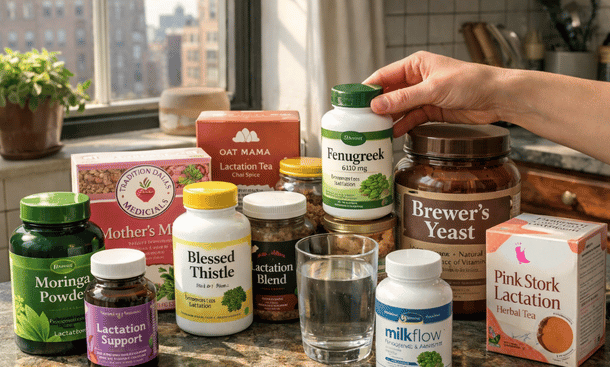
The lactation supplement aisle is overwhelming. There are capsules, teas, powders, tinctures, and about seventeen different herb combinations all claiming they’ll double your milk supply. Some of them cost more than my monthly subway pass.
When my supply dipped around week eight, I bought pretty much everything the lady at the natural foods store recommended. Fenugreek, blessed thistle, moringa, some proprietary blend with like nine ingredients I couldn’t pronounce. I spent over $150 and had no idea if any of it was actually doing anything or if my supply came back on its own.
So let me save you the money and confusion. Here’s what the research actually says about lactation supplements, what’s worth trying, what’s probably a waste, and when you should skip the pills entirely and call a professional.
Understanding What Supplements Can and Can’t Do
First, let’s be clear about what we’re talking about. Lactation supplements are substances believed to increase milk production. They’re called galactagogues, which is a fancy word that sounds like a dinosaur but just means “promotes milk flow.”
Here’s the reality. No supplement can fix a supply issue caused by insufficient milk removal. If your baby has a tongue tie and can’t effectively transfer milk, or you’re only pumping twice a day when you need to pump six times, fenugreek isn’t going to solve that problem.
Supplements work best when your milk removal is already adequate but your body needs a little extra support to meet demand. They’re an addition to the basics, not a replacement for them.
Most lactation supplements have limited high-quality research behind them. We have centuries of traditional use and lots of anecdotal evidence, but not many randomized controlled trials. That doesn’t mean they don’t work. It just means the science isn’t as solid as we’d like.
What we do know is that some herbs have properties that may influence hormones involved in milk production. Some provide nutrients that support lactation. Some might work through placebo effect and honestly, if the placebo effect increases your supply, who cares?
The key is having realistic expectations and understanding what you’re taking and why.
Fenugreek: The Most Popular Option
Fenugreek is probably the most commonly recommended lactation supplement. Walk into any lactation consultant’s office and they’ll likely suggest it if you’re struggling with supply.
The typical dose is 3,500 to 4,000 mg per day, usually split into three doses. Most women who respond to fenugreek notice a difference within 24 to 72 hours. If you don’t see any change after a week, it’s probably not going to work for you.

Here’s what you need to know about fenugreek. It works for some women and does absolutely nothing for others. There’s no way to predict which category you’ll fall into except to try it.
The most common side effect is smelling like maple syrup. Your sweat, your urine, sometimes even your breast milk will have a sweet maple scent. It’s weird but harmless. Some babies don’t mind it at all and others seem less interested in nursing when mom smells like pancakes.
Fenugreek can cause digestive issues. Gas, bloating, diarrhea. Start with a lower dose and work up to minimize this. Take it with food.
Don’t take fenugreek if you have a peanut or chickpea allergy because it’s in the same plant family and cross-reactions can occur. Avoid it if you have asthma as it can worsen symptoms in some people.
Fenugreek can lower blood sugar so if you’re diabetic or hypoglycemic, talk to your doctor before taking it. It can also interact with blood thinners.
Some women with PCOS or thyroid conditions find that fenugreek makes things worse instead of better. If you have hormonal issues, proceed cautiously and pay attention to how you feel.
The bottom line on fenugreek is that it’s worth trying if you have no contraindications. It’s relatively inexpensive and safe for most women. But if it doesn’t work after a week, move on to something else.
Blessed Thistle: Fenugreek’s Partner
Blessed thistle is often recommended alongside fenugreek. Many lactation supplements combine the two because they’re thought to work synergistically.
The typical dose is 1,200 to 1,500 mg three times per day. Like fenugreek, you should see results within a few days if it’s going to work for you.
Blessed thistle can cause stomach upset and nausea, especially on an empty stomach. Take it with food and plenty of water. If you’re already dealing with nausea from exhaustion or hormones, blessed thistle might make it worse.
Don’t take blessed thistle if you’re allergic to ragweed, daisies, marigolds, or other plants in that family. Cross-reactions are common.
The research on blessed thistle specifically is pretty limited. Most studies that show positive results used it in combination with fenugreek, so it’s hard to say how much blessed thistle contributes on its own.
Many women take blessed thistle because their lactation consultant recommended the fenugreek-blessed thistle combo. If fenugreek alone isn’t cutting it, adding blessed thistle might help. Or it might not. The only way to know is to try.
Moringa: The Trendy Option
Moringa has gained popularity in the last few years as a superfood and lactation supplement. It’s a plant native to parts of Asia and Africa and it’s been used traditionally in those regions for various health purposes including supporting lactation.
Moringa is high in vitamins, minerals, and protein. It’s nutritionally dense which could support milk production indirectly by giving your body the nutrients it needs.
Some small studies suggest moringa can increase milk supply. One study showed mothers taking moringa powder had increased milk production compared to a control group. But the research is still pretty limited and we need larger, better-designed studies.
The typical dose is 250 to 1,000 mg per day in capsule form or about a teaspoon of powder mixed into smoothies or food. Start low and increase gradually to see how you tolerate it.
Moringa generally has fewer side effects than fenugreek. Some women report mild stomach upset but most tolerate it well. It has a slightly earthy, green taste if you’re using the powder.
Avoid moringa if you’re pregnant as high doses might have uterine stimulating effects. But it’s generally considered safe while breastfeeding.
Is moringa worth it? If you’re looking for something nutritionally supportive that might also help supply, it’s a reasonable option. It’s more expensive than fenugreek but some women prefer it because it doesn’t cause the maple syrup smell or digestive issues.
Brewer’s Yeast and Other B-Vitamin Sources
Brewer’s yeast isn’t an herb, it’s a nutritional supplement high in B vitamins, iron, protein, and chromium. It’s often recommended for milk supply and it’s a main ingredient in many lactation cookie recipes.
The idea is that the B vitamins support energy production and overall health, which indirectly supports lactation. Some women with low iron see improved supply when they increase iron intake through brewer’s yeast or other sources.
There’s no established dose for brewer’s yeast as a galactagogue. Most lactation recipes use 2-4 tablespoons. In supplement form, follow package directions.
Brewer’s yeast can cause gas and bloating in some women. It has a slightly bitter taste that some people dislike. You can mix it into smoothies, oatmeal, or baked goods to mask the flavor.
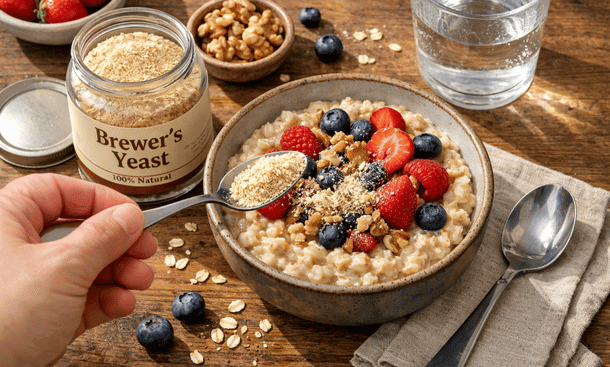
Don’t take brewer’s yeast if you’re on MAO inhibitors or if you have a yeast allergy, though brewer’s yeast is different from the yeast that causes infections.
The benefit of brewer’s yeast is that even if it doesn’t directly increase supply, you’re getting good nutrition that supports your overall health during an incredibly demanding time. That’s worth something.
Goat’s Rue, Shatavari, and Other Less Common Options
There are dozens of other herbs used traditionally for lactation support. Goat’s rue, shatavari, milk thistle, alfalfa, raspberry leaf. The list goes on.
Goat’s rue is thought to actually help develop breast tissue and is sometimes recommended for women who had insufficient glandular tissue or who’ve had breast surgery. The research is minimal but some lactation consultants swear by it for specific situations.
Shatavari is an Ayurvedic herb used traditionally in India to support lactation. Small studies suggest it might help but we need more research. It’s generally well-tolerated.
The problem with many of these less common options is that there’s even less research than on fenugreek and blessed thistle. You’re basically relying on traditional use and hoping it translates to you.
If you want to try any of these, work with a lactation consultant who has experience with herbal galactagogues. They can help you choose appropriate herbs for your specific situation and dose them safely.
Lactation Teas: Worth It or Just Expensive Water?
Lactation teas typically contain a blend of galactagogue herbs like fenugreek, fennel, anise, blessed thistle, and others. They’re convenient and they help with hydration which matters for milk production.
The downside is that you’re getting much lower doses of herbs in tea form compared to capsules. You’d need to drink multiple cups per day to get therapeutic doses of most galactagogues.
That said, if drinking lactation tea encourages you to hydrate more and gives you a psychological boost, it’s worth it. The ritual of making tea and taking time to sit and drink it has value beyond just the herbs.
Some women love lactation teas and swear they help. Others find them a waste of money. They’re generally safe so if you want to try them, go for it. Just don’t expect dramatic results from tea alone.
When Supplements Actually Help vs. When They’re a Band-Aid
Supplements are most helpful in these situations:
You’ve established good milk removal patterns but your supply is slightly lower than you’d like. You’re nursing or pumping frequently, your baby is gaining weight but slowly, and you want to boost production a bit.
You’re exclusively pumping and want to optimize output. You’re already pumping 8-10 times per day with good technique but want every possible advantage.
You’re going back to work and worried about maintaining supply while separated from your baby. Supplements might help bridge the gap while you adjust to pumping at work.
You’re recovering from an illness or period of high stress that temporarily tanked your supply. Your body needs support getting back to baseline.
Supplements are NOT helpful and can give you false hope in these situations:
Your baby isn’t effectively removing milk due to tongue tie, poor latch, or other anatomical issues. Fix the root problem first.
You’re not nursing or pumping frequently enough. No supplement can replace adequate milk removal. If you’re only pumping three times a day when you should be pumping eight, take fenugreek all you want but it won’t fix the fundamental issue.
You have insufficient glandular tissue or had breast surgery that damaged milk ducts. Some herbs like goat’s rue might help slightly but you need realistic expectations and likely will need to supplement with formula.
You have an underlying medical condition affecting hormones like thyroid issues or retained placenta. Address the medical issue.
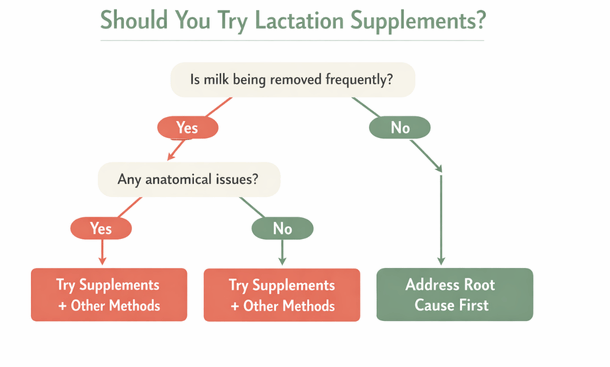
If you’re not sure whether your situation calls for supplements or something else, that’s when you need a lactation consultant. They can assess what’s actually happening and give you a real plan instead of just throwing supplements at the problem.
The Cost-Benefit Analysis
Let’s talk money because supplements add up fast. Fenugreek and blessed thistle are relatively cheap, maybe $15-20 per month. Moringa can run $30-50. Proprietary blends can cost $40-60 or more per month.
Is it worth it? That depends on whether it works for you and whether you have the budget.
If spending $20 on fenugreek increases your supply enough that you don’t need to supplement with formula, you’re saving money overall. Formula is expensive.
But if you’re spending $60 per month on supplements that aren’t making any noticeable difference, that money might be better spent on a consultation with an IBCLC who can identify what’s actually going on.
Be honest with yourself about whether you’re seeing results. It’s easy to convince yourself something is working because you spent money on it and you want it to work.
Give any supplement at least 3-5 days to see if it makes a difference. If your supply hasn’t increased at all after a week, it’s probably not going to. Move on to a different approach instead of throwing more money at something that isn’t helping.
Combining Supplements with Other Strategies
Supplements work best as part of a comprehensive approach. You can’t just pop pills and expect your supply to skyrocket if everything else about your breastfeeding or pumping routine is off.
Make sure you’re nursing or pumping frequently enough and that you’re using proven natural methods to support your overall supply. Make sure your latch is good or your pump flange fits correctly. Make sure you’re eating enough calories and staying hydrated. Make sure you’re getting some sleep and managing stress as much as possible.
If you want to optimize milk removal through specific pumping techniques like power pumping while also supporting your body nutritionally, combining those approaches will give you better results than either alone. The same goes for understanding how your overall milk production system works and addressing any gaps in that process.
Think of supplements as one tool in your toolkit, not the entire toolkit. They can give you an edge but they’re not magic.
My Honest Recommendation
If you want to try lactation supplements, start with the basics. Fenugreek is inexpensive, well-tolerated by most women, and has the most evidence behind it even though that evidence isn’t perfect.
Take it at the full recommended dose of 3,500-4,000 mg daily. Give it a full week. If you see an increase in supply, great. Keep taking it as long as it continues to help and you don’t have side effects.
If fenugreek doesn’t work or you can’t take it due to allergies or other contraindications, try moringa or a combination that includes blessed thistle.
Be skeptical of expensive proprietary blends that don’t list specific herb amounts. You’re often paying for marketing and fancy packaging rather than effective doses of actual galactagogues.
And remember that before you spend money on any supplements, make sure the fundamentals are in place. Frequent milk removal, adequate nutrition, proper hydration, and stress management are all free and they matter more than any pill.
If supplements help, that’s fantastic. If they don’t, you haven’t failed. You’ve just learned that your body needs a different kind of support, and figuring out what works through strategies that reduce stress and support your mental health might be the missing piece.

As a Felyro.com content author, I develop actionable content on breastfeeding, translating research-backed information into practical advice for mothers. My goal is to help families establish healthy feeding habits, improve maternal confidence, and support infant development.