
So you need to boost your milk supply and you need it to happen quickly. Maybe you’re heading back to work next week and your freezer stash is pathetic. Maybe your baby hit a growth spurt and suddenly your once-solid supply feels inadequate. Maybe you’re exclusively pumping and the numbers just aren’t where they need to be.
Whatever your reason, power pumping is one of the most effective ways to tell your body to ramp up production fast. I’m not gonna lie to you though. It’s time-consuming and kind of annoying. But it works when you do it right.
I first tried power pumping when I went back to my marketing job after 12 weeks of maternity leave. My supply had been fine at home but suddenly I was stressed, exhausted, and pumping in a converted storage closet during my lunch break. Within three days my output had dropped by almost 40 percent. I was panicking hard.
A lactation consultant walked me through power pumping and within a week I was back to my normal output. So yeah, I’m a believer. Let me show you exactly how to make this work.
What Power Pumping Actually Is
Power pumping mimics cluster feeding. You know how your baby sometimes nurses constantly for a few hours, barely coming up for air? That’s cluster feeding and it’s their way of telling your body to make more milk.
When you power pump, you’re recreating that pattern artificially with your breast pump. You’re pumping frequently in a concentrated time period to send your body the message that demand just increased significantly.
The key is frequency, not duration. You’re not trying to drain your breasts completely dry with each session. You’re triggering multiple letdowns and stimulating prolactin production over and over in a short window.
Most women see results within 3-5 days. Some notice a difference in 48 hours. If you don’t see any change after a full week, something else might be going on and you should talk to a lactation consultant.
The Classic Power Pumping Schedule
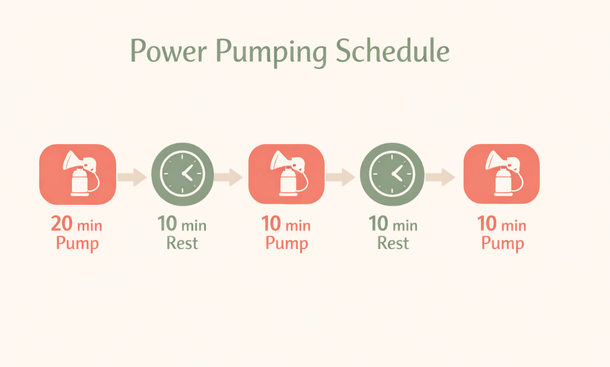
Here’s the standard power pumping protocol that most lactation consultants recommend. Pick one hour each day when you can commit to this routine without interruptions.
Pump for 20 minutes. Rest for 10 minutes. Pump for 10 minutes. Rest for 10 minutes. Pump for 10 minutes. Done.
That’s one full power pumping session and it takes exactly one hour. You do this once per day, ideally at the same time each day, for at least three days. Most people continue for 5-7 days.
The best time to power pump is usually in the morning because that’s when prolactin levels are naturally highest for most women. But honestly, the best time is whatever time you can actually commit to doing this consistently. If evenings work better for your schedule, do evenings.
You continue your regular nursing or pumping schedule throughout the day. Power pumping is in addition to your normal routine, not a replacement for it. Yeah, I know. It’s a lot. But remember, this is temporary.
During the rest periods you can scroll your phone, fold laundry, eat a snack, whatever. You’re just giving your breasts a break before the next round of stimulation.
Making Power Pumping Actually Work in Real Life
The textbook schedule is great but life with a baby is chaotic. Here’s how to actually make this happen when you’re running on four hours of sleep and your to-do list is a mile long.
Set everything up the night before. Put your pump parts together, have your pumping bra ready, set up your pumping station with water, snacks, phone charger, and anything else you need. Don’t give yourself excuses to skip it because you’re too tired to gather supplies.
Pick a consistent time and protect it. Tell your partner this hour is non-negotiable. Put it in your calendar. Treat it like a doctor’s appointment you can’t miss.
If you’re home with the baby, power pump during their longest nap or first thing in the morning before they wake up. If your baby won’t nap independently, wear them in a carrier while you pump or set them up safely nearby with toys they can explore.
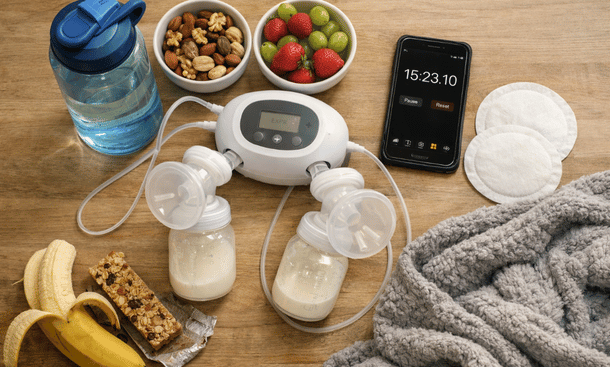
Use a hands-free pumping bra. Seriously, if you don’t have one, order it right now. Trying to hold flanges in place for an hour is miserable and you need your hands free to stay sane during this process.
Many moms find that watching something engaging helps the time pass. Funny videos, a show you’re into, FaceTime with a friend. Some women prefer using the time to work or respond to emails. Do whatever keeps you from clock-watching and getting frustrated.
Optimizing Your Power Pumping Sessions
Just showing up and turning on the pump will help, but you can maximize results with a few adjustments.
Make sure your flange size is correct. Most women use flanges that are too big. Your nipple should move freely in the tunnel without your areola getting pulled in. Poor flange fit means inefficient milk removal which defeats the purpose.
Start with stimulation mode or low suction for the first minute or two, then increase to your comfortable maximum. Higher suction doesn’t mean more milk. You want strong enough to be effective but not so strong it hurts.
Massage your breasts before and during pumping. Use your fingertips to compress breast tissue toward the nipple. This helps move milk toward the milk ducts and can trigger additional letdowns.
Try breast compressions while pumping. When you notice the milk flow slowing down, use your hand to compress the breast you’re pumping from. Squeeze and hold for a few seconds, release, then repeat. This mimics what babies do when they’re actively nursing.
Heat helps with letdown. A warm compress on your breasts before pumping or even just pumping after a warm shower can make milk flow more easily.
Look at photos or videos of your baby if you’re pumping while separated from them. Smell something that smells like them. This triggers oxytocin release which you need for letdown. Your body responds to these sensory cues even when your baby isn’t physically present.
What to Expect During Power Pumping
The first session usually doesn’t yield much milk. You might get a normal amount in the first 20 minutes and then just drops or nothing during the shorter sessions. That’s completely normal. You’re not trying to empty your breasts. You’re trying to stimulate them.
By day two or three you should notice you’re getting more letdowns during the session. You might see multiple letdowns in a single 10-minute segment.
Around day three to five most women notice their regular pumping sessions throughout the day are producing more. That’s when you know it’s working. Your supply is responding to the increased demand.
Some women feel more engorged or notice their breasts feeling fuller. Others don’t feel any different but see the increase in output. Both experiences are fine.
Don’t expect dramatic overnight results. You’re probably not going from pumping 3 ounces to pumping 8 ounces. Realistic goals are increasing output by 25-50 percent over the course of a week. For some women that might mean going from 2 ounces per session to 3 ounces. For others it might be 4 ounces to 6 ounces.
Combining Power Pumping with Other Techniques
Power pumping works best when it’s part of a comprehensive approach to building supply. The pumping creates demand but your body needs the right conditions to meet that demand.
Hydration matters more than you think. You need to drink when you’re thirsty but also make a conscious effort to get enough fluids. Keep water with you during every pumping session.
Your nutrition directly impacts milk production. Your body is working overtime during power pumping week so make sure you’re eating enough calories and focusing on foods that actually boost milk production.
Sleep is hard with a newborn but it’s not optional for milk production. Prolactin peaks during sleep. If you’re power pumping but running on two hours of sleep per night, your body can’t keep up with the demand you’re creating. Take naps when possible and accept help so you can rest.
Managing your stress levels makes a real difference in how well your body responds. High cortisol interferes with oxytocin and your letdown reflex. If you’re power pumping while completely stressed out, you’re working against yourself.
When to Stop Power Pumping
Once you see your supply increase to where you need it, you can stop the daily power pumping sessions. Most women do this for 5-7 days total.
After you stop, maintain the increased supply by making sure milk gets removed frequently. If you built your supply through power pumping but then cut back on your regular nursing or pumping sessions, your supply will drop back down.
Some women do occasional power pumping sessions as maintenance, like once a week or whenever they notice output decreasing. That’s totally fine. Just know that your body will adjust supply to match demand so you need to maintain the demand if you want to maintain the supply.
If you did a full week of consistent power pumping and saw zero change in your output, something else is likely going on. Schedule time with a lactation consultant to troubleshoot. It could be a flange fit issue, a pump that’s not working efficiently, or an underlying medical concern that needs attention.
The Real Talk About Power Pumping
Look, power pumping is not fun. Spending an extra hour attached to a machine every day when you’re already exhausted and touched out is a lot to ask. I’m not going to pretend otherwise.
But when you need to increase supply quickly and you’re committed to breastfeeding or providing breast milk, power pumping is one of the most effective tools you have. It works because it’s based on how milk production actually functions. You’re working with your body’s natural supply and demand system, not against it.
Give yourself credit for doing something hard because it matters to you and your baby. Set yourself up for success by preparing properly and being realistic about what you can commit to. And remember that this is temporary. You’re not signing up to pump for an hour every day forever. You’re doing this for less than a week to create a lasting change.
You’ve got this. Really. Thousands of moms have powered through power pumping and come out the other side with the supply they needed. You can too.

As a Felyro.com content author, I develop actionable content on breastfeeding, translating research-backed information into practical advice for mothers. My goal is to help families establish healthy feeding habits, improve maternal confidence, and support infant development.