

Mastitis is not something you tough out or wait to see if it gets better on its own. If you’re reading this because you’ve got a fever, your breast is red and painful, and you feel like you got hit by a truck, you need to take this seriously right now. This is one breastfeeding complication that can go south really fast without proper treatment.
I’m not trying to scare you, but I am trying to make sure you understand that mastitis needs immediate attention. The good news is that with quick action and the right treatment, most cases clear up within a few days and you can keep breastfeeding without any long-term problems. Let’s break down exactly what mastitis is, how to recognize it, and what you need to do about it.
What mastitis actually is
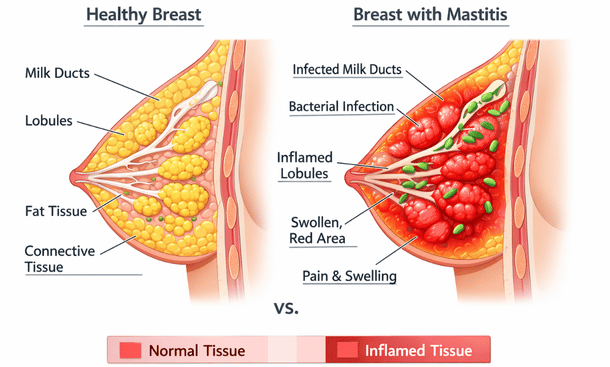
Mastitis is an infection or inflammation of your breast tissue. It usually happens when bacteria get into your breast through a cracked nipple or when a clogged duct doesn’t get cleared and the backed-up milk creates an environment where bacteria can grow.
Think of it like this. Your breast has all these tiny ducts carrying milk from where it’s made to your nipple. When one of those ducts gets blocked and milk sits there too long, it becomes a perfect breeding ground for bacteria. Or if you’ve got damaged skin on your nipple, bacteria from your baby’s mouth or your skin can get inside and cause an infection in the tissue.
The most common bacteria involved is Staphylococcus aureus, which lives on everyone’s skin normally but causes problems when it gets where it shouldn’t be. Sometimes mastitis happens without any obvious infection and is just severe inflammation from a badly clogged duct.
Mastitis typically affects just one breast, though you can technically get it in both. It usually develops quickly over a few hours rather than gradually over days. One minute you’re fine, the next you’re feeling absolutely terrible.
Most cases happen in the first three months postpartum, but you can develop mastitis at any point during breastfeeding. Some women get it multiple times, which is frustrating as hell but doesn’t mean you’re doing anything wrong.
Recognizing the symptoms
Mastitis comes on strong and you’ll know something is seriously wrong. The symptoms go way beyond just a sore breast.
Fever is the hallmark sign. We’re talking one hundred point four degrees Fahrenheit or higher, sometimes spiking up to one hundred and three. You might get chills and shakes along with it.
Flu-like symptoms hit hard. Body aches, exhaustion, headache, feeling completely wiped out. Many women describe it as the worst they’ve felt since actually having the flu. You’ll want to crawl into bed and not move.
Your affected breast will be red, often with a wedge-shaped area of redness or red streaks spreading out from one spot. The skin feels hot to the touch compared to your other breast.
Pain and tenderness in the affected area can range from a deep ache to sharp, stabbing pain. It hurts to touch, hurts to nurse, just hurts constantly.
Swelling and hardness in part or all of your breast. The infected area feels firm and different from the rest of your breast tissue.
Some women notice their milk looks different, maybe a bit stringy or containing pus, though this isn’t always visible and your milk is usually still safe for your baby even if it looks weird.
You might feel a hard lump or area that won’t drain even after nursing, which was probably the clogged duct that started this whole mess.
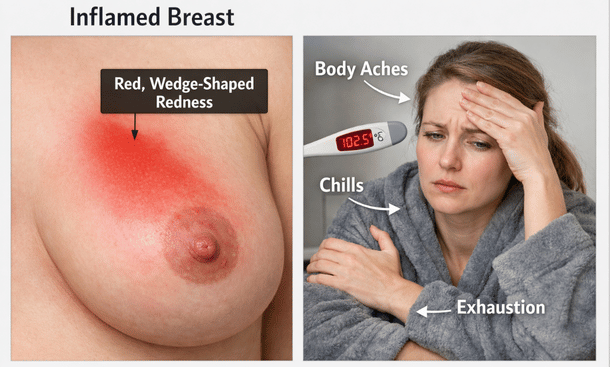
The key difference between mastitis and a simple clogged duct is the systemic symptoms. If you’ve got fever and feel sick all over, not just breast pain, that’s mastitis.
What to do immediately
As soon as you suspect mastitis, you need to act. Don’t wait until tomorrow or see if it improves overnight.
Call your doctor or healthcare provider right away. Explain your symptoms and that you think you have mastitis. Most providers will call in a prescription for antibiotics without even needing to see you if your symptoms are clear, though some will want you to come in.
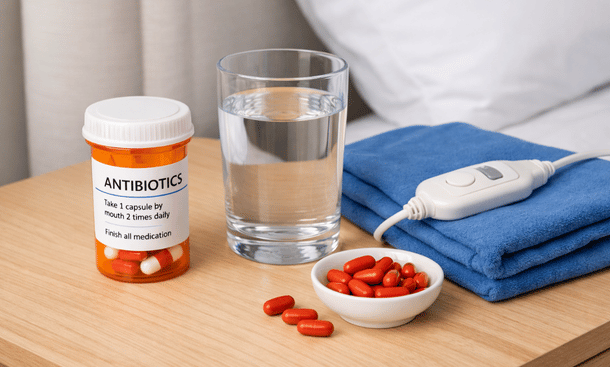
Start antibiotics as soon as you can get them. The most common prescription is dicloxacillin or cephalexin for ten to fourteen days. You need to take the full course even after you start feeling better, otherwise the infection can come back stronger.
Keep nursing or pumping. I know this sounds counterintuitive when your breast is killing you, but continuing to empty the breast is crucial for healing. The milk is safe for your baby. The infection is in your tissue, not in the milk itself. If you stop nursing, the breast stays full, the infection gets worse, and you risk developing an abscess.
Nurse frequently on the affected side, every two hours if you can manage it. Start each feeding on the infected breast so your baby drains it when their suck is strongest.
Rest as much as humanly possible. I know you’ve got a baby to take care of, but mastitis is your body telling you to slow down. Get someone to help with the baby between feedings. Sleep when the baby sleeps. Cancel everything non-essential.
Stay hydrated. Drink water, juice, whatever sounds good. Your body needs fluids to fight the infection and to keep making milk.
Take ibuprofen for pain and inflammation. It’s safe while breastfeeding and helps with both the breast pain and the body aches. Take it regularly, not just when the pain gets bad.
Apply heat before nursing to help with letdown and milk flow. A warm compress or heating pad for ten to fifteen minutes can make nursing less painful.
Use cold compresses between feedings to reduce inflammation and pain. Twenty minutes on, twenty minutes off.
Treatment that actually works
Antibiotics are the main treatment for bacterial mastitis. You should start feeling significantly better within twenty-four to forty-eight hours of starting them. If you’re not improving after two days on antibiotics, call your doctor back. You might need a different antibiotic or there could be an abscess forming.
Complete bed rest for the first day or two if at all possible. Your body is fighting an infection and needs energy to do that. Trying to power through and keep up with all your normal activities will just make recovery take longer.
Continue nursing through treatment. This is so important I’m saying it again. Emptying the breast helps clear the infection faster than anything else. If nursing is too painful, pump instead, but don’t let the breast stay full.
Probiotics might help, especially if you’re taking antibiotics. They can reduce your risk of getting thrush or other yeast infections as a side effect of the antibiotics. Take them a few hours apart from your antibiotic doses.
If you’re not on antibiotics yet but caught it early and your symptoms are mild, sometimes you can treat mastitis with aggressive home care. Frequent nursing, rest, heat, massage, and ibuprofen can occasionally clear up inflammation-based mastitis without antibiotics. But give it twenty-four hours max, and if you’re not significantly better or if you have a fever, get the antibiotics.
When it’s more serious
Sometimes mastitis develops complications that need additional treatment.
An abscess is a pocket of pus that forms in the breast tissue. If you’re on antibiotics for a few days and not getting better, or if you feel a distinct fluid-filled lump that’s getting bigger, you might have an abscess. This usually requires drainage, either with a needle or minor surgery. It doesn’t mean you have to stop breastfeeding, but you’ll need to see a doctor.
Recurring mastitis, where you keep getting it over and over, suggests there’s an underlying problem. Maybe your baby has a tongue tie affecting their latch, or you’ve got an oversupply issue, or there’s resistant bacteria involved. Work with a lactation consultant and your doctor to figure out why it keeps happening.
If you’re getting mastitis in the same spot repeatedly, there might be a structural issue with that duct or you might have chronic inflammation. Some women need to see a breast specialist.
Severe cases can make you extremely sick with very high fever and require IV antibiotics in the hospital. This is rare but can happen, especially if you delayed treatment or the bacteria are particularly aggressive.
Preventing mastitis from happening again
Once you’ve had mastitis, you really don’t want to go through it again. Prevention focuses on avoiding the triggers.
Treat clogged ducts immediately and aggressively. Most mastitis starts as a clog that doesn’t get cleared. At the first sign of a hard lump, start massage, heat, and frequent nursing.
Don’t go too long between feedings or pumping sessions. Your breasts need to stay drained regularly. If you’re sleeping through the night and waking up engorged, set an alarm to pump once.
Avoid tight bras and pressure on your breasts. This includes sleeping positions, heavy bags across your chest, and restrictive clothing.
Take care of cracked or damaged nipples right away since they’re entry points for bacteria. Use lanolin, fix latch problems, and keep nipples clean and dry between feedings.
Wash your hands before nursing and keep your pumping equipment clean. Basic hygiene matters when you’ve got broken skin.
Manage stress and get adequate rest. Easier said than done with a baby, but exhaustion and stress lower your immune system and make infections more likely.
Take probiotics regularly if you’re prone to mastitis. Some evidence suggests this helps prevent recurrence by supporting your immune system and maintaining healthy bacteria balance.
The honest truth about nursing through mastitis
Breastfeeding when you have mastitis absolutely sucks. Your breast hurts, you feel horrible, and the last thing you want is a baby latched on making it worse. But stopping nursing or pumping will make the mastitis worse and take longer to heal.
The pain during nursing usually gets a bit better after the initial letdown once milk is flowing. Some positions hurt less than others, so experiment with what works. Side-lying is often more comfortable than sitting up.
Your milk supply might temporarily drop while you’re sick, but it’ll come back once you recover. Keep nursing frequently and it’ll bounce back.
If you absolutely cannot bear to nurse on the affected side, pump it and nurse on the healthy side. But really try to nurse if you possibly can because your baby is more efficient at emptying the breast than any pump.
Some babies are fussy about nursing on the infected breast, maybe because the milk tastes slightly different or flows differently. Offer it first when they’re hungriest and most willing to work for it.
Your baby will not get sick from nursing while you have mastitis. The antibiotics you’re taking are safe for breastfeeding. Everything is fine for them, even though you feel terrible.
When to call the doctor back
You started antibiotics and you’re doing everything right, but you need to know when to follow up.
If you’re not feeling significantly better after forty-eight hours on antibiotics, call your doctor. You might need a different medication or there could be complications.
If your fever goes away but comes back after a few days, that’s a red flag for an abscess or resistant infection.
If the red area is spreading instead of shrinking, or if you notice a fluid-filled lump developing, you need to be seen.
If you’re feeling worse instead of better, don’t wait. Go to urgent care or the ER if you can’t reach your regular doctor.
Any time you’re concerned or something doesn’t feel right, call. Better to check in and have it be nothing than to let a complication develop.
Moving forward after mastitis
Once you’re feeling better and the infection is cleared, you can totally continue breastfeeding normally. Mastitis doesn’t damage your breast tissue or your milk supply long-term.
Stay vigilant about the prevention strategies because your risk of recurrence is higher once you’ve had it once. Pay attention to early warning signs and act fast if you notice a clog forming.
Be gentle with yourself during recovery. Even after the infection is gone, you might feel tired for a week or two. That’s normal after fighting off an infection while caring for a baby.
If nursing became really stressful or traumatic because of the mastitis, know that it’s okay to have complicated feelings about it. You can choose to continue breastfeeding or you can decide it’s not worth the anxiety. Either choice is valid.
Mastitis is miserable but treatable, and most moms who get it recover completely and go on to breastfeed successfully for as long as they want. It’s a setback, not an ending.
If you’re struggling with latching issues that might be contributing to cracked nipples and increasing your mastitis risk, our guide on solutions when your baby won’t latch can help you troubleshoot positioning and technique problems. And for comprehensive information on all the breastfeeding challenges you might encounter and how to handle them, take a look at our complete resource on common breastfeeding problems and how to solve them.

As a Felyro.com content author, I develop actionable content on breastfeeding, translating research-backed information into practical advice for mothers. My goal is to help families establish healthy feeding habits, improve maternal confidence, and support infant development.