
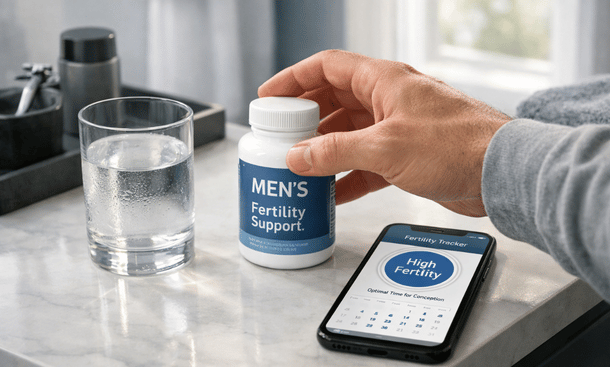
Alright, let’s address the elephant in the room: when most people think about preparing for pregnancy, they think about what the woman needs to do. Prenatal vitamins, doctor appointments, tracking ovulation, cutting out alcohol—it’s all focused on her.
But here’s the reality that doesn’t get talked about nearly enough: it takes two people to make a baby, and the guy’s health matters just as much as the woman’s when it comes to conception and early pregnancy outcomes.
Yeah, I know. Your partner probably thinks his only job is to show up at the right time. But sperm quality, DNA integrity, and male fertility are directly influenced by nutrition—and most men are walking around with suboptimal levels of the exact nutrients that support healthy sperm production.
So if you’re serious about getting pregnant and having a healthy pregnancy, this conversation needs to happen. Let me break down what your partner should actually be taking, why it matters, and how to get him on board without it turning into a battle.
Why Male Preconception Health Actually Matters
Let’s start with the science, because if your partner is anything like most guys, he’s gonna need convincing that this isn’t just you being overly cautious.
Sperm aren’t just passive passengers in the conception process. They contribute half of your baby’s DNA, and the quality of that DNA matters. Poor sperm quality isn’t just about whether conception happens—it also affects early embryo development, implantation success, and even pregnancy outcomes.
Here’s what the research shows. Low sperm count, poor sperm motility (how well they swim), and abnormal sperm morphology (shape and structure) are factors in about 40 to 50 percent of couples struggling with infertility. That’s nearly half. This isn’t just a woman’s issue.
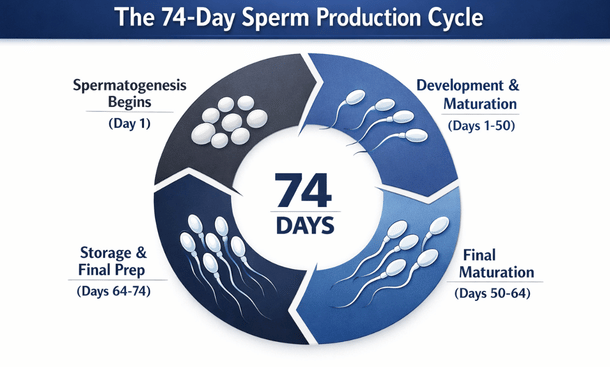
But here’s the good news: unlike women, who are born with all the eggs they’ll ever have, men produce new sperm constantly. The entire sperm production cycle takes about 74 days—roughly two and a half months. That means the sperm that will be ready to fertilize an egg three months from now are just beginning development today.
And that development process is heavily influenced by nutrition, oxidative stress, and overall health. Poor nutrition leads to DNA damage in sperm, which is linked to higher miscarriage rates, developmental issues, and lower pregnancy success rates even with IVF.
Translation? The supplements your partner takes today directly impact the quality of the sperm he’ll have in three months. And better sperm quality means better chances of conception and a healthier pregnancy.
The Essential Nutrients for Male Fertility
Just like women have specific nutrient needs for preconception, men have their own set of critical vitamins and minerals that support healthy sperm production.
Let’s break down what actually matters and what the research supports.
Zinc: The Fertility Mineral for Men
Zinc is probably the single most important mineral for male fertility. It plays a crucial role in testosterone production, sperm formation, sperm motility, and protecting sperm from oxidative damage.
Low zinc levels are directly associated with low sperm count, poor sperm quality, and even male infertility. Studies show that zinc supplementation can improve sperm count, motility, and morphology in men with low zinc levels.
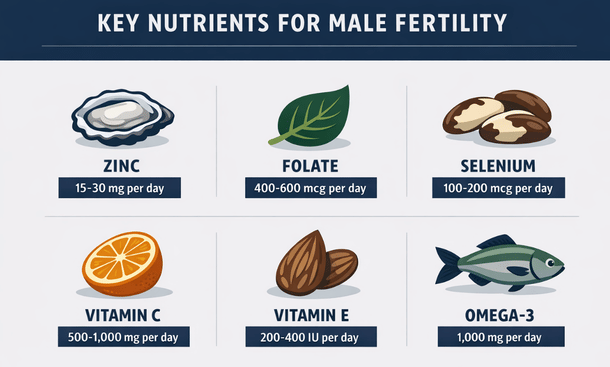
Your partner needs 11 milligrams of zinc daily. Some fertility-specific supplements for men go up to 15 to 30 milligrams, which is safe and potentially beneficial if he’s starting from a deficient state.
Food sources include oysters (which have more zinc per serving than any other food), red meat, poultry, beans, nuts, and whole grains. But most men don’t eat oysters regularly, and plant-based sources aren’t absorbed as efficiently, so supplementation makes sense.
Folate: Not Just for Women
Yeah, you read that right. Folate isn’t just for women. Men need it too, and it plays a critical role in sperm DNA synthesis and integrity.
Research shows that men with higher folate intake have lower rates of chromosomal abnormalities in their sperm. One study found that the combination of zinc and folic acid improved sperm count by 74 percent in subfertile men.
Your partner should aim for 400 to 800 micrograms of folate daily. And just like with women’s supplements, the form matters. Methylfolate (L-methylfolate or 5-MTHF) is preferable to synthetic folic acid because it’s already in the active form the body uses.
Selenium: Antioxidant Protection for Sperm
Selenium is a trace mineral that’s essential for sperm formation and motility. It’s a powerful antioxidant that protects sperm from oxidative damage—basically, it shields developing sperm from cellular stress that can damage their DNA.
Studies show that selenium supplementation improves sperm motility and morphology. Men with low selenium levels often have poorer sperm quality.
The recommended dose is 55 to 200 micrograms daily. Don’t go overboard here—selenium toxicity is a real thing at very high doses (above 400 micrograms daily), so more isn’t better.
Food sources include Brazil nuts (just two to three nuts provide the daily requirement), fish, poultry, and eggs.
Vitamin C: Free Radical Fighter
Vitamin C is another powerful antioxidant that protects sperm from oxidative stress. The testicles actually have some of the highest concentrations of vitamin C in the body, which tells you how important it is for sperm production.
Research shows that vitamin C supplementation can improve sperm count, motility, and morphology, and reduce DNA damage in sperm.
Your partner should aim for at least 90 milligrams daily (the RDA for men), but doses of 200 to 1,000 milligrams are commonly used in fertility protocols and appear to be safe and beneficial.
Citrus fruits, strawberries, bell peppers, broccoli, and tomatoes are excellent food sources.
Vitamin E: Partnering with Selenium
Vitamin E works synergistically with selenium to protect sperm membranes from oxidative damage. It’s a fat-soluble antioxidant that’s concentrated in sperm cells.
Studies suggest that vitamin E supplementation can improve sperm motility and the ability of sperm to penetrate eggs.
The dose is typically 15 milligrams (22 IU) daily for general health, but fertility supplements often contain 100 to 400 IU. Look for natural vitamin E (d-alpha-tocopherol) rather than synthetic (dl-alpha-tocopherol) for better absorption.
Food sources include nuts, seeds, vegetable oils, and leafy greens.
Omega-3 Fatty Acids: Building Better Sperm
DHA and EPA—the omega-3 fatty acids found in fish oil—are crucial for sperm membrane structure and fluidity. Basically, they help build healthier, more functional sperm.
Research shows that men with higher omega-3 intake have better sperm count, motility, and morphology. Omega-3s also reduce inflammation and oxidative stress, which benefits overall sperm quality.
Your partner should aim for at least 500 to 1,000 milligrams of combined EPA and DHA daily. Fish oil supplements are the most common source, but algae-based omega-3s work too if he’s vegetarian.
Fatty fish like salmon, sardines, mackerel, and anchovies are excellent food sources.
Vitamin D: The Testosterone Connection
Vitamin D isn’t just for bone health—it plays a role in testosterone production and sperm quality. Men with low vitamin D levels tend to have lower testosterone and poorer sperm parameters.
Studies show that vitamin D supplementation can improve sperm motility and testosterone levels in men who are deficient.
Your partner should aim for at least 1,000 to 2,000 IU daily, though some men need more depending on baseline levels. Getting his vitamin D levels tested (25-hydroxyvitamin D) is worthwhile if possible.
Very few foods naturally contain vitamin D—fatty fish, egg yolks, and fortified milk are about it—so supplementation is usually necessary.
Coenzyme Q10: Energy for Sperm
CoQ10 is an antioxidant that’s involved in cellular energy production. Sperm cells require a ton of energy to swim to and fertilize an egg, and CoQ10 helps provide that energy.
Research suggests that CoQ10 supplementation can improve sperm count, motility, and morphology, particularly in men with low sperm quality.
Doses used in studies range from 200 to 600 milligrams daily. This is one supplement that takes time to work—expect to take it consistently for at least three months to see benefits.
L-Carnitine: Sperm Fuel
L-carnitine is an amino acid derivative that plays a role in energy metabolism and is highly concentrated in sperm cells and seminal fluid.
Studies show that L-carnitine supplementation can improve sperm motility and overall sperm quality, especially when combined with other antioxidants.
Typical doses range from 500 to 3,000 milligrams daily.
What to Look for in a Male Fertility Supplement
Rather than buying seven different bottles of individual supplements, your partner can choose a comprehensive male fertility multivitamin that combines these nutrients in one formula.
Here’s what to look for when you’re comparing products.
First, check that it contains the core nutrients: zinc (11 to 30 milligrams), folate as methylfolate (400 to 800 micrograms), selenium (55 to 200 micrograms), vitamin C (200 to 1,000 milligrams), vitamin E (100 to 400 IU), and vitamin D (1,000 to 2,000 IU).
Second, look for additional ingredients like CoQ10 (200 to 600 milligrams), L-carnitine (500 to 2,000 milligrams), and omega-3s or a note to take them separately.
Third, check for quality markers like third-party testing (NSF, USP, or similar certifications) and transparency about ingredient sources and forms.
Fourth, read reviews not just about effectiveness (which is hard to measure directly) but about tolerability, pill size, and whether guys actually stick with taking them.
Specific Product Recommendations
Let me give you some actual brands that meet the criteria above, based on my research and label analysis.
Conception Men by Fairhaven Health is one of the most comprehensive options. It contains optimal doses of zinc, selenium, folate as methylfolate, vitamins C and E, L-carnitine, CoQ10, and a blend of other supportive nutrients. Three capsules daily. About 40 to 50 dollars monthly. This is specifically formulated for male fertility and has decent research backing.
FH Pro for Men by Fairhaven Health is the clinical-strength version with higher doses of key nutrients. Four capsules daily. About 60 dollars monthly. This is what fertility clinics often recommend for men with diagnosed sperm quality issues.
Optimen by Optimum Nutrition isn’t specifically a fertility formula, but it’s a comprehensive men’s multivitamin that contains good doses of zinc, selenium, B vitamins including methylfolate in some formulations, and antioxidants. Three tablets daily. About 20 to 25 dollars monthly. Good option if budget is tight.
Male Fertility Supplement by Premama contains folate, zinc, selenium, vitamins C and E, CoQ10, and L-carnitine. Two capsules daily. About 35 dollars monthly.
Coast Science Male Fertility Supplement is another comprehensive option with good doses of the key nutrients. About 30 to 40 dollars monthly.
For omega-3s, he’ll likely need a separate supplement since most male fertility formulas don’t include them or include inadequate amounts. Nordic Naturals Ultimate Omega or Carlson Elite Omega-3 Gems are solid choices. Two softgels daily providing 1,000 milligrams combined EPA/DHA. About 25 to 30 dollars monthly.
The Timeline: When Should He Start?
Remember how I said the sperm production cycle takes about 74 days? That’s your answer.
Your partner should start taking fertility supplements at least three months before you plan to start trying to conceive. This ensures that the sperm that will be ready when you’re trying have had optimal nutritional support throughout their entire development cycle.
If you’re already trying or about to start trying and he hasn’t been supplementing, have him start today. Even a few weeks of improved nutrition is better than nothing, and sperm quality can start improving within weeks even though the full cycle takes longer.
Consistency matters more than perfect timing. Taking supplements sporadically won’t give you the results you’re looking for. He needs to take them every single day, ideally at the same time, to maintain steady nutrient levels.
Lifestyle Factors That Matter Just as Much
Supplements aren’t magic pills that override poor lifestyle choices. Your partner’s overall health habits matter enormously for sperm quality.
Here’s what else needs to happen alongside supplementation.
Cut back on alcohol. Heavy drinking is directly linked to poor sperm quality, lower testosterone, and reduced fertility. Moderate intake (one to two drinks per day) might be okay, but less is better when you’re actively trying to conceive.
Quit smoking. Period. No debate here. Smoking damages sperm DNA, reduces sperm count and motility, and increases the risk of miscarriage and birth defects. If your partner smokes, quitting is the single most impactful thing he can do for fertility.
Manage weight. Both obesity and being significantly underweight can affect sperm quality and hormone levels. If your partner is overweight, even modest weight loss (5 to 10 percent of body weight) can improve fertility parameters.
Reduce heat exposure to the testicles. Sperm production requires a temperature slightly cooler than normal body temperature, which is why the testicles hang outside the body. Hot tubs, saunas, laptop computers on the lap, tight underwear, and long bike rides in tight shorts can all raise scrotal temperature and temporarily reduce sperm quality. Not dealbreakers, but worth being aware of when you’re actively trying.
Exercise regularly but don’t overdo it. Moderate exercise improves testosterone levels and overall health. Extreme endurance exercise or very intense training can actually decrease sperm quality and testosterone. Balance is key.
Manage stress. Chronic stress affects hormone levels and sperm production. Obviously easier said than done, but stress management techniques—whether that’s exercise, meditation, therapy, or just better work-life balance—can have real effects on fertility.
Avoid environmental toxins when possible. Pesticides, heavy metals, plastics (BPA and phthalates), and industrial chemicals can all negatively affect sperm quality. He doesn’t need to live in a bubble, but being mindful about avoiding unnecessary exposures makes sense.
How to Actually Get Him on Board
Okay, real talk. Getting your partner to take this seriously might be your biggest challenge.
A lotta guys don’t think their health affects conception, or they figure if women are doing all the prep work, their job is easy. Or maybe he just doesn’t like taking pills, or he thinks supplements are a waste of money.
Here’s how to approach this conversation without it turning into a fight.
First, frame it as a team effort, not an accusation. This isn’t about him being deficient or broken. It’s about both of you doing everything possible to improve your chances of conceiving and having a healthy pregnancy.
Second, share the actual science. Show him research about how sperm quality affects conception rates and pregnancy outcomes. A lot of guys respond better to data than to emotional appeals.
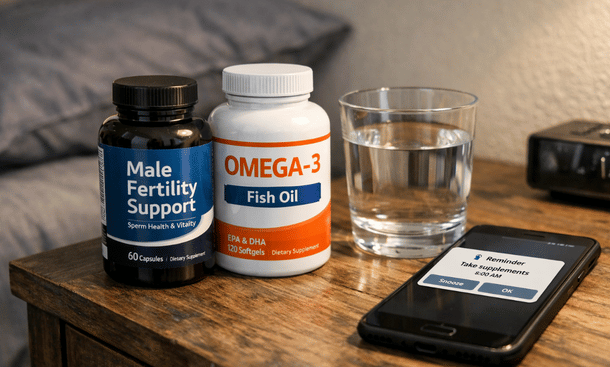
Third, make it easy for him. Buy the supplements. Set up a reminder on his phone. Put the bottles somewhere he’ll see them every morning. The less friction, the more likely he is to actually do it.
Fourth, acknowledge that it’s annoying to take multiple pills every day. Don’t minimize it. But also explain why it matters and that it’s temporary—just a few months of consistent effort for the best possible outcome.
Fifth, lead by example. If you’re taking your preconception vitamins religiously, tracking your cycle, making dietary changes, and doing everything on your end, it’s easier to ask him to step up too.
And finally, consider the return on investment. Fertility treatments are expensive, stressful, and time-consuming. If spending 30 to 50 bucks a month on supplements improves sperm quality enough to help you conceive naturally or on the first IUI or IVF cycle instead of the third or fourth, that’s a massive return on a relatively small investment.
When to See a Doctor
Supplements and lifestyle changes can definitely improve sperm quality, but they’re not a substitute for medical evaluation if there are actual fertility issues.
Your partner should see a doctor (ideally a urologist or fertility specialist) if you’ve been trying to conceive for a year without success (or six months if you’re over 35), if he has a history of testicular injury or surgery, if he’s had mumps after puberty, if he has obvious signs of low testosterone (low sex drive, difficulty maintaining erections, fatigue, loss of muscle mass), or if a home semen analysis shows concerning results.
A basic semen analysis checks sperm count, motility, morphology, and other parameters. It’s a simple test that can identify issues early and help determine if medical intervention is needed.
Don’t waste years trying supplements and lifestyle changes if there’s an underlying medical issue that needs treatment. Get baseline testing, make the improvements, and retest after three months to see if things have improved.
Male preconception health isn’t optional—it’s half the equation when it comes to conception and early pregnancy outcomes. The good news is that sperm quality can improve significantly with the right nutrients and lifestyle changes, and since men produce new sperm every 74 days, you can see results relatively quickly.
Getting your partner on board might take some convincing, but the science is clear: what he puts into his body today directly affects the quality of the sperm that will be ready in three months. And better sperm quality means better chances of conception and a healthier start for your baby.
Now that you’ve got the male fertility piece covered, there’s one more critical conversation we need to have: what to actually avoid in preconception supplements. Not all vitamins are created equal, and some contain ingredients or forms of nutrients that could actually work against you. Check out what you need to avoid in preconception supplements so you’re not sabotaging your efforts with low-quality products or unnecessary additives.
And if you’re feeling like you need the full picture of how all these pieces fit together—timing, nutrients for both partners, product quality, the whole deal—head back to our complete guide to preconception vitamins to make sure you’re not missing anything important as you prepare for pregnancy.
You’re taking this seriously, and that matters. Now make sure your partner is too.
