
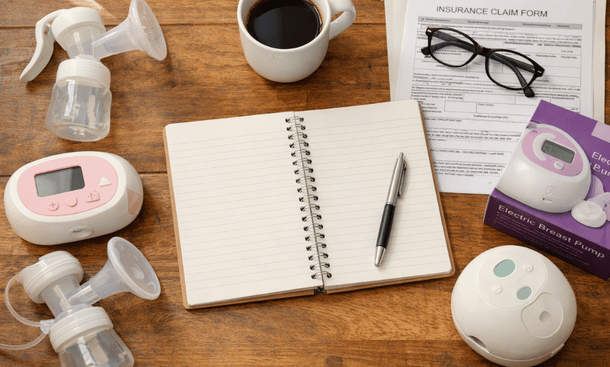
Choosin’ a breast pump shouldn’t feel like takin’ the SATs, but somehow it does. You’ve got insurance forms, confusing specs, a million Reddit threads, and everyone tellin’ ya somethin’ different. Here’s the deal: the “best” pump isn’t the same for everybody—it’s the one that fits YOUR life, whether you’re pumpin’ at home, in a corporate office, or somewhere in between. I’m gonna walk ya through exactly how to figure out what you actually need based on your work schedule, how often you’ll pump, and what you can realistically spend. Once you’ve nailed down your must-haves, you can check out detailed reviews and comparisons of top-rated pumps for this year to find your perfect match.
Start With Your Pumping Schedule
Before you even look at pump features, you gotta figure out how often and where you’ll be pumpin’. This is the foundation of everythin’ else.
If you’re plannin’ to primarily breastfeed and only pump occasionally—maybe once a day to build a freezer stash or to cover date night—your needs are totally different from someone who’s gonna be exclusively pumpin’ or pumpin’ three times during an eight-hour workday.
Take a realistic look at your maternity leave and return-to-work timeline. Are you goin’ back at six weeks? Twelve weeks? Six months? The longer you’re home, the more you might be able to rely on direct nursing and less frequent pumpin’.
Think about your work environment. Do you have a dedicated lactation room with an outlet and privacy? Are you gonna be pumpin’ in your car between appointments? Are you workin’ from home where you can pump at your desk? Each scenario needs different equipment.
Consider your baby’s feeding pattern too. If baby’s nursin’ well and gainin’ weight, you might only need to pump when you’re separated. If you’re supplementin’ with formula or dealin’ with latch issues, you might be pumpin’ after every feeding to protect your supply.
Be honest about your lifestyle. Are you someone who’s constantly on the go, or do you have a pretty routine daily schedule? Do you have childcare support that gives you predictable pumpin’ breaks, or are you solo parentin’ where you gotta multitask?
Write this stuff down. Seriously. When you’re comparin’ pumps later, you’ll want to refer back to your actual situation instead of gettin’ distracted by fancy features you don’t need.
Understanding Insurance Coverage
Insurance can literally save you hundreds of dollars, but navigatin’ it is annoying. Still, it’s worth the effort.
Thanks to the Affordable Care Act, most insurance plans are required to cover one breast pump per pregnancy. But the devil’s in the details. Some plans only cover specific models, some require you to use a particular supplier, and some have weird restrictions about when you can order.
Call your insurance company directly or check their website for a list of covered pumps. Don’t rely on what your friend’s insurance covered because every plan is different.
Most insurance works with durable medical equipment suppliers like Aeroflow, Edgepark, or Byram Healthcare. These companies handle all the paperwork and ship the pump to your door. You usually fill out a form with your insurance info and your due date, and they take it from there.
The pumps covered by insurance are typically mid-range double electric models—Spectra S2, Medela Pump in Style, Motif Luna, stuff like that. These are solid workhorse pumps that’ll do the job for most moms.
If you want an upgrade—maybe the rechargeable version of a pump instead of plug-in only, or a premium model like Spectra S1—many suppliers let you pay the price difference out of pocket. That might be fifty to a hundred bucks instead of the full retail price.
Some insurance plans also cover wearable pumps like Elvie or Willow, but this is less common. You usually need to specifically request it and maybe provide justification for why you need a wearable versus a traditional pump.
Timing matters. Most insurance companies let you order your pump about a month before your due date. If you order too early, they might deny the claim. If you wait until after baby’s born, you risk not havin’ it when you need it.
Keep all your documentation. If insurance denies your claim for some reason, you can appeal. Sometimes it’s just a paperwork mix-up that’s easy to fix.

Manual vs Electric vs Wearable: Picking Your Category
Once you know your schedule and insurance situation, you can narrow down which category of pump makes sense.
Manual pumps are perfect for occasional use—once a day or less. They’re quiet, portable, cheap, and simple. But if you’re pumpin’ multiple times a day, your hand’s gonna hate you. Manual pumps are great as backups even if you have an electric pump. Keep one in your diaper bag for emergencies.
Single electric pumps are the middle ground. They’re cheaper than double electrics and less tiring than manual, but they take twice as long because you’re doin’ one breast at a time. If you’re only pumpin’ once or twice a day at predictable times when you’ve got thirty minutes to spare, single electrics work fine. For most workin’ moms though, the time factor makes them impractical.
Double electric pumps are the standard for a reason. They’re efficient, most are covered by insurance, and they work for basically any pumpin’ schedule from occasional to exclusive. This is the safe bet if you’re not sure what your needs will be.
Wearable pumps are specialized tools for specific situations. They’re fantastic if you need to multitask while pumpin’ or if you don’t have access to private spaces with outlets. But they’re expensive, not always covered by insurance, and they don’t work as well for everyone. Don’t make wearable your only pump unless you’re confident it’ll work for your body and your budget can handle it.
Hospital-grade pumps are rental options for medical situations—NICU, severe supply issues, exclusive pumpin’ for multiples. You don’t buy these, you rent them monthly. If you’re in one of these situations, your healthcare provider will guide you.
Most moms end up with a double electric as their main pump, maybe a manual as backup, and possibly a wearable if they want the flexibility and can afford it. That’s a totally reasonable setup.
Features That Actually Matter
Now let’s talk about what features are worth payin’ attention to and what’s just marketing fluff.
Suction strength and adjustability matter. You want multiple suction levels so you can find what’s comfortable and effective for your body. Some pumps have ten levels, others have five. More options is generally better but past a certain point it’s diminishing returns.
Cycle speed is how many sucks per minute the pump does. Being able to adjust this separately from suction strength gives you more control. The combination of speed and strength should let you mimic different phases of baby’s nursing.
Closed system versus open system is about hygiene. Closed systems have a barrier that prevents milk from gettin’ into the tubing and motor. This means less risk of mold and contamination. Open systems are fine if you’re diligent about cleaning and replacing tubing, but closed is better if you have the option.
Battery versus plug-in affects portability. Rechargeable batteries are convenient but they do degrade over time. Plug-in only is cheaper and you never worry about battery life, but you’re stuck near an outlet. Best of both worlds is a pump that can do both.
Noise level matters more than you think. If you’re pumpin’ at work in a shared bathroom or thin-walled office, a quieter pump is worth seekin’ out. Spectra and Lansinoh pumps are notably quieter than Medela.
Letdown mode mimics the quick, light sucking babies do at the start of nursing to trigger milk flow. Most modern pumps have this and it genuinely helps most women get better output. It’s not a dealbreaker but it’s a nice feature.
Memory settings remember your preferred suction and speed levels so you don’t have to adjust every time you turn on the pump. Convenient but not critical.
Night lights are surprisingly helpful for middle-of-the-night pumpin’ sessions when you don’t wanna fully wake up.
What doesn’t matter as much? The color of the pump. Fancy carrying cases. Bluetooth connectivity unless you’re gettin’ a wearable pump where it’s actually functional. Extra bottles beyond the two it comes with—you can buy those separately if needed.
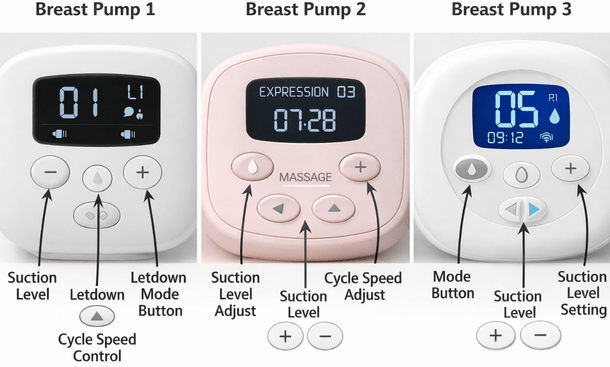
Breast Pump Control Comparison
Size and Portability Considerations
Think about where this pump’s gonna live and how often you’ll be movin’ it around.
If you’re pumpin’ primarily at home and the pump’s gonna sit on your nightstand or in the nursery, size and weight don’t matter much. Get whatever works best functionally.
If you’re commuting to work and carryin’ your pump back and forth every day, weight and compactness become important. Draggin’ a heavy pump plus your laptop and lunch through the subway gets old fast.
Some pumps come with specific bags or backpacks. These are convenient if you like ’em, but you can also just toss the pump in whatever bag you normally carry if it fits.
Consider whether you need to pump in multiple locations throughout the day. If you’re pumpin’ once at work and that’s it, you can leave your pump in your locker or desk drawer. If you’re a home health nurse pumpin’ in your car between patient visits, you need somethin’ genuinely portable.
The smallest pumps aren’t always the best pumps. Wearables are tiny but they have trade-offs in power and capacity. Don’t sacrifice functionality just to save space unless portability is genuinely your top priority.
Budget Reality Check
Let’s talk about what pumps actually cost and what’s worth spendin’ money on.
If you’re usin’ insurance, your out-of-pocket cost for a standard double electric is zero to maybe a hundred bucks if you upgrade. This is obviously the most budget-friendly option and there’s zero shame in takin’ the free pump your insurance offers.
If you’re payin’ entirely out of pocket, manual pumps run twenty to fifty dollars. Single electrics are sixty to a hundred and twenty. Double electrics are a hundred and fifty to three hundred for personal-use models. Wearables are three hundred to five hundred.
Hospital-grade rentals are fifty to a hundred and fifty per month, which adds up if you need one long-term.
Here’s my take on what’s worth spendin’ extra money on. A rechargeable battery instead of plug-in only is worth twenty to forty bucks if you pump away from home regularly. A quieter pump is worth payin’ a bit more for if noise is a concern in your environment. A closed system is worth seekin’ out for peace of mind.
What’s not worth extra money? Fancy bags and accessories—you can get cheaper alternatives. Premium brands when a mid-range option does the same thing. Multiple pumps unless you genuinely need backups in different locations.
Remember that pumpin’ has other costs beyond the pump itself. Replacement parts like valves and membranes need replacin’ every month or two. Storage bags if you’re freezin’ milk. Possibly a pumpin’ bra. Maybe extra bottles. Budget for the whole ecosystem, not just the pump.
Getting the Right Flange Size
This is so important I’m givin’ it its own section. Wrong flange size will ruin your pumpin’ experience no matter how good your pump is.
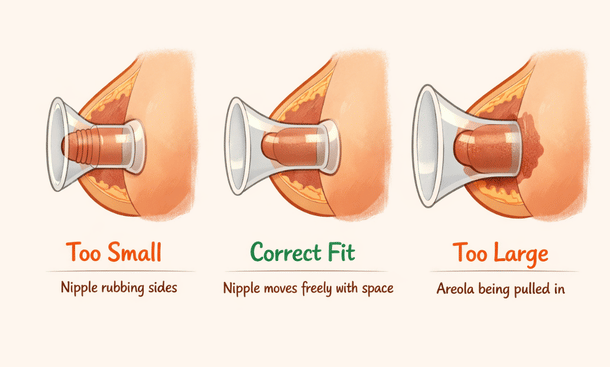
The flange is the cone-shaped part that goes over your nipple and areola. It needs to fit your specific anatomy. Too big and you’ll get poor suction and your areola gets pulled in. Too small and your nipple rubs against the sides which is painful and can cause damage.
Most pumps come with 24mm or 25mm flanges as standard. This is medium size and it works for maybe half of women. The other half need bigger or smaller.
To measure yourself, measure the diameter of just your nipple when it’s not erect, then add four millimeters. So if your nipple is 16mm, you probably need a 20mm flange. If it’s 20mm, you need 24mm.
When you’re pumpin’, your nipple should move freely in the tunnel without your areola bein’ pulled in. There should be a tiny bit of space around your nipple. If your nipple’s rubbin’ the sides or turnin’ colors, go down a size. If your areola’s gettin’ sucked in, go up a size.
Most pump brands sell flanges in multiple sizes separately. Sizes typically range from 15mm up to 36mm. You might need different sizes for each breast.
Pumpin’ shouldn’t hurt. If it does, flange size is the first thing to check before you assume the pump itself is the problem.
Timing Your Purchase
When should you actually get your pump?
If you’re usin’ insurance, order it about a month before your due date. This gives you time to receive it, unpack it, read the instructions, and maybe practice a bit before baby arrives. You don’t wanna be figurin’ out how to assemble a pump for the first time when you’re three days postpartum and engorged.
If you’re payin’ out of pocket, you can order whenever you want, but I’d still recommend havin’ it before baby comes. Even if you’re plannin’ to primarily nurse, you might need to pump sooner than expected if baby’s in NICU, if you have latch issues, or if you end up separated from baby for medical reasons.
That said, don’t stress if you end up needin’ to order after baby’s born. Most suppliers ship fast, or you can run to a store and grab somethin’ if necessary.
If you’re considerin’ a wearable pump as an addition to your insurance-covered pump, I’d actually recommend waitin’ until after baby arrives and you’ve established breastfeeding. You’ll have a better sense of your supply, your schedule, and whether the investment is worth it for your specific situation.
For replacement parts, order them before you desperately need them. When you open your pump for the first time, go ahead and order backup valves, membranes, and duck bills. Keep ’em on hand so you’re not scrambling when somethin’ wears out.
Red Flags to Avoid
Some warning signs that a pump might not be right for you or might be poor quality.
Super cheap prices on major brands usually means it’s a knockoff or used. Breast pumps are single-user items for safety reasons. Don’t buy used pumps except hospital-grade models designed for multiple users. Even if someone’s sellin’ a barely-used pump, you don’t know if milk got into the motor or how it was cleaned.
Pumps with overwhelmingly negative reviews about the same issue—like consistent motor failures or leaking problems—should be avoided. One or two bad reviews is normal. Dozens of people complainin’ about the same thing is a pattern.
Brands with no replacement parts available are a bad bet. If you can’t get new valves or membranes when yours wear out, your pump becomes useless. Stick with established brands where parts are readily available.
Pumps that claim unrealistic things like “never needs parts replaced” or “works for every woman” are overselling. All pumps need part replacement, and no pump works perfectly for everyone.
Be cautious with brand-new pump models that just launched. Let other people be the guinea pigs. Wait for real user reviews to come in before you buy the first generation of a new product.
Testing Before You Commit
Here’s somethin’ most people don’t think about. You can’t really test a pump before baby arrives because your milk hasn’t come in yet.
Some hospitals and lactation centers have pump rental programs or demo models. If you give birth in a hospital, they’ll probably have pumps available for you to use while you’re there. Pay attention to which ones you like.
Lactation consultants often have experience with multiple pump brands and can give you recommendations based on your specific situation. It’s worth schedulin’ a prenatal visit with an IBCLC if you’re unsure about what to get.
Once your milk comes in, give your pump a fair shot before decidin’ it’s not workin’. It takes a few days to figure out the right settings and get comfortable with the routine. Don’t judge a pump based on the first session.
That said, if after a week or two you’re consistently gettin’ poor output, experiencin’ pain, or feelin’ like the pump isn’t emptyin’ you well, it might genuinely not be the right fit. Don’t force yourself to suffer with a pump that doesn’t work for your body.
Many pumps have thirty-day return policies if they’re unused or gently used. Check the return policy before you buy so you know your options if you need to switch.
Making Your Final Decision
Alright, you’ve thought through your schedule, checked your insurance, considered your budget, and learned about features. Now you actually gotta pick somethin’.
Make a shortlist of two or three pumps that meet your basic criteria. Compare them directly on the factors that matter most to you. If noise is your top concern, prioritize the quietest option. If portability matters most, go with the most compact.
Read recent reviews from actual moms, not just the manufacturer’s marketing. Look for reviews from women in similar situations to yours. A pump that’s perfect for an exclusively pumpin’ mom might not be ideal for someone who’s pumpin’ once a day.
Check what’s covered by your insurance and start there. If multiple options are covered, pick the one that best fits your needs. If none of the covered options feel right, decide if the upgrade is worth payin’ for out of pocket.
Trust your gut. If a pump just feels right to you based on your research, go with it. You can always adjust later if needed.
Remember that no pump is permanent. If your first choice doesn’t work out, you can switch. If your needs change as baby gets older, you can add different equipment. This isn’t a lifelong commitment, it’s just a tool to get you through the breastfeeding stage.
Your Next Steps
You’ve now got a solid framework for makin’ this decision based on what actually matters for your life. The key is bein’ honest with yourself about your schedule, your budget, and what features you genuinely need versus what just sounds cool.
Once you’ve narrowed down your decision to a specific category and figured out your must-have features, it’s time to get into the nitty-gritty details of what’s actually out there. The accessories and extras you pair with your pump can make or break the whole experience, so make sure you know what breast pump accessories you actually need before you start pumpin’ so you’re fully set up for success from day one. And if you want one more comprehensive look at how all these different pump types and models stack up against each other in real-world use, my complete guide to the best breast pumps available this year covers everything from manual backups to high-tech wearables so you can make your final choice with total confidence.

As a Felyro.com content author, I develop actionable content on breastfeeding, translating research-backed information into practical advice for mothers. My goal is to help families establish healthy feeding habits, improve maternal confidence, and support infant development.